Your Cart is Empty


TL;DR:
- Voice care trends in 2025 emphasize evidence-based therapy as a clinical standard, with rigorous diagnostics and AI innovations shaping non-invasive evaluation methods. Intensive pediatric camps and structured follow-ups improve outcomes and adherence, while objective testing refines LPR diagnosis beyond dietary guesses. Integrating these insights into daily practice results in more durable vocal health and personalized, outcome-driven care.
The field of vocal health is not standing still. Voice care trends 2025 are reshaping how singers, actors, lecturers, and voice educators approach everything from daily practice hygiene to clinical diagnosis and recovery. New research is challenging outdated assumptions, and the gap between what most voice users do and what current evidence actually supports has never been wider. This article breaks down the most significant shifts, from evidence-based therapy protocols and pediatric voice camps to AI-powered biomarker diagnostics, so you can stay ahead and make smarter decisions for your voice or your clients.
| Point | Details |
|---|---|
| Therapy is non-negotiable | AAO-HNS/ASHA consensus confirms voice therapy should be integral to dysphonia treatment, not optional. |
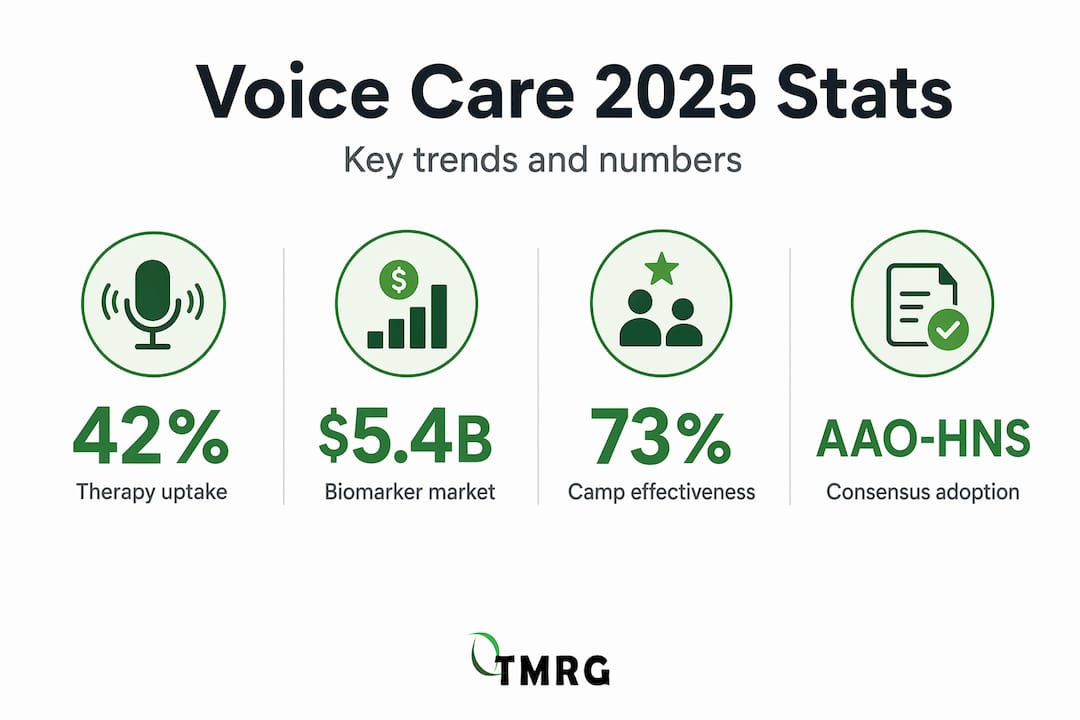
| Intensive camps work for kids | Structured one-week semioccluded vocal tract therapy shows measurable gains for children with vocal nodules. |
| LPR needs objective testing | Reflux symptoms require standardized ambulatory monitoring, not just symptom management or dietary guessing. |
| AI biomarkers are arriving fast | Machine learning models can now predict aspiration risk from simple vowel phonations, signaling a new era of non-invasive diagnostics. |
| Follow-up prevents skill drift | Brief maintenance sessions after intensive therapy are what separate lasting results from temporary improvements. |
The single biggest shift in 2025 voice health innovations is the formalization of voice therapy as a clinical standard, not a last resort. The AAO-HNS and ASHA jointly issued a consensus on dysphonia treatment confirming that therapy should continue until the patient reaches an optimal response, a statement that carries real weight for how clinicians structure care plans. This is not a minor update. It reframes therapy from a “try this first” suggestion into a defined, outcome-driven process.
For voice professionals, this matters in practical terms. Therapy delivered by a licensed speech-language pathologist improves not just vocal quality, but also the outcomes of any surgical intervention a patient might need. When therapy precedes or follows surgery, recovery is faster and vocal outcomes are more durable. That relationship between therapy and medical management is now codified.
There is also a compelling financial argument here. Voice therapy reduces emergency visits and prevents costly long-term complications in conditions like paradoxical vocal fold motion. For a touring singer or a full-time lecturer, avoiding a single hospitalization more than justifies the investment in consistent therapy.
Pro Tip: When reviewing types of voice therapy with clients, match the modality to the specific diagnosis. Resonant voice therapy works differently than vocal function exercises, and the consensus is clear that therapy plans should be individualized, not templated.
The broader principle underlying all of this is captured in one of the consensus’s core insights: the goal of voice therapy extends beyond symptom reduction. The aim is optimal, sustainable voice quality and function over the long term. That framing should change how you present therapy to clients who think they just need a few sessions to “fix” their hoarseness.
Young singers and choir children have historically fallen through the cracks of voice care. Weekly outpatient therapy is hard for busy families to sustain, and vocal nodules in children often go undertreated as a result. A 2026 randomized controlled trial changed that conversation significantly.
The study tested intensive semioccluded vocal tract therapy, or iSOVT, delivered in a structured one-week camp format versus standard weekly programs. The results were clear: the camp format produced measurable acoustic and self-reported improvements in children with vocal nodules. Acoustic measures improved, and children reported feeling better about their voices, both of which matter when you are working with young professional voice users.
Here is a side-by-side comparison of the two approaches:
| Feature | Weekly standard therapy | Intensive iSOVT camp |
|---|---|---|
| Session frequency | Once per week | Multiple sessions per day |
| Duration | 8 to 12+ weeks | One week |
| Family adherence demands | High, sustained over months | Concentrated, manageable |
| Skill consolidation | Gradual | Accelerated |
| Follow-up requirement | Ongoing | Brief maintenance sessions |
The camp format addresses a real barrier. Families can commit to one focused week far more easily than months of weekly appointments. This practical advantage explains why time-limited therapy camps improve adherence in young professional voice users, not just outcomes in ideal clinical conditions.

What the research also made clear is that the work does not end at the final camp session. Brief weekly follow-ups after intensive treatment are what prevent skill drift and lock in the gains. Without maintenance, children tend to revert to old vocal habits within weeks. Educators working with youth choirs should build this follow-up structure into any intensive program they recommend or run.
Pro Tip: If you are an educator recommending iSOVT camps, connect families with resources on preventing vocal nodules before the camp begins. Understanding the habits that caused the nodules makes the therapy content far more meaningful for both the child and the parent.
Laryngopharyngeal reflux is one of the most commonly misunderstood contributors to chronic vocal symptoms. Many voice users spend months avoiding acidic foods, elevating their bed frames, and taking over-the-counter antacids without ever confirming whether reflux is actually driving their hoarseness, throat clearing, or globus sensation. This is where 2025 voice care trends are forcing a meaningful change in clinical practice.
The San Diego Consensus established standardized ambulatory reflux monitoring as the baseline expectation for evaluating persistent LPR symptoms. The two primary tools recommended are:
The other critical concept emerging from this consensus is laryngeal hyperresponsiveness. Some voice users continue to experience throat symptoms even after acid suppression brings reflux under control. The explanation is that the laryngeal mucosa can become sensitized, reacting to minimal stimuli with symptoms that feel identical to active reflux. Treatment in these cases requires recalibration therapies targeting the neurological sensitivity, not just continued acid management.
For educators and clinicians, this research reframes the patient conversation. Persistent symptoms despite dietary changes are not necessarily a sign of non-compliance. They may reflect laryngeal hyperresponsiveness, and the appropriate next step is objective testing, not more lifestyle restriction.
This is the section of voice care trends 2025 that will still be relevant a decade from now. The intersection of artificial intelligence and vocal health is producing tools that can screen, monitor, and predict vocal health status without any invasive procedure.
The vocal biomarker market is projected to reach $5.4 billion by 2035, driven by AI and machine learning integration across healthcare. For voice professionals, the practical meaning of that figure is this: the tools being developed now for clinical research will become accessible screening instruments within the next few years.
The most striking recent example involves aspiration risk prediction. Researchers developed a machine learning model that analyzes simple vowel phonations, the kind any voice professional records routinely, and achieved an area under the curve of approximately 0.7 when distinguishing high from low aspiration risk. That level of accuracy, drawn from acoustic features alone, suggests a future where early swallowing dysfunction is flagged before a patient ever reaches a clinical evaluation.
Here is how the current trends in vocal wellness 2025 are shaping AI-driven voice care in practical terms:
Voice educators who want to stay current should follow this space closely. Understanding what these tools can and cannot do will help you advise clients appropriately and avoid overselling the technology before it is fully validated.
Knowing what is advancing in research is only valuable when you can apply it. The future of voice care is not just in research journals. It lives in how voice professionals, educators, and clients make daily decisions.
Here are specific ways to incorporate these 2025 voice health trends into your practice:
The pattern across all of these trends is the same: evidence-based practice, continuous monitoring, and structured follow-up produce better outcomes than any single intervention alone.
I have spent years watching voice care drift between two extremes: the clinical camp that reduces everything to anatomy and pathology, and the wellness camp that relies on hydration tips and vocal rest as if that were a complete plan. What I see in these 2025 trends is a genuine convergence, and that is genuinely encouraging.
What I have learned, though, is that voice rest alone is still the most overused and underexplained recommendation in our field. Patients hear “rest your voice” and interpret it as a full solution. It is not. Rest removes the stressor temporarily, but it does not retrain the vocal folds, it does not address the muscular tension patterns that caused the problem, and it does not prepare the voice for the demands that will immediately return once the professional goes back to work. The consensus data on therapy outcomes confirms what I have observed clinically: therapy changes how the voice works, not just how much it works.
The AI diagnostics piece is where I counsel the most caution. I am genuinely impressed by what the acoustic biomarker research is demonstrating. A model predicting aspiration risk from a vowel phonation is a meaningful result. But I have seen enough technology cycles to know that validated research models and commercially available clinical tools are very different things. My advice: learn the science, watch the regulatory developments, and do not promise clients a capability the tool cannot yet reliably deliver.
What I believe is most underestimated right now is the value of structured follow-up. The iSOVT camp research crystallized something I have always felt. The intensive work is not where lasting change happens. It is in the maintenance sessions, the brief weekly check-ins, the moment a client catches themselves reverting to old habits before it becomes a pattern. That is where real vocal transformation takes root.
— Golan
The trends in vocal wellness 2025 point consistently toward structured, evidence-informed care. Tmrgsolutions has spent over 25 years developing products specifically for voice professionals who need more than generic health advice.

Whether you are a singer managing early-stage vocal fatigue, an actor in a demanding season, or an educator looking to support your clients’ recovery, the Tmrgsolutions voice therapy kits are built around the same principles driving the 2025 research. From the entry-level Basic Kit to the Standard Kit designed specifically for singers, each kit integrates natural formulations, targeted recovery tools, and guidance rooted in clinical vocal health practice. Explore the full range of vocal problems resources to find the right starting point for your situation.
The leading voice care trends 2025 include formalized voice therapy protocols based on AAO-HNS/ASHA consensus, intensive pediatric semioccluded vocal tract therapy camps, standardized ambulatory reflux monitoring for LPR, and AI-powered vocal biomarker diagnostics for non-invasive health screening.
A 2026 randomized controlled trial found that a one-week iSOVT camp format produced measurable acoustic and self-reported improvements in children with vocal nodules. Brief follow-up maintenance sessions are necessary to preserve those gains over time.
Laryngeal hyperresponsiveness is a condition where the laryngeal mucosa remains sensitized and reactive even after acid reflux is controlled. It explains why some voice users continue to experience symptoms despite dietary changes, and it requires specific recalibration therapies rather than continued acid suppression.
Current research shows a machine learning model analyzing vowel phonations achieved an AUC of approximately 0.7 in predicting aspiration risk, which is a promising result. However, most models require further prospective validation and regulatory clearance before they are ready for routine clinical use.
Educators should update their curriculum to reflect the AAO-HNS/ASHA therapy consensus, teach clients about objective LPR diagnostics rather than relying solely on lifestyle recommendations, and build maintenance follow-up structures into any intensive training program they design or recommend.
