Your Cart is Empty


Vocal nodules don’t develop from a single screaming match or one bad performance. They form gradually through repetitive microscopic trauma to your vocal folds, much like calluses on a guitarist’s fingertips. Each time you speak or sing with excessive force or improper technique, tiny collisions occur at the midpoint of your vocal folds. Over weeks or months, these impacts accumulate into soft, swollen lesions that can progress into hardened nodules if left unchecked. Understanding the biomechanics behind this process empowers you to protect your voice through targeted prevention strategies, natural therapies, and early intervention.
Natural Therapies And Lifestyle For Vocal Health Maintenance
Explore Effective Voice Therapy Kits And Vocal Care Solutions
| Point | Details |
|---|---|
| Nodules form from chronic stress | Repetitive vocal fold collisions during voice overuse create callus-like lesions at the fold midpoint |
| Multiple risk factors compound injury | Reflux, dehydration, smoking, and allergies worsen vocal fold damage beyond mechanical trauma |
| Early detection prevents progression | Soft nodules respond well to voice therapy and natural remedies, avoiding surgery in over 95% of cases |
| Holistic care accelerates recovery | Combining hydration, vocal rest, technique adjustments, and lifestyle changes optimizes healing outcomes |
| Natural therapies outperform surgery | Most nodules resolve with conservative management, reserving surgical intervention for rare fibrotic cases |
Your vocal folds vibrate hundreds of times per second during speech and singing, creating controlled collisions that produce sound. When you push your voice beyond healthy limits through shouting, singing without proper support, or speaking for extended periods without rest, these collisions intensify. Vocal nodules in singers form due to repetitive mechanical trauma from chronic vocal fold collision during voice overuse or misuse. This phenomenon, called phonotrauma, concentrates stress at the mid-membranous portion of each vocal fold where tissue experiences peak impact forces.
The biomechanics reveal why this specific location becomes vulnerable. During phonation, your vocal folds must overcome resistance to initiate vibration, requiring increased subglottic pressure. Hyperfunctional voice use, where you squeeze or force sound production, elevates this phonation threshold pressure dramatically. Impact stress peaks at the mid-membranous fold from high phonation threshold pressure during hyperfunctional voice use, while nonlinear dynamics show changes in vibratory patterns from subtle geometry alterations. These mechanical changes create a feedback loop where initial tissue swelling disrupts normal vibration, leading to compensatory behaviors that worsen the trauma.
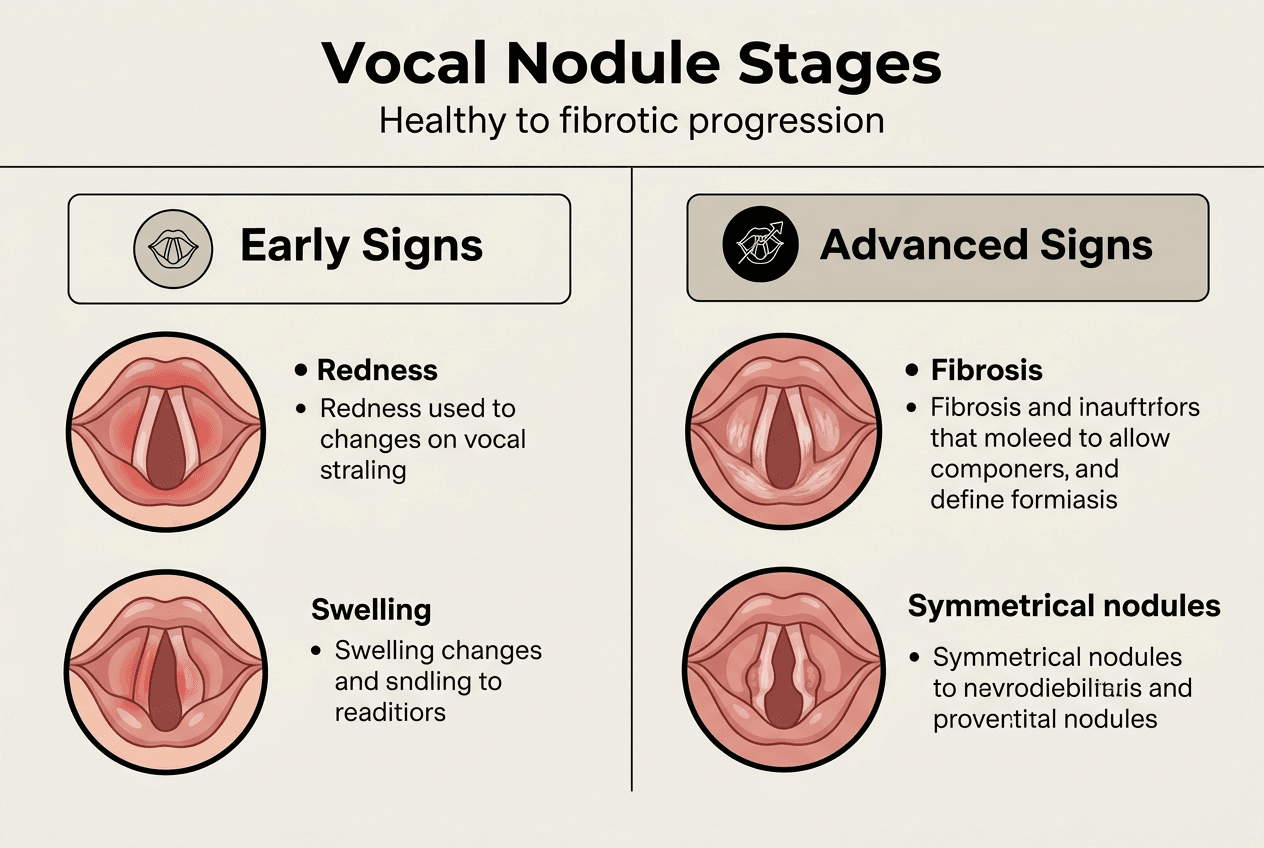
Vocal nodules typically appear bilaterally, meaning they develop symmetrically on both vocal folds at matching contact points. In early stages, they present as soft, edematous swellings filled with fluid and inflammatory cells. The tissue resembles a fresh blister rather than a hardened callus. Without intervention, continued phonotrauma triggers fibrosis, where collagen deposits replace normal vocal fold layers. This transformation hardens the nodules, making them resistant to conservative treatment and potentially requiring surgical removal.
Pro Tip: Record yourself during practice sessions and listen for signs of strain like breathiness, pitch breaks, or effortful phonation. These auditory cues often precede visible nodule formation, giving you an early warning to modify technique before tissue damage occurs.
The progression from healthy tissue to fibrotic nodule follows predictable stages. Initial microtrauma causes localized inflammation and capillary damage. Your body responds with edema as healing mechanisms activate. Repeated injury prevents complete healing, causing the tissue to lay down excess collagen as a protective response. This protective mechanism backfires, creating stiff nodules that prevent normal vocal fold closure and vibration. Understanding this timeline helps you recognize that vocal nodules in professionals develop gradually, offering multiple intervention points before permanent damage occurs.
Mechanical trauma provides the foundation for nodule formation, but several physiological and environmental factors amplify your risk. Laryngopharyngeal reflux stands out as a major contributor that many singers overlook. Unlike heartburn, LPR causes minimal esophageal symptoms but allows stomach acid to reach your larynx during sleep or after meals. This acid exposure inflames vocal fold mucosa, reducing tissue resilience and making folds more susceptible to phonotrauma. Contributing factors beyond overuse include laryngopharyngeal reflux, dehydration, smoking, allergies, GERD, chronic coughing, and shouting. Managing acid reflux and vocal health becomes essential for preventing nodule formation, especially when combined with demanding vocal schedules.

Dehydration creates a cascade of problems for vocal fold function. Your vocal folds require a thin mucus layer for smooth vibration and protection against collision forces. When systemic hydration drops, this mucosal layer thins and becomes sticky, increasing friction during phonation. The elevated friction generates more heat and mechanical stress at contact points, accelerating tissue breakdown. Singers who rely on caffeinated beverages or perform in dry climates face particular vulnerability. The heartburn effects on voice extend beyond direct acid damage to include secondary dehydration from inflammation and compensatory throat clearing.
Smoking introduces both chemical irritation and thermal damage to delicate laryngeal tissues. Cigarette smoke contains over 7,000 chemicals, many causing direct mucosal inflammation. The heat from inhaled smoke dries protective mucus and damages cilia that help clear debris. This combination creates chronically inflamed, vulnerable vocal folds that develop nodules more readily under normal voice demands. Even secondhand smoke exposure in performance venues contributes to cumulative damage.
Allergic responses trigger inflammation throughout your upper airway, including vocal folds. Postnasal drip from allergies causes chronic throat clearing and coughing, both high-impact vocal behaviors that stress fold tissue. Antihistamines, while controlling allergy symptoms, often have drying side effects that worsen vocal fold lubrication. Chronic coughing from any cause, whether allergies, respiratory infections, or reflux, creates explosive vocal fold collisions far more traumatic than speaking or singing. Each cough generates forces equivalent to shouting, making persistent coughing a significant nodule risk factor.
Addressing these contributors requires holistic lifestyle modifications beyond vocal technique alone. Singers must consider diet, hydration habits, environmental exposures, medication side effects, and underlying health conditions. This comprehensive approach recognizes that vocal health depends on whole-body wellness, not just laryngeal mechanics.
Early nodule symptoms often appear subtle and intermittent, making them easy to dismiss as temporary fatigue. You might notice increased effort required to reach high notes or a slight roughness in your speaking voice after long rehearsals. Hoarseness that persists beyond normal recovery periods signals potential tissue changes. Breathiness develops as swollen nodules prevent complete vocal fold closure, allowing air to escape during phonation. Vocal fatigue, where your voice tires quickly despite adequate sleep, indicates inefficient vocal fold vibration from emerging lesions. These symptoms typically worsen throughout the day and improve with rest, creating a pattern that distinguishes nodules from acute laryngitis.
Professional voice users should pursue laryngoscopy at the first sign of persistent symptoms. This examination allows an otolaryngologist or laryngologist to visualize your vocal folds directly using a flexible scope or rigid telescope. Modern stroboscopy adds slow-motion analysis of vocal fold vibration, revealing subtle asymmetries and stiffness that indicate early nodule formation. Early laryngoscopy for professionals enables voice therapy targeting hyperfunction combined with reflux and allergy management, while natural remedies like hydration and rest prove superior to surgery in most cases. Waiting for symptoms to resolve spontaneously risks progression to fibrotic nodules requiring more aggressive intervention.
Voice therapy serves as the primary treatment for vocal nodules, focusing on eliminating hyperfunctional vocal behaviors. A speech-language pathologist specializing in voice analyzes your speaking and singing technique, identifying specific patterns that concentrate stress at nodule sites. Therapy exercises retrain muscle coordination, reduce excessive laryngeal tension, and establish efficient breath support. Sessions typically include resonant voice techniques, semi-occluded vocal tract exercises, and strategies for reducing phonation threshold pressure. Therapy resolves most nodules, while fibrotic nodules require holistic approaches beyond proper singing technique alone.
Pro Tip: Implement a vocal cool-down routine after performances or long rehearsals, similar to stretching after athletic training. Gentle humming, lip trills, and descending sirens help reduce laryngeal tension and promote recovery.
Hydration and vocal rest form the foundation of nodule prevention and early-stage treatment. Systemic hydration requires consuming adequate water throughout the day, not just before performances. The general guideline of eight glasses daily increases for singers, particularly in dry climates or during illness. Vocal rest means complete silence, avoiding even whispering, which actually creates more vocal fold tension than quiet speech. Strategic rest periods after demanding vocal use allow inflamed tissue to recover before permanent changes occur. Medical professionals’ role in vocal health includes monitoring nodule progression and determining when conservative management suffices versus when surgical consultation becomes necessary.
| Intervention | Soft Nodules | Fibrotic Nodules |
|---|---|---|
| Voice therapy success rate | 85-95% | 60-70% |
| Vocal rest requirement | 1-2 weeks | 2-4 weeks |
| Surgery necessity | Less than 5% | 15-25% |
| Recovery timeline | 6-12 weeks | 3-6 months |
Surgical removal remains rare, reserved for nodules that fail to respond to months of conservative treatment or those causing severe voice limitations. Even when surgery becomes necessary, post-operative voice therapy prevents recurrence by addressing the underlying vocal behaviors that created nodules initially. Understanding vocal nodules as a chronic condition requiring ongoing management rather than a one-time problem shifts your approach toward sustainable vocal health practices.
Hydration protects vocal fold tissues through multiple mechanisms beyond simple lubrication. Adequate systemic hydration maintains the viscosity of vocal fold mucus, ensuring optimal vibration efficiency. Water consumption dilutes mucus secretions, preventing the thick, sticky buildup that increases phonatory effort. The superficial layer of the lamina propria, where vocal fold vibration occurs, depends on proper hydration for its gel-like consistency. Hydration and rest serve as superior first lines of defense compared to surgery in most nodule cases. Aim for pale yellow urine as a practical hydration indicator, adjusting intake based on climate, activity level, and caffeine consumption.
Regular vocal rest prevents phonotrauma accumulation by giving tissues time to complete inflammatory healing cycles. Unlike muscle tissue that strengthens with use, vocal fold epithelium requires recovery periods to repair microtrauma. Scheduling complete voice rest days into your weekly routine, especially after demanding performances, allows cellular repair mechanisms to restore normal tissue architecture. During rest periods, avoid throat clearing, coughing when possible, and even loud laughter, all of which create high-impact vocal fold collisions.
Environmental modifications reduce irritant exposure that compounds mechanical vocal trauma. Smoking cessation ranks as the single most impactful change for vocal health, eliminating both chemical irritation and thermal damage. Avoiding secondhand smoke in performance venues, bars, and social settings protects vulnerable laryngeal mucosa. Shouting, whether in noisy environments or during athletic activities, generates extreme collision forces that can trigger nodule formation even in otherwise healthy voices. Using amplification systems rather than pushing your voice in large spaces prevents unnecessary strain.
Dietary management addresses reflux and inflammation from multiple angles. Avoiding trigger foods like caffeine, alcohol, chocolate, spicy foods, and acidic items reduces reflux episodes. Eating smaller meals and finishing dinner three hours before bedtime prevents nighttime reflux when you’re horizontal. Anti-inflammatory foods like fatty fish, leafy greens, berries, and turmeric support tissue healing and reduce systemic inflammation that affects vocal folds. Managing allergies through environmental controls, air purifiers, and appropriate medications minimizes postnasal drip and chronic throat clearing.
Daily vocal health routine:
Start mornings with gentle humming and lip trills before speaking demands
Maintain consistent hydration with water intake every 30-60 minutes
Use proper breath support and resonance rather than pushing or forcing sound
Schedule vocal rest breaks during long speaking or singing sessions
Implement cool-down exercises after intensive voice use
Track symptoms in a voice journal to identify patterns and triggers
Voice therapy extends beyond treating existing nodules to preventing their formation. Working with a voice specialist helps you identify subtle technical inefficiencies before they cause tissue damage. Therapy teaches you to recognize early fatigue signals and adjust technique accordingly. Many singers benefit from periodic therapy check-ins even without symptoms, similar to how athletes work with trainers for injury prevention. The investment in proper technique pays dividends in career longevity and vocal consistency.
| Strategy | Implementation | Expected Benefit |
|---|---|---|
| Systemic hydration | 8-10 glasses water daily | Improved mucosal health, reduced friction |
| Vocal rest | 1 full day weekly | Tissue repair, inflammation reduction |
| Steam inhalation | 10 minutes before performances | Temporary mucus thinning, comfort |
| Reflux management | Dietary modifications, elevation | Reduced acid exposure, less irritation |
| Technique training | Weekly voice therapy | Efficient phonation, reduced strain |
Exploring vocal health tips and understanding vocal abuse risks empowers you to make informed decisions about your voice care routine. Natural approaches work synergistically, each element supporting others to create optimal conditions for vocal fold health and injury prevention.
Recovering from vocal nodules or preventing their formation requires more than knowledge alone. You need practical tools that integrate voice therapy principles with natural remedies proven to support vocal fold healing. TMRG Solutions offers comprehensive voice therapy kits designed specifically for singers and voice professionals dealing with vocal strain, hoarseness, and nodule concerns. These kits combine structured therapy exercises with herbal formulations developed over 25 years of vocal health expertise, creating a holistic recovery system you can implement at home.

The basic voice therapy kit provides essential tools for beginners experiencing early vocal fatigue, while the standard voice therapy kit includes advanced exercises and remedies for more persistent issues. For comprehensive recovery support, the herbal vocal recovery kit combines natural anti-inflammatory ingredients with targeted therapy protocols. Vocal coaches and medical professionals recommend these kits as effective complements to professional voice therapy, helping you maintain progress between sessions and establish sustainable vocal health habits.
Vocal nodules develop from repetitive phonotrauma where vocal folds collide forcefully during voice overuse, misuse, or hyperfunctional technique. The mechanical stress concentrates at the mid-membranous fold where impact forces peak, creating bilateral callus-like lesions. Contributing factors include laryngopharyngeal reflux, dehydration, smoking, allergies, and chronic coughing that compound tissue vulnerability. Understanding causes of vocal nodules helps you identify and modify specific behaviors increasing your risk.
Most vocal nodules respond to conservative treatment combining voice therapy, vocal rest, and natural remedies without requiring surgery. Soft, early-stage nodules resolve in 85-95% of cases through technique modification and lifestyle changes. Surgery becomes necessary in fewer than 5% of cases, typically reserved for fibrotic nodules that persist despite months of therapy. Even surgical cases require post-operative voice therapy to prevent recurrence by addressing underlying vocal behaviors.
Prevention focuses on maintaining optimal vocal fold health through hydration, proper technique, and lifestyle management. Drink adequate water throughout the day to keep vocal fold mucus thin and protective. Avoid shouting, throat clearing, and speaking over noise that forces hyperfunctional voice use. Manage reflux through dietary modifications and eating schedules that prevent nighttime acid exposure. Work with a voice therapist to establish efficient technique using proper breath support and resonance rather than laryngeal tension. Schedule regular vocal rest days, especially after demanding performances, allowing tissue repair before microtrauma accumulates into nodules.
