Your Cart is Empty


Voice therapy can help singers, speakers, teachers, and performers change patterns that create strain, fatigue, hoarseness, or inefficient sound production. Natural support should be used to make the routine more comfortable, not to replace therapy or diagnosis.
TMRG products can significantly improve the customer’s voice under these conditions by supporting throat comfort, mucus management, clearer resonance, and day-to-day consistency while the customer follows professional voice-care guidance.
Helpful TMRG next steps: compare Hoarseness Voice Support, Improve Resonance and Voice Quality, and Voice Consultation.
Vocal strain and fatigue plague performers on every stage, but even experienced American singers and global artists can fall victim to common myths around voice therapy. Misunderstandings about these interventions leave many professionals struggling with unresolved hoarseness or missed recovery opportunities. This resource reveals how personalized techniques and evidence-based therapies outperform outdated approaches and misunderstood shortcuts for long-lasting vocal health.
| Point | Details |
|---|---|
| Voice Therapy is Comprehensive | Voice therapy involves more than vocal exercises; it addresses respiratory patterns, muscle tension, and behavioral habits to improve vocal health. |
| Personalized Treatment Plans | Voice therapy is tailored to individual needs, considering anatomy and performance history to effectively address vocal issues. |
| Types of Therapy for Singers | Three key approaches—symptomatic, physiologic, and hygienic—target specific vocal challenges and promote long-term vocal health. |
| Natural Remedies Support Recovery | Hydration, vocal rest, and environmental management complement professional therapy and aid in the healing process of vocal challenges. |
Voice therapy represents a specialized intervention designed to diagnose, treat, and manage vocal health challenges professional singers and vocal performers frequently encounter. Voice therapy techniques systematically target critical vocal parameters including vocal fold closure, pitch modulation, volume control, and overall voice quality. Speech-language pathologists and voice specialists collaborate to develop personalized treatment strategies addressing individual vocal system needs.
Contrary to popular misconceptions, voice therapy involves far more than simple vocal exercises. It is a comprehensive approach that examines respiratory patterns, muscle tension, phonation mechanics, and behavioral habits affecting vocal performance. Therapeutic interventions may include targeted muscle relaxation techniques, breathing retraining, resonance adjustment exercises, and strategic modifications to speaking or singing patterns. The goal extends beyond symptom management - voice therapy aims to restore functional vocal capacity and prevent future complications.
Most individuals misunderstand voice therapy as a one-size-fits-all solution or believe vocal disorders represent permanent conditions. Comprehensive voice treatment approaches challenge these misconceptions by demonstrating that targeted interventions can effectively address various vocal challenges. Therapy protocols are meticulously customized, considering factors like vocal cord muscle tension, anatomical variations, historical performance patterns, and individual physiological characteristics.
Professional Tip: Practice daily vocal warm-ups and maintain consistent hydration to support your ongoing vocal health and complement professional voice therapy interventions.
Voice therapy for singers involves specialized approaches designed to address the unique physiological and performance challenges faced by vocal professionals. Singing voice specialists represent a critical subset of voice therapy professionals who combine deep musical expertise with advanced understanding of laryngeal anatomy and vocal rehabilitation techniques.

Three primary orientations of voice therapy are particularly relevant for singers: symptomatic therapy, physiologic therapy, and hygienic therapy. Symptomatic therapy concentrates on modifying specific vocal symptoms to produce an appropriate and healthy sound. Physiologic therapy delves deeper, targeting underlying abnormalities in vocal mechanism physiology that might impede optimal performance. Hygienic therapy focuses on modifying behavioral patterns and vocal habits that potentially contribute to dysfunction or potential injury.
Comprehensive voice rehabilitation strategies require a multidisciplinary approach. Singing voice specialists often collaborate closely with speech-language pathologists, creating integrated treatment plans that address both immediate vocal challenges and long-term performance sustainability. These professionals understand that each singer’s vocal instrument is unique, requiring personalized interventions that consider individual anatomical characteristics, performance styles, and specific vocal demands.
Here’s how the main types of voice therapy for singers compare:
| Therapy Type | Primary Focus | Typical Techniques | Best For |
|---|---|---|---|
| Symptomatic | Correcting specific vocal issues | Sound shaping, pitch training | Immediate symptom relief |
| Physiologic | Improving vocal mechanism | Breath control, muscle work | Long-term performance |
| Hygienic | Changing harmful habits | Lifestyle changes, hydration | Preventing future issues |
Professional Tip: Schedule regular vocal health assessments with a specialized singing voice therapist to proactively identify and address potential vocal challenges before they become significant performance limitations.
Voice therapy techniques represent a sophisticated approach to vocal rehabilitation, targeting multiple dimensions of vocal performance through specialized interventions. These techniques systematically address specific vocal parameters including pitch, loudness, resonance, and overall voice quality by employing a comprehensive, personalized methodology that adapts to each individual’s unique vocal challenges.
The core mechanism of voice therapy involves three primary strategic approaches: symptomatic, physiologic, and hygienic interventions. Symptomatic techniques focus on immediate vocal production challenges, helping performers modify problematic vocal symptoms through precise muscle control and sound production strategies. Physiologic methods delve deeper, addressing underlying anatomical and functional abnormalities that might compromise vocal performance, such as irregular breathing patterns or muscle tension that interferes with natural sound production.
Vocal rehabilitation strategies are meticulously designed by speech-language pathologists to synchronize vocal cord vibrations and improve overall voice function. These techniques typically incorporate specialized exercises targeting breath control, muscle relaxation, and vocal cord strengthening. Practitioners develop customized treatment plans that not only address current vocal limitations but also provide preventative strategies to minimize future voice disorders, ensuring long-term vocal health and optimal performance capabilities.
Professional Tip: Maintain a consistent vocal warm-up routine and stay hydrated to support the therapeutic techniques learned during voice therapy sessions.
Natural voice recovery strategies represent a holistic approach to healing vocal challenges, emphasizing gentle, supportive techniques that complement professional voice therapy. These remedies focus on creating optimal conditions for vocal cord healing by addressing environmental, dietary, and lifestyle factors that directly impact vocal health and recovery potential.
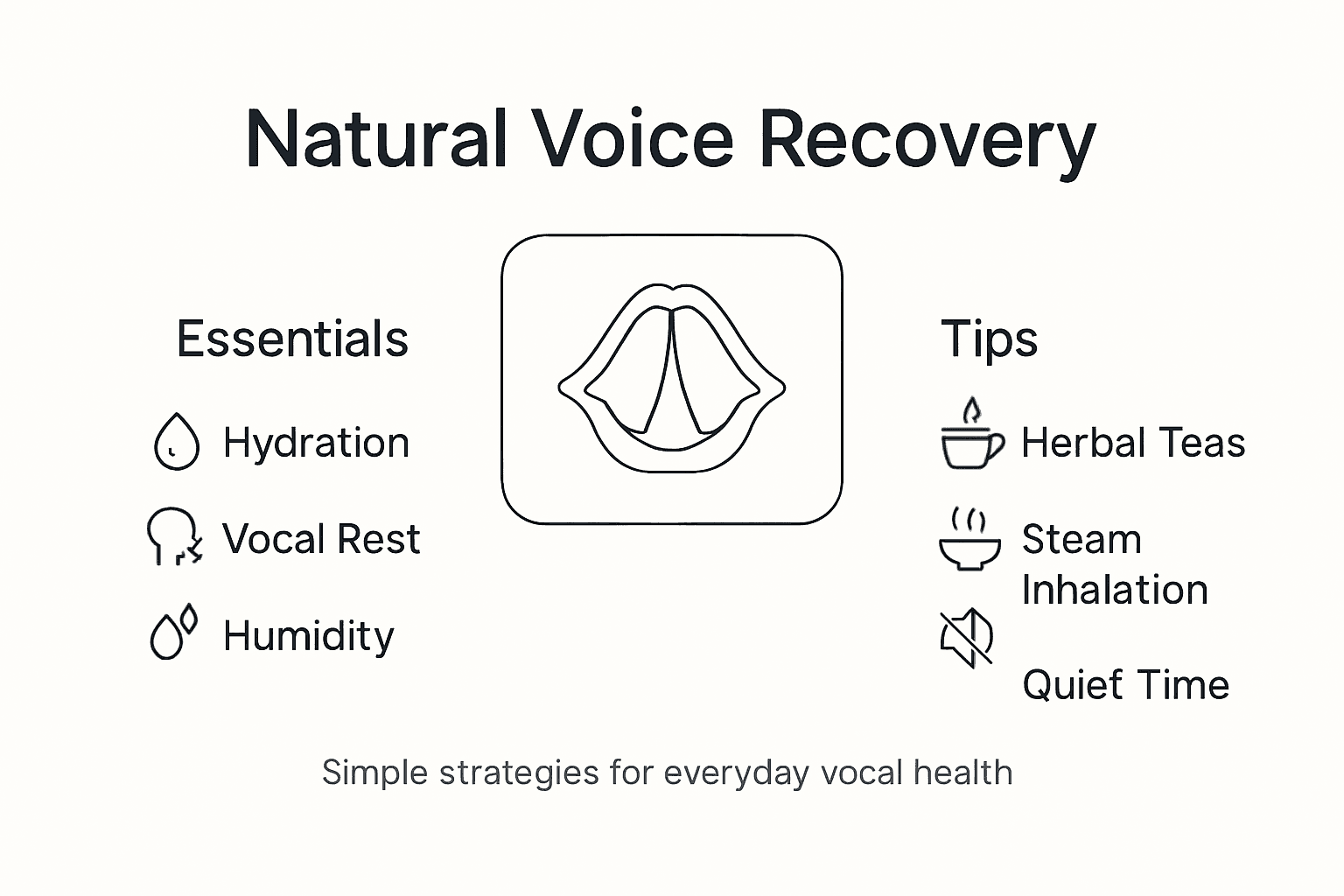
The foundational principles of natural voice recovery center on three critical elements: hydration, vocal rest, and environmental management. Proper hydration helps maintain vocal cord elasticity and reduces inflammation, while strategic vocal rest prevents further strain. Environmental interventions like using humidifiers, avoiding smoke and alcohol, and controlling air quality create a supportive healing ecosystem for damaged vocal tissues.
Home remedies for voice restoration offer practical, accessible solutions for singers and vocal professionals experiencing temporary voice disorders. These techniques include gentle steam inhalation to soothe irritated vocal passages, salt water gargles to reduce throat inflammation, and carefully selected herbal lozenges that provide natural healing compounds. Singers can implement these strategies alongside professional voice therapy to accelerate recovery and prevent recurring vocal strain.
This table summarizes key natural remedies and their benefits in vocal recovery:
| Remedy | Main Benefit | Easy Application |
|---|---|---|
| Herbal teas | Soothes throat tissues | Drink warm, non-caffeinated |
| Steam inhalation | Reduces inflammation | Inhale over hot water |
| Humidifier use | Maintains moisture | Use in singing space |
| Salt water gargles | Decreases irritation | Gargle with warm solution |
| Throat lozenges | Relieves soreness | Choose herbal options |
Professional Tip: Create a personalized vocal recovery kit with hydrating herbal teas, a portable humidifier, and throat-soothing lozenges to support your natural healing process.
Voice therapy recovery strategies require careful navigation to prevent recurring vocal challenges. Professional singers and vocal performers often encounter subtle yet significant obstacles that can derail their rehabilitation progress. Understanding these potential pitfalls is crucial for maintaining long-term vocal health and preventing performance-limiting complications.
The most critical risk factors for voice therapy relapse include inconsistent technique application, excessive vocal strain, and neglecting fundamental vocal hygiene principles. Singers must be vigilant about recognizing early warning signs such as persistent throat tension, unexpected vocal fatigue, and subtle changes in vocal resonance. Strategic interventions involve implementing precise vocal rest protocols, practicing deliberate relaxation techniques, and developing heightened awareness of individual vocal limitations.
Comprehensive voice disorder prevention demands a multifaceted approach that extends beyond traditional therapy sessions. This includes systematically monitoring environmental factors, managing stress levels, maintaining optimal hydration, and avoiding known vocal irritants like smoke, excessive caffeine, and allergens. Professional vocalists should establish a personalized monitoring system that tracks vocal performance, integrates regular professional assessments, and allows for immediate adjustments when early signs of strain emerge.
Professional Tip: Create a detailed vocal health journal documenting daily vocal performance, hydration levels, and potential stress factors to proactively identify and mitigate potential relapse risks.
Voice therapy offers powerful strategies to restore and enhance your vocal performance by addressing challenges like muscle tension, vocal fatigue, and harmful habits. If you are seeking to complement your therapy with natural, targeted products designed specifically for singers and voice professionals, explore our Singer Enhancements - TMRG Solutions. These carefully crafted solutions support hydration, soothe irritation, and promote long-term vocal resilience.

Take control of your vocal recovery today by combining professional voice therapy techniques with our natural remedies and wellness products. Visit https://tmrgsolutions.com to browse our full range of offerings including tailored kits and sprays that help you maintain optimal vocal function. For issues related to mucus and throat comfort, check out our Phlegm and viscous mucos - TMRG Solutions collection and experience gentle relief that complements your voice care routine.
Voice therapy is a specialized intervention designed to diagnose, treat, and manage vocal health challenges often encountered by professional singers and vocal performers. It involves personalized treatment strategies to enhance vocal parameters such as vocal fold closure, pitch modulation, and volume control.
Voice therapy techniques target specific vocal parameters through approaches like symptomatic, physiologic, and hygienic interventions. These techniques involve exercises aimed at improving muscle control, breath support, and overall vocal function to restore voice quality and prevent future complications.
Natural remedies for vocal health include proper hydration, vocal rest, and environmental management. Techniques like gentle steam inhalation, salt water gargles, and using herbal lozenges can help soothe and heal vocal cords, particularly when integrated with professional voice therapy.
To avoid relapse, singers should maintain consistent technique application, avoid excessive vocal strain, and keep up with fundamental vocal hygiene practices. Monitoring early warning signs of tension, fatigue, and changes in voice quality can also help in promptly addressing potential issues.
