Your Cart is Empty


Got a sore throat an hour before going on stage? Don’t panic. This guide covers the fastest, safest steps singers and performers can take to reduce throat pain and protect their voice when it matters most.
First actions in the next 10–60 minutes:
Switch to a soft, easy voice or written communication where possible
Apply a saline or herbal throat spray directly to the mucosa for surface hydration
Run a humidifier or sit in a steam-filled bathroom for 10 minutes
Sip warm (not hot) water or herbal tea
Warning: Avoid aspirin and ibuprofen before heavy voice use, menthol/eucalyptus/benzocaine products, whispering (it strains the vocal folds more than soft speech), and habitual throat clearing.
Pro Tip: Whispering feels gentle but forces the vocal folds into an unnatural adduction pattern. A soft, breathy spoken tone is safer than a whisper.
Vocal sore throat recovery for performers requires immediate load reduction, surface hydration, graded active rehab, and professional evaluation when symptoms persist beyond two to three weeks.
| Point | Details |
|---|---|
| Reduce vocal load first | Switch to amplified or soft speech immediately; avoid whispering and throat clearing. |
| Avoid numbing agents | Menthol, eucalyptus, and benzocaine mask pain signals and raise phonotrauma risk before performance. |
| Use graded active rehab | SOVT exercises, yawn-sigh, and Stretch-and-Flow outperform prolonged complete voice rest for recovery. |
| See a specialist by week 2–3 | Persistent hoarseness, pain with phonation, or sudden range loss requires ENT/SLP evaluation and possible videostroboscopy. |
| Tmrgsolutions performance kit | TMRG Loud & Clear Drops, Shine Bright Spray, and Defense Spray provide stage-safe surface lubrication with no numbing agents. |
Safe exercises and the rehab progression that actually works
How do you decide between rest, modification, or full performance?
How do you build long-term vocal endurance and prevent recurrence?
Which products are safe to use before and during a performance?
Why this guidance is credible and how Tmrgsolutions supports your recovery
A staged plan protects tissue while keeping you performance-ready.
First hour: Stop unnecessary talking. Apply a surface spray. Hydrate with warm water.
Hours 1–6: Use amplification for any required speaking. Reschedule non-essential rehearsals. Run a humidifier in your rest space.
Hours 6–12: Eat anti-inflammatory foods (ginger, turmeric, leafy greens). Avoid alcohol, caffeine, and dairy if you notice increased mucus. Sleep with a humidifier running.
Hours 12–48: Reintroduce gentle voice use only. Take vocal maintenance breaks every 10 minutes during any required performance or rehearsal. Monitor for worsening symptoms.
For performers with work commitments, practical accommodations matter:
Request a handheld or clip-on microphone to reduce projection demand
Delegate spoken introductions or MC duties to a colleague
Postpone high-intensity repertoire (belt passages, extended upper register) until soreness resolves
Do:
Run short semi-occluded vocal tract (SOVT) exercises to keep the folds mobile without overloading them
Keep a humidifier or personal steam inhaler in your dressing room
Secure amplification before every set when your voice is compromised
Monitor systemic hydration (urine should be pale yellow)
Check whether acid reflux or seasonal allergies are worsening symptoms
Don’t:
Whisper or push through pain
Use menthol, eucalyptus, or benzocaine products before performing. NCVS warns these agents numb the vocal tract and mask strain signals, raising the risk of phonotrauma or hemorrhage
Take aspirin or high-dose ibuprofen before a heavy vocal event.
Clear your throat repeatedly (each clearance impacts the vocal fold mucosa)
Pro Tip: Adjust microphone placement closer to your mouth so you can drop projection without the audience noticing a volume drop. Pair this with a slight repertoire shift toward mid-range passages.
Research on hierarchical voice therapy programs documents that Stretch-and-Flow, resonant voice, yawn-sigh, and SOVT exercises effectively rebalance the respiratory, phonatory, and resonatory subsystems. The key is sequencing them correctly.
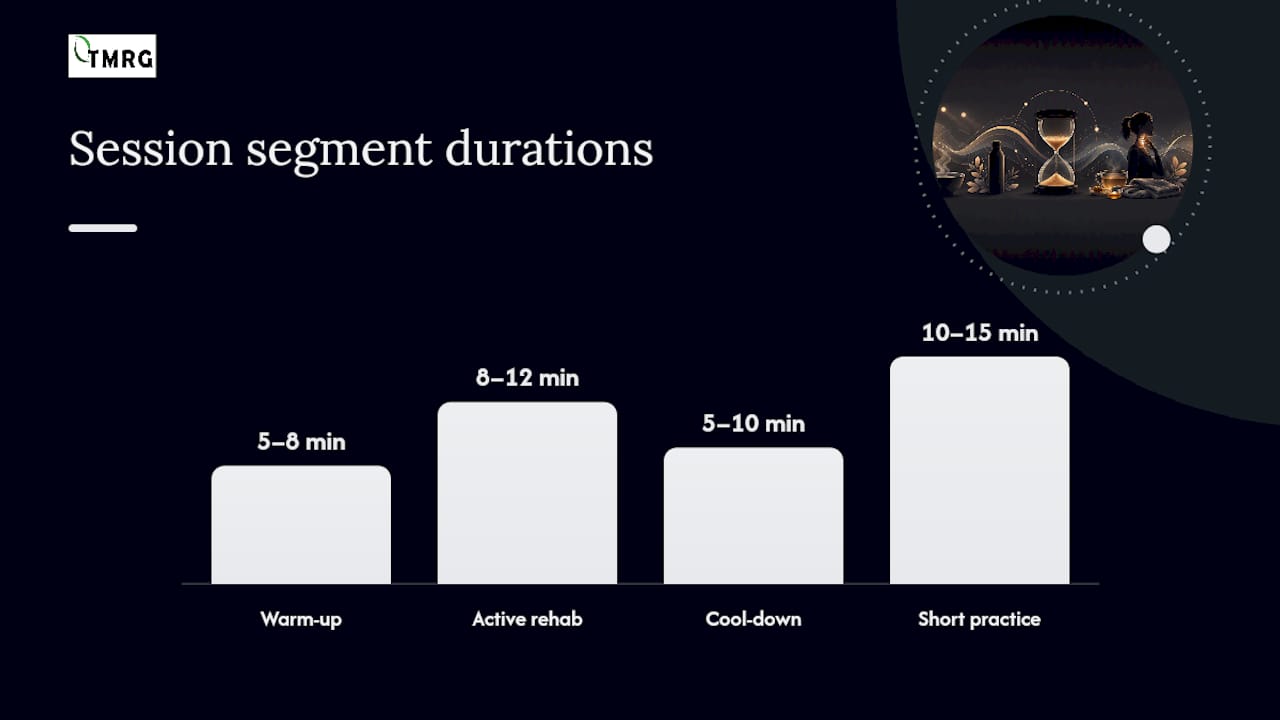
Warm-up sequence (5–8 minutes):
Yawn-sigh: open the throat fully, let the voice ride the exhale down from a high pitch to low. Repeat 4–5 times.
Lip trills: sustain a gentle trill on a comfortable pitch for 5 seconds. Move up and down a comfortable range.
Straw phonation: hum through a standard drinking straw for 3–5 minutes, staying in the middle of your range.
Active rehab (8–12 minutes):
Resonant voice: place sound forward in the “mask” (nasal bridge, lips). Say “mmm-mah” repeatedly, feeling buzz at the lips.
Stretch-and-Flow: gentle glides from low to high pitch on a voiced fricative (“vvv” or “zzz”), keeping airflow constant.
Cool-down (5–10 minutes):
The University of Minnesota Lion’s Voice Clinic recommends a 5–10 minute gentle cool-down after high-intensity performance to reduce tissue irritation and blood pooling. Descending pitch glides on a lip trill, followed by easy yawn-sighs, work well.
Stop immediately if you notice:
Increased pain or effort during an exercise
Voice becoming more hoarse mid-session
Sensation of something “catching” in the throat
Pro Tip: Short, frequent practice sessions (10–15 minutes, twice daily) build vocal capacity faster than one long session. Treat vocal warm-ups like athletic training intervals.
Not every sore throat warrants cancellation. The decision turns on symptom severity and what modification tools you have available.
Cancel or postpone when:
You feel pain with phonation at a conversational level
Your range has dropped by more than a third
You are breathy or aphonic at rest
You have a fever or systemic illness
Modify and proceed when:
Soreness is mild and voice quality is near-normal at soft volumes
Amplification is available and repertoire can be adjusted
You can take 10-minute voice breaks between sets
Pacing rules for a multi-show run: schedule 10-minute complete voice rest breaks between sets, transpose demanding keys down a step or two, use in-ear monitors to avoid over-singing against stage volume, and track your daily voice dose. Extended periods of speaking and singing may increase the risk of cumulative tissue fatigue.
Seek professional evaluation promptly when you notice any of the following:
Hoarseness or voice change lasting more than 2–3 weeks
Sudden, unexplained loss of range or vocal power
Pain with phonation at normal speaking volume
Breathy voice quality that does not improve with hydration and rest
Visible blood in mucus or hemoptysis
Sensation of a lump or foreign body in the throat
A voice-specialized evaluation typically includes a detailed history of your vocal demands, flexible nasoendoscopy or videostroboscopy (a camera examination that shows how your vocal folds vibrate in slow motion), acoustic and aerodynamic measures, and collaborative treatment planning between an ENT physician and a voice-specialized speech-language pathologist (SLP).
Bring to your appointment:
A timeline of when symptoms started and what triggered them
Your performance schedule and typical daily voice load
A list of medications, supplements, and any products you use on the throat
A short voice recording made at home so the clinician can hear your baseline
The NCVS bioenergetic model reframes vocal fatigue management: conditioning the whole performer, not just the voice, improves endurance across multi-show runs. Cardiovascular fitness, interval-style voice exercise, and training specificity all contribute.
A 2023 Springer review identifies hydration, environmental adaptation, efficient voice use, and stress management as the core prevention pillars for professional voice users.
Daily vocal hygiene checklist:
| Habit | Target |
|---|---|
| Systemic hydration | adequate daily intake of water as a baseline |
| Surface hydration | Saline or herbal spray applied 2–3 times per day |
| Voice rest breaks | 10 minutes of silence per hour of heavy voice use |
| Sleep | sufficient rest; run a humidifier in the bedroom |
| Reflux management | Avoid eating within 2–3 hours of sleep; limit acidic foods |
| Stress reduction | Diaphragmatic breathing, progressive muscle relaxation |
| Scheduled rest days | include low-voice days during heavy performance periods |
Pro Tip: Integrate vocal conditioning into your weekly rehearsal schedule the same way a runner builds base mileage: short daily sessions, one longer session mid-week, and a rest day before a high-demand performance.
Surface lubrication is not the same as systemic hydration, but it matters for performers. The right product applied at the right time reduces mucosal friction without masking pain signals.
Product categories and when to use them:
Saline sprays: The safest baseline option. Isotonic saline moistens the mucosa without any pharmacological effect. Use freely before and during a set.
Herbal drops: Plant-based formulations (slippery elm, licorice root, marshmallow root) coat the mucosa and reduce irritation. Apply 15–20 minutes before a set.
Oils and saline blends: Combine surface lubrication with protective coating. Useful in dry environments, air-conditioned venues, or during travel.
Mandatory caution: Never use menthol, eucalyptus, or benzocaine products before performing. These numb the vocal tract and remove the pain feedback your folds rely on to signal overuse.
TMRG-recommended products for your performance kit:
TMRG Loud & Clear Classic Voice Recovery Drops: herbal drops formulated for surface lubrication and quick mucosal relief. Apply 15 minutes before a set or between songs.
TMRG Shine Bright Classic Voice Recovery Spray: a portable herbal spray for onstage hydration. Safe for repeated use during a performance without numbing agents.
TMRG Defense Oils and Saline Voice and Throat Spray: an oils-plus-saline blend that provides protective coating in dry or demanding environments.
None of these products contain menthol, eucalyptus, or benzocaine, making them stage-safe by design.
Tmrgsolutions brings 25+ years of specialist experience in vocal health, with products developed and tested for professional and amateur voice users. The guidance in this article draws from peer-reviewed sources including NCVS, ASHA Perspectives, the University of Minnesota Lion’s Voice Clinic, and a 2023 Springer review on vocal hygiene.
A TMRG voice therapy kit maps directly to the rehab exercises described above: the included sprays and drops support surface hydration before and after SOVT sessions, while the kit’s guidance materials walk you through warm-up and cool-down sequences you can use on the road or backstage.
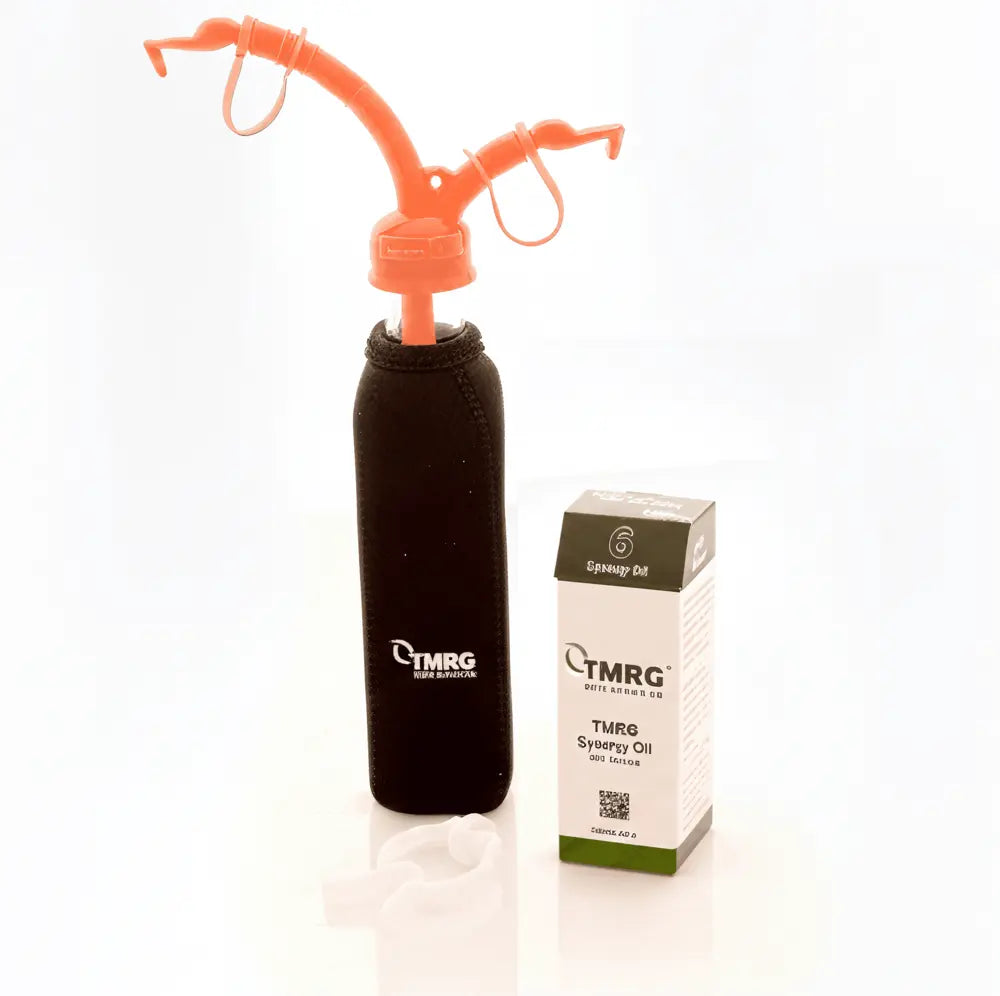
Tmrgsolutions products are for surface support and short-term relief. They are not a substitute for medical evaluation when red-flag symptoms are present.
The most common mistake professional voice users make is treating a sore throat as a nuisance to push through rather than a signal to act on. The science is clear: active, graded recovery outperforms prolonged silence, and early evaluation outperforms waiting until the damage is visible on a scope. Yet the performance culture still rewards the performer who “never cancels,” even when that decision costs them months of recovery later.
What actually works is a team approach: an ENT to rule out structural lesions, a voice-specialized SLP to guide the rehab progression, and a voice coach who understands the performance demands. Products and exercises fill the space between appointments and help you stay conditioned. They do not replace the team. The performers who recover fastest are the ones who build that team before the crisis, not during it.
Backstage, on tour, or in the practice room, having the right product within reach changes what you can do in the 20 minutes before a set.

The TMRG Premium Voice Therapy Kit includes sprays, drops, and an oils-plus-saline blend alongside structured guidance, so you have every layer of the recovery checklist covered in one bag. For performers earlier in their recovery or working within a tighter budget, the TMRG Basic Voice Therapy Kit delivers the core surface-hydration and herbal-relief tools without the extras. Apply the spray 15–20 minutes before your set, use the drops between songs, and run the Defense spray in dry environments or during travel. No menthol, no benzocaine, no masking of the signals your voice needs you to hear. Browse the full kit range at Tmrgsolutions and choose the option that fits your performance schedule.
You ARE a Vocal Athlete | Medical School (Lion’s Voice Clinic)
Vocal hygiene and prevention strategies for professional voice users - Springer
Apply a saline or herbal surface spray, reduce your vocal load to a soft amplified voice, and run a humidifier. Avoid menthol, eucalyptus, and benzocaine products, which numb the vocal tract and mask strain.
Prolonged complete voice rest is rarely the best approach.
See an ENT or voice-specialized SLP if hoarseness persists beyond 2–3 weeks, if you experience pain with normal speech, sudden range loss, or any blood in mucus. Early evaluation with videostroboscopy can prevent minor lesions from becoming chronic problems.
Only if they are free of menthol, eucalyptus, and benzocaine. NCVS specifically warns that these numbing agents mask pain signals in the vocal tract, increasing the risk of phonotrauma during performance.
TMRG Shine Bright Classic Voice Recovery Spray and TMRG Loud & Clear Classic Voice Recovery Drops are both formulated without numbing agents, making them safe to apply before and during a set for surface lubrication and mucosal relief.
