Your Cart is Empty


TL;DR:
Throat sprays, lozenges, and homeopathic pellets help hydrate and soothe irritated vocal folds for singers with hoarseness.
Choosing the right product depends on your schedule and severity, with sprays providing quick relief and pellets supporting drug-free options.
The best vocal recovery products for singers are moisturizing throat sprays, soothing lozenges and pastilles, and natural or homeopathic remedies that help a strained, hoarse voice feel better. Throat sprays coat and hydrate the throat within minutes, lozenges and pastilles keep it moist for longer, and herbal options offer a gentle, drug-free choice. Hoarseness (also called laryngitis or dysphonia) still needs vocal rest and plenty of water, so these products work best alongside them. Below, we compare each type of vocal recovery product, explain when to use it and share the kit we recommend for performers.
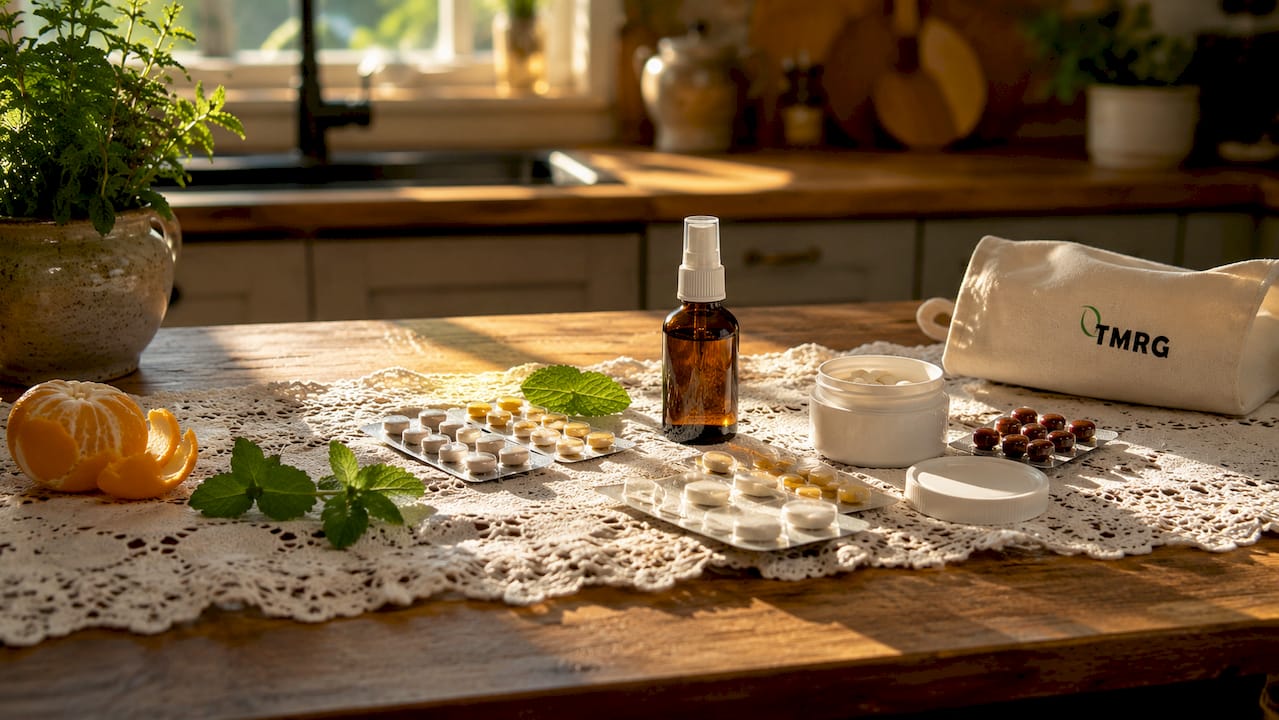
The three main categories of vocal health products are throat sprays, medicated lozenges, and homeopathic meltaway pellets. Each category targets hoarseness differently, and understanding those differences helps you choose the right tool for the right moment.
Throat sprays deliver moisture directly to the throat lining and vocal folds. Vocal Eze Throat Spray, priced around $19.99 for a 1 oz bottle, is marketed as a daily vocal care product that hydrates and lubricates quickly after just a few sprays. Sprays are the fastest delivery method when you need relief between sets or before stepping on stage.
Medicated lozenges dissolve slowly and release active ingredients over several minutes. Vocalzone throat pastilles contain levomenthol, peppermint oil, and myrrh tincture, which relieve throat irritation and dryness when combined with healthy vocal care. Strepsils Honey and Lemon lozenges include antibacterial ingredients and carry a dosing limit of 12 per day for adults.
Homeopathic meltaway pellets offer a different approach. Boiron Arum triphyllum 9C pellets dissolve under the tongue without water, carry no known drug interactions, and are available over the counter with HSA/FSA eligibility. They are a practical option for singers who want symptom support without medicated ingredients.
Each product type reaches the vocal tract through a different mechanism, and that affects how quickly you feel relief and how long it lasts.
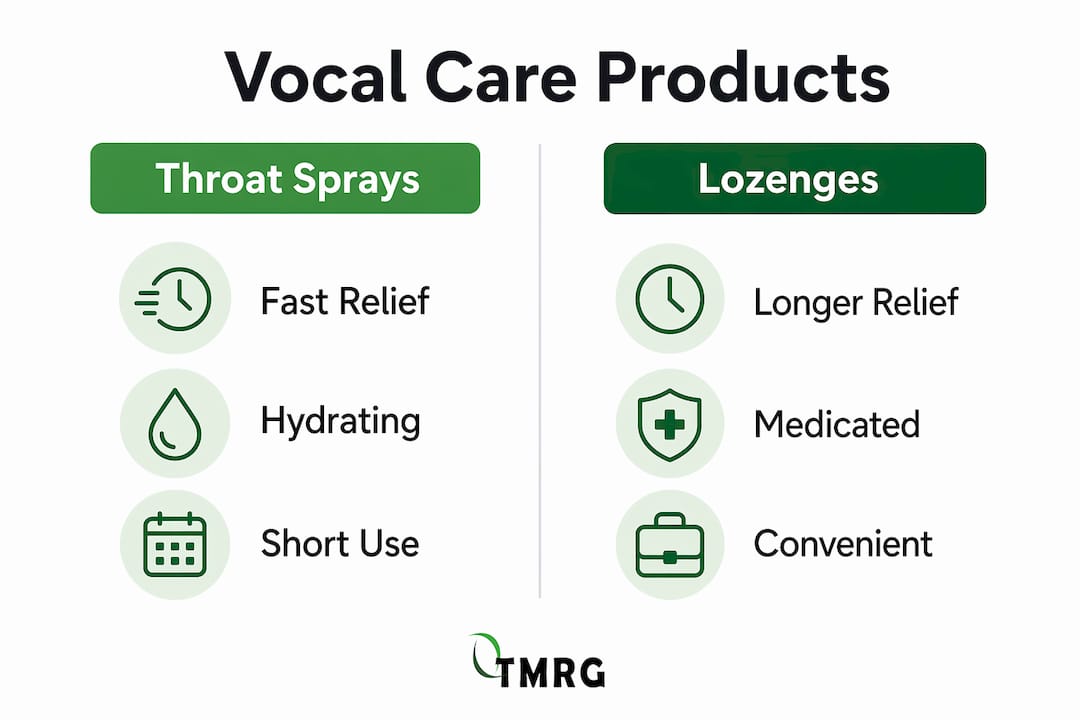
Throat sprays coat the mucosal lining of the pharynx and larynx almost immediately. This surface lubrication reduces friction on the vocal folds during phonation, which is the technical term for sound production. The effect is temporary, typically lasting 20–30 minutes, so sprays work best as a pre-performance or between-session tool rather than an all-day solution.
Medicated lozenges work more slowly but release active ingredients over a longer window. The key ingredients in products like Vocalzone include:
Levomenthol: Creates a cooling sensation and mild anesthetic effect on irritated throat tissue
Peppermint oil: Supports the cooling effect and adds mild antimicrobial properties
Myrrh tincture: A traditional botanical used to reduce throat inflammation and dryness
One caution: menthol can cause dryness in some singers when used too frequently. If your throat feels more parched after using a menthol lozenge, switch to a non-menthol option or reduce frequency.
Homeopathic meltaway pellets like Boiron Arum triphyllum 9C work on a different principle. They are formulated to address vocal strain symptoms without numbing the throat, which matters for singers who need to feel their instrument clearly. Dosing is straightforward: pellets dissolve under the tongue, require no water, and fit easily into a bag or pocket.
Pro Tip: Avoid eating or drinking for 15 minutes before and after using homeopathic pellets. Food and drink can interfere with absorption through the sublingual tissue.
Choosing between product types comes down to your performance schedule, ingredient preferences, and how severe your hoarseness is. The table below compares the three categories across the factors that matter most to singers.
| Feature | Throat sprays | Medicated lozenges | Meltaway pellets |
|---|---|---|---|
| Speed of relief | Fast (under 2 minutes) | Moderate (5–10 minutes) | Gradual |
| Duration of effect | Short (20–30 minutes) | Medium (30–60 minutes) | Variable |
| Active ingredients | Herbal blends, glycerin | Menthol, myrrh, antibacterials | Homeopathic dilutions |
| Portability | High (small bottle) | High (tin or blister pack) | High (tube or multi-pack) |
| Dosing limits | Typically no strict cap | Up to 12 per day (Strepsils) | Follow package instructions |
| HSA/FSA eligible | Varies by product | Varies by product | Yes (Boiron Arum triphyllum) |
| Best use case | Pre-performance, quick relief | Sustained comfort, mild infection | Symptom management, no drug interactions |
Cost is also a factor. Vocal Eze Throat Spray runs around $19.99 per bottle. Vocalzone pastilles and Strepsils are generally available at pharmacies for under $15. Boiron Arum triphyllum multi-packs offer better value per dose than single tubes. All three categories are available over the counter, which means no prescription is needed.
Product selection for vocal recovery should factor in form, dosing frequency limits, and whether you want hydrating or numbing effects. Numbing can mask pain signals that protect your voice from further damage, so use medicated options with awareness.
Products provide comfort. Vocal rest and hydration drive actual recovery. The fastest path back to a full voice combines both, and the sequence matters.
Voice rest and hydration are the primary tools for recovering from laryngitis, with clinical treatments reserved for specific cases. That means your product routine should support rest, not replace it. Follow these steps to build an effective recovery protocol:
Prioritize silence. Reduce all voice use to the minimum necessary. Brief, moderate-volume responses are safer than extended conversation.
Never whisper. Whispering increases laryngeal strain more than speaking at a low, normal volume. It forces the vocal folds into an unnatural position that worsens irritation.
Hydrate continuously. Drink water steadily throughout the day. Room temperature or warm water is easier on inflamed tissue than cold.
Use a humidifier. Humidified air reduces mucosal dryness and supports the natural healing process. Humidified air inhalation is a first-line recommendation for acute laryngitis.
Time your product use. Apply throat spray 10–15 minutes before any necessary voice use. Use lozenges during extended rest periods, not immediately before performing.
Avoid irritants. Caffeine, alcohol, cigarette smoke, and excessive menthol all dehydrate the vocal tract and slow recovery.
Take vocal naps. Short periods of complete silence during the day, even 20–30 minutes, give the vocal folds time to reduce swelling.
Laryngitis typically resolves within 1–2 weeks with self-care including moist air, fluids, and voice rest. If your hoarseness lasts beyond four weeks or comes with pain or swallowing difficulty, see a physician. Prolonged symptoms can signal a more serious condition that no lozenge or spray will address.
Pro Tip: Build a “vocal nap” into your rehearsal schedule. Thirty minutes of complete silence mid-afternoon does more for your voice than any single product on the market.
Natural and homeopathic options appeal to singers who want to avoid synthetic ingredients or who need products with no drug interaction risk. Several categories are worth knowing.
Boiron Arum triphyllum 9C: The most specific homeopathic product for vocal strain. Formulated for hoarseness and vocal fatigue, it dissolves under the tongue and requires no water. Its safety profile is well established, and it carries no known interactions with other medications.
Herbal throat sprays: Many singers use sprays containing slippery elm, marshmallow root, or licorice root extract. These botanicals coat the throat lining and reduce friction without synthetic ingredients.
Ginger and licorice root teas: Warm herbal teas provide hydration alongside mild anti-inflammatory botanical compounds. Ginger reduces throat inflammation, and licorice root soothes mucosal tissue. Avoid adding honey in large quantities if you are managing weight or blood sugar.
Steam inhalation: Plain steam, or steam with a drop of eucalyptus oil, hydrates the vocal tract directly. This is one of the oldest and most effective natural remedies for hoarse voice relief.
One honest limitation: homeopathic and herbal remedies lack the robust clinical trial data that conventional medications carry. Their benefits are real for many singers, but they work best as supportive care alongside voice rest and hydration. Overreliance on any single product, natural or otherwise, delays the behavioral changes that actually heal the voice. For a deeper look at natural hoarseness recovery, Tmrgsolutions offers detailed guidance tailored to performers.
Vocal health products provide meaningful comfort and surface hydration, but voice rest and hydration remain the most powerful tools for recovering from hoarseness.
| Point | Details |
|---|---|
| Sprays give fastest relief | Throat sprays like Vocal Eze hydrate vocal folds in under two minutes, ideal before performing. |
| Lozenges need dosing discipline | Medicated lozenges like Vocalzone and Strepsils have daily limits; overuse can dry out the voice. |
| Meltaway pellets suit drug-free needs | Boiron Arum triphyllum 9C pellets carry no drug interactions and are HSA/FSA eligible. |
| Never whisper during recovery | Whispering increases laryngeal strain; speak briefly at moderate volume when voice use is unavoidable. |
| Seek care for prolonged hoarseness | Hoarseness lasting beyond four weeks requires professional evaluation, not more product use. |
After working with singers across every genre and performance level, the pattern I see most often is this: vocalists reach for products first and rest last. That instinct is understandable. A show is booked, a session is scheduled, and a lozenge feels like a solution. It is not. It is a comfort measure.
The singers who recover fastest are the ones who treat voice rest as non-negotiable and use products to make that rest period more comfortable, not to skip it. I have seen performers use Vocal Eze before a gig on a genuinely damaged voice and get through the set, only to lose their voice completely the following week. The spray did its job. The singer did not do theirs.
My practical recommendation: build a kit that covers all three delivery methods. Keep a throat spray for pre-performance moments, a tin of pastilles for sustained comfort during long rehearsal days, and a tube of Boiron Arum triphyllum for symptom management without medication. Then use the kit to support rest, not to avoid it.
One more thing worth saying directly: if your hoarseness lasts more than four weeks, stop experimenting with products and see a specialist. Vocal nodules, polyps, and other structural issues do not respond to sprays. They respond to professional care. Catching them early protects your career. A good voice care routine for performers builds that awareness into daily practice before problems develop.
— Golan
Tmrgsolutions has spent 25+ years formulating vocal health products specifically for singers, actors, and speakers who cannot afford to lose their voice.
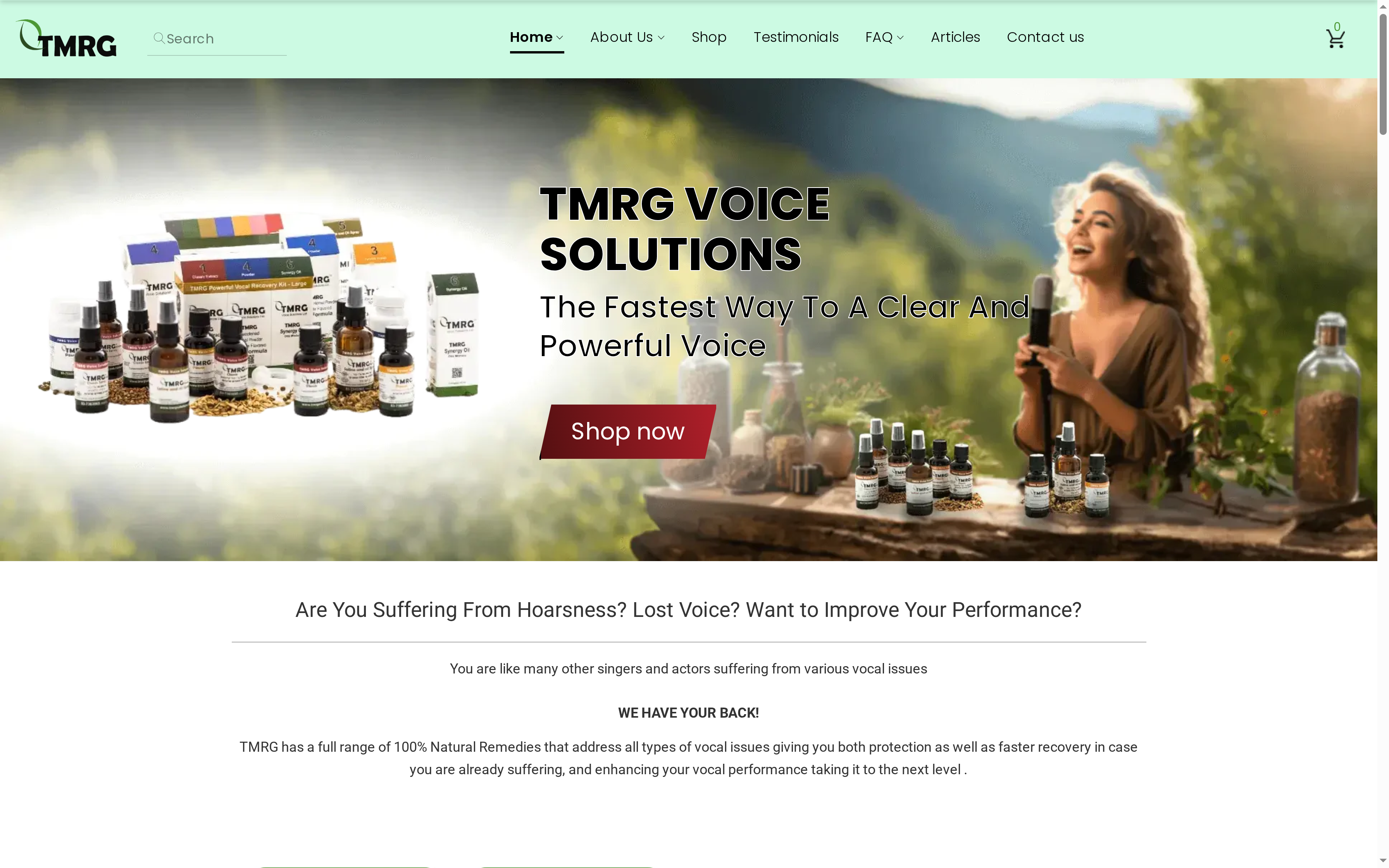
The TMRG Loud and Clear Voice Recovery Drops and TMRG Classic Voice Recovery Spray are two of the most requested products for singers dealing with hoarseness and vocal fatigue. Both are formulated with natural herbal ingredients and designed to complement voice rest and hydration, not replace them. Tmrgsolutions also offers complete voice therapy kits for singers that bundle sprays, drops, and oils into a single recovery system. Whether you need quick relief before a performance or a structured recovery plan after vocal strain, the full product range is available at Tmrgsolutions.
A throat spray like Vocal Eze provides surface lubrication within minutes and is the fastest short-term option. Combine it with warm water, voice rest, and humidified air for lasting relief.
No lozenge will heal overworked vocal cords on its own. Lozenges are comfort measures that reduce irritation and dryness, but true recovery requires voice rest and hydration.
Boiron Arum triphyllum 9C pellets carry no known drug interactions and are available over the counter. Follow the package dosing instructions and consult a physician if symptoms persist beyond two weeks.
Most laryngitis cases resolve within 1–2 weeks with proper self-care. Hoarseness lasting longer than four weeks warrants a medical evaluation to rule out structural vocal issues.
Whispering is not safer than speaking. It forces the vocal folds into an abnormal position that increases strain. Speak briefly at a moderate, natural volume when communication is necessary.
A moisturizing throat spray for quick relief, lozenges or pastilles for longer-lasting comfort, and a natural remedy kit for daily care. Use them together with vocal rest and plenty of water.
They ease dryness and irritation, but they can’t heal strained vocal folds on their own. Rest your voice, drink water and avoid shouting while you recover.
If your voice is hoarse, it’s best to rest it. Products can make your throat feel better while your vocal folds are still swollen, and singing then can cause more strain.
Avoid whispering, clearing your throat, shouting, alcohol, too much caffeine and numbing sprays. See an ENT if hoarseness lasts more than 2–3 weeks.
Best Throat Sprays for Singers 2025 – Expert Comparison - TMRG Solutions
Some tips for your hoarseness and other vocal issues | TMRG - TMRG Solutions
7 Proven Voice Exercises for Hoarseness: Make Your Voice Better Fast - TMRG Solutions
7 Best Throat Sprays for Singers: Clear Voice, Powerful Results - TMRG Solutions
