Your Cart is Empty


Most American singers and performers know the frustration of vocal fatigue, yet globally more than 40 percent of professionals struggle with hoarseness each year. Even minor vocal strain can jeopardize your artistry and stage career. Learning how the vocal cords work, spotting damage early, and adopting proven care habits gives you the best chance to safeguard your unique voice and recover quickly without risking long-term harm.
| Point | Details |
|---|---|
| Vocal System Structure | The vocal system comprises three subsystems: lungs, vocal folds, and vocal tract, essential for sound production. Understanding these components is crucial for vocal health. |
| Types of Vocal Damage | Common vocal disorders include Vocal Nodules, Vocal Polyps, and Laryngitis, each requiring early detection to prevent long-term damage. |
| Habits for Vocal Protection | Daily practices like hydration, controlled breathing, and vocal rest significantly enhance vocal health and resilience. |
| Risks of Neglect | Ignoring vocal health can lead to permanent damage, career interruptions, and financial repercussions, making proactive care essential. |
The human voice represents an incredibly complex biological system that enables communication, emotional expression, and professional performance. Voice production involves precise physiological mechanisms that transform breath into sound through intricate muscular interactions.
At the core of vocal functionality are the vocal folds, two muscular tissues located within the larynx that vibrate and generate sound waves. When air passes through these folds, they snap together and create vibrations that generate unique sound qualities. These vibrations are then modulated by resonating cavities in the throat, nose, and mouth, which explain why each person’s voice sounds distinctly different.
The vocal system operates through three fundamental subsystems: the air pressure system (lungs), the vibratory system (vocal folds), and the resonating system (vocal tract). Each component plays a critical role in producing sound. The lungs generate airflow, the vocal folds create initial sound vibrations, and the vocal tract shapes these vibrations into recognizable speech or musical tones. Understanding these subsystems is essential for maintaining vocal health.
Pro tip: Practice daily breath control exercises to strengthen your respiratory muscles and improve overall vocal cord resilience.
Vocal health professionals recognize multiple categories of vocal damage that can significantly impact a performer’s career and communication abilities. Voice disorders manifest through complex structural and functional changes that compromise vocal performance and quality.
The primary types of vocal damage include:
Warning signs demanding immediate professional attention include persistent hoarseness lasting more than two weeks, sudden changes in vocal pitch or quality, pain while speaking, reduced vocal range, and difficulty swallowing. Early detection of vocal damage prevents permanent impairment and supports long-term vocal health.
Here’s a summary comparing common voice disorders by cause and typical impact:
| Voice Disorder | Main Cause | Typical Symptoms | Long-Term Impact |
|---|---|---|---|
| Vocal Nodules | Repeated vocal strain | Hoarseness, voice fatigue | Permanent tissue changes |
| Vocal Polyps | Chronic irritation | Rough or breathy voice | May require surgical removal |
| Muscle Tension Dysphonia | Excess muscle tension | Tightness, vocal pain | Ongoing discomfort, instability |
| Laryngitis | Infections, overuse | Swelling, voice loss | Rarely permanent if treated |
| Vocal Cord Paralysis | Neurological issues | Weakness, pitch loss | Serious, often lifelong effects |
Pro tip: Schedule annual vocal health screenings with a professional to catch potential issues before they become serious complications.
Natural aging processes significantly impact vocal cord performance, introducing complex challenges for voice professionals and performers. As vocal muscles naturally lose elasticity and strength, singers and speakers experience progressive changes in vocal quality, range, and endurance.
Multiple critical factors influence vocal cord longevity:
Vocal cord health requires comprehensive management of environmental and physiological stressors. Professional voice users must proactively monitor their vocal mechanisms, implementing strategic rest periods, practicing proper technique, and seeking regular medical evaluations to mitigate potential long-term damage.

Pro tip: Develop a personalized vocal maintenance routine that includes daily hydration, gentle warm-ups, and periodic professional assessments to preserve your vocal instrument.
Daily vocal hygiene practices form the foundation of long-term voice health, protecting professional and amateur performers from potential vocal strain and damage. Understanding and implementing strategic daily habits can significantly enhance vocal resilience and prevent unnecessary vocal cord stress.
Key daily habits for optimal vocal protection include:
Protecting your voice requires consistent, mindful practices that address both physical and environmental factors. Voice professionals must develop a holistic approach that considers nutrition, stress management, sleep quality, and vocal technique to maintain optimal vocal performance and prevent long-term damage.
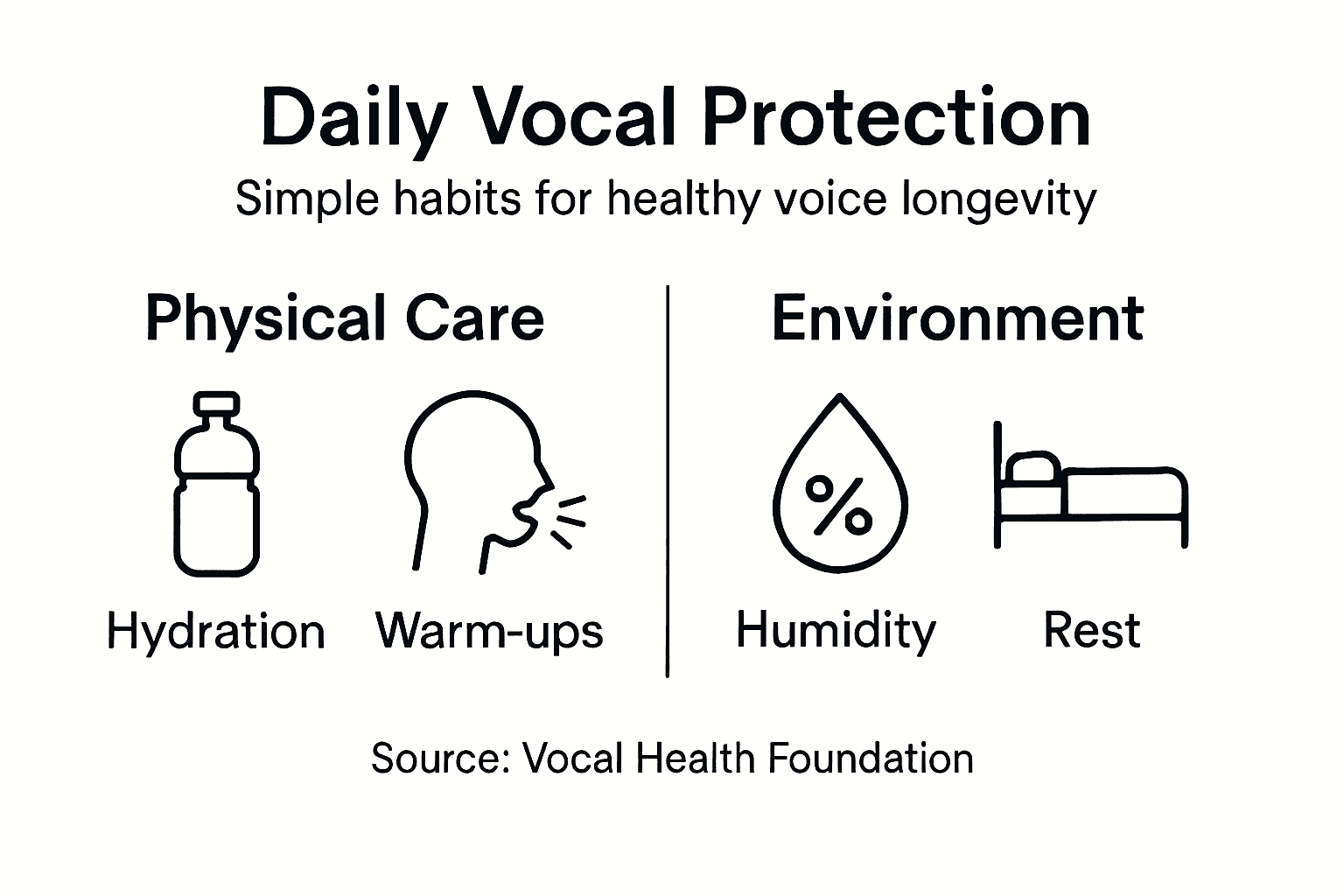
Below is a concise overview of daily habits and their direct benefits for vocal health:
| Habit | Direct Benefit | Suggested Practice |
|---|---|---|
| Hydration | Reduces vocal fold friction | Water, moist environment |
| Controlled Breathing | Improves vocal endurance | Diaphragmatic exercises |
| Environmental Control | Prevents tissue irritation | Air filters, avoid smoke |
| Volume Moderation | Lowers strain risk | Speak at natural pitch |
| Vocal Rest | Promotes repair and recovery | Breaks, silent intervals |
Pro tip: Create a personalized vocal care checklist and post it in your workspace as a daily reminder of your vocal health commitment.
Professional voice users face significant career risks from untreated vocal damage that can permanently alter performance capabilities. Chronic vocal strain transforms from a minor inconvenience into a potential career-ending challenge when performers ignore early warning signs and continue pushing their vocal limits.
The primary risks of neglecting vocal care include:
Vocal disorders can progressively compromise a performer’s fundamental communication abilities, creating cascading challenges that extend beyond immediate performance concerns. The cumulative effect of sustained vocal abuse can lead to irreversible physiological changes, making prevention dramatically more cost-effective and strategically important than reactive treatment.
Pro tip: Schedule quarterly vocal health assessments with a professional to catch and address potential issues before they become serious complications.
Natural vocal recovery strategies emphasize holistic healing approaches that prioritize gentle, non-invasive interventions to support vocal cord restoration. Understanding these strategies can help performers quickly address vocal strain and prevent long-term damage.
Essential natural recovery techniques include:
Herbal interventions can effectively reduce vocal cord inflammation when applied with professional guidance, offering singers and performers targeted relief without harsh chemical treatments. The key is understanding each remedy’s specific therapeutic mechanism and applying it strategically to support natural healing processes.
Pro tip: Keep a vocal recovery kit with herbal teas, honey, a small humidifier, and a notebook to track your vocal healing progress.
The article highlights major challenges like vocal strain, hoarseness, and long-term damage that can threaten your career and quality of life. If you want to maintain vocal health by reducing strain, managing hydration, and supporting recovery naturally then exploring specialized products and remedies can make all the difference. Our range of carefully crafted Singer Enhancements - TMRG Solutions offers herbal sprays, oils, and supplements designed to boost vocal resilience and restore tone.

Take control of your vocal future today by choosing solutions backed by over 25 years of expertise and trusted by professional vocal coaches and medical specialists. Visit All Products - TMRG Solutions to find the right natural remedies for your unique needs. For issues related to phlegm and mucous build-up that can interfere with voice clarity, check out our targeted Phlegm and viscous mucos - TMRG Solutions collection. Protecting your voice starts now with simple steps and expert support at https://tmrgsolutions.com.
The most common types of vocal damage include vocal nodules, vocal polyps, muscle tension dysphonia, laryngitis, and vocal cord paralysis. Each of these conditions can arise from different causes, such as vocal strain or irritation, and can significantly impact voice quality.
Warning signs of vocal health issues include persistent hoarseness lasting more than two weeks, sudden changes in vocal pitch or quality, pain while speaking, reduced vocal range, and difficulty swallowing. Recognizing these signs early can help prevent permanent damage.
To protect your voice daily, focus on maintaining hydration, practicing proper breathing techniques, managing your environment to reduce exposure to irritants, speaking at an appropriate volume, and allowing for vocal rest and recovery periods.
Regular vocal health screenings are crucial for early detection of potential vocal damage. These assessments help identify issues before they develop into serious complications, allowing for effective treatment and maintaining vocal performance over time.
