Your Cart is Empty


TL;DR:
- Not all throat sprays work the same way — and using the wrong one for your symptoms can slow down your recovery. This guide helps singers choose the right throat spray based on exactly what they’re experiencing: mucus, dryness, inflammation, acid reflux, or general soreness.
The best throat spray for singers is the one that targets your specific symptom, whether that is acute pain, persistent dryness, or irritating cough, because no single spray fits all vocal needs. Throat sprays used in vocal care fall into two broad clinical categories: anesthetic sprays containing phenol or benzocaine, and demulcent sprays built on herbal or glycerin bases. Products like Chloraseptic, Vocal Eze, Clear Voice, Entertainer’s Secret, and Singer’s Saving Grace each serve a distinct purpose. Understanding which category matches your symptoms is the first and most important step in effective singer throat care.
The answer depends entirely on what your throat is telling you. OTC sprays provide temporary relief but do not treat the underlying cause of your vocal discomfort. That distinction matters more for singers than for anyone else, because performing on a masked or numbed injury can turn a minor strain into a serious vocal fold problem.
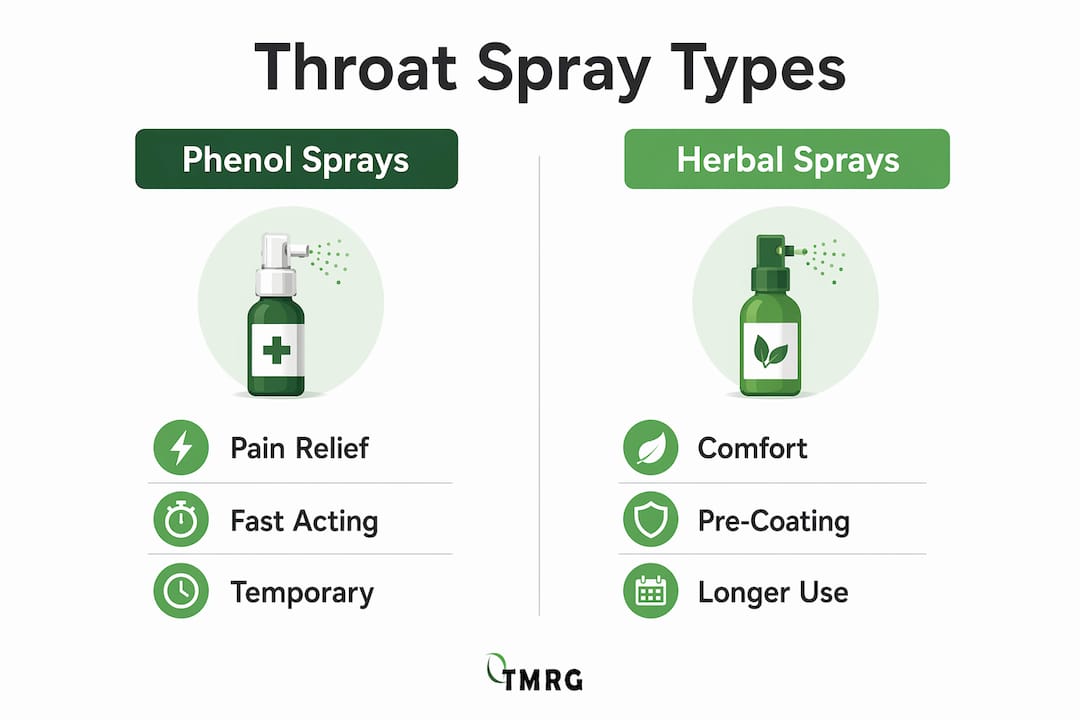
Phenol-based sprays like Chloraseptic deliver fast numbing action by temporarily blocking pain receptors in the throat tissue. Glycerin-based sprays like Vocal Eze coat the mucosal lining of the throat, reducing friction and dryness without any numbing effect. Herbal sprays like Clear Voice use licorice root and slippery elm bark to soothe and hydrate tissue. Each approach works through a different mechanism, and each is appropriate for a different situation.
The practical takeaway is this: if you are in acute pain before a performance, a phenol spray addresses that symptom directly. If your throat feels dry and tight during rehearsal, a demulcent or herbal spray is the better tool. Matching the spray to the symptom is the core principle of smart throat spray recommendations for vocal performers.
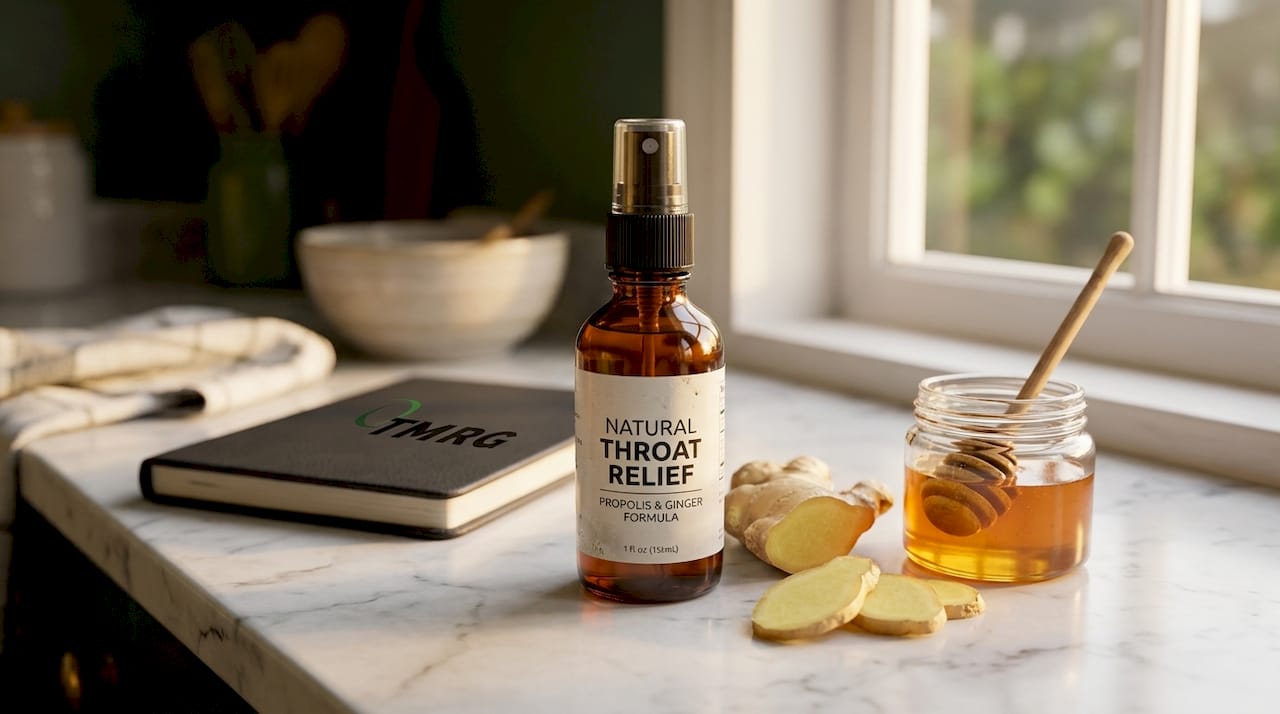
Singers deal with a narrower but more consequential set of throat symptoms than the general public. Vocal fold health depends on precise tissue hydration, mucosal integrity, and freedom from inflammation. The four most common complaints are pain or swelling, dryness and irritation, post-nasal drip, and persistent cough.
Here is how spray ingredient categories address each:
Pain and swelling: Phenol sprays (Chloraseptic) and benzocaine sprays numb the throat tissue, reducing the sensation of pain. This is useful for acute soreness but carries real risk if overused.
Dryness and irritation: Glycerin-based sprays like Vocal Eze and herbal sprays like Clear Voice coat the throat lining. Licorice root and slippery elm create a protective film that retains moisture and reduces friction during phonation.
Cough and tickle: Demulcent sprays reduce the irritation that triggers coughing reflexes. Entertainer’s Secret and Singer’s Saving Grace use similar herbal formulations to calm the mucosal surface.
General vocal fatigue: No spray directly treats fatigue. Hydrating sprays can reduce the sensation of tiredness in the throat, but actual vocal fold fatigue requires rest, not a spray.
The critical limitation across all categories is the same: sprays relieve symptoms but do not cure the condition causing them. A singer who uses a numbing spray to push through rehearsal with a strained voice is not protecting the instrument. The spray is masking a signal the body is sending for a reason.
Pro Tip: Apply a demulcent or herbal spray 15 to 20 minutes before a rehearsal or performance to pre-coat the throat tissue. This gives the active ingredients time to settle on the mucosal surface before your vocal folds begin working at full intensity.
Safety is not a footnote when it comes to throat sprays for vocal performers. The risks are real, and the consequences of misuse fall directly on the voice you depend on.
Follow these usage principles carefully:
Respect the dosing interval. Phenol sprays are dosed at one spray every two hours for adults and children over three. Exceeding this frequency does not increase relief. It increases the risk of tissue irritation and systemic side effects.
Understand the benzocaine risk. Benzocaine sprays carry a rare but serious risk of methemoglobinemia, a condition that reduces the blood’s ability to carry oxygen. Use no more than four times daily and avoid use in young children entirely.
Allow contact time. After spraying, let the medication remain on the tissue for the recommended period before swallowing. This maximizes local effect and reduces systemic absorption.
Never use a spray to perform through pain. Masking throat pain with a numbing spray can cause you to miss the escalation of a vocal injury. Pain is information. Silencing it without addressing the source is how minor strains become nodules or hemorrhages.
Test on a non-performance day. Before relying on any spray before a show, use it on a rest day first to observe how your throat responds. Some singers experience increased dryness or mild irritation from certain formulations.
Consult a professional if symptoms persist. Hoarseness or discomfort lasting beyond two weeks requires evaluation by an ENT or voice specialist, not a larger dose of spray.
Pro Tip: Keep a small log of which sprays you use, when you use them, and how your voice responds in the following 24 hours. Patterns emerge quickly, and you will identify which products genuinely support your voice versus those that offer short-term relief at a longer-term cost.
The market for vocal health sprays ranges from standard pharmacy products to singer-specific formulations. Here is a direct comparison of the most widely used options.
| Spray | Active ingredients | Primary benefit | Best use case | Precautions |
|---|---|---|---|---|
| Chloraseptic | Phenol 1.4% | Fast pain numbing | Acute sore throat before performance | Max every 2 hours; avoid overuse |
| Vocal Eze | Glycerin, honey, herbs | Coating and moisture | Dryness and vocal fatigue | Not for acute pain |
| Clear Voice | Licorice root, slippery elm | Soothing and hydration | Rehearsal comfort and dryness | Herbal; check for allergies |
| Entertainer’s Secret | Sodium carboxymethylcellulose | Mucosal hydration | Dry environments, travel | Not a pain reliever |
| Singer’s Saving Grace | Herbal blend | Gentle soothing | Light irritation, maintenance | Not for acute infection |
Pharmacist rankings place Chloraseptic Max Strength at the top for pain relief, with Cepacol and Vicks VapoCool also rated highly. Those rankings reflect general sore throat relief, not singer-specific vocal care. A singer with dry vocal folds before a two-hour concert needs Entertainer’s Secret or Vocal Eze, not Chloraseptic.
The distinction between pain relief sprays and comfort sprays is the most important comparison a singer can make. Phenol and benzocaine products are pharmaceutical tools for symptom suppression. Glycerin and herbal products are maintenance tools for vocal comfort. Using the wrong category for your situation produces either inadequate relief or unnecessary pharmacological risk.
For a deeper look at how these products stack up in real performance conditions, the expert spray comparison from Tmrgsolutions breaks down ingredient profiles and singer feedback in practical detail.
Throat sprays work best as one layer of a broader vocal care approach. Relying on them alone is like tuning one string on a guitar and ignoring the rest.
Hydration: Vocal fold lubrication depends on systemic hydration. Drinking water does not directly wet the vocal folds, but it maintains the thin fluid layer that allows them to vibrate without friction. Aim for consistent water intake throughout the day, not just before performing.
Humidification: Balanced environmental humidity supports vocal fold surface health, but excessive humidity can worsen allergies and increase mucus production. A room humidifier set to 40 to 50 percent relative humidity is the target range, not maximum output.
Voice rest: Scheduled silence is not a luxury for professional singers. It is a recovery tool. Even 30 minutes of complete vocal rest between rehearsals reduces cumulative strain on the vocal folds.
Warmup and cooldown: Warming up the voice before heavy use prepares the vocal folds for the mechanical demands of singing. Cooling down after performance helps reduce post-use inflammation. Both practices reduce the frequency with which you will reach for a spray.
Professional monitoring: Persistent vocal discomfort warrants a visit to an ENT or voice specialist. Recurring hoarseness, loss of range, or pain during phonation are not problems a spray can solve. They are signals that require diagnosis.
You can find a structured approach to these practices in the complete vocal care guide from Tmrgsolutions, which covers exercises and habits that support long-term vocal health alongside spray use.
The best throat spray for singers is always symptom-specific: phenol sprays address acute pain, while glycerin and herbal sprays serve dryness, coating, and comfort needs.
| Point | Details |
|---|---|
| Match spray to symptom | Use phenol for acute pain and herbal or glycerin sprays for dryness and comfort. |
| Respect dosing limits | Phenol sprays are limited to every two hours; benzocaine to four times daily maximum. |
| Never mask injury | Numbing a painful throat to perform can escalate a minor strain into serious vocal damage. |
| Hydration and rest matter | Sprays work best alongside consistent hydration, humidification, and scheduled voice rest. |
| Seek professional help | Hoarseness or discomfort lasting more than two weeks requires ENT evaluation, not more spray. |
I have worked with singers at every level, from weekend performers to touring professionals, and the pattern I see most often is this: singers reach for a spray when they should be reaching for rest. The spray feels like a solution because it produces an immediate sensation of relief. That sensation is real. The solution is not.
The sprays I trust most for singers are the ones that support the voice without suppressing its warning signals. Clear Voice and Entertainer’s Secret earn that trust because they hydrate and soothe without numbing. You can use them before a performance and still feel what your voice is telling you. Chloraseptic has its place, but that place is acute pain management, not routine pre-show preparation.
My practical advice is to test any new spray on a day when you are not performing. Observe how your throat feels two hours later, and again the next morning. Some formulations that feel good immediately cause increased dryness the following day. You need that data before you are standing in the wings thirty minutes before curtain.
The singers who protect their voices longest are not the ones who find the best spray. They are the ones who manage hoarseness early, treat sprays as a single tool in a larger kit, and consult a voice specialist before a small problem becomes a career-altering one. A spray is a bridge between discomfort and performance. It is not a substitute for the vocal care that makes performance sustainable.
— Golan

Throat sprays address the symptom. Tmrgsolutions addresses the voice. With 25 years of expertise in vocal health, Tmrgsolutions has developed a range of voice therapy kits that combine herbal formulations, targeted exercises, humidification guidance, and educational resources into a single system for singers, actors, and speakers. Whether you are managing recurring hoarseness, recovering from vocal fatigue, or building long-term vocal resilience, the kits are structured to work alongside your spray routine, not replace it. The premium therapy kit is designed specifically for professional performers who need advanced tools and a complete recovery protocol. Explore the full range and find the right fit for your vocal needs.
Herbal and glycerin-based sprays like Entertainer’s Secret or Clear Voice are the safest pre-performance options because they soothe and hydrate without numbing the throat. Numbing sprays like Chloraseptic can mask pain signals that indicate vocal injury.
Phenol sprays are approved for use every two hours in adults and children over three. Exceeding this frequency increases the risk of tissue irritation and side effects without providing additional relief.
Throat sprays relieve specific symptoms like pain and dryness, which can allow a singer to perform more comfortably. They do not improve vocal technique, increase range, or treat the underlying causes of vocal strain.
Hoarseness or throat discomfort that persists beyond two weeks requires evaluation by an ENT or voice specialist. Continued spray use without professional assessment risks missing a diagnosable condition like vocal nodules or laryngitis.
Natural sprays like Clear Voice and Singer’s Saving Grace are effective for dryness, coating, and mild irritation, but they do not match the pain-relieving power of phenol or benzocaine sprays. The right choice depends on the symptom, not a preference for natural versus pharmaceutical ingredients.
7 Best Throat Sprays for Singers: Clear Voice, Powerful Results - TMRG Solutions
Throat spray for singers: Enhance your vocal health naturally - TMRG Solutions
Unlock Your Best Performance: Natural Throat Sprays for Singers - TMRG Solutions
Best throat sprays for singers: protect and enhance your voice - TMRG Solutions
