Your Cart is Empty


Keep hotel room humidity between 40% and 60%, with 45–55% ideal for working voices, and act fast: run a cool-mist travel humidifier by the bed overnight or take a short nebulizer session before you sound-check. Clean the device daily and skip humidification altogether in a room that already smells musty or shows condensation.
TL;DR:
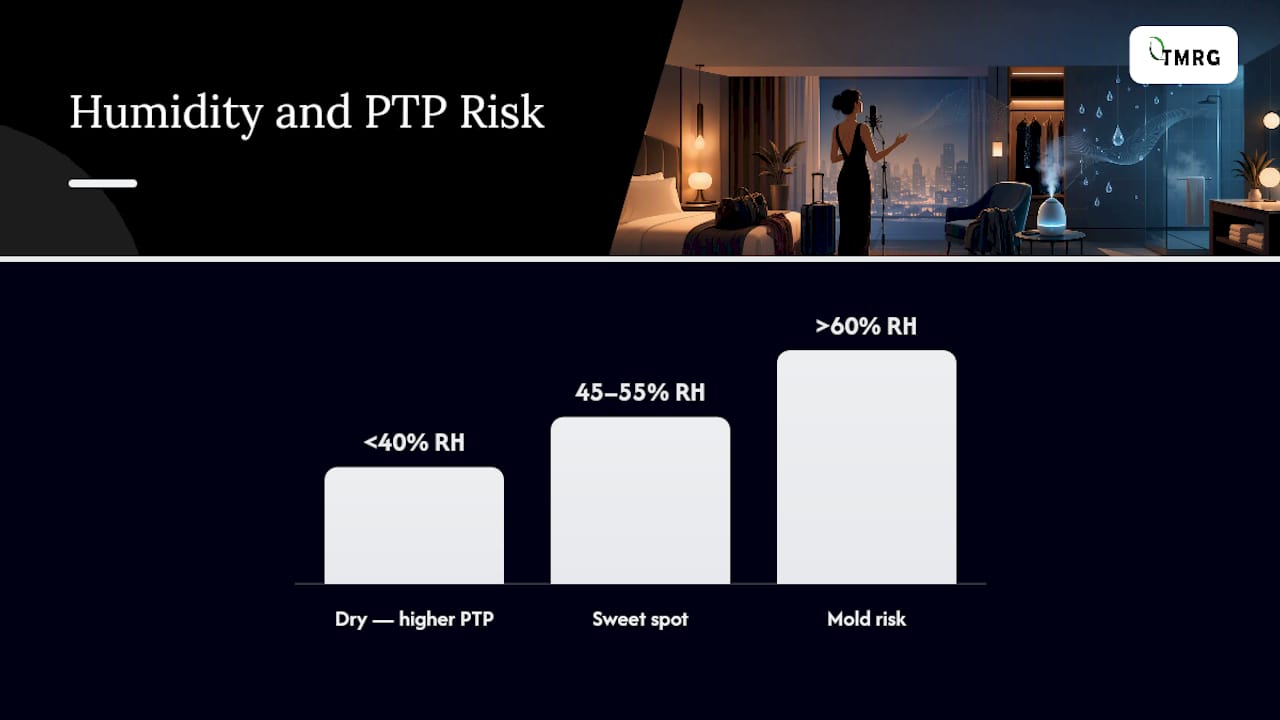
- Maintaining hotel room humidity between 45 and 55 percent prevents vocal fatigue and reduces phonation threshold pressure, unlike rooms below 40 percent or above 60 percent.
- Dry air from airplane cabins, high HVAC use at night, and mouth breathing during sleep significantly increase dehydration risks and damage vocal folds during travel.
- Using a cool-mist humidifier overnight is the most effective long-term solution, complemented by targeted nebulizer sessions before performances for immediate hydration.
- Check room humidity immediately after check-in with a hygrometer, and avoid humidifying rooms with signs of dampness, condensation, or mold to prevent worsening conditions.
- Regular cleaning of humidifiers and prioritizing basic tools like a hygrometer and humidifier outweigh reliance on advanced gadgets or last-minute improvisations.
The standard target range for indoor air quality is moderate humidity, but performers usually prefer a slightly narrower band that gives the vocal folds enough surface moisture to vibrate efficiently without pushing the room toward mold-friendly conditions.
The reason humidity matters so much comes down to phonation threshold pressure, or PTP: the minimum air pressure your lungs need to push through to start your vocal folds vibrating. When the mucosal layer coating your vocal folds dries out, PTP climbs, and your voice has to work harder just to produce the same sound. Research on superficial laryngeal dehydration and humidification shows this rise in PTP is measurable in controlled studies, and it reverses with humidification.
You cannot manage what you do not measure. A pocket hygrometer, roughly the size of a keychain, gives you an actual reading instead of a guess, and most read accurately within a minute of being unpacked. Smartphone weather apps that report “local humidity” reflect outdoor conditions, not your room, so they are not a substitute.
Pro Tip: Check the hygrometer reading as soon as you check in. Many hotel rooms are often dry due to aggressive HVAC systems, and you will want to start correcting for it before you even unpack.
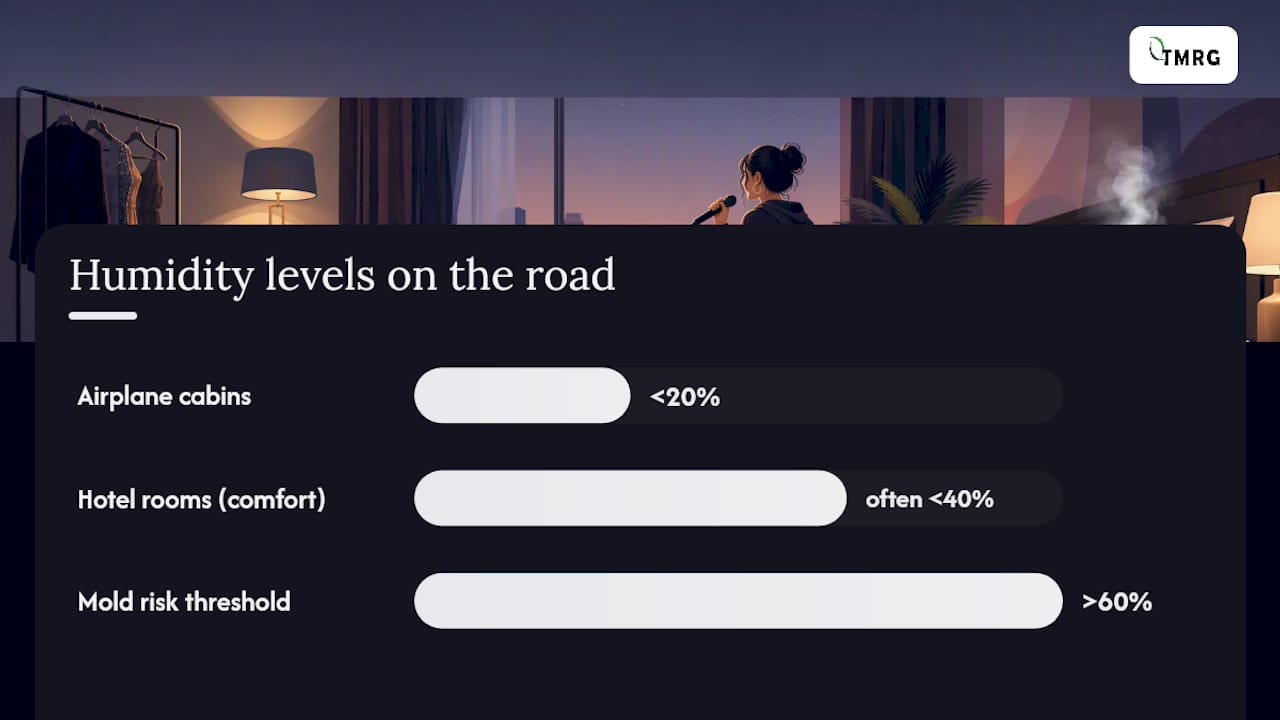
Dry air raises your phonation threshold pressure, and the symptoms show up faster than most performers expect: a scratchy quality after twenty minutes of talking, more frequent throat clearing, and a voice that feels “thin” by the second half of a rehearsal. None of that is dramatic on its own, but it compounds across a multi-city tour.
Three travel scenarios accelerate this dehydration in particular:
Hotel rooms are frequently drier than the buildings performers work in during the day. Reporting on hotel indoor air notes that many hotel rooms sit well below the 40% comfort threshold, largely because HVAC systems are tuned for temperature, not moisture.
The opposite problem exists too, though it is rarer on the road. Sustained humidity above 60% creates the conditions mold needs to establish itself, and mold exposure brings its own respiratory irritation that can undo any vocal benefit you were chasing. The goal is a band, not a ceiling to push past.
Speed matters more than perfection here. Work through these in order of how fast they help:
For your travel kit, pack a sub-500-gram cool-mist humidifier, a pocket nebulizer with saline, a keychain hygrometer, a small bottle of distilled water, and a cleaning wipe or two. Distilled water matters because tap water minerals build up inside humidifier tanks and get aerosolized into the air you breathe.
None of this replaces systemic hydration. Drinking water throughout the day and pacing your voice between engagements does more for your vocal health long-term than any device can. Humidity control handles the surface; you still have to handle the rest.
Each tool solves a different problem, and picking the wrong one wastes the small window you have before a show.
Cool-mist humidifiers change the humidity of an entire room over several hours. They are the right call for overnight use and for any stretch where you are in the room for a while. Clinicians consistently recommend cool-mist over hot-steam units for hotel settings because there is no burn risk if a device tips or a child, or a bleary-eyed touring musician, bumps into it at 2 a.m.
Ultrasonic nebulizers deliver saline mist directly to the vocal fold surface in a matter of minutes. They do not touch room humidity at all, but they are the fastest way to rehydrate before you walk on stage. Voice therapy guidance frames this as a layered approach: humidifier for the baseline, nebulizer for the moment that matters.
Steam inhalation works, but it carries real burn risk and is genuinely impractical in most hotel bathrooms, which lack ventilation and turn into saunas fast. Reserve it for when you traveled with nothing else and need something in the next ten minutes.
Pro Tip: Whichever device you use, clean it daily. A dirty humidifier tank does not just fail to help, it can aerosolize bacteria and mold spores directly into the air you are trying to breathe cleanly. Rinse the tank, wipe the base, and let it air-dry before refilling.
Push past 60% RH and you trade one problem for another. Dust mites and mold both thrive above that threshold, and the EPA’s guidance on indoor mold is clear that sustained dampness is what allows mold colonies to establish, not a single humid night.
Check for these signs before you even plug in a humidifier:
If any of those show up, do not run a humidifier in that room. Call the front desk, request a different room, and ventilate if you can crack a window. Running a device in a room that is already damp adds mold exposure risk on top of whatever caused the dampness in the first place.
For the devices themselves: change the water daily, never let standing water sit for more than 24 hours, and stick to distilled water so you are not aerosolizing mineral dust along with moisture.
A humidity fix works best inside a routine, not as a one-off panic move. At night, pair a cool-mist humidifier placed near your pillow with a glass of water on the nightstand and, if your throat feels tight, a topical spray or drops before you sleep.
Before a show, a short nebulizer session or a quick spray application handles the surface hydration a humidifier cannot deliver fast enough, followed by a light vocal warmup and pacing your voice through soundcheck rather than pushing full volume immediately. This layered approach reflects what clinicians recommend for performers: environment for the baseline, targeted treatment for the moment. It is also what medical professionals working with performers tend to reinforce when they build a touring plan for a client.
Most advice on this topic treats humidity like a one-time fix: buy a humidifier, problem solved. That misses the actual failure point, which is that touring performers forget to pack it, forget to clean it, or run it in a room that is already damp because nobody checked first.
The research backs a layered routine over any single device, and the evidence for hydration treatments is honest about its limits. Studies on vocal fold hydration consistently find the benefits are real but often modest and short-lived, which means humidity control supports your voice rather than fixing damage that is already done. That is a different promise than most marketing around this topic makes.
What gets overlooked most is the hygrometer. Performers will spend money on a nebulizer and skip the ten-dollar device that tells them whether the room even needs one.
Prioritize the cheap, boring tools first: a hygrometer to know your baseline, a cool-mist humidifier to fix it overnight, and the discipline to clean both regularly. The advanced tactics only matter once the basics are actually happening every night on tour.
— Golan
Humidifying the room handles the environment. Your vocal folds still need direct support, especially on a tour schedule where recovery time between shows is thin. That is where a targeted product routine closes the gap that ambient humidity alone cannot, and where voice therapy for muscle tension dysphonia can provide clinical support.
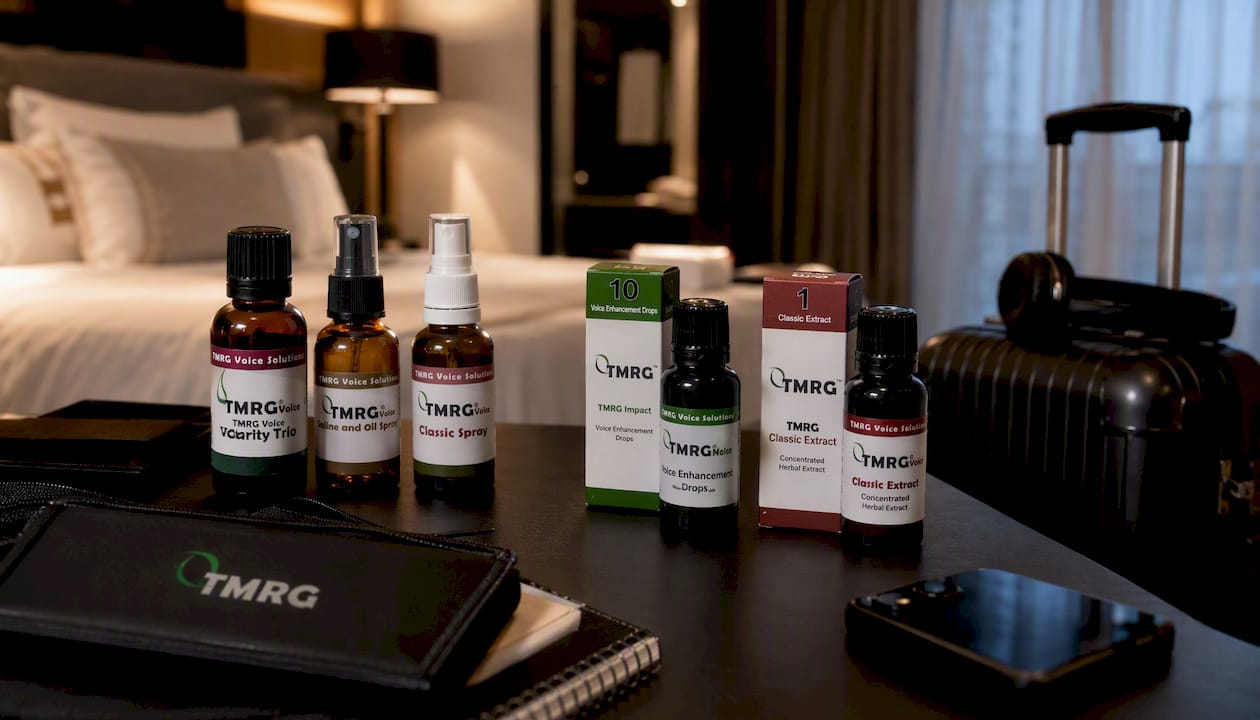
For immediate pre-show surface hydration, the TMRG Shine Bright Classic Voice Recovery Spray pairs naturally with a short nebulizer session, giving you fast relief right before you walk on stage. If you want drops in your kit instead, the TMRG Loud & Clear Classic Voice Recovery Drops and the TMRG Protection Voice Synergy Oil both handle the same job with a different delivery method. For nightly and systemic support alongside your humidifier, the TMRG Safe & Sound Voice and Throat Supplement Powder covers what environmental humidity cannot: internal hydration and throat comfort that build over the course of a tour.
If you want a single consolidated kit rather than assembling pieces yourself, the TMRG Voice Therapy Kit Standard bundles a nightly and pre-show routine into one travel-ready package, while the TMRG Voice Therapy Kit Basic covers the essentials if you are packing light. None of these replace humidity control. They fill in what a humidifier cannot reach. Check the current kit options and build a travel routine before your next tour date.
Yes, humidity well above the 40 to 60% comfort range creates conditions where mold and dust mites thrive, according to EPA guidance. It offers no added vocal benefit over the 45 to 55% range performers should target.
Adding a short nebulizer session with saline mist gives faster, more targeted relief than raising room humidity alone.
Yes, sustained humidity above 60% is past the point where mold growth and dust-mite activity increase, based on EPA indoor air guidance. If a room feels that damp, check for condensation and musty odors, and request a different room rather than trying to manage it.
A damp towel over an air vent adds some ambient moisture, but it is a weak, short-term fix compared to a cool-mist travel humidifier running overnight. Use it only when you have no device packed and need something better than nothing.
