Your Cart is Empty


TL;DR:
- Consistent vocal hygiene practices can prevent most voice disorders and prolong a professional voice career.
- Hydration, avoiding irritants, proper warm-up, and rest are essential for voice health.
- Stress and improper habits can cause damage even if all other routines are followed.
Your voice is your instrument, your livelihood, and sometimes your entire identity as a performer. Yet persistent hoarseness after a heavy show, a scratchy throat before auditions, or that slow creep of vocal fatigue are problems most singers and actors quietly accept as unavoidable. They are not. Research confirms that consistent, daily vocal hygiene practices can prevent the majority of voice disorders that derail professional careers. This guide breaks down five evidence-backed steps you can apply immediately, whether you are preparing for a tour, navigating a demanding run of shows, or simply trying to protect your voice for the long haul.
| Point | Details |
|---|---|
| Hydration is vital | Regular water intake and humidified air directly boost vocal performance. |
| Avoid harmful behaviors | Eliminate throat clearing, smoking, whispering, and treat reflux for safer vocal use. |
| Manage vocal load smartly | Use amplification and micro-rests to prevent fatigue and injury during performances. |
| Daily warm-up and recovery | Consistent warm-up, cool-down, and sleep routines set a strong foundation for voice health. |
| Rest is non-negotiable | Voice professionals need regular rest and recovery periods to avoid long-term damage. |
Vocal hygiene is not a single behavior. It is an entire framework of daily choices that protect your vocal folds (the two muscular bands inside your larynx that produce sound) from unnecessary stress, injury, and disease. Think of it like dental hygiene: you do not wait for a cavity to start brushing. You protect consistently because prevention is far less painful, and far less expensive, than repair.
The urgency here is real. Up to 46% of singers develop voice disorders at some point in their careers, according to research by vocal disorder specialists. That is nearly half of all professional voice users. The risks are not limited to one genre or style. Whether you are a classical soprano or a rock belter, injury rates remain comparable when poor technique collides with high demands.
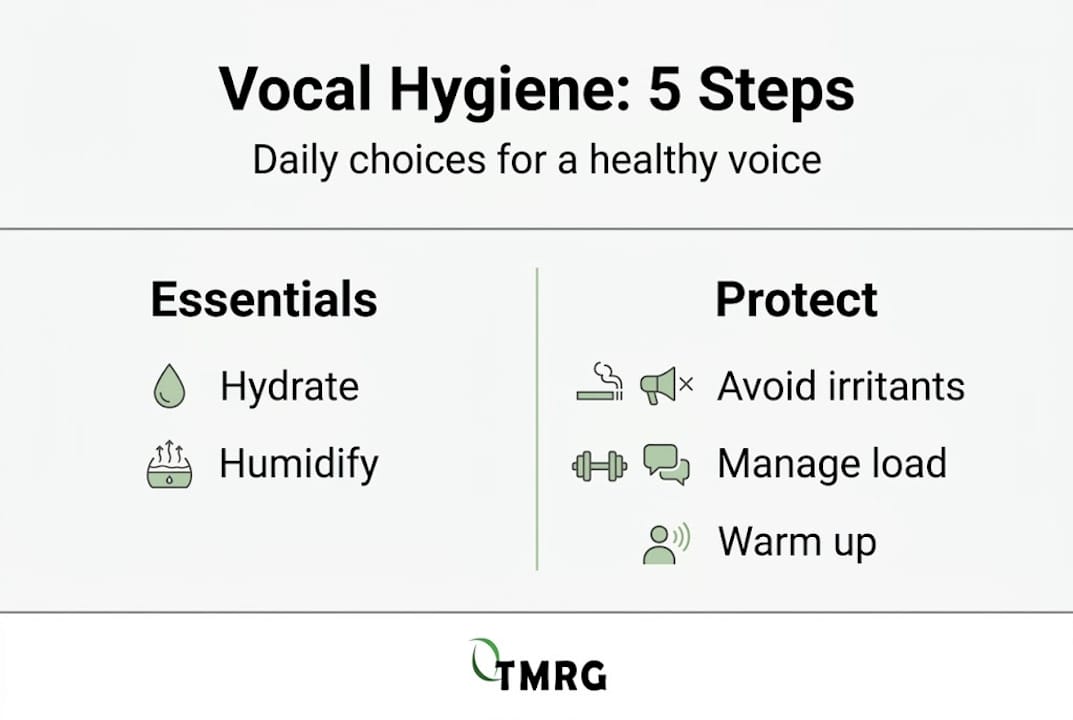
Some symptoms are easy to dismiss. A little hoarseness after a long rehearsal feels normal. But hoarseness lasting over two weeks is a clinical signal that something more serious may be developing and requires professional evaluation. Early detection of lesions, nodules, or polyps can mean the difference between voice rest and surgery.
Here is a quick comparison of what neglecting versus practicing vocal hygiene looks like in real life:
| Risk (without vocal hygiene) | benefit (with vocal hygiene) |
|—|—|
| vocal nodules and lesions | smooth, resilient vocal folds |
| chronic hoarseness | consistent, reliable tone quality |
| acid reflux damage | protected laryngeal tissue |
| early career interruption | sustained long-term performance |
| fatigue after short sessions | greater vocal stamina and range |
“Your voice is a physical instrument. Like any instrument, it needs tuning, care, and protection. Most singers learn this the hard way. You do not have to.”
The vocal health maintenance steps that follow in this guide are grounded in clinical research and practical experience from vocal health specialists. Start here, build habits, and your voice will thank you at every performance.
Key warning signs to watch for:
Water is the single most accessible tool you have for vocal health. Your vocal folds vibrate hundreds of times per second when you sing. That process generates heat and friction. Without adequate hydration, the mucous membrane covering your folds becomes thick and sticky, increasing the effort required to produce sound and raising injury risk significantly.
You should aim for 64 to 128 oz (2 to 4 liters) of water daily, adjusted upward in hot climates, dry environments, or high-output performance days. Do not wait until you are thirsty. By the time thirst kicks in, you are already mildly dehydrated.
| Goal | Target | Common pitfall |
|—|—|—|
| daily water intake | 64 to 128 oz (2 to 4L) | replacing with coffee or tea |
| indoor humidity | 40 to 60% | dry heated/air conditioned rooms |
| pre-performance hydration | 30 to 60 min before | drinking cold water right before |
| caffeine/alcohol limits | minimize or avoid | using both on heavy performance days |
Environment matters just as much as intake. Use a humidifier in your bedroom or practice space, especially in winter when heating systems strip moisture from the air. A target humidity level of 40 to 60% supports healthy vocal fold vibration and reduces morning hoarseness.
Caffeine and alcohol are dehydrants, meaning they pull water from your tissues rather than adding to them. On performance days, both should be minimized. This does not mean you can never have a coffee. It means you should compensate with extra water and time your intake strategically. Your voice care routine tips should factor in these timing details.
Pro tip: Keep a water bottle with volume markings at every rehearsal and show. Log your intake for one week. Most performers discover they are drinking far less than they thought, and the connection to vocal fatigue becomes immediately obvious. Small adjustments here often produce the fastest, most noticeable improvements in voice quality.
Once hydration is in place, your next priority is identifying and eliminating the behaviors and substances that quietly erode your vocal health. Some are obvious. Others are surprisingly counterintuitive.
Here are the most important changes to make:
“Voice disorder research consistently shows that whispering creates more strain on the vocal folds than speaking in a gentle, relaxed voice, especially when the voice is already compromised.”
For throat clearing specifically, use this substitution: sip water, swallow slowly, then produce a gentle cough. This technique moves the irritant without the damaging impact. Most performers who adopt this habit notice a significant reduction in vocal irritation within two to three weeks. See safer vocal behaviors for the full clinical rationale.
Pro tip: Place a glass of water on every music stand, desk, and rehearsal table. Make the sip-and-swallow habit automatic by anchoring it to every break, page turn, or direction from your coach.
You can hydrate perfectly and avoid every irritant and still overload your voice. Managing vocal load means being strategic about how much you ask of your voice and building in structured recovery throughout your day.
The most powerful tool here is amplification. Using a microphone to reduce strain in noisy environments allows you to project without recruiting extra muscular effort from your larynx. Teachers, actors, and coaches who resist microphones often pay the price in chronic fatigue. The data is clear: amplification protects vocal longevity across all voice professions.
| riskier habit | protective alternative |
|—|—|
| shouting over background noise | use a microphone or PA system |
| talking at end of breath | breathe earlier, speak on supported air |
| no breaks during long rehearsals | schedule 60-second silence breaks |
| using gestures only at shows | use gestures throughout rehearsals too |
| powering through vocal fatigue | rest immediately when fatigue appears |
Micro-rests are underused and undervalued. A micro-rest is simply 60 seconds of complete silence during a rehearsal or long speaking day. Think of it as an interval rest for your vocal folds, the same way an athlete rests between sets. These brief pauses allow the tissue to recover, reduce inflammation, and restore vibratory efficiency.
Avoid speaking over background noise whenever possible. When you raise your volume to compete with a loud room, you increase subglottic pressure (the air pressure beneath the vocal folds) well beyond normal levels. Done repeatedly, this pattern is one of the most common causes of vocal nodules. For your step-by-step vocal recovery if you have already overdone it, rest is the first prescription.
Pro tip: Block micro-rests into your rehearsal schedule the way you block musical cues. Use written notes, hand signals, or gesture-based cues to communicate with collaborators during those windows. It protects your voice and trains your ensemble to be more visually responsive.
A cold engine run at full speed breaks down faster. Your vocal folds are no different. Starting with humming, lip trills, and sirens for just one to five minutes before heavy singing or speaking gradually increases blood flow to the laryngeal muscles, improves fold flexibility, and reduces injury risk dramatically.
Here is a simple warm-up sequence you can use before any performance or heavy rehearsal:
Cool-downs matter just as much. After intense use, descending pitch slides and slow, gentle breaths help the vocal folds return to a resting state and reduce next-day soreness. Think of it as stretching after a run.
Long-term recovery, though, is where most professionals fall short. Getting 7 to 9 hours of sleep is not optional. Sleep is when your body repairs micro-tissue damage, including within your larynx. A balanced diet rich in anti-inflammatory foods supports mucosal health. Regular physical exercise builds the respiratory stamina that powers your voice.
Pro tip: Add yoga or a brief meditation session into your post-show routine. Research consistently shows that stress management reduces muscular tension throughout the body, including the intrinsic muscles of the larynx. A calmer nervous system produces a freer, more resonant voice. For deeper support, review peak voice health recovery protocols.
Here is what most vocal hygiene guides skip: you can follow every step correctly and still damage your voice if you ignore the psychological dimension. Many professional singers and actors report that their worst vocal injuries happened during periods of high stress, not high workload. The larynx responds directly to anxiety. When you are stressed, muscles tighten, breath support shortens, and the folds are forced to compensate. The injury is not from singing hard. It is from singing tense.
Another overlooked truth: overdoing healthy habits causes harm too. Some performers steam for so long or warm up so aggressively that they actually inflame tissue they were trying to protect. More is not always better.
“Research on throat clearing describes it as sandpaper on your vocal folds. Every unnecessary clearance is a small injury. Done dozens of times a day, it becomes a significant one.”
Voice rest is not a sign of weakness or failure. It is recovery. Athletes accept rest as mandatory. Voice professionals often resist it out of guilt or professional pressure. That resistance is where the real damage begins. Trust the process, protect the silence, and your voice will perform when it counts.
Now that you have a complete picture of vocal hygiene, including the steps most guides ignore, the next move is supporting your practice with the right tools. At tmrgsolutions.com, we have spent 25+ years developing natural solutions specifically for singers, actors, and vocal professionals dealing with hoarseness, fatigue, and strain.

Our basic voice therapy kit is an excellent starting point for anyone building a daily hygiene routine. If you have more demanding performance schedules, the voice therapy kit for singers includes expanded support for recovery and hydration. For professionals managing complex or chronic issues, the premium voice therapy kit offers our most complete, clinically aligned solution. Every kit is designed to complement the steps in this guide, not replace them.
Singers should aim for 64 to 128 oz (2 to 4 liters) of water per day, adjusted upward for activity level, climate, and performance demands.
No. Voice disorder research consistently shows that whispering strains folds more than speaking in a gentle, relaxed voice, especially when hoarse.
Persistent hoarseness lasting over two weeks, pain during speaking or singing, or any sudden change in range or tone quality requires prompt professional evaluation.
Get 7 to 9 hours of sleep, follow a balanced anti-inflammatory diet, practice yoga or meditation to reduce tension, and schedule complete voice rest periods throughout the following day.
