Your Cart is Empty


Your voice is your most valuable professional asset, and yet most singers and voice professionals only think about vocal health when something goes wrong. Vocal disorders affect 6-23% of the general population, with lifetime incidence climbing to 50-80% among professional voice users like singers and teachers. That means the odds are not in your favor if you are waiting for symptoms before taking action. This guide gives you science-backed strategies, natural remedies, and daily habits to protect your voice before problems ever start.
| Point | Details |
|---|---|
| Risk is high for professionals | Up to 80% of singers and educators experience vocal problems in their career. |
| Daily habits matter most | Hydration, technique, and rest prevent issues better than treating them later. |
| Personalized prevention is key | Factors like gender, medical history, and workload affect your vocal care needs. |
| Natural remedies support, not replace | Use honey, herbal teas, and steam as adjuncts but watch for individual contraindications. |
| Annual voice screenings advised | Yearly checks help catch subtle problems before they impact your voice or livelihood. |
Most vocal problems do not appear overnight. They build quietly over months or years of accumulated strain, poor hydration, and inconsistent technique. By the time hoarseness or fatigue becomes noticeable, tissue damage may already be underway. That is why a preventative approach is not optional for professional voice users. It is career insurance.
Vocal disorder prevalence reaches 42.3% in some studies of active voice users, a number that should stop any singer or educator in their tracks. The risks of ignoring early warning signs include:
For singers, the stakes are especially high. Explore vital strategies for vocal longevity and understand how voice care for educators applies across professional settings.
“The most dangerous vocal problems are the ones you do not feel yet. Undiagnosed strain accumulates silently until the damage becomes impossible to ignore.”
Review vocal health facts to see how career longevity is directly tied to consistent, strategic prevention rather than reactive treatment.
Now that we have established why avoiding vocal problems is essential, let us explore the science behind how preventative care works.
Your vocal folds are two small, delicate bands of muscle and mucous membrane inside your larynx. They vibrate hundreds of times per second to produce sound. That makes them extraordinarily sensitive to dehydration, overuse, and poor technique.
Hydration keeps vocal folds moist and flexible, reducing friction and strain during phonation (the act of producing sound). Without adequate fluid, the folds become stiff and more prone to micro-injury. Warm-ups and cool-downs build tissue resilience over time, much like stretching protects muscles before exercise.
Diaphragmatic breathing, where airflow is driven by the diaphragm rather than the throat, reduces the mechanical load on your vocal folds. This is the foundation of efficient, sustainable voice production. When you breathe from your core, your voice carries further with less effort.
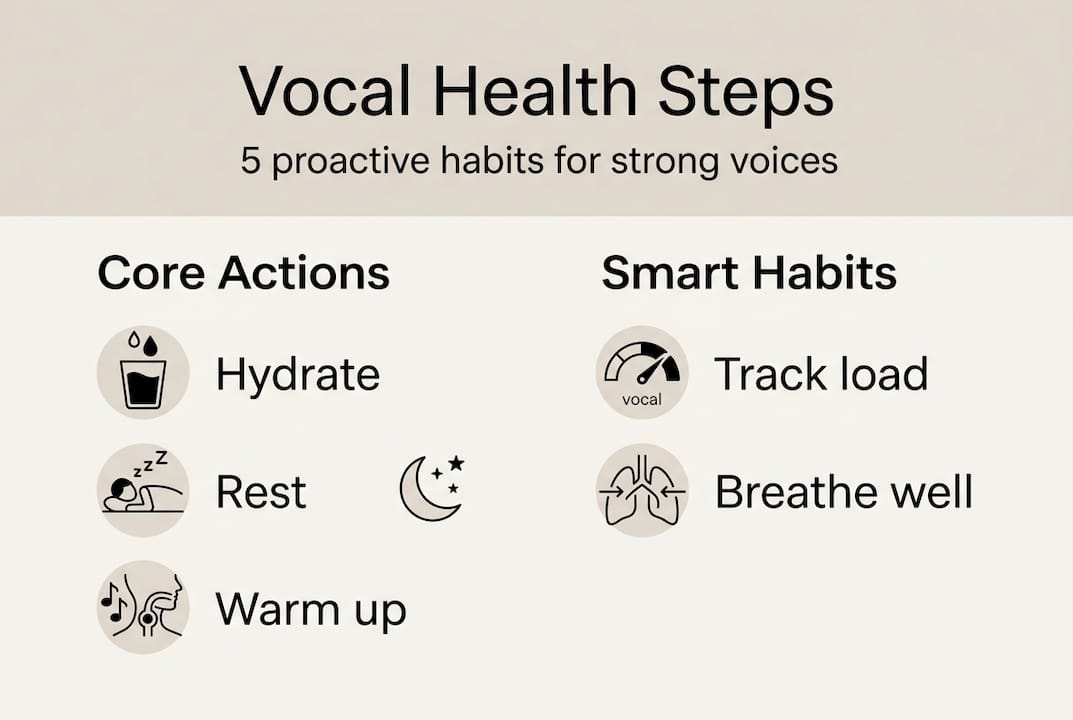
| Preventative action | Recommended frequency | Biological effect |
|---|---|---|
| Hydration | 8-10 glasses of water per day | Keeps vocal folds moist and reduces friction |
| Vocal warm-up | Before every session | Increases blood flow and tissue flexibility |
| Vocal cool-down | After every session | Reduces post-performance inflammation |
| Vocal rest | At least 1-2 hours daily | Allows tissue recovery and repair |
| Workload management | Weekly planning | Prevents cumulative overload |
Vocal hygiene practices including hydration, rest, and workload regulation based on the acute-to-chronic load ratio are foundational to long-term vocal health. This ratio compares your recent vocal demand to your average demand over time, helping you avoid sudden spikes that cause injury.
For a deeper look at fluid intake, read our vocal cord hydration guide. And if you are already noticing tension or fatigue, our guide on preventing vocal strain walks you through targeted solutions.
Pro Tip: Schedule vocal health breaks into your rehearsal plan, not just your performance schedule. Even five minutes of silence every hour can meaningfully reduce cumulative strain.
Learn more about the power of vocal health and why it matters across all stages of a singing career.
Armed with an understanding of why these methods help, let us see how risk varies and which factors require extra attention.
Not all voice users face the same level of risk. Your profession, biology, environment, and stress levels all shape how vulnerable your voice is to damage.
| Profession | Primary risk factors | Key concern |
|---|---|---|
| Singers | High vocal demand, performance pressure | Nodules, hemorrhage, fatigue |
| Teachers | Daily extended use, noisy environments | Chronic hoarseness, polyps |
| Broadcasters | Long sessions, microphone reliance | Muscle tension dysphonia |
| Actors | Projection demands, emotional intensity | Strain, nodules |
Females face higher risk of voice disorders due to hormonal influences on vocal fold tissue. Hearing loss increases vocal effort because speakers unconsciously raise their volume. Stress and anxiety cause laryngeal muscle tension, which tightens the voice and reduces range. Environmental irritants like smoke, dry air, and chemical fumes inflame the vocal folds directly.
Factors that amplify your risk include:
For singers preparing for demanding periods, read our tips for strained vocal effort and our guide on maintenance during intense effort.
Pro Tip: Keep a vocal workload journal for two weeks. Log your speaking and singing hours, hydration, sleep, and how your voice feels each day. Patterns will emerge that reveal your personal risk triggers.
Now, let us translate these risk factors into actionable preventative strategies you can implement every day.
Consistency is what separates singers who sustain long careers from those who burn out early. These habits are not complicated, but they require daily commitment.
Techniques worth building into your routine:
Proactive strategies like hydration, hygiene, and technique training enable career longevity by preventing the kind of injuries that derail professional singers. Annual voice screenings are the often-missed secret to early detection. A laryngologist (a doctor specializing in the larynx) can identify early tissue changes before they become serious problems.

For a structured approach to fatigue prevention, explore our expert strategies for preventing vocal fatigue.
But what about natural remedies or adjunct approaches? Next, we will cover evidence-based natural supports for your voice.
Natural remedies can play a meaningful supporting role in your vocal health routine. The key word is supporting. They work best alongside good technique and hydration, not as replacements for them.
Proven natural supports and when to use them:
Honey, herbal teas, and steam inhalation have documented soothing and anti-inflammatory effects that complement a vocal hygiene routine.
“Natural does not always mean harmless. Some herbal remedies interact with medications or worsen certain conditions. Always consult a voice specialist or physician before adding new supplements to your routine.”
Exercise physiology principles apply to voice training just as they do to athletic conditioning. Natural remedies complement this training, but they are not a substitute for professional guidance when symptoms persist.
Know when to seek professional care. Red flag symptoms include persistent hoarseness lasting more than two weeks, pain when swallowing, a lump sensation in the throat, or sudden loss of vocal range. These require evaluation by a specialist, not just rest and tea.
For herbal options tailored to singers, see our guide on herbal solutions for vocal care. If you are managing seasonal challenges, our article on disinfection and winter vocal care offers targeted seasonal strategies.
Finally, let us clarify some common misconceptions about prevention versus treatment and give you a clear path forward.
The most common mistake professional voice users make is treating the voice reactively. They rest when hoarse, see a doctor when the problem is severe, and return to full workload as soon as symptoms ease. This cycle is both predictable and preventable.
False assumptions that put your voice at risk:
Voice therapy is the first-line treatment for most benign vocal fold lesions, with many cases resolving effectively within 4-8 weeks. That is a far better outcome than surgery, and it reinforces the habits that prevent recurrence.
“An ounce of prevention is worth a pound of cure. The evidence is clear: singers and voice professionals who invest in proactive care spend less time in recovery and more time performing.”
For a practical framework that ties prevention and treatment together, revisit our guide on lasting vocal health tips.
For readers ready to take their vocal health to the next level, specialized products can make a significant difference. The strategies in this guide work best when supported by high-quality tools designed specifically for professional voice users.

At TMRG Solutions, we have spent 25+ years developing natural, evidence-informed products for singers, educators, and voice professionals. Our basic voice therapy kit is an excellent starting point for building a daily preventative routine. If your vocal demands are higher, the standard therapy kit for singers offers a more complete solution. For targeted support before or after performances, our voice enhancement drops provide fast-acting, natural relief. Explore the full range and find the right fit for your voice and your schedule.
Most experts recommend 8-10 glasses daily for optimal vocal fold hydration. Consistent sipping throughout the day is more effective than drinking large amounts at once.
Early signs include hoarseness, vocal fatigue, throat dryness, and a narrowing of your upper range. Catching these early warning signs before they worsen is exactly why daily self-monitoring matters.
Most herbal remedies are generally safe, but some interact with medications or worsen specific conditions. Always consult a specialist if you have underlying health issues or take prescription medications.
Annual voice screenings are recommended for all professional voice users. Early detection through regular laryngological checks allows for intervention before minor issues become career-threatening.
Preventative care is essential and reduces your overall risk significantly, but it is not a substitute for professional therapy when problems persist. Voice therapy is the first-line clinical response for benign vocal fold conditions and should not be delayed when symptoms continue beyond two weeks.
