Your Cart is Empty


Every vocal professional knows the sinking feeling when your voice starts to crack mid-performance or lecture. Whether you’re a singer preparing for tour, an actor rehearsing eight shows weekly, or a lecturer facing back-to-back classes, your voice is your livelihood. Vocal professionals are prone to issues like hoarseness and strain when neglecting care, yet most damage is preventable through consistent maintenance. This guide delivers evidence-backed strategies to protect your vocal cords, sustain performance quality, and extend your vocal career through practical daily habits and smart technique choices.
| Point | Details |
|---|---|
| Hydration foundation | Hydration maintains a thin mucus layer that cushions vocal folds, with a goal of eight to ten glasses of water daily and front loading hydration before demanding sessions. |
| Vocal rest schedule | Plan ten minute breaks every hour during heavy vocal use and avoid whispering during breaks to prevent added strain. |
| Warm up before use | Perform a dedicated ten minute warm up before any demanding vocal work to prepare tissue, improve flexibility, and reduce friction. |
| Early warning awareness | Monitor for signs such as persistent throat clearing, breathy quality, reduced range, pain, or fatigue and record weekly samples to detect problems early. |
| Technique and medical guidance | Practice proper vocal technique and seek professional input or medical consultation to prevent damage and sustain long term vocal health. |
Your vocal cords are delicate tissue folds that vibrate hundreds of times per second during speech and singing. These twin bands of muscle and membrane sit in your larynx, opening for breathing and closing for sound production. When air from your lungs passes through closed vocal folds, the vibration creates your voice. The frequency and amplitude of these vibrations determine pitch and volume, but sustained or improper use causes swelling, nodules, or hemorrhaging that compromise function.
Professional voice users face unique risks. Teachers speak continuously for hours without adequate breaks. Singers push volume and range during rehearsals and performances. Actors project over ambient noise or perform vocally demanding roles night after night. This constant demand, combined with environmental factors like dry air, allergens, and poor acoustics, creates perfect conditions for vocal damage. Understanding the basis of vocal health helps you recognize why prevention matters more than treatment.
Common warning signs appear before serious damage occurs:
Pro Tip: Record yourself weekly during typical vocal activities. Comparing recordings helps you catch subtle quality changes that signal emerging problems before they sideline your career.
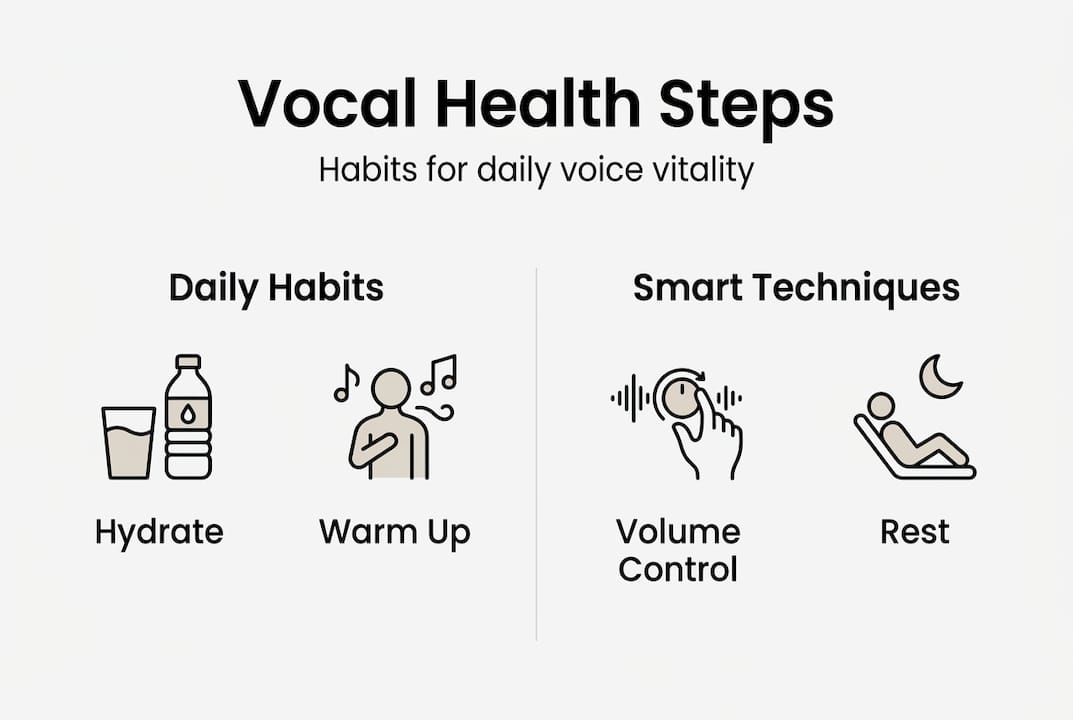
The difference between temporary hoarseness and chronic vocal injury often comes down to whether you implement preventive maintenance consistently. Your vocal cords heal slowly compared to other tissues because they move constantly during breathing and speaking. Small injuries compound when you don’t give them recovery time, eventually requiring months of voice rest or surgical intervention. Prevention through daily maintenance costs minutes but saves careers.
Hydration forms the foundation of vocal health because vocal fold vibration depends on a thin mucus layer for smooth, efficient movement. Consistent hydration and warm-ups drastically reduce vocal problems by maintaining tissue flexibility and reducing friction. Target eight to ten glasses of water daily, but understand that hydration affects vocal folds with a delay. Water you drink now impacts voice quality four hours later, so front-load hydration before demanding vocal sessions.
| Hydration Source | Vocal Benefit | Timing Recommendation |
|---|---|---|
| Plain Water | Optimal tissue hydration | Throughout day, especially morning |
| Herbal Tea (warm) | Soothes throat, adds moisture | 30 minutes before vocal use |
| Honey Water | Coats throat, reduces irritation | Evening or after strenuous use |
| Steam Inhalation | Direct moisture to vocal folds | Before performances or long sessions |
| Sports Drinks | Electrolyte balance for stamina | During extended vocal sessions |
Vocal rest doesn’t mean complete silence, but strategic breaks prevent cumulative fatigue. Schedule ten-minute rest periods every hour during heavy vocal use. During breaks, avoid whispering, which actually strains vocal folds more than normal speech. Instead, communicate through text or gestures. For performers with multiple shows or teachers with consecutive classes, protect your voice between sessions by limiting social conversation and phone calls.
Implement this warm-up sequence 10 minutes before any demanding vocal work:
Your voice care routine 2026 should account for individual factors like your vocal demands, environmental conditions, and personal physiology. Some professionals need more extensive warm-ups or additional hydration based on their specific circumstances. Experiment to find what keeps your voice feeling strong and responsive throughout your workday.
Pro Tip: Avoid caffeine and alcohol before vocal performances. Both are diuretics that reduce systemic hydration and dry vocal fold mucosa. If you consume them, double your water intake to compensate.
Environmental humidity matters as much as internal hydration. Use a humidifier in sleeping and working spaces, especially during winter when heating systems dry indoor air. Aim for 40-50% relative humidity. Breathing dry air for hours forces your body to use internal moisture to humidify inhaled air, stealing hydration from your vocal folds. Portable humidifiers for dressing rooms or offices provide immediate relief in challenging environments.
Proper technique protects your voice by distributing effort across your entire vocal system rather than isolating strain in your larynx. Proper voice technique practiced consistently maintains vocal power and clarity while reducing injury risk through biomechanically efficient sound production. Breath support forms the engine of healthy voice use, providing steady air pressure that allows vocal folds to vibrate without excessive muscular tension.
Master these fundamental technique elements:
Volume control prevents the most common vocal injuries in professional users. Teachers often strain by projecting over classroom noise rather than managing the environment. Singers push volume during rehearsals when microphones aren’t available. Actors compete with set noise or attempt to fill large theaters with unamplified voice. Instead, use amplification when available, request better acoustics, or modify your environment to reduce ambient noise. Your vocal folds weren’t designed for sustained high-volume use without support.

Implement strategic vocal breaks during extended sessions. For every 90 minutes of continuous vocal use, take a 15-minute complete rest. During performances or classes where breaks aren’t possible, vary your vocal intensity. Alternate between full voice and lighter production. Use recorded material or student participation to give yourself micro-rests. These vocal maintenance tips become critical during touring, tech weeks, or finals when vocal demands spike.
Avoid these harmful habits:
Pro Tip: Record yourself during typical work sessions and play back at half speed. This reveals technique flaws you can’t hear in real time, like breath noise, tension, or inconsistent support. Address these issues in practice before they become ingrained habits.
Regular self-assessment catches problems early when they’re easiest to address. Monitor these indicators weekly:
When warning signs appear, implement conservative management immediately. Early intervention with voice therapy can prevent permanent damage by addressing dysfunction before it requires medical treatment. Reduce vocal demands, increase hydration, ensure adequate sleep, and eliminate irritants. Most minor vocal issues resolve within 48-72 hours with rest and supportive care.
| Intervention | Best For | Implementation |
|---|---|---|
| Complete Voice Rest | Acute injury or severe hoarseness | 24-48 hours of total silence |
| Steam Inhalation | Dryness or mild inflammation | 10 minutes three times daily |
| Vocal Exercises | Technique issues or muscle tension | Guided practice with voice teacher |
| Professional Voice Therapy | Persistent problems or nodules | Weekly sessions with speech pathologist |
| Medical Treatment | Structural damage or infection | ENT evaluation and treatment plan |
This vocal recovery guide provides detailed protocols for various injury types, but professional assessment remains essential for persistent issues. Don’t self-diagnose or delay consultation when problems continue beyond two weeks.
Critical warning: Never push through vocal pain or significant hoarseness for performances or work obligations. Performing on injured vocal folds compounds damage exponentially. A week of rest now prevents months of forced silence later. Your career longevity depends on respecting your body’s warning signals.
Seek immediate medical evaluation for:
An otolaryngologist (ENT) can visualize your vocal folds directly using laryngoscopy, identifying nodules, polyps, hemorrhage, or other structural problems. Many vocal injuries heal completely with appropriate rest and therapy when caught early, but delayed treatment often results in permanent changes requiring surgery or ending vocal careers.
Maintaining optimal vocal health requires more than knowledge. Having the right tools and products supports your daily maintenance routine and accelerates recovery when issues arise. TMRG Solutions offers specialized kits developed over 25 years of vocal health expertise, combining natural herbal formulations with proven therapeutic approaches.

The voice therapy kit basic provides essential tools for daily vocal maintenance, while the voice therapy kit standard adds targeted recovery support for professionals with demanding schedules. For comprehensive care including advanced nutritional guidance, the premium voice therapy kit delivers everything needed to maintain peak vocal performance throughout your career. Each kit features natural ingredients endorsed by vocal coaches and medical professionals, offering effective alternatives to pharmaceutical interventions for common vocal challenges.
Prioritize consistent hydration by drinking eight to ten glasses of water spread throughout your day, with extra intake before demanding vocal sessions. Implement a structured warm-up routine lasting 5-10 minutes before any professional voice use, incorporating humming, scales, and targeted exercises. Schedule regular vocal breaks during extended speaking or singing, aiming for 10 minutes of rest every hour. Monitor your technique continuously to avoid strain, focusing on proper breath support and avoiding excessive volume.
Maintain proper vocal technique with emphasis on diaphragmatic breathing and forward resonance rather than throat-based production. Take strategic breaks between vocal sessions and vary intensity throughout performances or classes to prevent cumulative fatigue. Stay well hydrated starting hours before demanding use, since hydration affects vocal folds with a four-hour delay. Recognize early warning signs like throat clearing or increased effort and reduce demands immediately rather than pushing through discomfort.
Consult an otolaryngologist if hoarseness persists beyond two weeks despite rest and conservative care. Seek immediate evaluation for complete voice loss, pain during speaking, bloody mucus, or sudden unexplained voice changes. Annual voice evaluations benefit all professional voice users, catching subtle changes before they become serious problems. Early professional intervention prevents minor issues from requiring extended rest or surgical correction.
Proper nutrition supports vocal tissue health and stamina through adequate hydration and nutrient delivery to maintain cellular function. A healthy vocal diet emphasizes water-rich foods, lean proteins for tissue repair, and anti-inflammatory ingredients while avoiding dairy before performances and limiting caffeine or alcohol that dehydrate tissues. Balanced nutrition improves overall physical stamina, which directly translates to vocal endurance during demanding sessions. Certain nutrients like vitamin C and zinc support immune function, reducing illness-related vocal problems.
