Your Cart is Empty


TL;DR:
- Proper vocal hydration involves both systemic intake and immediate surface moisture support.
- Surface hydration methods like steam inhalation provide quick, targeted relief during performances.
- Consistent hydration practices tailored to individual needs prevent vocal fatigue and injury.
Drinking water is a good start, but if you think staying hydrated simply means sipping enough throughout the day, you’re working with an incomplete picture. Your vocal folds are delicate, fast-moving tissue that depend on precise moisture levels to vibrate freely and resist fatigue. Many singers and actors find themselves hoarse or vocally exhausted despite drinking plenty of water, because they’re missing key strategies around when, how, and what type of hydration their voice actually needs. This guide walks you through the science and gives you practical, evidence-based tools to protect your voice at every stage of your performance life.
| Point | Details |
|---|---|
| Hydration is foundational | Proper hydration keeps vocal folds flexible, reducing fatigue and injury risk. |
| Systemic and surface matter | Both drinking fluids and surface moisture are crucial—surface methods work faster for acute relief. |
| Customize your strategy | Listening to your body and adapting to your environment leads to the best vocal outcomes. |
| Look for subtle signs | Pay attention to early signs of dryness or fatigue, not just thirst, to stay ahead of vocal issues. |
Your vocal folds vibrate hundreds of times per second when you sing or speak. That kind of mechanical demand requires tissue that is supple, well-lubricated, and resilient. Hydration is the single most controllable factor that determines whether your folds meet that demand or struggle against it.
Vocal fold pliability is directly maintained by hydration, which reduces phonation threshold pressure (PTP), the minimum airflow needed to set your folds into vibration. When PTP rises because your tissue is dry, you push harder to produce sound. That extra effort leads to fatigue and, over time, injury.
Dehydration does more than make your throat feel scratchy. Tissue stiffness increases and the acoustic and aerodynamic properties of your voice worsen, meaning your tone becomes thinner, your range narrows, and your stamina drops. These changes can happen with surprisingly mild fluid deficits, well before you feel thirsty.
Voice professionals are especially vulnerable because heavy vocal use depletes the surface moisture on the folds faster than the body can replenish it through normal fluid intake alone. Reviewing a solid vocal cord hydration overview can help you understand the full picture of what your tissue needs. For a broader framework, these vocal health tips are worth building into your daily routine.
Watch for these early warning signs before you reach for a glass of water:
“The vocal folds need consistent hydration to maintain the mucosal wave that creates smooth, efficient sound production. Even a small drop in tissue moisture changes everything.”
Pro Tip: Don’t wait until you feel thirsty to act. By the time thirst registers, your vocal tissue may already be operating at a disadvantage. Monitor subtle vocal changes as your first signal.
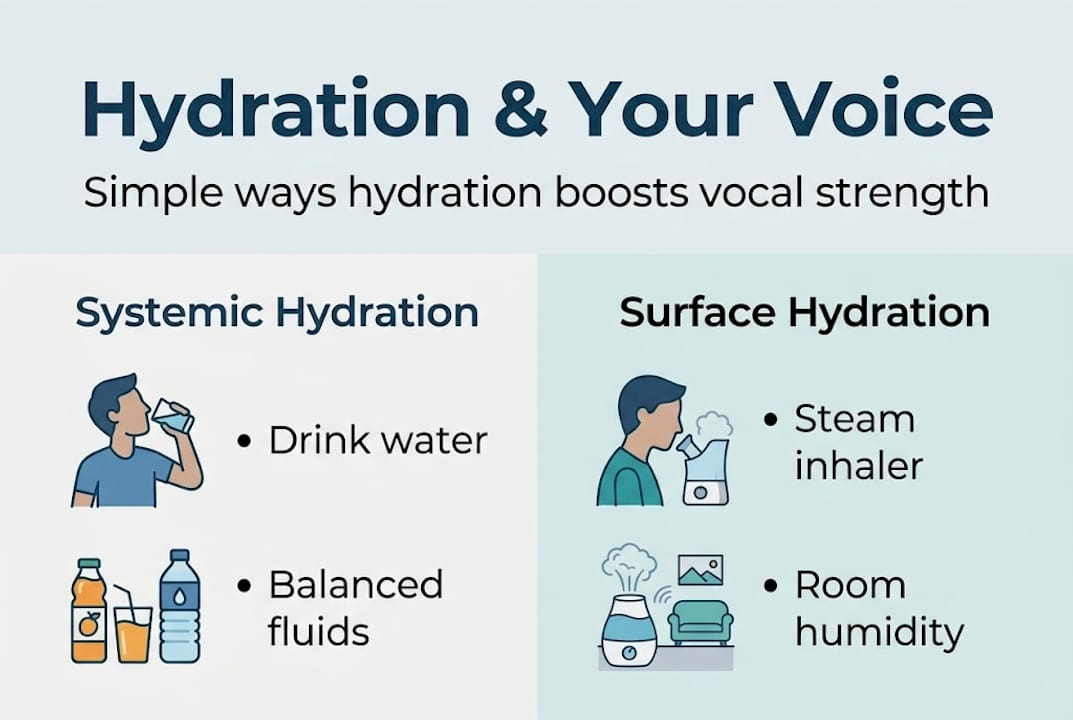
Here’s where most performers get tripped up. Drinking water is a form of systemic hydration, meaning fluid is absorbed through your digestive system and gradually distributed to tissues throughout your body, including your vocal folds. The catch? Systemic hydration takes about 4 hours to meaningfully affect the folds. That glass of water you drink 30 minutes before showtime is not protecting your voice tonight.
Surface hydration, by contrast, delivers moisture directly to the vocal fold mucosa through inhalation. Steam, nebulized saline, and room humidifiers all work this way. The effects are faster and more targeted, making surface methods essential for acute relief before and during heavy vocal use. Surface hydration improves the mucosal wave while systemic hydration prevents extreme hoarseness over time, as fasting studies confirm.

Both approaches work together. Neither replaces the other.
| Feature | Systemic hydration | Surface hydration |
|---|---|---|
| Mechanism | Absorbed via digestion, distributed body-wide | Inhaled directly onto vocal fold surface |
| Onset time | 2 to 4 hours | Minutes |
| Ideal use | Daily maintenance, long-term vocal health | Pre-performance, acute dryness, recovery |
| Examples | Water, herbal teas, water-rich foods | Steam inhalation, nebulized saline, humidifier |
| Limitations | Slow to act on folds directly | Doesn’t replace systemic fluid needs |
Building both into your voice care routine is non-negotiable for serious performers. If you work in a dry or air-conditioned environment, understanding the environmental impact on vocal health will help you calibrate your surface hydration strategy accordingly.
Pro Tip: Keep a personal steam inhaler in your kit. A 10-minute steam session before rehearsal can noticeably reduce vocal effort and warm up the tissue more efficiently than vocal exercises alone.
The classic “8 glasses a day” rule was never designed for performers. Your actual needs depend on your body size, vocal load, climate, and what you ate that day. Voice professionals need 64 to 120 oz of water daily (roughly 2 to 3.5 liters), and that target should increase by 20 to 30 percent before high-demand events. Room temperature water is preferred because cold water can temporarily tighten throat muscles.
Here’s how to set your personal hydration target:
| Situation | Recommended daily intake | Pre-event strategy |
|---|---|---|
| Light vocal use | 2 to 2.5 liters | Maintain baseline |
| Moderate use (rehearsals) | 2.5 to 3 liters | Begin increasing 24 hours prior |
| Heavy use (performance, touring) | 3 to 3.5 liters | Increase 20 to 30%, start 24 to 48 hours prior |
| Dry or air-conditioned environment | Add 500 ml to any above | Use surface hydration as supplement |
For a full breakdown of daily habits that support your voice, these essential voice care tips offer a structured approach. Educators and lecturers with sustained daily vocal demands will find specific guidance in this resource on vocal care for educators.
Pro Tip: Set a phone reminder to sip every 20 minutes during long teaching or rehearsal days. Consistent small amounts outperform occasional large drinks every time.
Even performers who understand the basics often fall into patterns that undermine their hydration efforts. Knowing the common mistakes is just as valuable as knowing the best practices.
Common pitfalls to avoid:
For performers in demanding conditions, electrolytes aid cellular hydration in ways that plain water cannot. Adding a low-sugar electrolyte supplement during prolonged performance days helps your cells actually absorb and retain fluid. Older performers and those managing vocal fold pathology such as nodules or polyps should work with a voice specialist to create individualized hydration plans, since their tissue responds differently to standard recommendations.
“Pre-hydrate for at least 24 hours before any high-demand vocal event. The night before matters as much as the morning of.” — TMRG Voice Specialist
Nasal breathing during non-performance periods also helps. Mouth breathing, especially in dry environments, accelerates surface moisture loss from the folds. Explore voice care best practices for a full checklist of environmental and behavioral strategies that work alongside hydration.
Pro Tip: If you drink coffee in the morning, follow each cup with an equal volume of water. This simple habit neutralizes the diuretic effect without requiring you to give up caffeine entirely.
After working with singers, actors, and speakers for over 25 years, one pattern stands out clearly. The performers who struggle most with vocal fatigue are rarely the ones who drink too little water. They’re the ones who drink plenty of water but ignore surface hydration, sleep in dry hotel rooms, and push through early warning signs because they feel “hydrated enough.”
More is not always better. Overhydration without attention to electrolyte balance can actually dilute the minerals your vocal fold tissue needs to function properly. True vocal hydration is a system, not a single habit.
Rest, environmental humidity, and minimizing irritants like smoke and dry air often matter as much as fluid intake. We’ve seen performers transform their vocal stamina not by drinking more, but by adding a humidifier and a nightly steam routine. The complete guide to vocal hydration outlines how these elements work together.
Pro Tip: Treat hydration as a personalized protocol, not a universal rule. Track what works for your voice across different seasons, venues, and vocal loads, then adjust accordingly.
Hydration is foundational, but it’s rarely the only piece your voice needs, especially if you’re dealing with persistent dryness, recurring hoarseness, or fatigue that doesn’t resolve with rest and fluids.

At TMRG, we’ve spent over 25 years developing natural solutions that work alongside smart hydration habits. The TMRG Voice Therapy Kit Basic is a great starting point for singers and speakers managing everyday vocal strain. For more demanding performance schedules, the TMRG Standard Kit offers a broader range of targeted support. If you’re navigating a specific vocal issue, explore our vocal problems solutions page to find the right approach for your situation.
Start hydrating at least 4 hours before intensive vocal use, since systemic hydration takes time to reach the vocal folds. For major performances, begin increasing your intake 24 hours in advance.
Moderate caffeine intake is fine as long as you compensate with enough water to maintain overall hydration. Strict avoidance isn’t necessary for most performers.
Yes. Maintaining room humidity at 40 to 60 percent reduces throat dryness and provides consistent surface moisture that drinking water alone cannot replicate.
Frequent dehydration raises your risk of vocal fatigue and injury, but most effects are reversible when you rehydrate promptly and address the underlying habits causing the deficit.
