Your Cart is Empty


Your voice suddenly cracks during a speech, or you wake up hoarse after a long rehearsal. Most singers and speakers blame technique or overuse, but the real culprit often hides in plain sight: your environment. Noise pollution, dry air, poor acoustics, and pollutants silently sabotage vocal fold health, raising strain and inflammation risks. This guide reveals the science behind these effects and delivers actionable strategies to protect your voice naturally, combining environmental control with proven vocal hygiene practices.
| Point | Details |
|---|---|
| Noise increases strain | Loud environments trigger involuntary voice loudness, raising vocal fold collision forces and lesion risk. |
| Dry air impairs vibration | Low humidity reduces vocal fold hydration, increasing phonation effort by up to 30% and diminishing voice quality. |
| Acoustics shape effort | Room reverberation and background noise directly influence how hard you must work to project your voice comfortably. |
| Myths hinder recovery | Believing complete voice rest solves all problems ignores environmental stressors that perpetuate vocal damage. |
| Hydration needs environment | Drinking water alone isn’t enough; controlling ambient humidity and avoiding irritants are equally essential. |
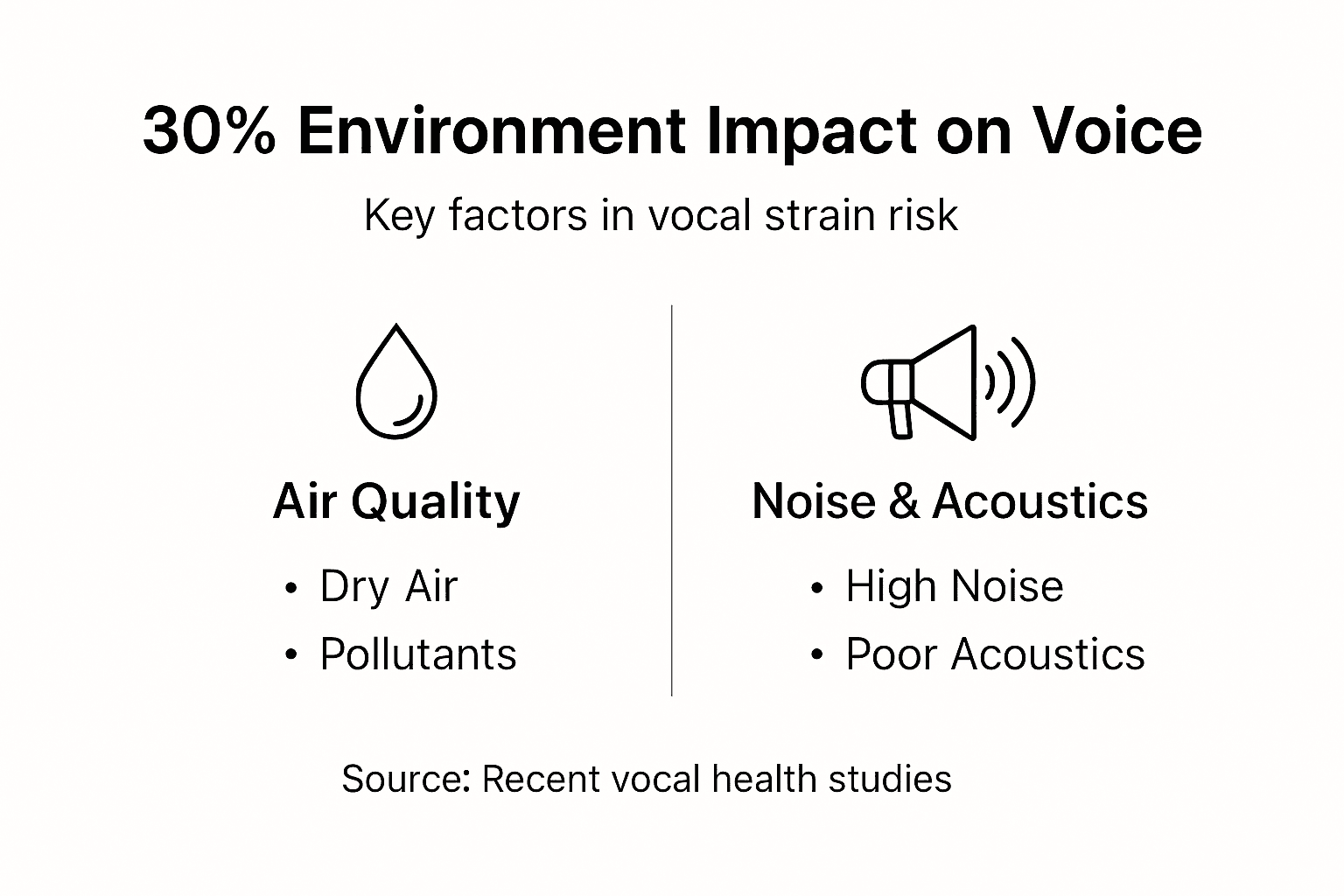
Your vocal folds are delicate mucous membrane structures that vibrate hundreds of times per second to produce sound. Their pliability depends entirely on adequate hydration. When tissue water content drops, vocal fold elasticity suffers. Research shows epithelial elasticity depends on tissue hydration; dehydration can cause a measurable drop in vocal fold viscoelasticity and increase phonation threshold pressure by up to 30%. This means you must push harder to produce sound, accelerating fatigue and damage.
Several environmental factors directly influence this delicate balance:
Understanding these factors empowers you to prevent damage before it starts. Vocal professionals who ignore environmental influences often struggle with recurring hoarseness, fatigue, and lesions despite proper technique. Controlling your surroundings protects the physiological conditions your voice needs to function optimally. This is especially critical for singers, teachers, actors, and speakers who rely on vocal endurance daily. Learn more about maintaining vocal fold hydration for sustained performance.
When you speak in a noisy environment, your brain automatically raises your voice volume. This involuntary response is called the Lombard effect. It evolved to ensure communication in challenging acoustic conditions, but it comes at a cost. Louder phonation means your vocal folds collide with greater force during each vibration cycle. Over time, this repetitive trauma leads to tissue changes.
Studies confirm noise pollution exposure creates the Lombard effect, where speakers involuntarily increase voice loudness, which contributes to vocal fold lesions such as nodules, edema, and polyps over time. Teachers working in noisy classrooms show significantly higher rates of vocal disorders compared to peers in quieter settings. Performers in loud venues without adequate monitoring face similar risks. The cumulative effect of chronic noise exposure accelerates the development of benign lesions that impair voice quality and require medical intervention.
“Noise doesn’t just annoy you. It literally changes how your vocal folds collide, increasing mechanical stress with every word.”
Practical solutions exist. Using amplification systems reduces the need to project forcefully. Controlling background noise through acoustic treatments or strategic venue selection minimizes Lombard effect triggers. Even small environmental adjustments, like closing windows during traffic hours or using white noise machines to mask irregular sounds, can reduce vocal strain. Recognizing noise as a physiological threat, not just an annoyance, helps you prioritize vocal fold health proactively. Addressing noise pollution is as important as warming up your voice before performance.
Dry air is a silent enemy of vocal health. When relative humidity drops below 40%, your vocal folds lose moisture rapidly during phonation. This dehydration stiffens the epithelial layer, making vibration less efficient. Research demonstrates dry indoor air reduces vocal fold hydration, diminishing epithelial pliability, which is critical for efficient vocal fold vibration and voice quality. The result is a scratchy, effortful voice that fatigues quickly.
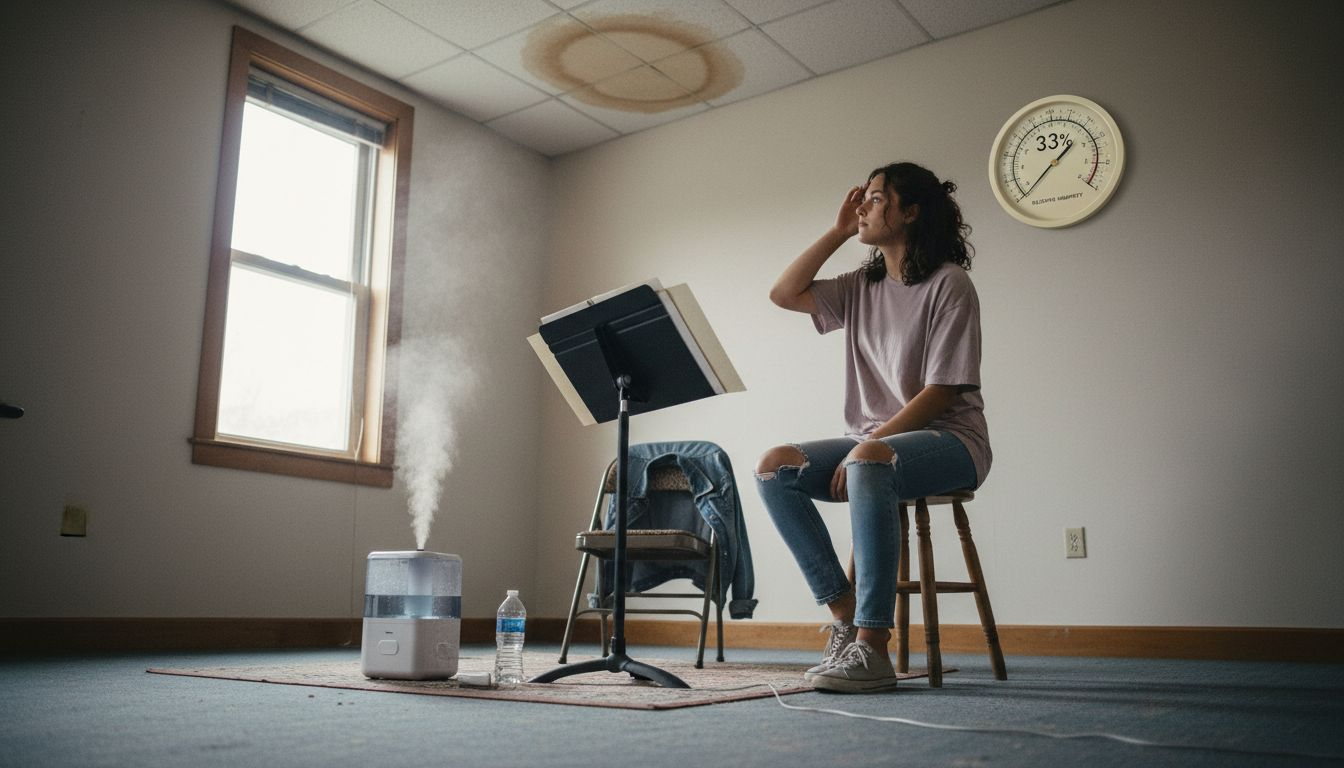
Air pollutants compound the problem. Particulate matter, chemical fumes, and allergens irritate mucous membranes, triggering inflammation. Inflamed vocal folds swell, reducing their vibration precision. This creates hoarseness and vocal instability. Singers and speakers exposed to polluted urban environments or poorly ventilated indoor spaces experience higher rates of vocal fatigue and disorder.
Follow these hydration and air quality strategies:
Pro tip: Place a small humidifier near your practice area and monitor humidity with a hygrometer. Optimal moisture levels feel comfortable to breathe and prevent that dry throat sensation. Explore comprehensive vocal hydration strategies to maintain tissue elasticity and voice quality.
The acoustic properties of a room dictate how much effort you need to be heard. Long reverberation times in large halls can mask your voice, forcing you to project harder. Conversely, acoustically dead rooms with heavy absorption require more vocal energy to achieve adequate volume. Background noise adds another layer of challenge, triggering the Lombard effect we discussed earlier.
Studies show artificial acoustic environments with altered reverberation and background noise levels significantly affect vocal sound pressure levels and perceived vocal comfort, directly impacting vocal effort and fatigue. Researchers measured how speakers adjusted their voices in response to acoustic changes, finding substantial variation in effort and comfort based on environmental design.
Sidetone amplification, where you hear your own voice through monitors or headphones, improves auditory feedback. This helps you gauge volume accurately, reducing the tendency to over project. Ergonomic vocal practices, including proper posture and microphone technique, further minimize strain.
| Acoustic Setting | Impact on Vocal Effort | Ergonomic Solution |
|---|---|---|
| High reverberation hall | Can mask clarity, tempts overprojection | Use directional microphones, rely on amplification |
| Acoustically dead room | Requires more energy for audible volume | Position speakers closer, add strategic reflective surfaces |
| High background noise | Triggers involuntary loudness increase | Implement noise control, use personal monitoring systems |
| Optimal acoustics (moderate reverberation) | Natural voice projection, lower effort | Maintain posture, use minimal amplification as needed |
Pro tip: Test the acoustics of new performance spaces during rehearsal. Walk around while speaking or singing to find spots where your voice carries naturally. Adjust your position and microphone setup accordingly. Discover more voice volume enhancement techniques to optimize projection without strain.
Myth: Complete voice rest always heals vocal strain. While rest has its place after acute injury, extended silence isn’t practical or necessary for most vocal professionals. Expert analysis reveals complete voice rest is not practical for day to day vocal management and may not be necessary if vocal hygiene and environmental conditions are optimized. Moderate, mindful voice use combined with hydration and environmental control often produces better outcomes than total silence.
Myth: Vocal problems stem only from poor technique. Technique matters, but environment plays an equally important role. Even singers with flawless technique develop problems when chronically exposed to noise, dry air, or pollutants. Blaming technique alone ignores the physiological reality that environmental stressors directly damage vocal fold tissue regardless of how you use your voice.
Myth: Hydration is just about drinking water. Systemic hydration from fluids is essential, but it’s only part of the equation. Controlling ambient humidity prevents moisture loss during phonation. Avoiding irritants like smoke and allergens reduces inflammation that impedes hydration effectiveness. True vocal hydration is a multifaceted strategy integrating internal and external moisture management.
These misconceptions persist because vocal care advice often oversimplifies complex physiological interactions. Modern vocal hygiene strategies recognize that environment and behavior must work together. Addressing environmental factors amplifies the benefits of good technique and hydration, creating a comprehensive approach to vocal health that prevents problems before they start.
Effective vocal hygiene tailored to environmental stressors combines hydration protocols, irritant avoidance, and behavioral modifications. Research supports maintaining vocal hygiene involves both reducing environmental irritants like air pollutants and allergens, and adopting behavioral modifications such as hydration and voice rest to prevent damage. This integrated approach addresses the root causes of vocal strain rather than merely treating symptoms.
Key preventive practices include:
Pro tip: Keep a vocal journal noting environmental conditions, voice use patterns, and how your voice feels each day. Over time, you’ll identify specific environmental triggers and refine your hygiene practices accordingly. Implement these vocal strength improvement tips to build resilience against environmental stressors.
Natural remedies complement vocal hygiene by directly supporting mucosal hydration and reducing inflammation. Herbal sprays and oils formulated for vocal health deliver active botanical compounds to vocal fold surfaces, enhancing tissue repair and comfort. Clinical evidence shows up to 40% improvement in perceived vocal comfort and reduced hoarseness using herbal sprays and oils within 1 to 2 weeks of use.
Common ingredients in effective vocal remedies include:
User feedback consistently reports noticeable improvements in vocal comfort, reduced scratchiness, and faster recovery from fatigue when integrating these remedies into daily routines. Natural treatments work best when combined with environmental controls and proper hydration, creating synergistic benefits that exceed isolated interventions.
| Remedy Type | Primary Benefit | Typical Improvement Timeline | Best Use Case |
|---|---|---|---|
| Herbal spray | Direct mucosal hydration | 3 to 7 days | Pre/post performance, dry environments |
| Essential oil steam | Anti inflammatory, hydration | Immediate to 5 days | Acute irritation, congestion |
| Herbal tea | Systemic hydration, soothing | 1 to 2 weeks | Daily maintenance, mild hoarseness |
| Topical oil blend | Localized inflammation reduction | 5 to 10 days | Persistent discomfort, nodule recovery |
Safely integrate natural remedies by starting with small doses and monitoring your response. Avoid remedies containing irritants like alcohol or strong astringents. Consult with a vocal health professional if symptoms persist beyond two weeks. Explore proven vocal recovery strategies and herbal vocal care solutions tailored to environmental challenges.
Synthesizing the insights from this guide into daily habits ensures sustained vocal performance and health. Start by assessing your regular environments using this checklist:
Daily strategies to maintain vocal health:
Professional voice users benefit from regular environmental audits. Revisit your spaces quarterly to identify seasonal changes or new stressors. Sustained vigilance combined with proactive adjustments preserves vocal longevity and performance quality. Follow these step by step vocal recovery practices to maintain optimal voice health through environmental awareness.
Environmental vocal health challenges demand proven, natural remedies that integrate seamlessly into your daily routine. TMRG Solutions offers over 25 years of expertise in vocal care, providing research backed herbal formulations designed specifically for singers, speakers, and vocal professionals facing environmental stressors.

Explore our comprehensive range of vocal remedies addressing hydration, inflammation, and fatigue. Discover how our herbal vocal recovery kit combines sprays, oils, and dietary guidance to support mucosal health and accelerate recovery. Learn more about protecting your voice with our vocal health insights, ensuring you perform at your best regardless of environmental conditions.
Maintain indoor humidity between 40% and 60% relative humidity. This range prevents vocal fold dehydration while avoiding excessive moisture that promotes mold growth. Use a hygrometer to monitor levels and adjust with humidifiers or dehumidifiers as needed.
Use amplification systems like microphones and personal monitors to avoid projecting loudly. Take regular voice breaks and step away from noise when possible. Consider noise canceling barriers or acoustic treatments to lower ambient sound levels in your workspace.
Yes, herbal vocal sprays formulated without alcohol or harsh astringents are safe for daily use. They provide direct mucosal hydration and anti inflammatory benefits. Start with recommended doses and monitor your response, adjusting frequency as needed.
Absolutely. Proper posture aligns your respiratory system for efficient breath support, reducing unnecessary tension. Using microphones correctly and positioning yourself in acoustically favorable spots minimizes vocal effort, significantly extending your endurance during long sessions.
Drinking water supports systemic hydration, but it’s not sufficient alone. You must also control ambient humidity to prevent moisture loss during phonation and avoid environmental irritants that impair mucosal function. Comprehensive hydration integrates internal and external moisture management for optimal vocal health.
