Your Cart is Empty


Long rehearsal days can leave even the most skilled performers struggling with hoarseness and fatigue. For professional vocalists and actors, every meal and drink directly influences the power, clarity, and stamina of their voice. Diet functions as both a maintenance system and a performance enhancer, impacting hydration, tissue repair, and vocal mucosa health. This guide uncovers specific dietary strategies that sustain vocal strength and help ease chronic strain, giving you actionable nutrition insights to support your craft.
| Point | Details |
|---|---|
| Diet Directly Affects Vocal Health | Nutrition influences vocal performance, hydration, and tissue repair, making diet crucial for vocalists. |
| Hydration is Essential | Adequate hydration keeps vocal cords functioning optimally, preventing strain and damage during performances. |
| Avoid Irritants | Foods that trigger acid reflux and dehydration can hinder vocal performance; it’s important to choose wisely. |
| Track Dietary Impact | Monitoring what you eat and your vocal fatigue can help identify personal dietary influences on vocal health. |
Your voice is essentially a finely tuned instrument, and the fuel you provide directly determines its performance. Diet functions as both a maintenance system and a performance enhancer for your vocal cords, mucous membranes, and the intricate systems that support sound production.
When you’re a professional vocalist or actor, your voice is your income stream. What you eat—or don’t eat—affects how your voice sounds on stage or during long recording sessions. Lifestyle factors like smoking, alcohol consumption, and caffeine intake significantly influence voice outcomes, with hydration levels directly impacting the health of your vocal mucosa.
Your vocal cords need consistent lubrication to vibrate smoothly without strain. Proper hydration and nutrient-rich foods support this essential function by maintaining the moisture balance in your throat and vocal tract.
Research shows that everyday lifestyle and diet significantly affect vocal health, with specific nutrients playing distinct roles:
Many professionals experience vocal fatigue after 4-6 hours of heavy use. The interplay between diet and perceived voice fatigue reveals that while nutrition matters, performance duration and hydration status create a complex interaction that determines how tired your voice actually feels.
Diet alone doesn’t make you a great singer—but poor dietary choices can absolutely undermine your technical abilities. Think of it like running a car on low-grade fuel; the engine still runs, but not optimally.
Key dietary components that support vocal health include:
Your vocal performance ceiling is partially determined by what you consumed yesterday and last week, not just what you ate this morning.
Actors often notice that certain foods leave them feeling hoarse or fatigued by evening, while others leave them feeling vocal power throughout long rehearsal days. This isn’t random—it’s biology. Your throat tissues respond to dietary choices in measurable ways.

The Mediterranean approach to eating, featuring olive oil, lean proteins, and whole grains, has been highlighted as beneficial for vocal mucosa health. Certain herbs also support vocal function when incorporated into daily nutrition.
Pro tip: Track your vocal fatigue level for one week while noting what you eat, then identify which foods correlate with your best vocal days—this personal data beats generic advice.
Nutrients don’t just fuel your body—they directly determine whether your vocal cords function optimally or struggle under pressure. Specific micronutrients protect vocal tissue from damage while maintaining the flexibility and strength your voice demands during performances.
Think of your vocal mechanism like a high-performance engine. Without the right nutrients, even technically perfect singers experience hoarseness, fatigue, and loss of power by mid-performance. With proper nutrition, your voice stays resilient through demanding rehearsal schedules and back-to-back shows.
Vitamins and minerals act as the maintenance crew for your vocal tissue. They support muscle metabolism and the mucosal hydration essential for vocal fold function, preventing the friction-related damage that leads to strain and injury.
Nutrients play a key role in vocal health by supporting vocal cord integrity in several specific ways:
Hydration sits at the foundation of everything else. Your vocal cords need consistent moisture to vibrate without friction, and dehydration creates the exact conditions that cause vocal strain.
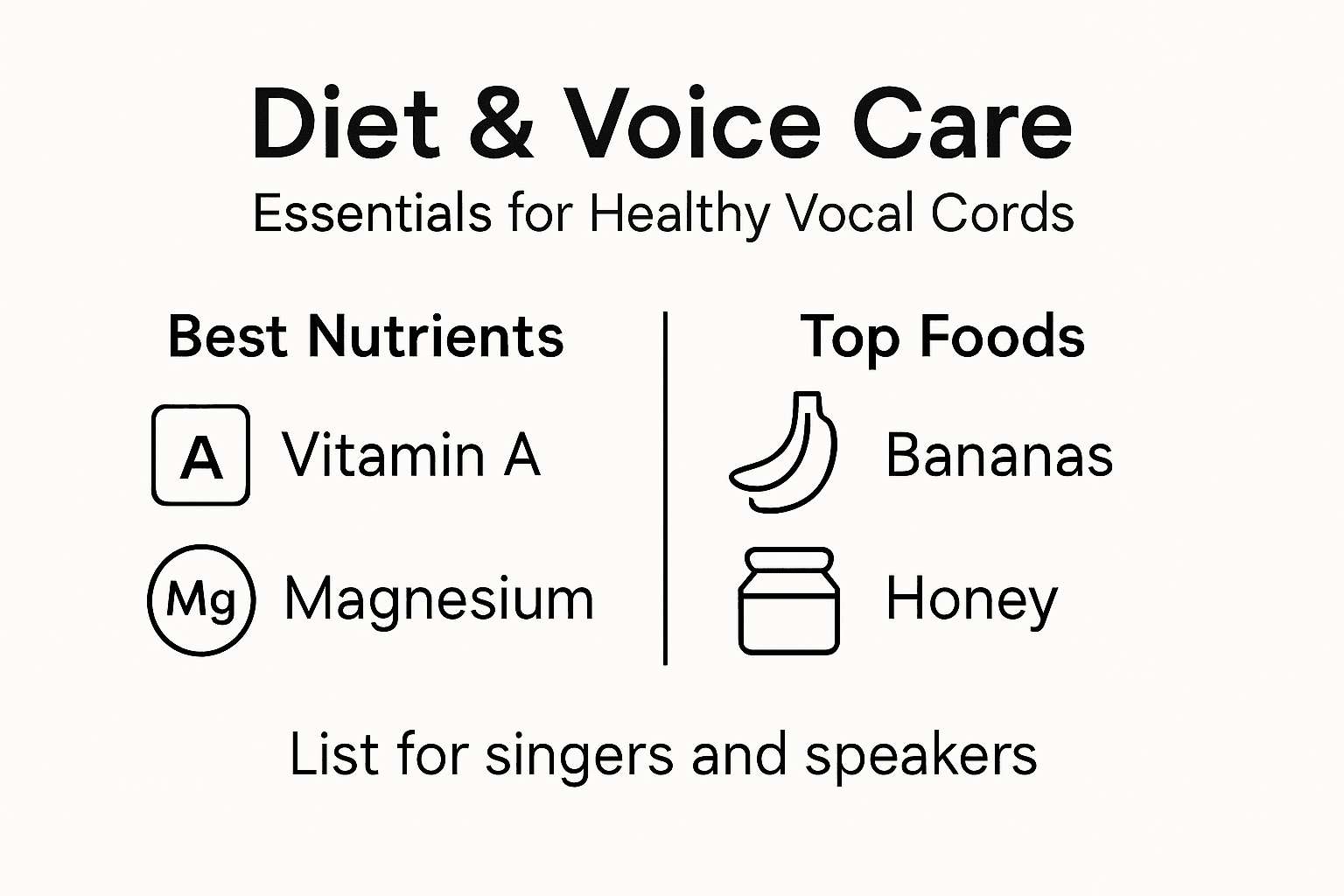
Summary of key nutrients and their functions in vocal health:
| Nutrient | Vocal Benefit | Practical Food Sources |
|---|---|---|
| Vitamin A | Maintains mucous membranes | Sweet potatoes, carrots |
| Vitamin C | Increases collagen support | Bell peppers, oranges |
| Vitamin E | Reduces oxidative stress | Almonds, sunflower seeds |
| B Vitamins | Boosts muscle energy | Eggs, whole grains |
| Iron & Zinc | Tissue repair, immunity | Lean meats, legumes |
| Omega-3s | Lessens inflammation | Salmon, flaxseed oil |
The relationship between diet and vocal health is nuanced. Too many nutrients can be just as problematic as too few. Excess supplementation, particularly fat-soluble vitamins, can create inflammation rather than reduce it.
Foods that trigger acid reflux, smoking, and alcohol consumption actively irritate your vocal tissue. They create swelling and moisture loss that makes even simple speaking uncomfortable by evening.
Antioxidant-rich foods—ripe fruits, leafy vegetables, and colorful produce—contain healing compounds that protect voice from damage. These aren’t just health trends; they’re biochemical necessities for vocal performers.
The foods you eat today determine how your voice sounds three days from now, not tomorrow.
Your throat tissue operates on a delayed response system. Poor choices accumulate, and optimal choices build resilience gradually.
Many professional singers notice that vocal cord hydration and nutrition work together to prevent fatigue during long sessions. You can’t simply drink water and ignore everything else; the nutrients in your food determine whether your body actually retains that hydration.
Pro tip: Focus on foods you can eat right before performance—ripe bananas, honey, and warm herbal tea maintain hydration and provide quick energy without triggering reflux or stomach discomfort.
Not all foods affect your voice equally. Some actively enhance your vocal capacity while others undermine it within hours. Strategic food choices can mean the difference between powering through a three-hour rehearsal and losing your voice by act two.
Your goal is simple: keep vocal tissues hydrated, reduce inflammation, and avoid triggers that create irritation. The right foods do all three simultaneously.
Water-rich foods work harder than plain water because they deliver hydration alongside nutrients your body actually retains. These foods maintain the moisture your vocal cords need to vibrate smoothly without strain.
Priority hydrating foods include:
Eat these consistently throughout your day, not just before performance. Your vocal cords respond to cumulative hydration, not last-minute gulping.
Here’s a comparison of foods that boost vocal performance versus those that can hinder it:
| Food Type | Supports Vocal Health | Potential Risks for Vocalists |
|---|---|---|
| Hydrating Fruits | Watermelon, honeydew provide moisture | Citrus may trigger reflux |
| Leafy Greens & Veggies | Sustain hydration, easy to digest | None, unless personal sensitivities |
| Herbs and Spices | Ginger & turmeric reduce inflammation | Spicy options may cause reflux |
| Dairy | Can provide nutrients if tolerated | May increase mucus in some people |
| Beverages | Herbal teas hydrate and soothe | Caffeine and alcohol dry the voice |
| Processed/Fried Foods | None | Increase inflammation, irritation |
Certain foods enhance vocal performance by reducing irritation and promoting healing of vocal tissues. Anti-inflammatory herbs and whole foods directly calm the inflammation that causes hoarseness and fatigue.
Your inflammation-fighting arsenal:
Many professional singers add fresh ginger to warm water 30 minutes before performance. It’s not magic—it’s biochemistry reducing inflammation that would otherwise limit your range.
Acidic and spicy foods exacerbate reflux, which burns your vocal cords from below. Avoid these 24-48 hours before major vocal performances:
The foods you eliminate matter as much as the foods you consume.
You don’t need complicated meal plans. You need consistency and awareness. Professional singers understand timing around eating and vocal effort because eating too close to intense performance diverts blood flow from your voice to digestion.
Pro tip: Eat your substantial meal 3-4 hours before performance, then consume only light hydrating foods (fruit, honey, herbal tea) in the final hours—this maintains vocal power without digestive interference.
Hydration isn’t optional for vocal performers—it’s foundational. Systemic hydration is critical and easily implemented to improve voice quality and reduce fatigue during demanding performances. Your vocal cords literally cannot function optimally without adequate moisture.
When you’re dehydrated, your vocal folds become stiff and move inefficiently. This creates friction-based wear that leads to hoarseness, fatigue, and accelerated vocal aging. The solution is simpler than most singers realize.
Hydrated vocal folds move efficiently during phonation, reducing the strain that accumulates across a long performance day. Adequate hydration ensures mucosal elasticity and pliability essential for vocal fold function, allowing your voice to access its full range and power.
Dehydration sneaks up quietly. You might feel fine while your vocal cords are already struggling. By the time you notice hoarseness, you’ve already damaged tissue that could take weeks to recover.
The hydration formula for professional vocalists:
Many actors and singers underestimate how much water they actually need. You’re not just maintaining normal hydration—you’re compensating for vocal cord demand that ordinary people never experience.
Supplements can support vocal health but require careful dosing. Too much of the wrong supplement creates inflammation instead of reducing it. Nutritional supplements should be used cautiously, as overdosing can harm the voice.
Supplements worth considering if you have specific deficiencies:
Before adding any supplement, get baseline blood work. You might already have adequate levels, and adding more creates waste and potential harm. Proper hydration combined with essential voice care practices addresses most vocal concerns without supplementation.
Hydration is the foundation; supplements are the refinement.
Don’t reverse this priority. Countless performers waste money on expensive supplements while staying chronically dehydrated. Get the foundation right first.
Pro tip: Drink 16 ounces of water upon waking and another 16 ounces two hours before your performance—this establishes baseline hydration without forcing you to drink excessively right before singing.
Most vocal problems aren’t caused by bad technique alone. Poor dietary choices undermine even flawless vocal training by damaging the tissues your voice depends on. The mistakes are predictable, repeated by thousands of singers, and completely avoidable.
Understanding these pitfalls transforms your vocal health from fragile to resilient. You’re not just learning what to avoid—you’re learning why your voice responds the way it does.
Dehydration is the single most common vocal mistake. Insufficient water intake causes mucous membrane dryness, which prevents your vocal folds from moving smoothly. This friction-based wear accumulates invisibly until hoarseness appears suddenly.
Many vocalists assume they’re drinking enough because they don’t feel thirsty. Your thirst mechanism lags behind your actual hydration needs by hours. By the time you feel dry, your vocal cords have already been struggling.
Dehydration compounds when combined with other mistakes:
You can’t hydrate retroactively. Your vocal tissue needs consistent moisture, not emergency water consumption before performance.
Alcohol consumption leads to severe dehydration while also relaxing the muscles that control your vocal cords precisely. Even one drink the night before performance creates measurable vocal degradation the next day.
Caffeine creates a different problem. It’s a diuretic, meaning it increases urination and net water loss. High amounts of caffeine trigger the exact conditions that cause vocal strain and fatigue.
The combination is especially destructive. Coffee in the morning plus evening alcohol creates 24-48 hours of vocal vulnerability. Common dietary mistakes that damage voices include excessive alcohol and insufficient water intake.
Acid reflux burns your vocal cords from below, creating damage that feels like strain but originates from your digestive system. Trigger foods vary by person, but common culprits include citrus, tomatoes, chocolate, and spicy foods.
Eating large meals close to performance diverts blood flow from your voice to digestion. Your throat tissues lose oxygen and nutrient delivery exactly when they need it most. Wait at least three hours between substantial eating and vocal demand.
Mistakes in this category:
Your voice isn’t just what happens when you sing—it’s what you ate yesterday and how you slept the night before.
Dietary mistakes create cumulative damage. One poor choice is recoverable; patterns of poor choices create chronic vocal problems. Vocalists sabotage their voices through preventable dietary and lifestyle decisions that feel normal until damage becomes visible.
Pro tip: Track your vocal fatigue and hoarseness against your diet for two weeks—you’ll identify your personal dietary culprits faster than any generic advice could reveal them.
Your voice’s health depends on more than just diet. When hydration, nutrients, and anti-inflammatory care are out of balance, vocal fatigue and hoarseness can hold you back from delivering your best performances. Addressing these challenges requires targeted solutions that not only support your vocal cords but also work in harmony with your lifestyle choices like diet and hydration.
Discover tailored natural remedies and proven therapies designed for professionals who refuse to settle for less. Explore our Singer Enhancements - TMRG Solutions for powerful, nutrient-rich support that complements your vocal care routine. Combine these with effective tools from our TMRG Voice Therapy Kits - TMRG Solutions to restore and maintain vocal strength.

Ready to protect and strengthen your voice with expert-backed solutions that respect your body’s needs and your demanding schedule Visit https://tmrgsolutions.com now to take control of your vocal health and perform with confidence every day.
Diet plays a critical role in maintaining vocal health by providing the necessary hydration and nutrients to keep the vocal cords lubricated and functioning optimally. Proper hydration and nutrient-rich foods support mucosal membrane hydration, reduce inflammation, and enhance vocal performance.
Key nutrients for vocal health include Vitamin A (for mucous membrane maintenance), Vitamin C (for collagen production), Vitamin E (to protect vocal tissues), B vitamins (to boost energy), and minerals like iron and zinc (for tissue repair and immune function).
Foods that can negatively impact vocal performance include acidic foods (like citrus and tomatoes), spicy foods, dairy (if it increases mucus for you), caffeine, and alcohol, especially when consumed close to singing or speaking engagements.
To improve hydration, aim to drink at least half your body weight in ounces of water daily, plus additional water for every hour of vocal use. Incorporate hydrating foods such as watermelon, cucumber, and herbal teas, and avoid cold water to ensure optimal throat muscle function.
