Your Cart is Empty


Yes, slippery elm can soothe an irritated throat and take some strain off your voice, but it works as an adjunct, not a cure. The mucilage in slippery elm bark is generally recognized as safe (GRAS), and while no large clinical trial has tested it specifically on vocal cords, its demulcent action explains why so many singers keep it in their kit. Brands like TMRG Solutions build recovery products around that same principle: coat and calm the tissue so your technique isn’t fighting inflammation.
Here’s what to do with that information right now:
Quick fact: Slippery elm’s protective effect comes almost entirely from mucilage, a polysaccharide that swells into a gel when it hits saliva. That’s the whole mechanism. It’s not magic, it’s chemistry, and it’s worth understanding before you build a routine around it.
Slippery elm’s mucilage soothes throat tissue and reduces the cough reflex, but no clinical evidence proves it treats vocal cord disorders directly.
| Point | Details |
|---|---|
| Adjunct, not a cure | Slippery elm calms throat tissue and reduces reflexive throat-clearing, but doesn’t touch the vocal folds directly. |
| Form matters | Unsweetened lozenges and tea maximize throat contact time; capsules bypass the throat entirely. |
| Timing separation | Keep slippery elm at least 60 to 90 minutes away from prescription medications to avoid absorption interference. |
| Know the red flags | Hoarseness over two weeks, swallowing trouble, or blood in sputum means see a clinician, not another lozenge. |
| TMRG fits the gap | TMRG Safe & Sound powder and TMRG Loud & Clear drops are built for the same pre and post-show windows as a slippery elm routine. |
Mucilage is the reason slippery elm shows up in vocal-care kits at all. Grind the inner bark into powder, add liquid, and the polysaccharides absorb water and swell into a slick, gel-like film. That film clings to mucous membranes in the mouth and pharynx the way a bandage clings to a cut, sitting on the tissue instead of running past it.
For singers, the payoff is mostly indirect. Slippery elm doesn’t touch your vocal folds themselves, since they sit below the pharynx and aren’t coated the way your throat lining is. What it does is calm the surrounding tissue, and that matters more than it sounds. A dry, irritated throat triggers the urge to cough or clear your throat, and that reflex slams your vocal folds together with far more force than singing does. Fewer throat clears means fewer hard hits on cords that are already tired from a show.
Here’s the functional chain worth remembering:
Pro Tip: Let the lozenge or tea sit in contact with your throat as long as possible before swallowing. Mucilage works by staying put, not by being gulped down fast.
The honest answer is that the science backs the mechanism more than it backs the outcome. LiverTox at the NCBI Bookshelf confirms slippery elm’s GRAS status for demulcent use, but notes there are no large-scale trials proving it fixes any specific vocal disorder. That gap shows up across the literature.
Memorial Sloan Kettering’s integrative medicine review lists sore throat and cough as traditional uses while flagging that supporting evidence is thin. Medical News Today reaches a similar conclusion: more mechanistic and historical support than rigorous human trials. A peer-reviewed overview of slippery elm’s biochemistry and use for laryngeal irritation treats it as a reasonable complementary option, not a proven treatment.
Slippery elm sits in what researchers sometimes call an “emerging” evidence category: a plausible mechanism, centuries of traditional use, and a shortage of controlled trials in humans.
That leaves slippery elm firmly in adjunct territory. It supports hydration, humidification, voice rest, and proper technique. It doesn’t replace any of them, and it’s not a substitute for a medical exam if your hoarseness won’t quit.
Slippery elm comes in four practical forms, and each one fits a different point in your performance schedule.
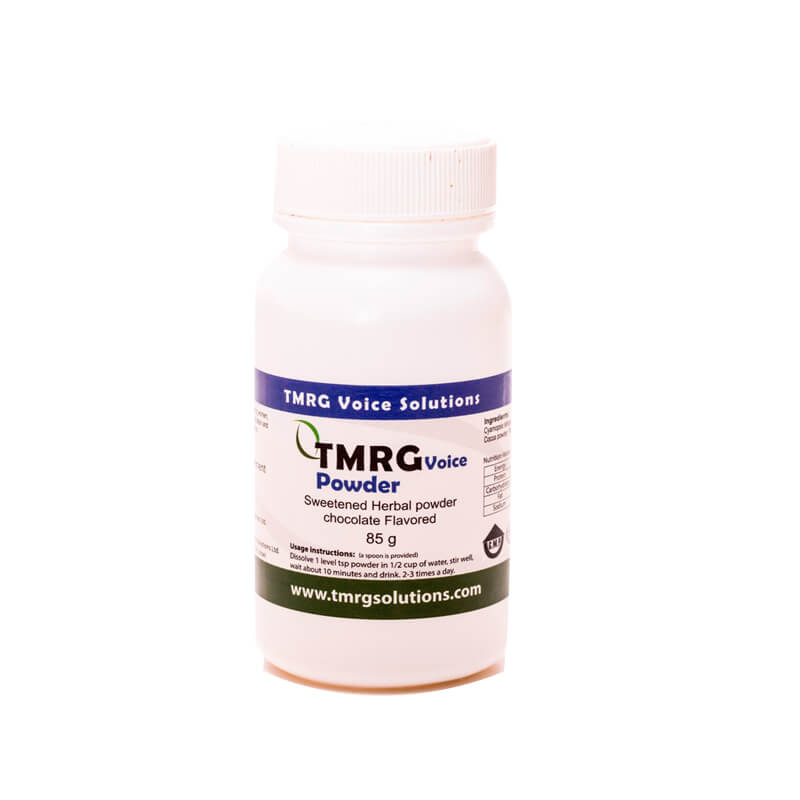
Tea gives you the longest contact time with throat tissue and works well an hour before a show. Mix one teaspoon of powder into a cup of warm (not scalding) water, stir until it thickens slightly, and sip slowly rather than gulping.
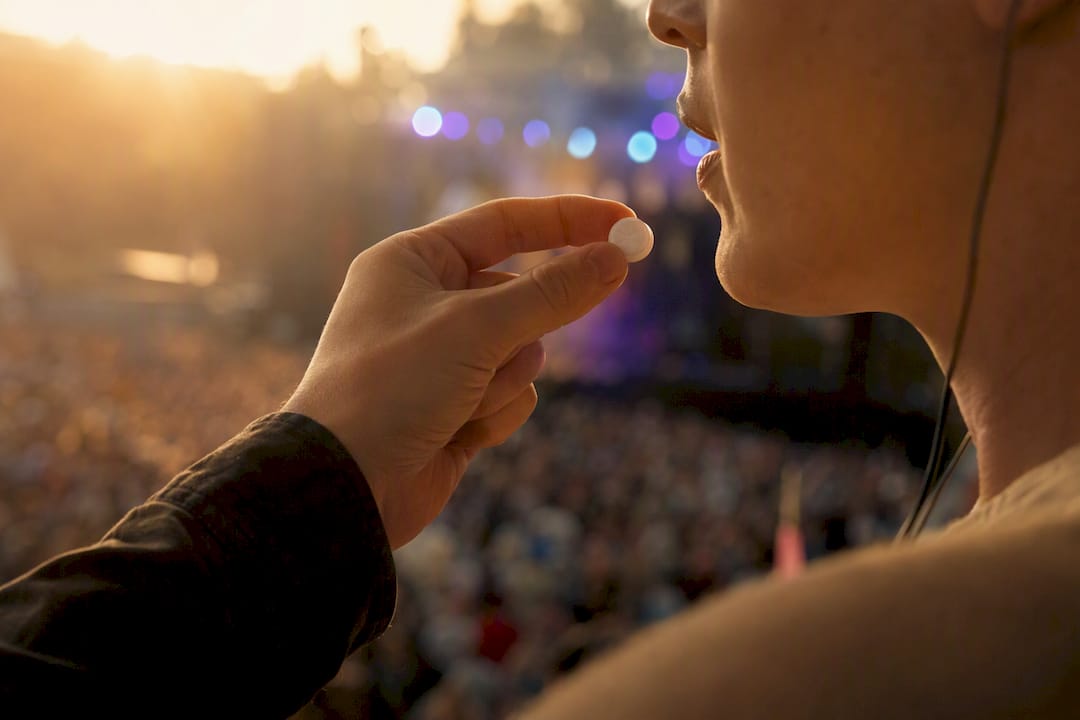
Slow-dissolve lozenges are the most portable option and the best choice backstage, since you can’t exactly brew tea between numbers. Choose unsweetened versions. Sugary lozenges increase phlegm production, which muddies vocal clarity right when you need it clean.
Pure powder gruels (powder mixed into a small amount of water into a thick paste) maximize mucilage concentration and suit post-show recovery, when you want the strongest coating effect and you’re not about to walk onstage.
Capsules are the least useful for singers specifically, since swallowing them whole bypasses the throat contact that makes slippery elm work in the first place. They’re better suited to digestive use than vocal care, per Healthline’s breakdown of slippery elm forms.
A simple, singer-tested routine:
Pro Tip: Tilt your head back slightly and let tea or dissolved lozenge sit at the back of your throat for a few extra seconds before swallowing. That’s where mucilage does the most good.
Timing matters beyond the stage clock, too. Because mucilage coats the gut lining as well as the throat, it can slow how fast your body absorbs other things you swallow, including medication. Separate slippery elm from prescription drugs by at least an hour if you take anything with a narrow dosing window.
Slippery elm is low-risk for most healthy adults, but “low-risk” isn’t “risk-free,” and singers who rely on their voice professionally should know the specifics.
The absorption issue deserves its own line, since it’s the one most singers overlook. If you’re on thyroid medication, certain antibiotics, or anything with a narrow therapeutic window, take slippery elm at least 60 to 90 minutes apart from your dose. That gap gives your gut time to absorb the medication before mucilage coats the lining.
When to stop and call a clinician: persistent throat pain despite use, new swallowing difficulty, or any sign of allergic reaction. Slippery elm should never be the reason you delay seeing someone about a voice problem that isn’t improving.
Slippery elm works best as one tool among several, not the centerpiece. Hydration, humidification, adequate voice rest, and solid technique still do most of the heavy lifting for vocal health, a point echoed by vocal-care groups like Chorus America that list demulcents as a supplement to hygiene practices rather than a replacement for them. Think of slippery elm as backup support for a system that already needs to be working.
The harder question is knowing when a sore throat stops being a slippery-elm problem and becomes a doctor’s-office problem. Use this checklist:
If none of those apply, self-care is reasonable: rest your voice, hydrate, add humidity to your environment, and let slippery elm play its supporting role. If any of them do apply, slippery elm is the wrong tool for the moment. Book a voice clinic appointment instead of reaching for another lozenge.
Voice professionals who work with singers day to day tend to land on a few repeatable routines rather than improvising each time. A pre-performance combination of one unsweetened lozenge dissolved slowly, followed by a few sips of warm water, shows up often as a way to prime the throat without adding bulk before singing. Post-show, a thicker powder mixed into warm water, paired with genuine vocal rest, tends to get better results than either step alone.
TMRG Solutions has spent many years focused specifically on vocal health, and that experience shapes how slippery elm gets recommended here: as part of a routine, not a standalone fix.
The singers who get the most out of demulcent herbs are the ones who pair them with rest and hydration, not the ones expecting the herb to do all the work.
Pro Tip: Keep a small tin of unsweetened lozenges in your gig bag specifically for the 20 minutes before you go on. That window is when mucilage’s coating effect matters most.
I think slippery elm earns its place in a singer’s kit, but the enthusiasm around it online often outruns the evidence. The mechanism is real and well understood. The outcome data for voice specifically just isn’t there yet, and pretending otherwise does singers a disservice. My honest position: use it as a comfort measure, use it correctly, and never let it substitute for actual vocal rest or a checkup when your voice tells you something’s wrong. Combine it with sound TMRG-style hygiene protocols and treat any persistent problem as a reason to see a specialist, not a reason to buy more lozenges.
If you already use slippery elm around rehearsals and shows, a couple of TMRG Solutions products slot right into that same window without adding complexity. The TMRG Safe & Sound powder works well as a post-show recovery drink, mixed the same way you’d prepare a slippery elm gruel, for singers who want a supportive routine after heavy vocal load.
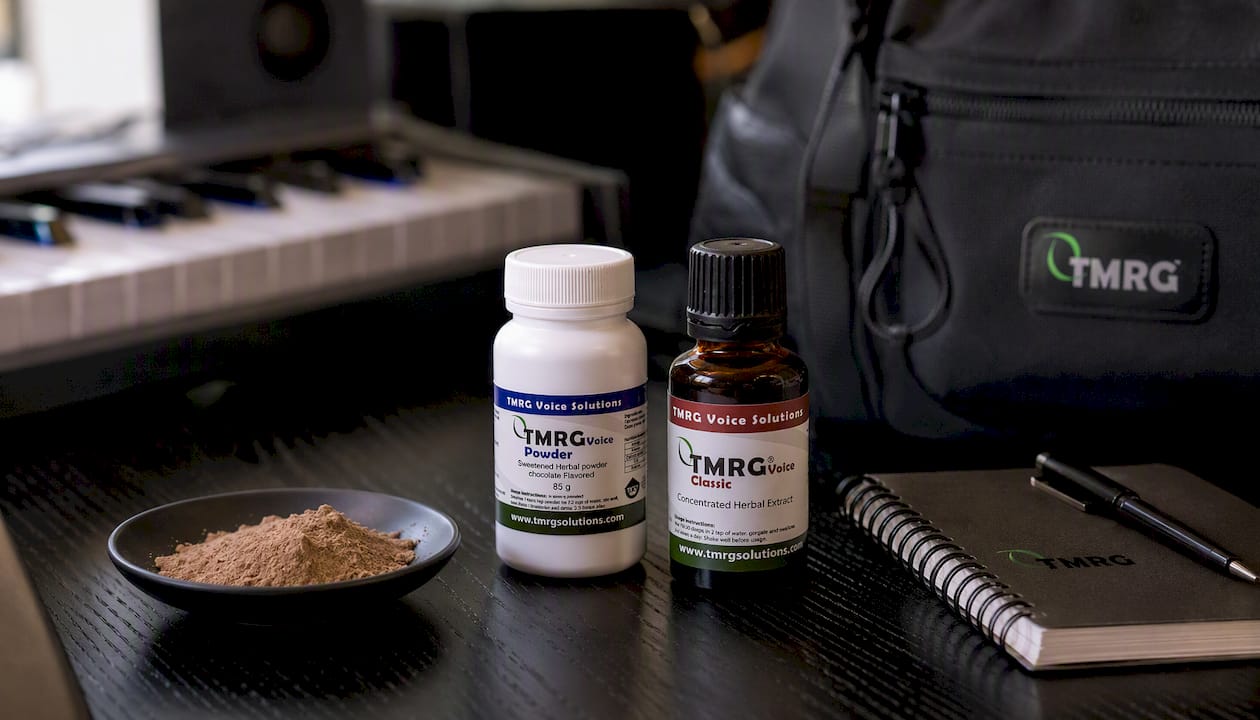
For moments when you need targeted hydration fast, before a second set or between scenes, the TMRG Loud & Clear drops are built for quick throat relief without disrupting your warm-up. Neither product claims to outperform basic vocal hygiene, but both are formulated specifically for the singer’s schedule, which most kitchen-cabinet remedies aren’t. If your routine already includes tea or lozenges, check the product pages and see which one fits the gap you’re missing.
It can help soothe the throat irritation that often accompanies laryngitis, but it doesn’t treat the underlying cause, so persistent laryngitis still needs a clinician’s evaluation.
Nothing heals vocal cords “fast” in a literal sense; voice rest, hydration, and humidification remain the core recovery tools, with demulcents like slippery elm supporting comfort along the way.
No herb directly heals the vocal folds, but demulcent herbs like slippery elm and marshmallow root soothe the surrounding throat tissue and can reduce strain from coughing or throat-clearing.
Its mucilage forms a gel-like coating over throat tissue, hydrating the lining and calming irritation, which is the same mechanism that makes marshmallow root popular for throat comfort among singers.
Both work through similar mucilage-based mechanisms, though marshmallow root is often considered a more sustainable option and some singers find it produces less thickness in saliva.
