Your Cart is Empty


TL;DR:
- In vocal emergencies, hydrate with room-temperature water, avoid menthol, and perform straw phonation to reduce strain.
- Follow this quick routine with steam, voice rest, and gentle warm-ups to support recovery before a performance.
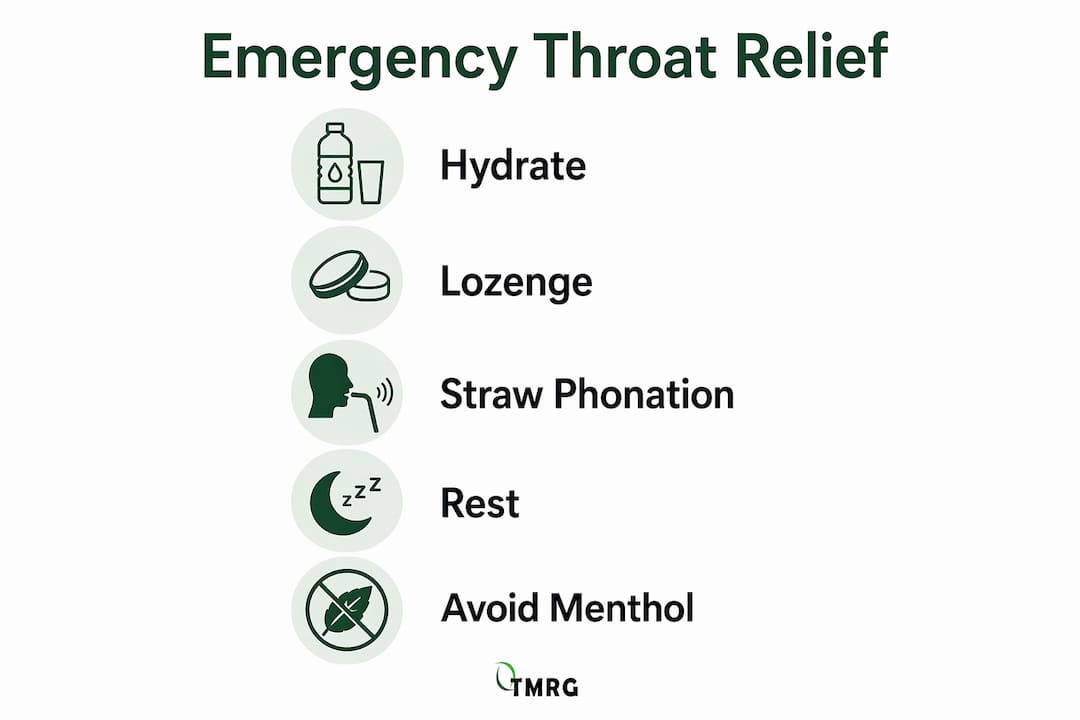
When your voice is in crisis before a performance, the fastest path to relief is this: sip room-temperature water, drop the menthol lozenge, do 60 seconds of straw phonation, inhale steam or run a humidifier, and go silent until showtime.
Your 60-second emergency checklist:
TL;DR: Hydrate, ditch menthol, do SOVT straw phonation, steam, and rest. These five steps, taken in the first 60 seconds, give your vocal folds the best chance of recovering before you perform.
Follow this sequence precisely. Each step builds on the last.
On medication: If you need pain relief on performance day, choose acetaminophen. NSAIDs like ibuprofen thin the blood and raise the risk of vocal fold hemorrhage in already-inflamed tissue. That risk is real and not worth taking on a show day.
Pro Tip: If you feel the urge to clear your throat, swallow firmly instead, then take a small sip of water. A single, soft cough is far less damaging than repeated forceful throat clearing, which causes a vicious cycle of irritation and mucus buildup.
Several popular “fixes” actively harm your vocal folds. Know them before you reach for the wrong thing.
The tea myth, clarified: Warm tea with honey soothes the throat and supports systemic hydration, but liquids do not directly contact the vocal folds — they travel down the esophagus, not the trachea. The benefit is real but indirect. Do not expect tea to “fix” inflamed folds; it buys comfort and systemic moisture, nothing more.
SOVT exercises are the single most evidence-backed tool you have in an acute situation. Vocal coach Topher Keene describes straw phonation as a physiological method for reducing the collision force of tired or inflamed vocal folds, making it suitable for emergency use when done gently.
Straw phonation protocol:
Alternative SOVT shapes include lip trills (blow air through loosely closed lips while voicing) and humming on an “ng” sound with teeth slightly apart. Both create similar back pressure without requiring a straw.
After a performance, use these gentle warm-downs:
Pro Tip: SOVT exercises are appropriate when your voice is tired or mildly inflamed. If speaking at a normal volume causes pain, skip the exercises entirely and go straight to complete vocal rest. Exercises for vocal support are tools, not obligations.

| Timeframe | What to expect | Action |
|---|---|---|
| — | Mild hoarseness, fatigue, sticky mucus | Rest, hydrate, steam, SOVT only |
| — | Gradual improvement with true rest | Continue rest; gentle humming only |
| — | Voice begins to normalize | Light warm-ups; monitor carefully |
| — | No improvement or worsening | Contact your primary care provider |
| Beyond 2 weeks | Persistent hoarseness | See an ENT promptly |
Red flags that require urgent ENT attention:
When you do see a clinician, bring a voice recording of your problematic range, a log of symptom onset and duration, a list of all medications and home remedies used, and notes on your recent performance schedule. This information significantly shortens the diagnostic process. For guidance on preventing hoarseness before it becomes a crisis, Tmrgsolutions has a dedicated resource worth bookmarking.
This is the hardest call. Use this framework.
Decision checklist:
If you must perform:
Scripts for your team:
On financial and insurance considerations, check your performance contract and speak with your manager or agent about force majeure clauses before making a final call.
The recommendations in this article are grounded in ENT and voice-coach guidance, not folk remedies.
Hydration and steam are backed by UT Southwestern’s voice-care team, which identifies steam as the most direct delivery method for moisture to the larynx. NIDCD supports maintaining environmental humidity at 30% or higher. Glycerin-based lozenges are recommended by both UT Southwestern and voice clinician Korovin MD as the safer alternative to menthol. SOVT straw phonation is validated by Topher Keene as a physiological tool for reducing fold collision force. The NSAID caution comes directly from Keene’s clinical guidance for performers. The University of Utah Health’s Voice Disorders Center confirms that persistent voice changes lasting a month or longer warrant a full medical evaluation.
From Tmrgsolutions: These recommendations reflect the same principles that have guided our vocal health formulations for over 25 years. Golan and the TMRG team work with singers, actors, and voice professionals who need solutions grounded in physiology, not marketing. Endorsements from vocal coaches and medical professionals have shaped every product in the TMRG line.
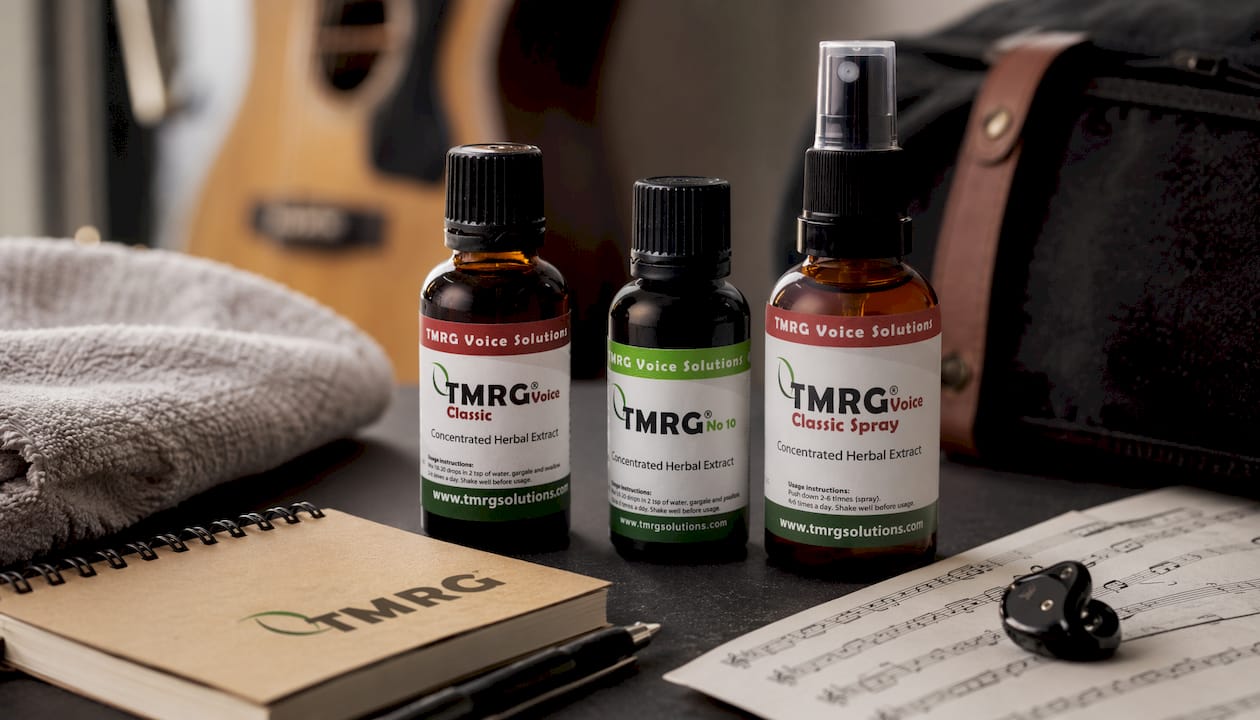
When you need a topical option alongside rest and hydration, Tmrgsolutions offers three targeted rescue products designed specifically for performers.
TMRG Loud & Clear drops are the flagship recovery option, formulated without menthol and designed to soothe and support vocal fold tissue before and after performance. Use them as directed, and avoid doubling up with other numbing agents.
TMRG Impact drops offer on-the-spot enhancement support for moments when your voice needs an extra layer of care during a demanding set or rehearsal block.
TMRG Shine Bright spray delivers fast topical relief in a convenient format. Use it pre-performance as directed; do not exceed recommended frequency, and discontinue use if you experience any allergic reaction or if symptoms are severe enough to warrant ENT care.
All three products are adjuncts to rest, hydration, and proper vocal technique. They are not substitutes for medical attention when red flags appear. Visit the Tmrgsolutions store to find the right option for your situation.
The single most effective habit for preventing vocal emergencies is consistent daily hydration combined with humidification and brief SOVT practice, maintained before a crisis ever starts.
| Point | Details |
|---|---|
| Hydrate first | Aim for about 64 ounces of water daily; sip room-temperature water immediately during an emergency. |
| Choose glycerin, not menthol | Glycerin-based lozenges increase oral moisture safely; menthol dries and irritates vocal tissue. |
| SOVT straw phonation | Five to eight gentle repetitions reduces vocal fold collision force without adding strain. |
| Know your red flags | Hoarseness beyond two weeks, blood-tinged mucus, or breathing difficulty requires urgent ENT care. |
| Tmrgsolutions rescue options | TMRG Loud & Clear drops, Impact drops, and Shine Bright spray offer menthol-free topical support for performers. |
The performers who handle vocal emergencies best are rarely the ones with the strongest voices. They are the ones who have built consistent daily habits: steady hydration, a humidifier running overnight, and a short SOVT routine before every rehearsal. When a crisis hits, those habits give the vocal folds a foundation to recover from.
The hardest lesson for most singers is accepting that short-term fixes, whether a numbing spray or pushing through a painful set, almost always cost more than they save. A canceled show is recoverable. A vocal fold hemorrhage or a lesion that requires surgery is a different matter entirely. If you are seeing red flags, please consult an ENT. Do not let a single performance become the reason you lose months of your career.
Tmrgsolutions exists to give performers practical, physiology-based tools for both daily care and acute recovery. Explore the daily vocal health strategies on the site to build the habits that make emergencies rare.
Medical centers and ENT guidance:
Voice clinicians and coaches:
This article is general information for educational purposes, not medical advice. Confirm current guidance with a qualified ENT or speech-language pathologist for your specific situation.
Sip room-temperature water, use a glycerin-based lozenge, and do 60 seconds of straw phonation. These three steps reduce vocal fold strain and improve mucosal moisture faster than any single remedy alone.
No. Menthol creates a temporary cooling sensation but dries the throat tissue and increases the urge to clear your throat, which worsens vocal fold irritation. Glycerin-based lozenges are the recommended alternative.
See an ENT if hoarseness persists beyond two weeks, if you experience sudden complete voice loss, blood-tinged mucus, severe swallowing pain, or any breathing difficulty.
Whispering does not protect the voice. It often requires more muscular tension than normal speech and can strain the vocal folds as much as talking. True vocal rest means complete silence.
TMRG Loud & Clear drops are the primary recovery option for acute situations. TMRG Shine Bright spray offers fast topical relief pre-performance. Both are menthol-free and designed for performer use.
