Your Cart is Empty


TL;DR:
- The market is flooded with throat recovery products for singers — but most don’t deliver. This complete guide breaks down the categories of products that actually work, what ingredients to look for, and how to build an effective throat recovery toolkit without wasting money on gimmicks
Singer throat recovery products are specialized lozenges, sprays, oils, and herbal remedies designed to soothe irritated vocal folds, reduce inflammation, and restore vocal clarity after strain. Every singer faces vocal fatigue at some point, whether from a long rehearsal, a demanding performance, or illness. The right products speed recovery and protect your voice. The wrong ones can mask pain and cause lasting damage. This guide covers the main product categories, the ingredients that actually work, and the mistakes that slow singers down.
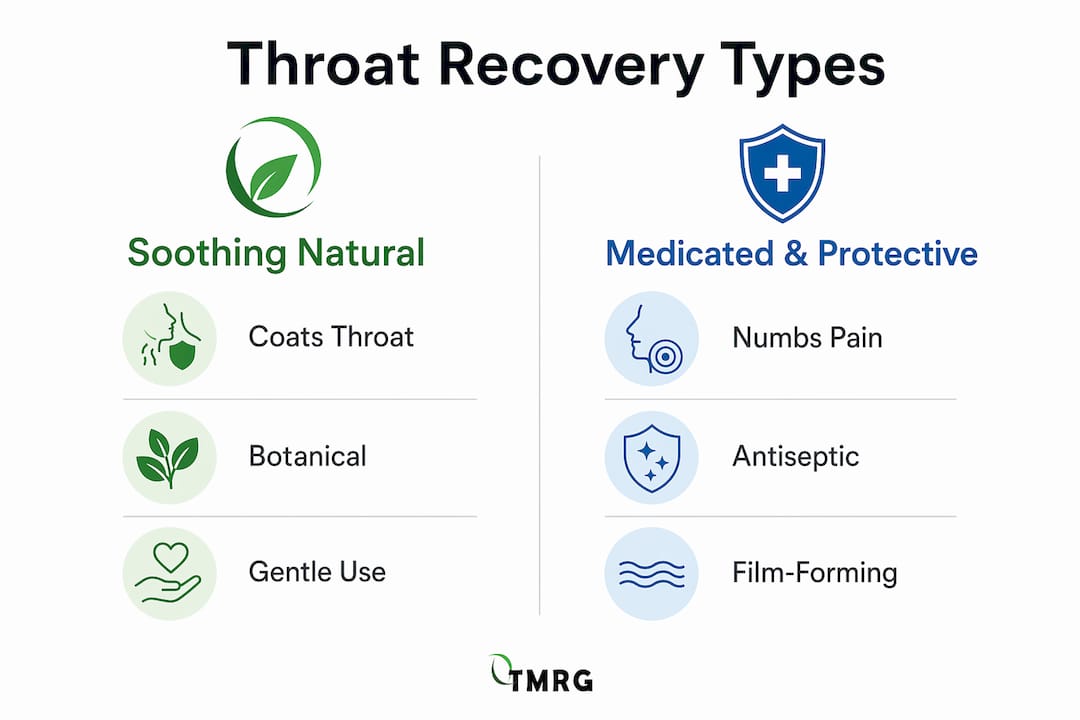
Throat recovery products for singers fall into three main categories: soothing natural, medicated, and protective film-forming types. Each category serves a different purpose, and using the right one for your symptoms makes a real difference.
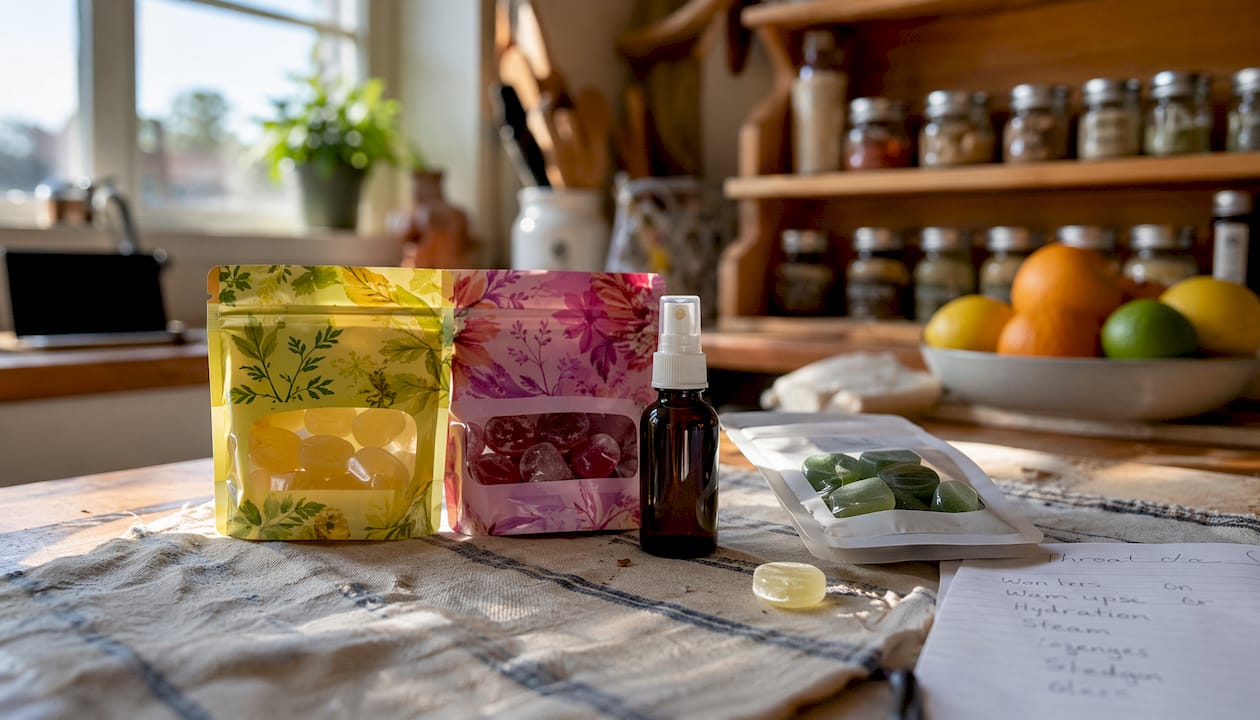
Soothing natural lozenges rely on botanical and mucilaginous ingredients. Slippery elm, marshmallow root, and honey coat the throat with a thin protective layer that reduces friction on the vocal folds. These are the safest option for daily use and work well for general dryness or mild irritation after singing.
Medicated lozenges often contain menthol, antiseptics like cetylpyridinium chloride, or numbing agents. They deliver faster symptomatic relief, but they carry real risks for singers. Menthol can irritate sensitive vocal tissue in some people, and numbing agents like benzocaine are genuinely dangerous before a performance.
Protective or film-forming products include throat sprays and specialized oils that coat and hydrate the vocal folds directly. These products work faster than lozenges because the active ingredients reach the throat without being dissolved slowly in the mouth. They are especially useful backstage or between sets.
| Category | Primary benefit | Best use case | Key caution |
|---|---|---|---|
| Soothing natural lozenges | Coats and soothes throat | Daily use, mild irritation | Avoid sugar-heavy formulas |
| Medicated lozenges | Fast symptomatic relief | Acute soreness, illness | Avoid numbing agents before performing |
| Film-forming sprays and oils | Direct hydration and protection | Between sets, backstage | Check for alcohol content |
The ingredients in a product determine whether it helps or harms your voice. Not all throat products are made with singers in mind, so reading labels carefully is non-negotiable.
Slippery elm and marshmallow root are mucilaginous agents. They dissolve into a gel-like coating that soothes inflamed tissue and reduces friction on the vocal folds. These are among the most trusted ingredients in natural vocal remedies for performers.
Honey acts as a natural antimicrobial and anti-inflammatory. It also adds a mild coating effect and is gentle enough for daily use.
Propolis is a resin produced by bees with strong antimicrobial and anti-inflammatory properties. Marshmallow root and propolis together address both soothing and infection-fighting needs simultaneously.
Ginger reduces inflammation and improves circulation to throat tissue. It pairs well with honey in teas and lozenges.
Menthol creates a cooling sensation that feels soothing, but menthol-containing products can irritate some singers and are better avoided by those with sensitive vocal tissue.
Vitamin C and zinc support immune function and help the body fight the underlying causes of vocal strain, including viral infections.
Benzocaine and other numbing agents are the ingredients to avoid. They block pain signals entirely, which means you cannot feel when you are damaging your vocal folds.
Pro Tip: Never use a lozenge with benzocaine before or during a performance. The numbing effect removes your body’s warning signal, and singers who perform through pain risk vocal hemorrhage or chronic cord damage.
Singers can customize their throat recovery protocols based on symptoms. Dryness calls for mucilaginous agents. Inflammation calls for propolis and ginger. Immune support calls for vitamin C and zinc. Matching the ingredient to the problem is more effective than reaching for the same product every time.
Choosing the right product starts with identifying your primary symptom. Dryness, inflammation, and irritation each respond to different formulations. Using a general-purpose product for a specific problem often delivers underwhelming results.
Match the product to the symptom. Dry throat after a long rehearsal responds best to mucilaginous lozenges or a hydrating throat spray. Acute soreness from illness calls for anti-inflammatory ingredients like propolis or ginger. Persistent hoarseness that lasts more than a few days warrants a visit to a laryngologist, not just another lozenge.
Use lozenges at the right frequency. Most soothing lozenges are safe to use every two to three hours during periods of active vocal strain. Overconsumption of menthol products can worsen dryness despite the temporary relief they provide. Follow the product’s recommended dosage and resist the urge to use more when symptoms persist.
Hydrate alongside every product you use. No lozenge or spray replaces water. The vocal folds are hydrated from the inside out, meaning systemic hydration through drinking water is more effective than topical products alone. Aim for consistent water intake throughout the day, not just before you sing.
Warm up your voice before performing, even when your throat feels better. Products reduce symptoms, but they do not repair tissue or restore muscle readiness. A gentle vocal warm-up routine prepares the vocal folds for the demands of performance and reduces the risk of re-injury.
Choose sugar-free formulas when possible. Sugar feeds bacteria and can contribute to throat irritation over time. Many natural lozenges use xylitol or stevia as sweeteners, which are safer for regular use.
Pro Tip: Sprays reach the throat faster than lozenges and are ideal for quick relief between songs. Keep a small herbal throat spray in your pocket during performances instead of relying on lozenges that take several minutes to dissolve.
Singers who rely solely on products without addressing vocal technique or rest habits will find their recovery stalls. Products are a support system, not a substitute for proper vocal care.
Lozenges are the most visible category of vocal health products, but they are not the only tools worth using. Several complementary products address the conditions that lozenges cannot reach.
Saline and herbal throat sprays help maintain throat moisture and reduce inflammation, making them effective complements to lozenges during recovery. Saline sprays thin mucus and clear irritants from the throat without any risk of chemical irritation. Herbal sprays with echinacea or licorice root add anti-inflammatory support.
Humidifiers add moisture to the air you breathe, which directly benefits vocal fold hydration. Sleeping with a humidifier in a dry climate or during winter months reduces morning hoarseness significantly. A cool-mist humidifier set to 40–60% relative humidity is the standard recommendation for vocal performers.
Herbal teas with licorice root, chamomile, or ginger provide anti-inflammatory benefits and systemic hydration simultaneously. Avoid teas with caffeine, which acts as a diuretic and counteracts hydration efforts.
Elderberry supplements support immune function and reduce the duration of upper respiratory infections. Elderberry gummies or syrups are easy to incorporate into a daily routine during high-demand performance seasons.
Homeopathic pellets formulated for voice loss or hoarseness are used by many professional singers as a complementary tool. Their mechanism differs from herbal products, and results vary by individual.
| Product type | Primary function | When to use |
|---|---|---|
| Saline throat spray | Clears irritants, thins mucus | Daily or after exposure to dry air |
| Herbal tea | Anti-inflammatory, hydration | Morning and evening |
| Humidifier | Environmental moisture control | Overnight, especially in dry climates |
| Elderberry supplement | Immune support | During illness or high-demand seasons |
Integrating these products into a consistent vocal care routine produces better results than using them reactively only when symptoms appear.
The most common mistakes with throat recovery products come from misunderstanding what these products can and cannot do. Recognizing these patterns helps you avoid them.
Using numbing agents before performing. Benzocaine lozenges can cause singers to perform through pain, leading to vocal hemorrhage or chronic damage. Pain is a protective signal. Removing it entirely during a performance removes your ability to protect your voice.
Overusing menthol products. Menthol feels cooling and soothing, but frequent use can dry out throat tissue and cause rebound irritation. Use menthol-containing products sparingly and only when other options are not available.
Ignoring hydration and vocal rest. Many singers rely solely on throat products and ignore hydration, vocal rest, or technique adjustments, which delays true recovery. Products reduce symptoms. Rest and hydration repair tissue.
Skipping professional consultation for persistent symptoms. Hoarseness that lasts more than two to three weeks requires evaluation by a laryngologist. Voice changes from laryngitis typically improve within 2–4 weeks. Symptoms that extend beyond that window may indicate a structural issue that no product can address.
Treating products as a long-term solution without fixing technique. Long-term vocal health requires addressing underlying causes such as poor technique and dehydration rather than relying solely on symptomatic throat products.
Pro Tip: If you find yourself reaching for a throat product before every rehearsal, treat that as a signal. Your technique, hydration habits, or warm-up routine likely needs adjustment. Products should be occasional support, not a daily crutch.
Effective singer vocal care requires matching the right product to the right symptom while keeping hydration, rest, and technique at the center of every recovery plan.
| Point | Details |
|---|---|
| Match product to symptom | Use mucilaginous agents for dryness, anti-inflammatory ingredients for soreness, and sprays for fast relief. |
| Avoid numbing agents | Benzocaine masks pain and can lead to vocal hemorrhage when singers perform through injury. |
| Hydrate systemically | Water hydrates vocal folds from the inside out; no topical product replaces consistent water intake. |
| Use complementary products | Humidifiers, herbal teas, and elderberry supplements extend recovery beyond what lozenges alone can achieve. |
| Seek professional help early | Hoarseness lasting more than 2–4 weeks needs laryngologist evaluation, not more product use. |
By Golan
After working with singers at every level for over two decades, the pattern I see most often is this: performers reach for a product when they should be reaching for rest. There is nothing wrong with a good herbal lozenge or a quality throat spray. They genuinely help. But I have watched singers use them as permission slips to keep performing when their voice is clearly telling them to stop.
The products I trust most are the ones built around mucilaginous and anti-inflammatory botanicals. Slippery elm, marshmallow root, propolis, and honey are not glamorous ingredients, but they have a track record that synthetic alternatives cannot match. I am skeptical of any lozenge that leads with menthol or includes a numbing agent. Those products prioritize the feeling of relief over actual tissue recovery.
The singers who recover fastest are not the ones with the most products. They are the ones who treat products as one layer of a broader routine that includes real hydration, genuine vocal rest, and honest attention to technique. If your throat hurts every time you sing, a lozenge is not the answer. Your breath support, your resonance placement, or your warm-up protocol probably needs work. Products support recovery. They do not fix the root cause.
— Golan
Tmrgsolutions brings 25+ years of vocal health expertise into every product it formulates for singers, actors, and speakers.

The TMRG Loud & Clear voice recovery drops and the TMRG Shine Bright throat spray are built around natural herbal formulations that soothe, hydrate, and protect the vocal folds without numbing agents or harsh chemicals. For singers who want a complete recovery system, the TMRG Voice Therapy Kit bundles the core products into a single routine designed for both amateur and professional performers. Every product in the Tmrgsolutions line is formulated with the specific demands of vocal performance in mind, not just general throat comfort.
Lozenges containing slippery elm, marshmallow root, honey, or propolis are the safest options for singers. These ingredients soothe and coat the vocal folds without numbing agents that mask pain or menthol that can irritate sensitive tissue.
Voice changes from laryngitis typically improve within 2–4 weeks with proper rest, hydration, and supportive products. Recovery that extends beyond that window warrants evaluation by a laryngologist.
No. Lozenges reduce symptoms but do not repair vocal fold tissue. Vocal rest, systemic hydration, and technique correction are the foundations of true recovery; products support that process but cannot replace it.
Benzocaine numbs the throat entirely, removing the pain signal that protects your vocal folds during performance. Singers who use numbing lozenges before performing risk vocal hemorrhage or chronic cord damage by pushing through injury they cannot feel.
Saline and herbal throat sprays, cool-mist humidifiers set to 40–60% relative humidity, elderberry supplements, and herbal teas with licorice root or chamomile all support recovery alongside lozenges. These products address hydration, inflammation, and immune function from multiple angles simultaneously.
