Your Cart is Empty


Yes, thyroid problems can change a singing voice. Hoarseness, a rougher tone, lost head voice, and early vocal fatigue are all documented effects of hypothyroidism, hyperthyroidism, and thyroid nodules or surgery. If you notice these changes, get thyroid function tests (TSH and free T4), see an ENT for laryngoscopy, and consult an endocrinologist. Document exactly when and how your voice changed before your appointment.
TL;DR:
- Thyroid hormone imbalance can cause vocal fold swelling, leading to lower pitch, roughness, and loss of agility, especially in hypothyroidism.
- Hyperthyroidism may cause voice instability, tremor, and breathiness due to neuromuscular fatigue rather than tissue thickening.
- Nerve injuries from thyroid surgery, particularly to the external branch of the superior laryngeal nerve, can specifically impair head voice and pitch control.
- Acoustic measures like jitter, shimmer, and maximum phonation time can objectively reveal thyroid-related vocal changes, guiding timely diagnosis.
- Early thyroid function testing, laryngoscopy, and coordinated specialist care improve chances of vocal recovery and help manage long-term nerve or muscle damage.
Your vocal folds carry thyroid hormone receptors, which means the same hormone imbalance that slows your metabolism also reshapes the tissue you sing with. This isn’t a coincidence of anatomy. It’s the reason thyroid disease shows up as a voice problem before some patients even notice fatigue or weight changes.
Hypothyroidism is the more common culprit for singers. When thyroid hormone drops, fluid accumulates in the vocal fold tissue in a process called myxedema. That fluid thickens the lamina propria, the pliable middle layer of the vocal fold responsible for fine vibration. A thickened fold vibrates slower and less precisely, which lowers pitch, adds roughness, and reduces agility on fast passages or runs. Alongside this, the cricothyroid muscle, the muscle that stretches the vocal folds to produce your head voice and upper range, can weaken or atrophy under chronic hormone deficiency. Singers frequently describe this as their high notes simply “not being there anymore.”
Hyperthyroidism works differently but is equally disruptive. Excess thyroid hormone triggers tremor and drives respiratory and neuromuscular fatigue, so the voice becomes unstable and breathy rather than thick and rough. A singer with hyperthyroidism might notice their sustained notes wobble or their breath support gives out faster than usual, even in pieces they’ve sung for years.
Nerve involvement is the third mechanism, and the one with the most serious long-term stakes. Thyroid inflammation or thyroid surgery can affect the external branch of the superior laryngeal nerve (EBSLN) or the recurrent laryngeal nerve. Damage to the EBSLN specifically impairs the cricothyroid muscle’s function, producing register-specific problems like a vanished head voice, while recurrent laryngeal nerve involvement tends to cause broader, sometimes one-sided vocal fold weakness.
Just how common is this? Voice changes appear in an unusually wide range of hypothyroid patients, between 2% and 98% depending on the study, and in roughly 27% of hyperthyroid patients. That wide range reflects differences in how “voice change” gets measured across studies, but the pattern holds: thyroid dysfunction and vocal symptoms travel together far more often than most singers assume.
The perceptual signs tend to arrive before a singer thinks to blame their thyroid. Hoarseness is usually first, followed by a voice that sounds deeper or rougher than your baseline. Many singers report their upper register thinning out or disappearing entirely, along with vocal fatigue that hits earlier in a rehearsal than it used to. Projection often suffers too, since a swollen or stiffened vocal fold doesn’t carry sound as efficiently.
Clinicians quantify these complaints with objective acoustic measures, and understanding them helps you interpret your own evaluation results:
Studies measuring these parameters consistently find that hypothyroid patients show elevated jitter and shimmer, lower HNR, and shorter MPT compared to healthy controls, and these acoustic shifts map directly onto real singing problems. A weakened passaggio, unstable high notes that crack or flip unpredictably, and a persistently breathy tone in the middle voice are the practical translations of these lab measurements.
Subtle, gradual changes over months, especially alongside fatigue, weight shifts, or cold intolerance, warrant a routine workup. Sudden voice loss, one-sided weakness, or a rapidly growing neck lump are different: those call for urgent evaluation, not a wait-and-see approach.
Three specialists matter here, and each answers a different question. An ENT (laryngologist) examines your vocal folds directly and rules out structural problems like nodules or paralysis. A phoniatrician or voice-focused speech-language pathologist measures how your voice actually functions during phonation and designs rehabilitation. An endocrinologist manages the thyroid disease itself, since correcting the hormone imbalance is often the single biggest lever for vocal recovery.
The core workup usually includes:
Abnormal TSH with normal laryngoscopy usually points toward a purely hormonal cause, which responds well to medical treatment. Abnormal laryngoscopy with nerve findings on EMG suggests a structural or neurological component that may need surgical or intensive rehabilitative care instead of hormone therapy alone.
Pro Tip: Bring a recorded sample of your voice from before symptoms started if you have one, plus a written range chart noting exactly which notes have become unreliable. Specialists can compare that baseline against your current acoustic results far more precisely than relying on your memory of “how I used to sound.”
Hormone replacement with levothyroxine is the frontline treatment for hypothyroid-related voice change, and it works, though not always completely. Hormone correction commonly improves hoarseness along with objective measures like shimmer, jitter, and noise-to-harmonic ratio fairly soon after treatment starts. That’s genuinely good news for most singers.
The caveat matters just as much as the good news. Pitch and vocal range are the outcomes most resistant to full restoration, particularly when the hormone imbalance has been present for a long time before diagnosis. If your cricothyroid muscle has atrophied significantly or if EBSLN involvement has set in, hormone replacement addresses the fluid and metabolic side of the problem but may not fully reverse muscle or nerve changes.
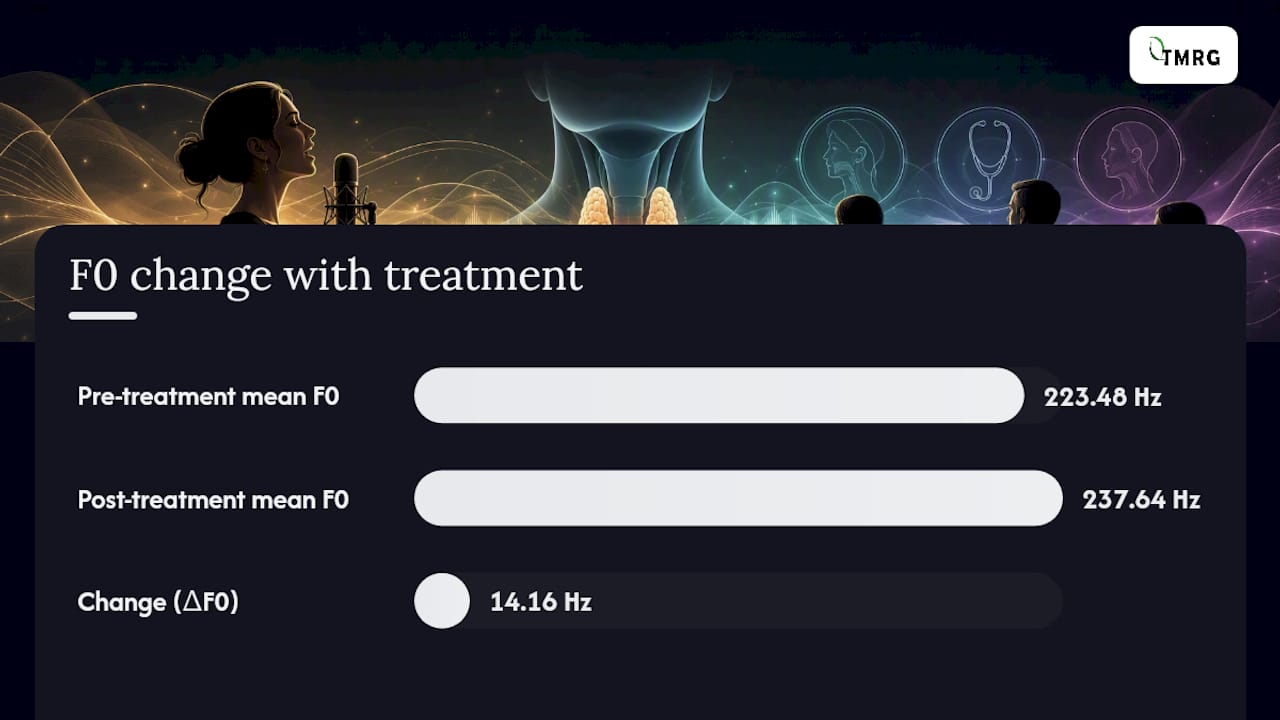
One prospective study offers a concrete illustration. After total thyroidectomy and subsequent thyroid hormone replacement, mean fundamental frequency rose from about 223.48 Hz to about 237.64 Hz in the female patients tracked. That’s a real, measurable improvement in pitch, but it also shows recovery is gradual and partial rather than an immediate full reset.
Surgery decisions for singers carry extra weight, since even a technically successful thyroidectomy carries some risk to the nerves controlling pitch and volume. Surgeons weighing nodule removal against a singer’s career should ideally coordinate with the singer’s voice team before the operating room date is set, not after.
Supportive voice care during any of this, adequate hydration, avoiding vocal strain, and pacing rehearsal intensity, doesn’t cure the underlying thyroid condition, but it prevents secondary damage while your hormone levels stabilize. The NIDCD’s general vocal hygiene guidance is a solid baseline framework to follow alongside medical treatment.
Thyroid surgery puts two nerves directly at risk, and each produces a distinct vocal signature. The recurrent laryngeal nerve controls most of the muscles that open and close your vocal folds; injury here causes hoarseness, breathiness, or, in severe cases, significant volume loss. The external branch of the superior laryngeal nerve (EBSLN) controls the cricothyroid muscle specifically, so damage to it targets your head voice and pitch control almost exclusively. A singer can lose top-range access after EBSLN injury while their speaking voice sounds nearly normal, which is exactly why standard post-op checkups sometimes miss the problem.
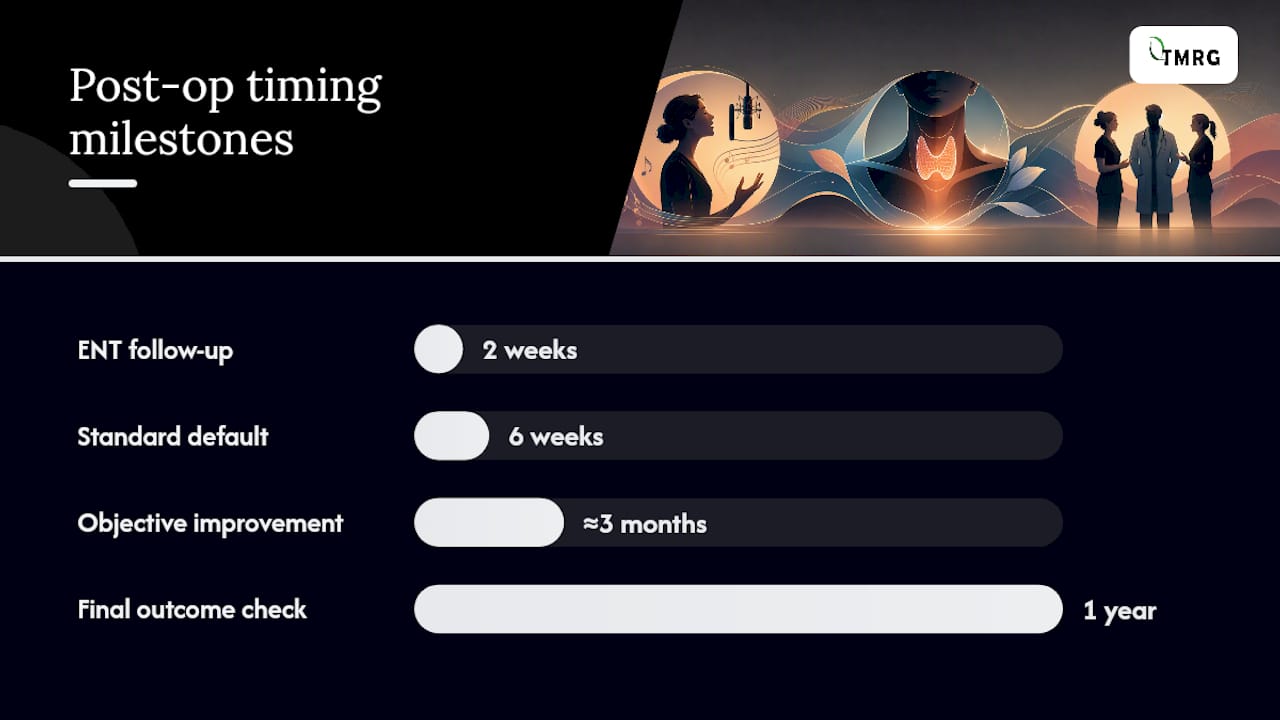
Recovery follows a recognizable but imperfect pattern. Many objective acoustic measures show improvement by around three months post-surgery, but range and fine register control can lag well behind, sometimes permanently, if the nerve injury was significant. EMG and stroboscopy together help clinicians predict which pattern you’re looking at early, rather than waiting a year to find out.
Clinical guidance on pre- and post-thyroid-surgery voice care emphasizes exactly this staged approach: early monitoring, gradual reintroduction of vocal demand, and close coordination between the surgical team and voice rehabilitation specialists.
Pro Tip: If you’re a working singer scheduling elective thyroid surgery, request your acoustic baseline (jitter, shimmer, HNR, MPT) be recorded before the operation. Without a pre-op number, it’s nearly impossible to prove objectively how much of any post-op change is surgical versus something else.
Chronic thyroid disease, especially autoimmune thyroiditis like Hashimoto’s, isn’t a one-and-done diagnosis for your voice. It’s a condition that deserves periodic rechecking, because inflammation in Hashimoto’s can progressively affect the EBSLN over years, and that kind of nerve involvement is far easier to manage when caught early. Case reports describe singers with long-standing Hashimoto’s losing head voice function gradually, with EMG confirming denervation only after the damage was already substantial.
A sensible monitoring cadence for a singer with known thyroid disease looks like this: baseline laryngoscopy and acoustic testing at diagnosis, then reassessment every 6 to 12 months, or sooner if you notice new hoarseness, fatigue, or range loss. That interval isn’t arbitrary. It’s frequent enough to catch a slow-developing nerve problem before it becomes irreversible, without turning your life into a string of unnecessary appointments.
The rehabilitation side runs in stages. Immediate symptomatic care addresses the acute complaint, whether that’s hoarseness, dryness, or fatigue. From there, a speech-language pathologist with voice specialization can lead targeted exercises aimed at rebuilding range and register stability, followed by slow, progressive vocal loading with performance-readiness checks before you commit to a full concert schedule again.
| Rehab stage | What it involves | Who leads it |
|---|---|---|
| Acute symptom care | Hydration, vocal rest, symptomatic support | Singer, with SLP guidance |
| Targeted rehab | Range-rebuilding exercises, register work | Voice-specialized SLP |
| Progressive return | Gradual loading, readiness checks | SLP and ENT jointly |
| Long-term monitoring | Periodic acoustic and laryngoscopy recheck | ENT and endocrinologist |
Topical hydration products, targeted oils, and recovery drops have a real but limited role in this picture. They support comfort and symptom relief. They are not a substitute for endocrine treatment or specialist-led rehabilitation, and no supportive product changes a TSH value or repairs a nerve. Within that honest framing, TMRG Loud & Clear Classic Voice Recovery Drops are often used during the acute symptomatic stage to ease day-to-day hoarseness, while TMRG Protection Voice Synergy Oil supports hydration during the progressive return-to-performance phase, and TMRG Impact Voice Enhancement Drops can serve as an adjunct once your clinician has cleared you for fuller vocal loading.
Tmrgsolutions brings 25+ years focused on vocal health, and that background informs how these products are positioned, as supportive tools within a clinician-directed plan, never a replacement for one. If you’re managing inflammation, recent surgery, or an active thyroid flare, get clearance from your ENT or endocrinologist before adding any supplement or topical agent to your routine.
Thyroid disease isn’t the only reason a singer’s voice degrades, and mistaking one cause for another delays proper treatment. Acid reflux, for instance, produces hoarseness and throat clearing that can mimic early hypothyroid symptoms, but reflux typically worsens after meals or lying down, a pattern thyroid dysfunction doesn’t follow. Vocal fold nodules from overuse cause a rough, breathy quality similar to myxedema-related thickening, but nodules usually develop gradually with heavy singing load and show a characteristic hourglass gap on laryngoscopy rather than diffuse tissue thickening.
Allergies and postnasal drip cause throat irritation and voice fatigue too, but they come with nasal congestion and seasonal patterns thyroid disease lacks. Simple vocal overuse from an intense rehearsal schedule causes fatigue and reduced range, but it typically resolves with a few days of rest, while thyroid-related fatigue persists or worsens without medical intervention.
The clearest differentiator is the systemic picture. Thyroid-related voice change rarely travels alone. It tends to arrive with fatigue, weight change, cold or heat intolerance, hair thinning, or heart rate changes that point beyond the larynx. If your voice symptoms show up isolated with no other system affected, look first at reflux, overuse, or allergy. If they arrive alongside broader physical changes, the thyroid function tests come first.
Key references to include peer-reviewed research on voice characteristics in thyroid disorders, acoustic changes in hypothyroidism, and EBSLN involvement in Hashimoto’s thyroiditis. For symptom management resources, see Tmrgsolutions’s guidance on hoarseness treatment and chronic voice loss.
Get tested early. Recovery is often real, but timing and specialist care decide how much of your range comes back.
— Golan
If you’re navigating thyroid-related hoarseness or vocal fatigue, Tmrgsolutions gives you targeted, natural support you won’t find bundled into a generic supplement aisle or a one-size-fits-all vocal rest regimen. Every product is built specifically around vocal recovery, not general wellness, which matters when your instrument is your income.
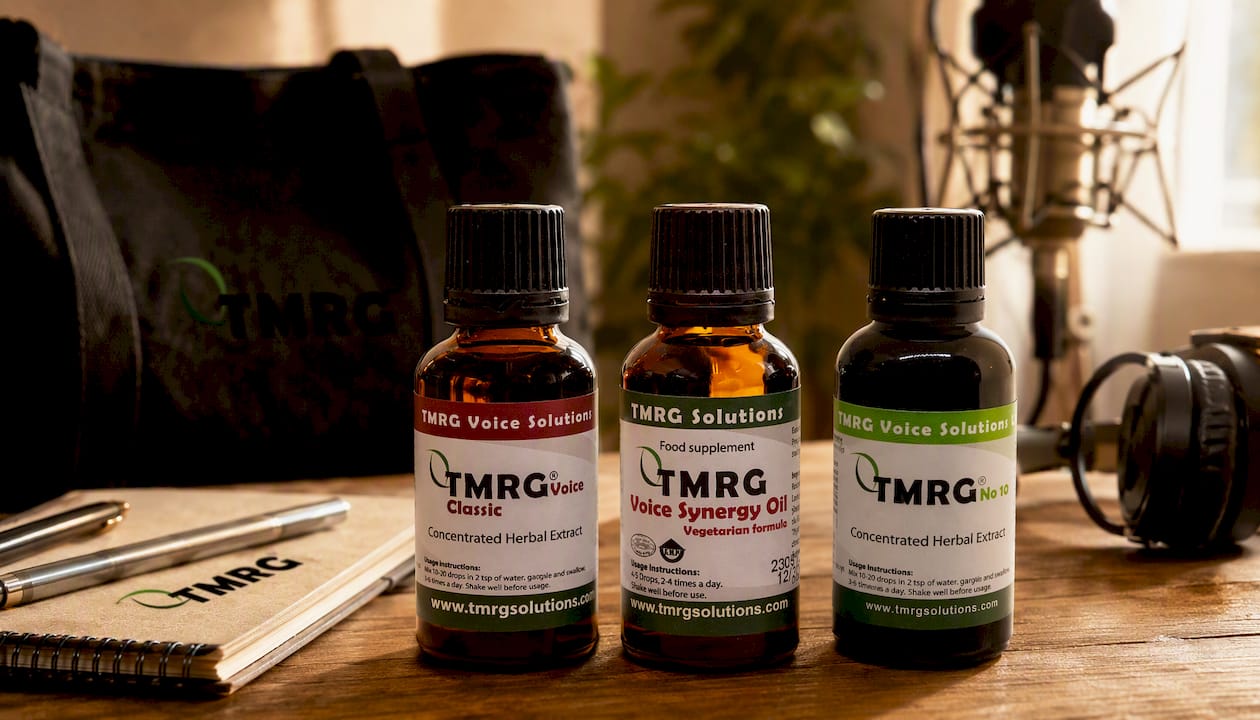
For the acute stage, TMRG Loud & Clear Classic Voice Recovery Drops address day-to-day hoarseness while your medical treatment takes effect. As you rebuild toward full vocal loading, TMRG Protection Voice Synergy Oil supports the hydration your vocal folds need during that transition, and browsing the full vocal problems shop will show you where each formulation fits your specific stage of recovery. Talk to your ENT or endocrinologist about your clearance timeline, then explore the shop to find the product that matches where you are right now.
Yes. Hypothyroidism and hyperthyroidism both commonly cause hoarseness, reduced range, and early vocal fatigue, and severe or long-standing cases can affect head voice specifically through cricothyroid muscle or nerve involvement.
Watch for hoarseness that doesn’t resolve with rest, a voice that sounds deeper or rougher than usual, high notes that feel harder to reach, and vocal fatigue that hits earlier than it used to in rehearsal.
Many objective voice measures improve within about three months after surgery, but full recovery of range and register control can take longer and may remain incomplete if a nerve like the EBSLN was affected.
A hypothyroid voice tends to sound deeper, rougher, and huskier with reduced projection and diminished high notes, while a hyperthyroid voice often sounds breathy and unstable due to tremor and fatigue.
Supportive products like hydrating oils or recovery drops can ease symptoms alongside medical treatment, but they work best as an adjunct once a medical professional has confirmed the diagnosis and cleared you for use.
