Your Cart is Empty


Allergy season doesn’t have to mean cancelled performances. This field guide covers everything singers need to know about managing allergies while continuing to perform — from pre-show preparation and safe medications to long-term vocal protection strategies.
Immediate actions before you sing:
Drink at least 16 oz of room-temperature water
Do a saline nasal rinse (a neti pot or squeeze bottle works well)
Inhale steam for 10 minutes to surface-hydrate the vocal folds
Avoid throat clearing — swallow gently or sip water instead
Take any antihistamine or nasal spray at least 2 hours before singing, not right before
Stop and rest if you notice any of these red flags:
Hoarseness lasting more than two weeks
Pain when speaking or swallowing
Breathlessness or a feeling of throat tightness
Blood in mucus or sputum
Sudden, unexplained loss of upper range
Allergy-related laryngitis often resolves within two weeks once allergen exposure stops, but persistent symptoms need a clinician’s attention, not another performance.
Singers with allergic rhinitis can protect their voices by combining local nasal treatments, timed medication trials, and SOVT-based warmups rather than relying on oral antihistamines alone on show day.
| Point | Details |
|---|---|
| Act locally first | Saline rinses and intranasal steroids reduce symptoms with minimal drying risk to the vocal folds. |
| Trial meds before show day | Never use a new systemic antihistamine for the first time on a performance day — test it during rehearsal. |
| Warm up gently | Use SOVT exercises (lip trills, straw phonation) to mobilize the voice without straining inflamed folds. |
| Know the red flags | Hoarseness beyond two weeks, pain, or sudden range loss requires an ENT visit, not another performance. |
| Tmrgsolutions products | The Loud & Clear drops, Shine Bright spray, and Defense spray offer targeted vocal support around allergy season. |
How should you warm up and protect your voice during allergy season?
What does the research actually show about allergies and singers?
The relationship between allergies and singing goes well past a stuffy nose. Allergic rhinitis triggers a cascade of physiological changes that directly compromise the precision your vocal folds need to produce a controlled, resonant sound.
Nasal congestion and resonance loss. Your nasal cavity is a primary resonance chamber. When it fills with inflamed tissue and mucus, the warm, full tone you’ve trained for becomes thin and hyponasal — the vocal equivalent of singing with a clothespin on your nose. Consonants blur, and the upper register loses its ring.
Postnasal drip and vocal fold irritation. Mucus draining down the back of the throat coats the vocal folds, causing edema (swelling) and surface irritation. Swollen folds vibrate less efficiently, which produces hoarseness, pitch breaks, and a shortened sustainable range. The reflex to clear the throat makes this worse: each forceful throat clear slams the folds together with roughly the same impact as a cough.
Inflammation and mass changes. Even mild laryngeal inflammation increases the mass of the vocal folds. Heavier folds require more subglottic air pressure to vibrate, which accelerates fatigue and makes high notes feel like a physical struggle rather than a technical one.
A 2026 study published in the Journal of Voice found a statistically significant association between seasonal allergic rhinitis and singers’ self-reported reductions in singing ability, with participants reporting higher Singing Voice Handicap Index (SVHI) and EASE scores alongside frequent pitch breaks, vocal fatigue, and difficulty sustaining phrases.
Stat to know: A clinical series of professional singers found that those with allergic rhinitis had 3.7 times the odds of postponing performances and 4.4 times the odds of singing with active laryngeal inflammation compared to non-allergic peers.
Time-ordering your allergy management on show day makes a measurable difference. Here is a practical sequence you can follow from morning through curtain.
Morning (3+ hours before call time): Complete a saline nasal rinse to flush allergens and thin mucus. Avoid heavy dairy — milk and cheese can thicken secretions in some singers, making postnasal drip feel worse. Drink 16–24 oz of water with breakfast.
2–3 hours before: If you use an intranasal steroid spray (such as fluticasone), apply it now. These sprays need time to reduce inflammation before they provide noticeable relief. Avoid oral antihistamines for the first time on show day — trial them on a rehearsal day first.
30–45 minutes before: Inhale steam for 10–15 minutes, or use nebulized saline before singing for surface hydration without systemic drying. Begin a gentle warmup (see Section 5 for the full sequence).
15 minutes before: Sip room-temperature water. Avoid ice-cold drinks, which can constrict the laryngeal muscles. A throat lozenge with slippery elm or glycerin can help coat the throat without numbing it.
On stage: Keep a small water bottle at your feet or on a monitor. Sip between songs rather than gulping. If congestion forces you to breathe through your mouth, increase your mic proximity slightly to compensate for reduced projection. Modify your set if needed — drop the highest-demand song or transpose a key down a half step.
After the show: Steam again, hydrate, and rest your voice for at least 30 minutes before any social conversation.
Pro Tip: Before going on stage, avoid petroleum jelly inside the nostrils as a pollen barrier. Mayo Clinic experts caution that inhaled petroleum products carry a risk of lipoid pneumonia. A saline spray at the nostrils is a safer and equally effective barrier strategy.
Medication choice is where singers most often make costly mistakes. The table below outlines the main categories, their effect on congestion, their risk to vocal lubrication, and the best timing relative to a performance.
| Medication type | Effect on congestion | Risk to vocal lubrication | Best timing for singers |
|---|---|---|---|
| Oral antihistamines (1st gen, e.g., diphenhydramine) | Moderate | High — sedating and strongly drying | Avoid near performances |
| Oral antihistamines (2nd gen, e.g., loratadine, cetirizine) | Moderate | Low to moderate — still can dry mucosa | Trial before show day |
| Intranasal corticosteroids (e.g., fluticasone) | High | Very low — localized action | Daily use; apply 2–3 hours before singing |
| Oral decongestants (e.g., pseudoephedrine) | High | Moderate — systemic drying possible | Use sparingly; avoid on show day without prior trial |
| Saline nasal rinse | Moderate (mechanical) | None — adds moisture | Any time; ideal morning and pre-show |
| Leukotriene modifiers (e.g., montelukast) | Moderate | Very low | Daily use; no performance timing concern |
Intranasal steroids and saline rinses are the first-line recommendation for voice professionals precisely because they act locally. They reduce nasal inflammation and postnasal drip without the systemic glandular effects that thicken vocal fold mucus.
Oral antihistamines can alter glandular secretions and dry the vocal tract. Even second-generation options like cetirizine carry some drying risk. The practical rule: trial any systemic allergy medication on a rehearsal day, never for the first time on a performance day.
Additional precautions for singers:
Immunotherapy (allergy shots or sublingual drops) is a long-term option worth discussing with an allergist if your symptoms recur every season and affect multiple performances per year
Avoid combining oral antihistamines with alcohol or caffeine on show day — both amplify drying effects
If you use a nasal steroid spray, rinse your mouth afterward to prevent any residual steroid from reaching the larynx
Allergy season is not the time for aggressive warmups. Your vocal folds are already working harder than usual, and a standard full-range warm-up can push irritated tissue past its limit. The goal is to mobilize the voice gently, build coordination without strain, and keep the folds as hydrated as possible throughout.
Allergy-season warmup sequence:
Hum softly on a comfortable mid-range pitch for 2 minutes. Humming creates gentle internal vibration without high subglottic pressure.
Lip trills up and down a five-note scale, starting in the middle of your range. This semi-occluded vocal tract (SOVT) exercise reduces collision force on the folds while maintaining phonation.
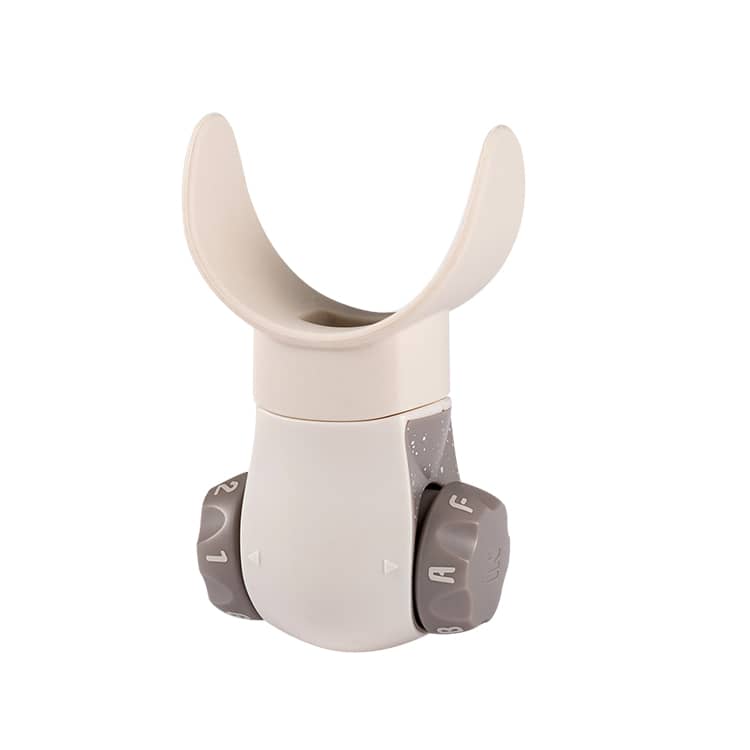
Straw phonation through a standard drinking straw into a cup of water for 3–5 minutes. The back-pressure from the water creates a safe, even load on the folds and helps reduce edema.
Gentle slides from your comfortable speaking pitch up to about a fifth above, then back down. Avoid pushing into the upper passaggio until the voice feels warmer.
Light scales on a neutral vowel (“uh” or “oh”) through your usable range — not your full range. If a note feels strained, stop there.
Behaviors that cause the most damage during allergy season: whispering (which actually increases vocal fold tension), forceful throat clearing, shouting over background noise, and speaking at length in dry or air-conditioned environments. Each of these compounds the inflammation already present. For a deeper look at avoiding vocal damage, the guidance applies even more urgently when your folds are already irritated.
Pro Tip: Between songs or during set breaks, take three slow sips of room-temperature water, then do a quiet 10-second lip trill. This micro-routine keeps the folds lubricated and the muscles loose without drawing attention on stage.
Humidification at home matters as much as what you do on stage. Running a cool-mist humidifier in your bedroom during allergy season keeps the vocal mucosa from drying overnight, which is when much of the tissue repair happens. For more on preventative vocal health steps that apply year-round, the same principles scale directly to allergy management.
Most allergy-related vocal symptoms are temporary and manageable. Some are not. Knowing which specialist to call — and when — can protect your voice from long-term injury.
See a clinician promptly if you experience:
Hoarseness or voice change lasting more than two weeks despite rest
Pain when speaking, swallowing, or singing
A sensation of something stuck in the throat that doesn’t resolve
Sudden, unexplained loss of range or vocal control
Coughing up blood or blood-streaked mucus
Difficulty breathing or a feeling of throat closure
Which specialist for which problem:
ENT (otolaryngologist): For laryngoscopy or stroboscopy to visualize the vocal folds directly. An ENT can identify edema, nodules, polyps, or contact ulcers that allergic inflammation may have triggered or worsened. Referral to a voice specialist for vocal fold ailments is appropriate when symptoms persist beyond two weeks.
Allergist/immunologist: For skin-prick or blood testing to identify specific allergens (dust mites are among the most common triggers in professional singers, per the ScienceDirect series). An allergist can also evaluate you for immunotherapy candidacy.
Voice therapist (speech-language pathologist specializing in voice): For technique rehabilitation, compensatory strategies, and structured vocal function exercises after an inflammatory episode.
Before your appointment, prepare a brief symptom diary: note when symptoms worsen (morning vs. evening, indoors vs. outdoors), which allergens you suspect, and whether symptoms correlate with specific venues or seasons. A recording of your voice on a symptomatic day is genuinely useful for a clinician. Tools like the SNOT-22 (Sino-Nasal Outcome Test) and the Singing Voice Handicap Index (SVHI) are standardized questionnaires your provider may use to measure severity and track improvement.
The evidence base for allergies and singing is still developing, but two studies provide the clearest clinical picture available.
| Study | Key finding | Metric |
|---|---|---|
| J Voice 2026 (choral singers, SAR cohort) | SAR significantly associated with self-reported singing impairment | Higher SVHI and EASE scores vs. controls |
| ScienceDirect monoinstitutional series (professional singers) | Allergic singers more likely to postpone performances | OR 3.7 for postponing; OR 4.4 for singing with laryngeal inflammation |
The J Voice cohort focused on adult choral singers and found that seasonal allergic rhinitis (SAR) correlated with higher scores on both the SVHI and the EASE (Evaluation of the Ability to Sing Easily), meaning singers themselves reported meaningful reductions in ease and quality of singing during symptomatic periods. The ScienceDirect series of professional singers added clinical weight: allergic singers showed higher SNOT-22, Voice Handicap Index (VHI), and SVHI scores, and dust mite sensitivity was a common finding.
Prevalence estimates for allergic rhinitis in the general U.S. adult population run roughly 10–30%, but singers may feel the functional impact more acutely because their performance demands require finer pitch control, greater stamina, and consistent resonance than ordinary speech.
Study limitations worth noting: Both studies are observational and involve relatively small, specialized samples. Neither isolates the effect of specific medications on vocal outcomes, which remains an important gap. Larger, controlled trials with objective acoustic measures (such as Dysphonia Severity Index scores) are needed before firm treatment hierarchies can be established for singers specifically.
The most common mistake I see singers make during allergy season is treating a performance commitment as non-negotiable while treating their vocal health as negotiable. The logic gets reversed. A single postponed performance is recoverable. A vocal fold hemorrhage from singing through significant laryngeal inflammation is not — at least not quickly, and sometimes not completely.
What I typically recommend: prioritize the local, low-risk interventions first (saline rinse, intranasal steroid, steam, SOVT warmup), trial any systemic medication well before a performance window, and build a standing relationship with both an ENT and an allergist if you perform regularly. Allergy immunotherapy, while a longer commitment, has helped many professional singers reduce their seasonal symptom burden enough to perform more consistently and with less vocal risk.
The voice is not separate from the immune system. Chronic allergic inflammation is chronic laryngeal stress. Protecting the voice during allergy season means treating the allergy, not just managing the symptoms on show day.
Singers managing allergy-related vocal symptoms need tools that work between medical appointments and on the day of a performance. Tmrgsolutions offers three products specifically designed for voice professionals facing exactly this situation.

The TMRG Loud & Clear Classic Voice Recovery Drops are formulated to soothe and support vocal recovery after inflammation or fatigue — a practical option for the days following a symptomatic performance when the folds need recovery support. The TMRG Shine Bright Classic Voice Recovery Spray provides surface lubrication and relief, and works well as a pre-performance and post-performance topical support. For singers dealing specifically with postnasal drip and throat irritation, the TMRG Defense Oils and Saline Voice and Throat Spray combines saline and protective oils to hydrate and coat the vocal surface.
How to use these products around allergy season:
Use the Defense spray as part of your morning nasal and throat hygiene routine
Apply the Shine Bright spray 15–20 minutes before singing for surface preparation
Use the Loud & Clear drops post-performance for recovery support on high-symptom days
These products complement medical care — they are not a substitute for it. For persistent or worsening symptoms, coordinate with your ENT or allergist.
Allergic Rhinitis in Professional Singers: A Monoinstitutional Series - ScienceDirect
Prescription medications and voice — Voice Academy (University of Iowa)
Allergies and losing your voice: Causes, treatment — Medical News Today
Can You Sing with Allergies? How to Perform When You’re Congested — Ensemble Performing Arts
Yes. Allergic rhinitis causes nasal congestion, postnasal drip, and vocal fold swelling, all of which reduce resonance, increase fatigue, and disrupt pitch control. A 2026 Journal of Voice study found a statistically significant link between seasonal allergic rhinitis and self-reported singing impairment in adult choral singers.
Postnasal drip and laryngeal inflammation from allergen exposure increase the mass and stiffness of the vocal folds, making high notes harder to reach and sustained phrases more fatiguing. If the change is sudden and severe, see an ENT to rule out a vocal fold hemorrhage or polyp.
Most experienced singers prioritize saline nasal rinses, intranasal steroid sprays, steam inhalation, and SOVT warmups on symptomatic days. They also trial any oral antihistamine well before a performance to assess its drying effect, and they modify their set if the voice feels compromised.
They can. Both first- and second-generation oral antihistamines can dry the vocal mucosa by altering glandular secretions, which thickens mucus and impedes smooth vocal fold vibration. The University of Iowa Voice Academy recommends trialing systemic medications outside performance windows to judge their effect on your specific voice.
See an ENT or allergist if hoarseness persists beyond two weeks, if you experience pain when singing or speaking, or if you notice a sudden unexplained loss of range. These symptoms may indicate laryngeal inflammation or a structural change that needs clinical evaluation rather than self-management.
