Your Cart is Empty


TL;DR:
- Your voice takes longer to recover from respiratory illness than your body, increasing the risk of injury during healing. Voice rest, immune support, and careful care are essential to prevent lasting damage and support full vocal function. Sustained good habits and proper management during illness promote resilient, healthy voices for all singers and voice professionals.
Your voice takes far longer to recover from a respiratory illness than your body does, and that gap is where vocal injuries happen. Most singers feel well enough to rehearse by day seven of a cold, but the immune system and vocal health connection runs much deeper than symptom relief. Your vocal folds are still fragile, still inflamed, and highly vulnerable to permanent damage during those additional weeks of silent tissue repair. This guide explains exactly what is happening inside your larynx during recovery, and gives you concrete, evidence-based strategies to support both your immunity and your instrument.
| Point | Details |
|---|---|
| Vocal healing lag | Your vocal folds heal 1 to 3 weeks longer than cold symptoms, making voice rest crucial after illness. |
| Singing boosts immunity | Regular singing increases immune antibodies that protect your respiratory tract and vocal folds. |
| Healthy lifestyle essentials | Exercise, plant-rich diet, probiotics, and sufficient sleep are foundational for vocal and immune health. |
| Critical vocal rest | Avoid singing, whispering, and NSAIDs during inflammation to prevent vocal fold injury. |
| Early symptom awareness | Monitor subtle voice changes as early immune activation signals to adjust rest and recovery promptly. |
When a respiratory infection clears, most people feel functional within a week. Congestion lifts, energy returns, and the urge to sing comes rushing back. But feeling better is not the same as being healed. Your vocal folds, the two thin mucous membranes that vibrate hundreds of times per second to produce sound, experience a separate healing timeline entirely.
Full mucosal wave recovery of vocal folds takes 3 to 4 weeks after respiratory infections, while cold symptoms resolve in about one week. That means you could be symptom-free and still have tissue that tears under vocal load. The blood vessels supplying those folds are temporarily fragile during this phase, making them susceptible to hemorrhage, which is a small but serious bleed inside the fold tissue. A single high-pressure singing session during this window can trigger exactly that.
“The most dangerous time for a singer is not when they feel sick, it is when they feel almost better.” This is when the temptation to return to full voice is strongest, and when the tissue is least equipped to handle it.
The other common trap is steroid use. Corticosteroids reduce swelling and can restore vocal clarity within hours, which makes singers feel performance-ready. What steroids do not do is repair the fragile vascular network underneath. You may sound fine while the underlying tissue is still one high note away from injury.
Voice rest is not passive or optional. It is the single most important clinical factor in vocal fold recovery, more than hydration, more than herbal teas, more than steam inhalation. You can explore specific vocal recovery strategies that account for this timeline, but nothing replaces actual silence. Understanding this healing timeline sets the context for why immune health and vocal care are so interconnected for singers.
The relationship between singing and immunity is not one-sided. Your immune system protects your voice, but your voice practice can actively strengthen your immune response in return.

Research shows that choral singing increases IgA (Immunoglobulin A) levels in saliva after just one hour of rehearsal, enhancing the respiratory mucous membrane’s ability to fight incoming pathogens. IgA is your body’s front-line antibody for mucosal surfaces, meaning it guards the very tissues that line your throat and vocal tract. Singing, quite literally, trains your respiratory defense system.
The mechanism goes deeper than antibody production. Singing activates the vagus nerve, releasing endorphins that boost immune function beyond what passive music listening achieves. The vagus nerve regulates heart rate, digestion, and immune activation, so stimulating it consistently has measurable downstream effects on your body’s ability to protect your immune system against daily threats.
Here is what regular, consistent singing contributes to immune health specifically for voice professionals:
The practical implication is clear. Singing is not just an art form or a profession. Practiced with care and appropriate rest, it is an immune-enhancing behavior. This mutual benefit makes protecting your voice during illness even more meaningful.
Strong immunity is the foundation that keeps your vocal folds resilient. You cannot separate nutrition for vocalists from tissue health, because the mucosal lining of your vocal folds is living tissue that depends entirely on what you give your body.
Follow these steps to build consistent immune support for singers into your daily routine:
Exercise regularly. Aim for 150 minutes of moderate exercise per week to support immune function relevant to voice professionals. Exercise improves cardiovascular and pulmonary capacity, both of which directly affect vocal stamina and the body’s ability to clear airway inflammation.
Prioritize plant-rich nutrition. A diet with two-thirds vegetables, fruits, whole grains, and probiotics supports the mucosal immunity that protects your vocal folds at the tissue level. Gut health and mucosal defense are deeply linked, making fiber and fermented foods particularly relevant for singers.
Protect your sleep. Getting 7 to 9 hours nightly is essential for immune repair and reduces respiratory infection risk. Sleep is when your body produces the cytokines (signaling proteins) needed to repair damaged tissue, including vocal fold mucosa.
Limit stress exposure. Chronic stress elevates cortisol, which actively suppresses immune function. For singers, this means managing performance anxiety and recovery periods with equal seriousness.
Avoid alcohol, smoking, and excessive caffeine. Each of these dries or inflames the vocal mucosa and disrupts the immune barrier that protects it.
Pro Tip: Add a daily probiotic from fermented foods like yogurt, kefir, or kimchi to your diet. Gut bacteria regulate a significant portion of your mucosal immune response, including in the throat and airways.
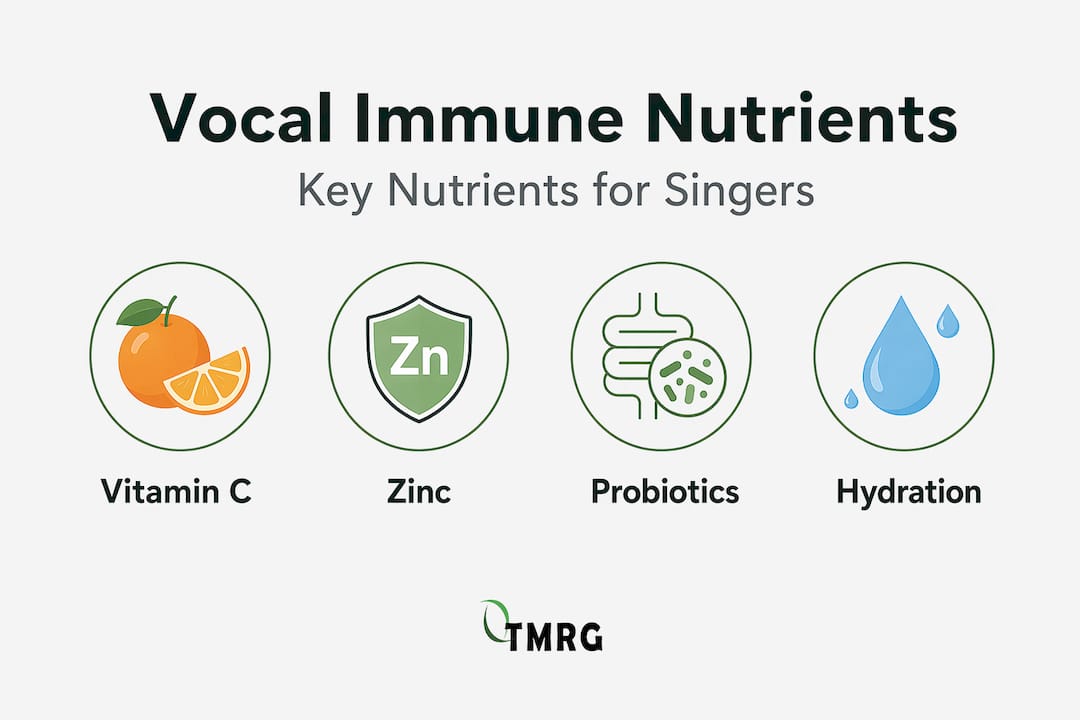
The table below summarizes key nutrients and their roles in both immune health and vocal tissue support:
| Nutrient | Immune role | Vocal health benefit |
|---|---|---|
| Vitamin C | Stimulates white blood cell production | Supports collagen in vocal fold tissue |
| Zinc | Regulates immune cell signaling | Speeds mucosal tissue repair |
| Probiotics | Strengthens gut mucosal immunity | Reduces inflammatory responses in the throat |
| Omega-3 fatty acids | Reduces systemic inflammation | Decreases vocal fold swelling during recovery |
| Vitamin D | Regulates immune activation | Lowers risk of upper respiratory infections |
For a deeper look at what to eat and avoid, the diet for vocal health resource breaks down specific food choices and their effects on your voice. You can also find broader vocal support strategies to integrate these habits with your performance schedule.
When illness does arrive, how you manage those first two to four weeks determines whether you return to full voice or spend months in rehabilitation. Acute laryngitis from upper respiratory infections causes vocal fold swelling that resolves in 2 to 4 weeks with voice rest as the primary treatment. Not herbal tea. Not a throat spray. Rest.
Key dos and don’ts during vocal fold inflammation:
Pro Tip: If you must communicate during recovery, use text messages or a notepad. Even a few minutes of unnecessary speaking each day can extend your healing timeline significantly.
| Approach | During illness | After symptoms clear |
|---|---|---|
| Voice use | Complete rest | Gradual, supported reintroduction |
| Hydration | Consistent sipping throughout the day | Continue; increase before rehearsals |
| Steroids | Only under medical supervision | Avoid unless prescribed |
| NSAIDs | Avoid entirely | Resume with caution |
| Exercise | Light movement only | Resume moderate exercise within 2 weeks |
If hoarseness persists beyond 3 to 4 weeks, seek evaluation from an ENT specialist. Explore the vocal recovery process or get specific guidance on coaching vocal recovery if you work with singers returning from illness.
Sustainable vocal health is not about what you do when you are sick. It is about what you do every day when you are well. Combining consistent immune support with deliberate vocal care creates a foundation that makes illness less frequent and recovery faster.
Follow this daily framework to build resilience over time:
Monitor your voice each morning. Subtle voice changes signal early immune activation, giving you a chance to rest before a full illness develops. If your voice feels thin, rough, or unreliable at the start of the day, treat it as a warning signal.
Hydrate before you feel thirsty. Vocal fold tissue needs consistent systemic hydration. By the time you feel dry, your mucous layer is already compromised.
Use semi-occluded vocal tract exercises during maintenance periods. Techniques like lip trills, straw phonation, or humming with slightly closed lips keep the vocal folds in gentle contact and support mucosal health without strain. These exercises also function as an early diagnostic tool. If they feel effortful or produce discomfort, your voice is telling you to back off.
Return to singing gradually after illness. Start with 10 minutes of quiet, supported humming and add volume and range over 7 to 10 days. Resist the pull of the full repertoire until your voice has proven its stamina on simpler tasks.
Protect sleep and manage muscle tension. Muscle tension dysphonia (a condition where excess laryngeal muscle tension disrupts voice production) is a common result of trying to sing through fatigue or illness too soon. Consistent sleep reduces the physical tension that sets this condition in motion.
Pro Tip: Keep a simple voice journal. Note fatigue levels, hydration, sleep quality, and vocal performance each day. Patterns reveal your personal risk windows before injury occurs.
For singers ready to go further, the advanced vocal recovery guide provides detailed protocols, and these vocal recovery exercises build strength progressively and safely.
After 25 years working with singers and voice professionals, we have seen the same well-intentioned mistakes repeated constantly. Honey and lemon tea. Warm broth. Steam inhalation. These things feel soothing, and they are not harmful, but they do not drive recovery. They do not repair mucosal tissue. They do not rebuild fragile blood vessels.
The advice that circulates most widely places too much emphasis on comfort measures and not nearly enough on the two things that actually matter: immune system strength and true voice rest.
Hydration and teas help, but voice rest is the single most important factor after a respiratory illness to prevent hemorrhage and nodules. That statement should be printed on every singer’s mirror. Not “drink more tea.” Not “gargle with salt water.” Be quiet.
The second persistent gap in standard recovery advice is the almost total absence of immune system and vocal health principles. Most guides treat the voice as a mechanical instrument to be lubricated. They ignore that the tissue of your vocal folds is living, immunologically active, and dependent on your systemic health to recover. A singer who sleeps poorly, eats a poor diet, and trains obsessively between performances is already operating with a suppressed immune system, meaning every illness hits harder and every recovery takes longer.
Steroids are another blind spot. Singers and coaches reach for them quickly because they work fast, and sometimes a performance genuinely cannot be canceled. But steroids mask the problem without fixing it. The vascular fragility that makes post-illness singing dangerous is still there, possibly even slightly worse, because the tissue appears ready before it truly is. Use them only with a physician’s guidance, never routinely.
The most effective singers we have worked with treat immune support and vocal rest as non-negotiable, and they plan for recovery time just as seriously as they plan rehearsal schedules. Visit our vocal recovery strategies resource to see what a properly structured recovery plan actually looks like.
If you are serious about the connection between immune system and vocal health, having the right tools at hand makes a real difference. TMRG Solutions has spent over 25 years developing natural voice therapy products specifically for singers, actors, and voice professionals who need reliable recovery support they can trust at home.

Our basic voice therapy kit gives you a structured starting point for recovery, while the standard voice therapy kit offers a fuller range of natural supplements and exercises designed to support both vocal fold healing and immune resilience. These kits are not shortcuts. They are designed to work alongside the voice rest, nutrition, and sleep practices described throughout this guide. When you are ready to build a complete approach to your vocal health, explore our full range of solutions and find the right fit for your voice and your recovery stage.
Your vocal folds need 3 to 4 weeks to fully heal after a cold even when you feel better within one week, so maintaining voice rest through that full period significantly reduces your injury risk.
Yes. Choral singing increases IgA levels in saliva after just one hour, strengthening your respiratory tract’s first-line mucosal defense against incoming pathogens.
Aim for 150 minutes of exercise weekly, eat a plant-rich diet with probiotics, and get 7 to 9 hours of sleep nightly to build the immune foundation that protects your vocal folds.
Avoid whispering, throat clearing, NSAIDs, and premature singing. Whispering dries vocal folds more than quiet supported speech, and NSAIDs increase hemorrhage risk during vocal fold inflammation.
Persistent hoarseness beyond 3 to 4 weeks warrants laryngoscopic evaluation to rule out serious conditions, and you should seek care sooner if you experience sudden voice loss, throat pain, or difficulty breathing.
