Your Cart is Empty


Coaching singers with hoarseness demands a careful, knowledgeable approach that prioritizes vocal health while supporting recovery. Hoarseness commonly affects singers and presents unique challenges for vocal coaches who must balance technique instruction with therapeutic intervention. Early and effective coaching strategies can aid recovery and prevent long-term damage to the vocal mechanism. This guide covers diagnosis, warm-ups, vocal technique adjustments, and therapy methods that enable you to support hoarse singers through safe, progressive rehabilitation while maintaining their artistic development and performance capabilities.
| Point | Details |
|---|---|
| Vocal rest and hydration | Strict vocal rest for 24 to 48 hours helps initial healing by reducing vibration on inflamed folds, with modified rest for performers to preserve essential vocal use. |
| Address mechanical causes | Address functional and structural factors such as breath support, laryngeal tension, and posture to reduce strain and support recovery. |
| Therapy techniques | Use voice therapy methods including CVT and resonant voice therapy to retrain efficient vocal production during rehab. |
| Medical evaluation | Diagnose medical issues such as reflux through collaboration with ENT specialists and speech language pathologists for comprehensive care. |
Before implementing any coaching strategy, you must identify whether hoarseness stems from functional, structural, or medical causes. Functional hoarseness typically results from vocal misuse or overuse, such as inadequate breath support or excessive laryngeal tension. Structural causes include vocal fold nodules, polyps, or cysts that physically interfere with vibration. Medical conditions like laryngopharyngeal reflux affect professional voice users and can cause fluctuating hoarseness that resists technique-based interventions.
Clinical and vocal assessments form the foundation of effective coaching preparation. Diagnostic measures of vocal function quantify issues without visible fold changes, using acoustic and aerodynamic metrics to reveal subtle dysfunction. You should gather information about onset, duration, and patterns of hoarseness, noting whether symptoms worsen with use or persist regardless of vocal activity. Understanding hoarseness causes for vocalists helps you differentiate between issues you can address through coaching versus those requiring medical intervention.
Prepare individualized approaches based on your diagnostic findings. A singer with nodules requires different exercises than one experiencing reflux-related inflammation. Consider multidisciplinary collaboration with ear, nose, and throat specialists and speech-language pathologists when symptoms persist beyond two weeks or worsen despite conservative management. This team approach ensures comprehensive care that addresses both artistic and medical needs.
Education on vocal hygiene and hydration proves essential for all hoarse singers:
These foundational practices create optimal conditions for vocal recovery and enhance the effectiveness of technique-based interventions. Review tips for vocal hoarseness with your singers to reinforce healthy habits outside coaching sessions.
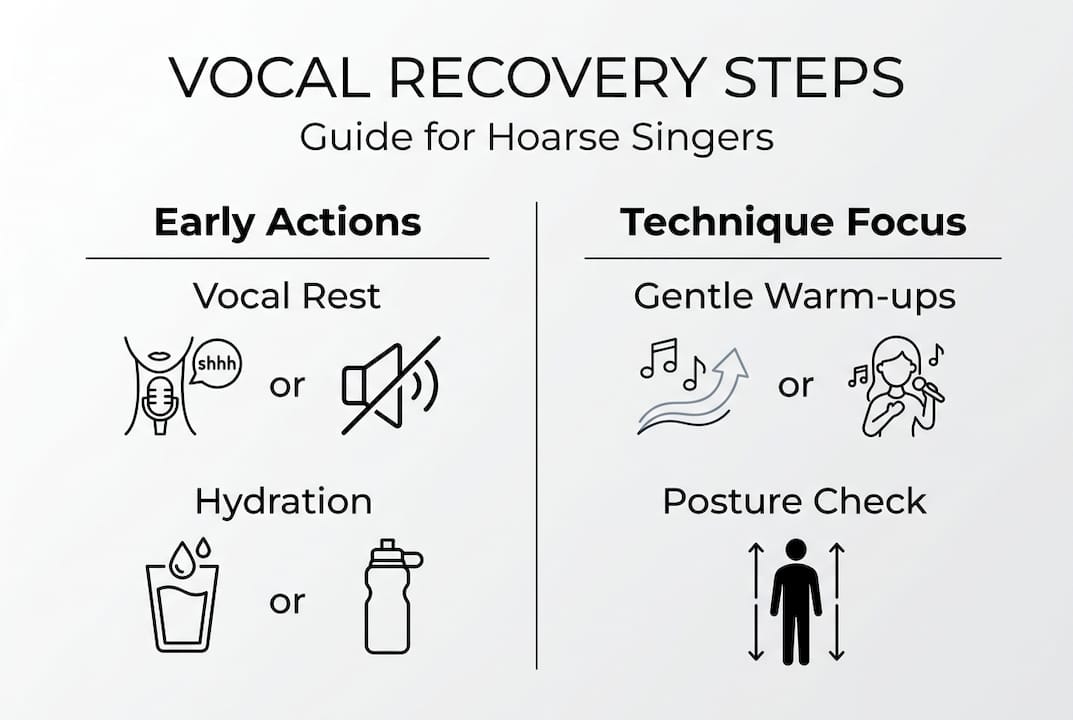
Strict vocal rest forms the critical first line of defense against worsening hoarseness. Complete voice rest for 24 to 48 hours allows inflamed vocal folds to begin healing without continued trauma from vibration. For professional singers facing performance obligations, modified rest that eliminates unnecessary speaking while preserving essential vocal use offers a practical compromise. Explain to your singers that pushing through hoarseness risks converting acute inflammation into chronic injury requiring months of recovery.
Hydration directly impacts vocal fold health by maintaining the viscosity of the mucus layer covering the folds. Well-hydrated tissues vibrate more efficiently and resist injury better than dehydrated ones. Encourage singers to monitor urine color as a hydration indicator, aiming for pale yellow throughout the day. Systemic hydration takes several hours to reach vocal tissues, so consistent water intake matters more than drinking immediately before singing.

Once initial rest reduces acute inflammation, practical methods for coaches recommend prioritizing gentle warm-ups like lip trills and humming. These exercises create vocal fold vibration with minimal impact force, gradually mobilizing the voice without strain. Realistic preservation strategies suggest gentle warm-ups in head voice and hydration help even when performing while hoarse, though this remains a last resort rather than standard practice.
Safe warm-up exercises for recovering voices include:
Warn singers to avoid pushing their voice or using harsh phonation during recovery. Any exercise causing pain, increased hoarseness, or vocal fatigue should stop immediately. The goal is gentle mobilization, not vocal athleticism.
Pro Tip: Start with warm-up sessions lasting just five minutes, gradually increasing duration as vocal comfort improves. This progressive approach prevents overuse while systematically rebuilding vocal stamina and resilience.
Integrate vocal recovery exercises into daily routines, emphasizing consistency over intensity. Short, frequent practice sessions support healing better than occasional extended workouts that fatigue recovering vocal mechanisms.
Incomplete vocal fold closure frequently underlies persistent hoarseness, allowing air to escape during phonation and creating breathy, inefficient sound production. Full closure requires balanced tension between the thyroarytenoid and cricothyroid muscles, proper hydration, and absence of structural lesions. Exercises targeting closure include glottal attacks on vowels, though these must be executed gently to avoid creating new trauma. Specific exercises for raspy voice recommend Lax Vox, glottal stops, and twang to improve fold closure without excessive force.
Posture correction addresses mechanical contributors to hoarseness that coaches often overlook. Forward head posture compresses the larynx and restricts its natural movement during pitch changes. Collapsed chest position limits breath support, forcing singers to compensate with laryngeal tension. The Alexander Technique teaches body awareness and releases habitual tension patterns that interfere with optimal vocal function. Yoga and Pilates strengthen core muscles that support efficient breathing, reducing the temptation to grip with throat muscles.
Complete Vocal Technique Emergency Aid quickly releases constriction by centering vocal mode, offering immediate relief when singers must perform despite hoarseness. CVT principles help you identify whether a singer is using an appropriate vocal mode for their repertoire or forcing their voice into configurations that promote injury. Neutral mode with minimal twang suits gentle rehabilitation, while more aggressive modes should wait until vocal health improves.
| Exercise Type | Primary Target | Best For | Cautions |
|---|---|---|---|
| Lax Vox | Vocal tract relaxation | Tension-related hoarseness | Avoid if reflux is present |
| Glottal stops | Fold closure | Breathy, weak voice | Use gently to prevent trauma |
| Twang exercises | Resonance efficiency | Reducing laryngeal effort | Monitor for increased strain |
| Straw phonation | Back pressure therapy | General vocal health | Ensure proper technique |
| Semi-occluded exercises | Balanced phonation | Functional dysphonia | Start with easiest variations |
Pro Tip: Monitor singer comfort continuously during exercises, stopping any activity that increases hoarseness or creates discomfort. Recovery should feel progressively easier, not harder, as sessions continue.
Incorporate vocal cord exercises that balance relaxation and strengthening, avoiding the extremes of complete flaccidity or excessive tension. Vocal support exercises build the breath management skills that reduce laryngeal compensation patterns. The soft start vocal technique teaches gentle onset that protects healing vocal folds from impact stress.
Voice therapy provides systematic intervention for both functional hoarseness and structural lesions affecting singers. Voice therapy effectively treats vocal nodules and dysphonia, improving quality and reducing pathology through targeted exercises and behavioral modification. Resonant voice therapy focuses on achieving easy, forward resonance with minimal laryngeal effort, reducing the mechanical stress that perpetuates hoarseness. Vocal function exercises systematically strengthen and balance the laryngeal musculature through controlled pitch glides and sustained phonation tasks.
Early intervention produces better outcomes than delayed treatment, particularly for structural lesions like nodules that may resolve with therapy alone if addressed promptly. The consensus recommends voice therapy as integral for dysphonia treatment, often combined with medical management for optimal results. A multidisciplinary approach coordinates your coaching expertise with medical evaluation from an ENT specialist and therapeutic intervention from a speech-language pathologist. This team ensures no aspect of the singer’s vocal health gets overlooked.
Monitoring vocal function with objective measures removes guesswork from recovery assessment. Acoustic analysis tracks parameters like jitter, shimmer, and harmonic-to-noise ratio that correlate with perceived hoarseness. Aerodynamic measures including maximum phonation time and airflow rates reveal efficiency of vocal fold closure and breath support. Subjective measures like the Voice Handicap Index capture how hoarseness impacts the singer’s quality of life and professional function.
| Therapy Approach | Primary Indication | Key Techniques | Expected Outcomes |
|---|---|---|---|
| Resonant voice therapy | Functional dysphonia | Forward focus, easy onset | Reduced laryngeal tension |
| Vocal function exercises | Muscle imbalance | Pitch glides, sustained tones | Improved strength and coordination |
| Confidential voice | Severe inflammation | Breathy, soft phonation | Reduced fold impact |
| Accent method | Rhythm and flow issues | Rhythmic phonation patterns | Enhanced breath support |
| Lee Silverman Voice Treatment | Hypophonia | Loud, effortful phonation | Increased vocal intensity |
Implement a systematic monitoring protocol:
Adjust your coaching based on progress patterns and singer comfort levels. Rapid improvement suggests functional causes responding well to intervention. Slow or inconsistent progress may indicate structural lesions or medical issues requiring additional evaluation. Voice therapy benefits extend beyond immediate symptom relief to include long-term vocal efficiency and injury prevention when singers integrate therapeutic principles into daily technique.
Supporting your coaching with professional-grade therapy tools enhances outcomes for singers recovering from hoarseness. TMRG Solutions offers specialized voice therapy kits designed specifically for singers and voice professionals experiencing vocal challenges. The TMRG voice therapy kit basic provides essential tools for beginning recovery, while the voice therapy kit standard adds therapeutic sprays and oils that support vocal fold healing. For comprehensive support, the premium voice therapy kit combines natural remedies with specialized equipment tailored to professional vocal demands.

These kits integrate seamlessly with the coaching and therapy methods discussed throughout this guide, providing your singers with consistent support between sessions. The natural herbal formulations address inflammation and promote tissue healing without pharmaceutical side effects. Combining evidence-based coaching techniques with targeted therapeutic products creates a comprehensive recovery environment that accelerates healing and prevents recurrence.
Behavioral hoarseness typically improves with rest and technique modification, showing progress within days to weeks of intervention. Medical causes often persist despite coaching changes or worsen over time, particularly when accompanied by pain, difficulty swallowing, or breathing changes. Fluctuating voice quality, reflux symptoms like throat clearing and post-nasal drip, or hoarseness worse in the morning suggest medical evaluation is needed. Understanding hoarseness causes for vocalists helps you recognize when referral to an ENT specialist is appropriate.
Lip trills, humming, and gentle sirens are widely recommended for recovering voices because they create vibration with minimal impact force. Straw phonation exercises using different straw diameters provide adjustable resistance that supports efficient vocal fold vibration. Start with five-minute sessions and avoid heavy phonation or loud singing until comfort improves significantly. These vocal recovery exercises should feel easy and pleasant, never strained or uncomfortable.
CVT Emergency Aid releases constriction and centers vocal mode, providing quick relief when singers must perform despite hoarseness. CVT focuses on safe vocal modes that minimize strain by optimizing resonance and reducing unnecessary laryngeal tension. It provides practical tools for managing voice when performance is necessary, though complete rest remains preferable for recovery. The soft start vocal technique derived from CVT principles protects healing vocal folds through gentle onset patterns.
Recommend medical evaluation for any hoarseness persisting beyond two weeks, worsening symptoms, or accompanying pain and swallowing difficulty. Structural changes like nodules, polyps, or cysts require medical diagnosis even if voice therapy becomes the primary treatment. The consensus recommends voice therapy as integral for dysphonia, especially with structural or persistent symptoms that resist coaching interventions alone. Early referral supports optimal recovery and prevents minor issues from becoming chronic problems requiring surgical intervention. Explore voice therapy benefits with singers to help them understand how professional therapy complements your coaching.
