Your Cart is Empty


The fastest, safest vocal fatigue remedies are short controlled phonation exercises (SOVTE, like straw phonation) or brief vocal rest, paired with hydration, steam, and a genuine warm-up before you use your voice again. Skip the whispering and the shouting. Both strain your vocal folds more than talking at a normal, supported volume. Recovery follows a predictable curve: after two hours of heavy vocal loading, most function returns within several hours, with full recovery typically landing around 12 to 18 hours later.
That timeline only holds if you actually give your voice the right kind of break. Prevention matters just as much as recovery, and it starts with:
Controlled phonation and hydration recover vocal function faster and more reliably than silence alone, and consistent daily habits prevent most vocal fatigue before it starts.
| Point | Details |
|---|---|
| Prioritize controlled phonation | Straw phonation for 5 to 10 minutes often restores vocal effort as well as rest does. |
| Expect a real recovery curve | Most function returns within several hours after heavy use, with full recovery typically landing around 12 to 18 hours later. |
| Hydrate systemically | Target around 64 ounces of water daily, more with caffeine, alcohol, or heavy vocal use. |
| Treat reflux and allergies early | Meal timing, elevation, and trigger avoidance often resolve chronic hoarseness without medication. |
| Use topical support as an adjunct | Products like TMRG Loud & Clear drops and Shine Bright spray ease discomfort between exercise sessions. |
The instinct to go completely silent after a rough show or a long lecture is understandable, but it is not always the smartest move. Controlled phonation through semi-occluded vocal tract exercises, known as SOVTE, can reverse measures of vocal effort just as effectively as rest, and sometimes with better protective carryover if you need to speak again soon.
Here is a practical sequence for the first hours after heavy use:
Pro Tip: Keep a small bottle of TMRG Shine Bright spray in your bag for the moments between sets or sessions when you need quick topical relief but can’t step away for a full recovery routine.
Cumulative strain, not one bad night, is what pushes most professional voice users into chronic hoarseness. The fix is routine, not heroics.
Voice professionals in high-conflict or high-stakes verbal settings face a related risk: raising volume and pitch under stress accelerates fatigue fast. Guidance on managing tone during tense conversations applies directly here, since calm, supported delivery protects both the message and the voice behind it.
Straw phonation remains the best-studied option for active recovery. The protocol researchers use involves a straw roughly 19 centimeters long with a narrow internal diameter, done in 30-second segments across different pitch and volume tasks for about 10 minutes total. You do not need lab equipment. Any drinking straw and a quiet corner will do.
Stop any exercise if you feel sharp pain, not just fatigue. Mild tiredness is normal; pain is not.
Pro Tip: A structured routine like the TMRG Voice Therapy kit gives you a repeatable format for these drills instead of guessing at reps and timing every session.
Water works from the inside out. Systemic hydration supports thin, watery mucus that lubricates the vocal folds far more effectively than sipping alone can achieve topically.
Repeated hoarseness often traces back to something other than overuse. Reflux irritation and postnasal drip are common, treatable culprits.
Most vocal fatigue resolves with rest, hydration, and exercise. Some signs deserve a professional evaluation instead of another round of home remedies.
A laryngologist typically performs stroboscopy to visualize fold movement, while a speech-language pathologist assesses technique and builds a therapy plan. If conservative measures show no improvement after two to three weeks, referral is reasonable; sudden loss after trauma warrants faster attention.
Working with singers, actors, and lecturers for over more than 25 years, teaches you one thing quickly: exercises alone do not always feel like enough when a show is in six hours and your voice already feels shredded.
That gap is exactly where topical and natural support earns its place, not as a replacement for SOVTE or hydration, but as a bridge while the tissue does its actual healing. reflect a pattern seen across genres and professions: performers who pair evidence-based exercises with consistent topical care tend to bounce back faster than those relying on either approach alone.
Tension in the jaw, shoulders, and throat rarely stays isolated. Stress tightens the very muscles that control airflow and fold vibration, and that tension shows up as vocal fatigue even on days with relatively light vocal use.
Performers and public speakers under deadline pressure often report their voice “gives out” faster during high-stakes weeks, not because they are talking more, but because cortisol-driven muscle tension changes how efficiently the larynx works. A tight jaw forces compensatory effort elsewhere in the vocal tract, and that effort accumulates the same way overuse does.
Simple stress-reduction habits pull double duty here. Diaphragmatic breathing, the same drill used for vocal warm-ups, also activates the parasympathetic nervous system and lowers general tension. A five-minute body scan before a performance or a big meeting can loosen the jaw and neck enough to change how the voice feels an hour later.
Sleep deprivation compounds the problem. A tired nervous system reacts to vocal demand with more muscular effort, not less, which is part of why performers on tight touring or lecture schedules report fatigue disproportionate to their actual speaking time.
The practical takeaway: treat stress management as part of vocal care, not a separate wellness category. A calm approach to a demanding vocal day, whether that means arriving early to avoid rushing or building in quiet time before a show, reduces the muscular tension that turns ordinary vocal use into fatigue.
Diet rarely gets equal billing with hydration and exercise in vocal health advice, but a few patterns show up consistently among voice professionals managing fatigue.
Spicy, acidic, and heavy meals close to a performance or big speaking engagement increase reflux risk, which irritates the vocal folds indirectly through the same postnasal drip and acid exposure mechanisms covered earlier. Timing matters more than eliminating any single food. A large meal three hours before curtain causes fewer issues than the same meal eaten thirty minutes before.
Dairy is a mixed case. Some people notice thicker mucus after milk or cheese, which can make throat clearing more frequent, though the reaction varies by individual and is not universal. If you notice a pattern, it is worth testing a short elimination period rather than assuming the effect applies to everyone.
Caffeine and alcohol both have mild diuretic effects that work against the hydration goals covered earlier, so extra water on days with either is a reasonable offset rather than a reason to avoid them entirely.
Warm, non-caffeinated teas, particularly those with honey, offer soothing comfort for irritated throats, though the effect is largely topical and temporary rather than a substitute for the systemic hydration that actually protects the folds. Ginger and licorice root teas show up frequently in vocal coaching circles as throat-soothing options, worth trying if you find them pleasant, without overstating what they can do.

Bad habits in how you stand, breathe, and place your voice often do more damage than any single night of overuse. Fixing them prevents the fatigue that shows up week after week.
Start with alignment. Shoulders rolled forward and a chin jutted toward the microphone compress the airway and force the throat muscles to compensate for weak breath support. Standing or sitting with a neutral spine, weight balanced, and shoulders relaxed down and back gives the diaphragm room to do its job.
Breath support, not throat effort, should drive volume. Many voice professionals unconsciously push from the throat when they need more volume, which strains the folds directly. Redirecting that effort to the diaphragm, engaging the lower abdominal muscles on exhale, protects the voice even during loud or sustained passages.
Resonance placement matters too. Speaking or singing with the sound focused too far back in the throat creates a strained, effortful quality. Coaches often cue forward resonance, imagining the sound resonating behind the front teeth or in the mask of the face, which reduces the muscular effort needed to project.
Jaw tension is a frequent, overlooked contributor. A clenched jaw restricts resonance space and forces compensatory tension elsewhere. Gentle jaw stretches and conscious relaxation before speaking sessions address this directly.
Most vocal fatigue advice defaults to silence as the safest choice, and that instinct is wrong more often than performers realize. The evidence points somewhere more useful: controlled phonation through SOVTE frequently restores vocal function as well as rest does, and sometimes better protects against a second round of exertion later the same day.
Conventional wisdom treats rest as the universal answer because it feels intuitively safe. But a voice professional who cannot afford three days of silence before their next show needs a plan built around what actually helps them keep working, not just what sounds cautious. That is where straw phonation earns its place as a genuine alternative, not a consolation prize.
What gets underestimated is timeline. Recovery is not instant, but it is faster than most people assume, and knowing the real curve changes how you plan a demanding week. The reader’s real priority should be building a maintenance routine, not scrambling for a fix only after the voice already feels wrecked. Treat vocal care the way you would treat any other physical training regimen: consistent, scheduled, unglamorous, and far more effective than anything reactive.
— Golan
Tmrgsolutions built its product line around exactly the gap between exercise-based recovery and the moments you need relief right now, whether that’s ten minutes before you go on stage or mid-lecture with no break in sight. TMRG Loud & Clear drops deliver targeted topical support when your throat feels raw and you need relief without stepping away from the room.

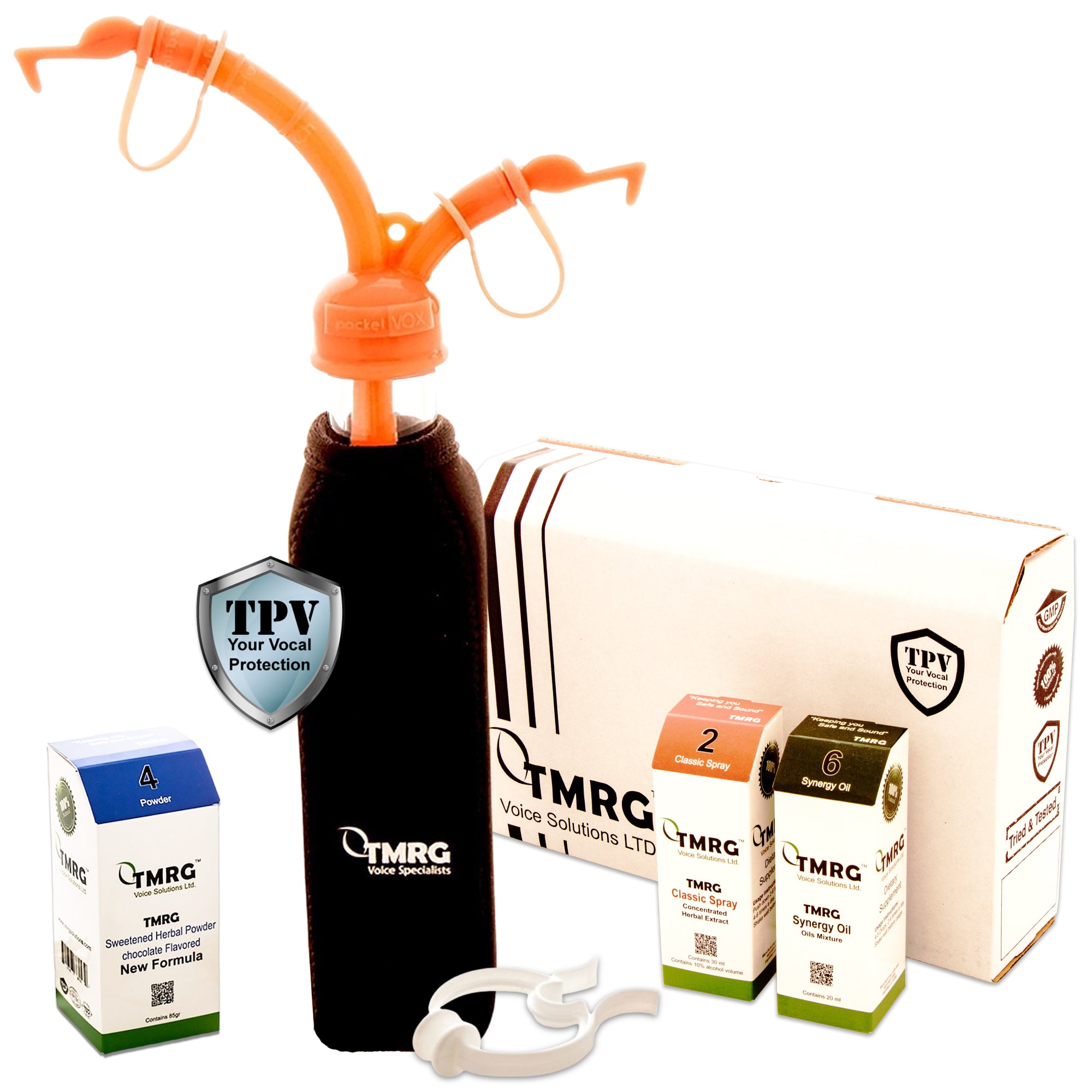
The TMRG Shine Bright spray fits in a pocket or bag for portable relief between sets, calls, or classes, while the TMRG Voice Therapy kit gives you a structured format for the SOVTE-style exercises covered earlier, so you are not guessing at timing or reps on your own. None of these replace medical care for persistent hoarseness, but they pair naturally with the recovery habits in this guide. Browse the full product lineup and add what fits your routine to your cart today.
Prolonged loud singing or shouting causes vocal folds to swell and collide harder than normal, which temporarily reduces their ability to vibrate cleanly, and the result is hoarseness or partial voice loss until the swelling subsides.
Recurring voice loss often points to an underlying issue like reflux, allergies, chronic overuse without adequate recovery, or a drying medication rather than a single bad night. A laryngologist evaluation is worth pursuing if it happens more than a few times a year.
Warm up before extended use, take scheduled vocal breaks, stay hydrated, and use amplification instead of raising your natural volume; posture and breath support training also reduce the muscular effort your throat has to compensate for.
Start with 5 to 10 minutes of straw phonation or modified vocal rest, drink water steadily, and use steam inhalation for topical relief; a product like TMRG Loud & Clear drops can ease discomfort while your voice recovers over the following hours.
