Your Cart is Empty


TL;DR:
- Hoarseness results from inflammation or irritation of the vocal folds. Resting the voice and hydrating thoroughly are the fastest ways to promote healing.
Hoarseness is defined as a rough, strained, or weakened quality of voice caused by inflammation or irritation of the vocal folds. To fix hoarse voice fast, the two most critical actions are immediate vocal rest and aggressive systemic hydration. Acute laryngitis resolves within 7–14 days with conservative self-care, but only when you stop straining the tissue and start supporting its repair. Rushing back to normal voice use, or reaching for the wrong remedies, can push a short-term problem into a chronic one. This guide gives you the exact steps to restore your voice quickly and safely.

Hoarseness is the audible sign that your vocal folds are swollen, irritated, or not vibrating smoothly. The vocal folds are two small bands of muscle tissue inside your larynx. When they swell, they cannot meet cleanly during vibration, which produces that rough, scratchy, or breathy sound you recognize as a hoarse voice.
The most common triggers include:
Dehydration makes every one of these causes worse. Vocal folds need a thin layer of fluid to vibrate efficiently. When that layer dries out, friction increases, inflammation spreads, and recovery slows. The moment you notice hoarseness, the clock starts. Every hour of continued voice strain adds more inflammation to already irritated tissue. Quick action does not mean aggressive treatment. It means stopping the damage immediately and giving your body the conditions it needs to heal.
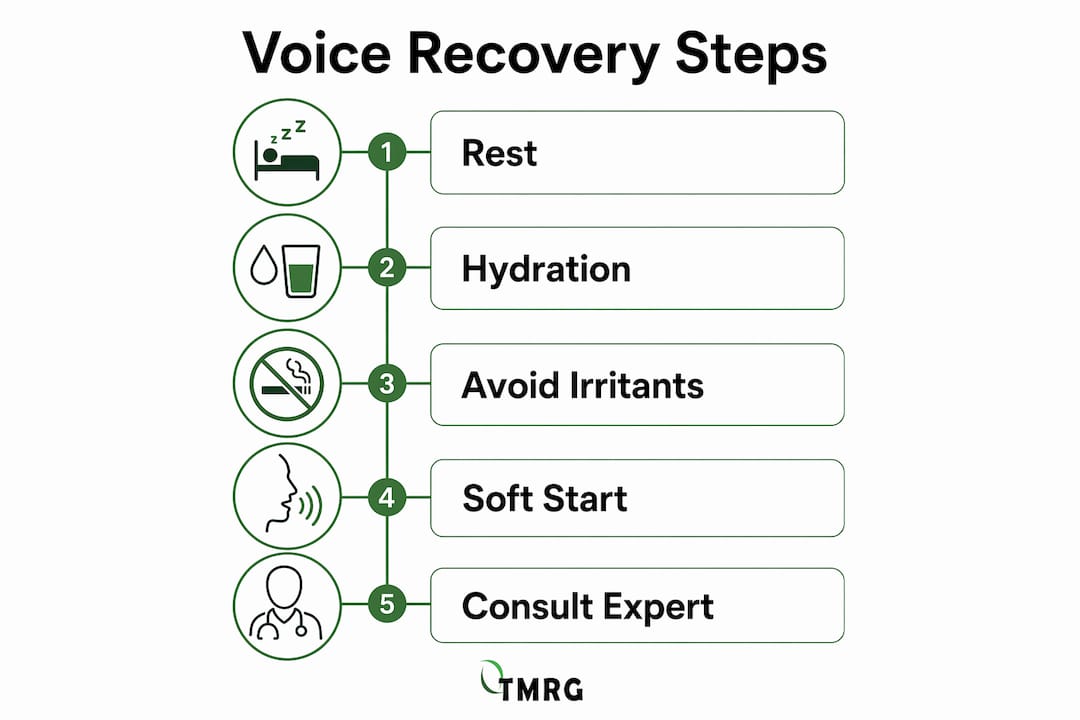
The fastest path to vocal recovery follows a clear sequence. Start with rest, add moisture from the inside and outside, and remove every irritant you can control.
Pro Tip: Never whisper as a substitute for silence. Whispering increases laryngeal tension and strains the vocal folds more than soft, relaxed speech. If you must communicate, use written notes or text messages.
Avoid smoke, alcohol, and excess caffeine throughout your recovery. All three dehydrate the vocal tissue and extend inflammation. This is not the time for your morning triple espresso.
After 24–72 hours of silence, your vocal folds need gentle reintroduction to movement, not a return to full volume. Think of this phase the way a physical therapist thinks about a sprained ankle: controlled, progressive loading.
Start with these steps in order:
Pro Tip: Use the soft start vocal technique when you begin speaking again. Start every phrase at low volume and low pitch. This reduces the impact on healing vocal folds and prevents setbacks.
If hoarseness persists beyond two weeks despite consistent rest and hydration, a voice specialist or ENT physician should evaluate your vocal folds directly. Persistent hoarseness can signal conditions that self-care alone cannot address, including vocal nodules, polyps, or reflux laryngitis. Tmrgsolutions has a detailed resource on persistent hoarseness prevention that covers when professional evaluation becomes necessary.
Your environment either supports or fights your vocal recovery. Most people focus entirely on what they put in their bodies and ignore the air around them.
| Factor | What to do | Why it matters |
|---|---|---|
| Indoor humidity | Keep at 40–50% with a humidifier | Dry air dehydrates vocal fold mucosa and slows healing |
| Air quality | Avoid smoke, dust, and chemical fumes | Irritants inflame the larynx and extend recovery time |
| Sleep | Aim for 7–9 hours per night | Tissue repair peaks during deep sleep cycles |
| Nutrition | Prioritize anti-inflammatory foods like ginger, turmeric, and leafy greens | Reduces systemic inflammation that affects the larynx |
| Medications | Use steroids only under medical supervision | Steroids reduce swelling but risk premature voice use if misused |
Environmental humidification is often overlooked but is one of the most effective tools for vocal recovery, especially in air-conditioned offices or dry climates. A $30 ultrasonic humidifier placed near your bed can meaningfully shorten your recovery time.
Sleep deserves special attention. The body produces growth hormone and repairs tissue primarily during deep sleep. Cutting sleep short to manage a busy schedule while trying to recover from hoarseness is counterproductive. Your vocal folds heal faster when you rest your whole body, not just your voice.
One common mistake is reaching for over-the-counter anti-inflammatory drugs like ibuprofen to mask throat pain and return to voice use sooner. These drugs reduce discomfort but do not repair the underlying tissue damage. Using them to push through a performance or a workday extends the total recovery time. Proper hydration works internally to lubricate vocal folds in a way that symptomatic remedies simply cannot match.
Vocal rest combined with systemic hydration of 11–15 cups of water daily is the fastest, most evidence-backed way to restore a hoarse voice and reduce vocal fold inflammation.
| Point | Details |
|---|---|
| Rest first, rest fully | Silence for 24–72 hours is the most effective first step; whispering makes it worse. |
| Hydrate from the inside | Drink 11–15 cups of water daily to lubricate vocal folds where it counts. |
| Add moisture to the air | A humidifier at 40–50% humidity supports overnight tissue repair. |
| Reintroduce voice gradually | Start with humming and lip trills before returning to normal speech. |
| Avoid common pitfalls | Skip menthol lozenges, alcohol, caffeine, and unsupervised steroid use. |
After working in vocal health for a long time, the pattern I see most often is not people doing too little. It is people doing the wrong things with great enthusiasm.
The most damaging myth is that whispering protects your voice. Patients whisper all day thinking they are being careful, and then wonder why they are still hoarse after two weeks. Whispering places the vocal folds in a hyperfunctional state, meaning they work harder and create more tension than soft, relaxed speech. Silence is always the better choice.
The second mistake is treating hoarseness like a sore throat. Throat lozenges, sprays, and gargles soothe the surface of the pharynx. They do not reach the vocal folds. Drinking water does. The distinction matters because people who rely on surface remedies often feel better without actually healing, and then push their voice too hard too soon.
The third mistake is impatience with the gradual return phase. I have seen singers and speakers who rested perfectly for three days and then gave a full performance on day four. They were back to square one within hours. The tissue needs progressive loading, not a sudden return to full demand. Humming and lip trills are not just warm-up exercises. They are therapeutic tools that promote vocal fold healing at the tissue level.
My honest advice: treat the first 72 hours as non-negotiable silence, drink more water than you think you need, and earn your voice back slowly. The people who recover fastest are always the ones who are most patient in the early days.
— Golan
Tmrgsolutions has spent over 25 years developing natural vocal health solutions for singers, actors, lecturers, and anyone who depends on their voice professionally.

The TMRG Loud & Clear Classic Drops are formulated to soothe inflamed vocal tissue and support hydration at the laryngeal level, making them a practical complement to the rest and hydration protocol described above. For on-the-go relief, the TMRG Shine Bright Classic Spray delivers targeted moisture and protection directly to the throat. Tmrgsolutions also offers structured voice therapy kits that guide you through the gradual vocal return phase with exercises and support tools built specifically for recovery. All formulations use natural herbal ingredients selected for their anti-inflammatory and moisturizing properties. Visit Tmrgsolutions to find the right option for your voice and your situation.
Most cases of acute hoarseness resolve within 7–14 days with vocal rest and hydration. Symptoms lasting more than four weeks require medical evaluation.
Whispering is not a safe alternative to silence. It increases tension in the vocal folds and can prolong inflammation and recovery time.
Warm water with honey is the most effective option. Herbal teas without caffeine also help. Avoid alcohol, caffeinated drinks, and very cold beverages during recovery.
Light physical activity is generally fine, but avoid anything that causes you to breathe heavily through your mouth for extended periods, as this dries out the vocal tract.
See a doctor if hoarseness lasts more than four weeks, is accompanied by pain when swallowing, or follows a neck injury. These signs may indicate a condition beyond simple laryngitis.
