Your Cart is Empty


TL;DR:
- A hoarse voice, or dysphonia, results from inflammation or irritation of the vocal folds that impair their vibration and produce a rough sound. Most cases of acute hoarseness resolve within one to two weeks through voice rest, hydration, and avoiding irritants, while persistent symptoms require medical evaluation. Preventative habits like staying hydrated, managing reflux, and limiting vocal strain can reduce the risk of recurrence and promote vocal health.
A hoarse voice, clinically called dysphonia, is the result of inflammation or irritation of the vocal folds that disrupts their normal vibration and produces a rough, strained, or weakened sound. Knowing how to get rid of hoarse voice symptoms quickly comes down to three priorities: rest your voice, hydrate aggressively, and remove whatever is irritating your vocal cords. The Mayo Clinic, Cleveland Clinic, and Yale Medicine all point to the same core approach. Most cases of acute hoarseness, or laryngitis, resolve on their own within 1–2 weeks when you follow the right steps. This guide gives you those steps, plus the warning signs that mean you need a doctor.
Your vocal folds produce sound by vibrating rapidly as air passes through the larynx. When those folds become inflamed or swollen, the vibration pattern breaks down. The result is a voice that sounds rough, weak, or completely absent.
Common causes of vocal cord inflammation include:
Throat clearing feels like a relief, but it is actually damaging. Aggressive throat clearing causes the vocal folds to slam together repeatedly, worsening swelling and prolonging recovery. Hoarseness is often accompanied by a sore throat, dry cough, or a feeling of tightness in the throat. These symptoms confirm that the larynx is under stress and needs active care.
No quick fix exists for a hoarse voice. Healing requires reducing irritation and giving the vocal folds time to recover. These are the most effective steps, in order of priority.
Rest your voice completely. Silence is the most powerful remedy available. Avoid speaking as much as possible, especially in noisy environments where you would need to raise your volume. When you must communicate, speak softly rather than whisper. Whispering strains vocal cords more than quiet, relaxed speech and can actually delay healing by increasing tension in the larynx.
Use alternative communication tools during vocal rest. Texting, writing on a whiteboard, or using a voice amplifier app all reduce the demand on your vocal folds without isolating you from daily life. This is especially useful for teachers, coaches, and performers who cannot simply go silent for a week.
Hydrate consistently throughout the day. Water keeps the mucous membrane covering your vocal folds thin and pliable. Aim for at least eight glasses of water per day. Avoid caffeine and alcohol, both of which dry out the larynx and slow recovery.
Add moisture to the air. Breathing moist air through a humidifier or steam inhalation soothes inflamed vocal folds directly. Run a cool-mist humidifier in your bedroom overnight. For faster relief, lean over a bowl of hot water with a towel over your head and breathe deeply for five to ten minutes.
Eliminate irritants from your environment. Smoke, chemical fumes, and strong fragrances all worsen vocal cord inflammation. Avoiding smoke and alcohol is not optional during recovery. Spicy foods and acidic drinks can also aggravate the larynx, particularly if reflux is a contributing factor.
Use over-the-counter pain relief when needed. OTC acetaminophen or ibuprofen can reduce pain and inflammation during acute hoarseness. Follow dosage instructions carefully and do not rely on pain relief as a reason to push your voice harder.
Pro Tip: Warm herbal teas with honey coat the throat and provide temporary soothing relief. Avoid peppermint varieties, which can trigger reflux in sensitive individuals. Chamomile or licorice root tea are better choices for vocal recovery.
For a structured approach to self-care, Tmrgsolutions offers a 3-step hoarseness treatment guide that walks you through these steps in a clear, practical sequence.

Most hoarseness clears up within one to two weeks with proper home care. When it does not, the cause may be more serious than a simple infection or vocal strain.
See a healthcare professional if hoarseness lasts longer than two weeks, or sooner if any of the following symptoms appear:
Warning: Hoarseness lasting longer than four weeks in adults, especially in smokers or those over 50, requires evaluation by an ENT (ear, nose, and throat) specialist. Persistent hoarseness can be an early sign of vocal cord nodules, polyps, or in rare cases, laryngeal cancer.
An ENT specialist will typically perform a laryngoscopy, a procedure that uses a flexible camera to examine the vocal folds directly. This identifies nodules, polyps, cysts, or other structural changes that cannot be detected from symptoms alone.
If the evaluation reveals chronic inflammation without structural damage, speech-language pathologist-led voice therapy is the standard next step. Voice therapy retrains how you use your larynx, reduces harmful habits, and rebuilds vocal strength over time. Surgery is reserved for cases involving growths that do not respond to conservative treatment.
Acid reflux is one of the most underdiagnosed causes of chronic hoarseness. Lifestyle adjustments and anti-reflux medications can significantly improve voice quality when reflux is the root cause. If your hoarseness worsens after meals or when lying down, mention this to your doctor.
Preventing recurring hoarseness requires consistent habits, not occasional fixes. The vocal folds are delicate tissue. They respond well to care and poorly to neglect.
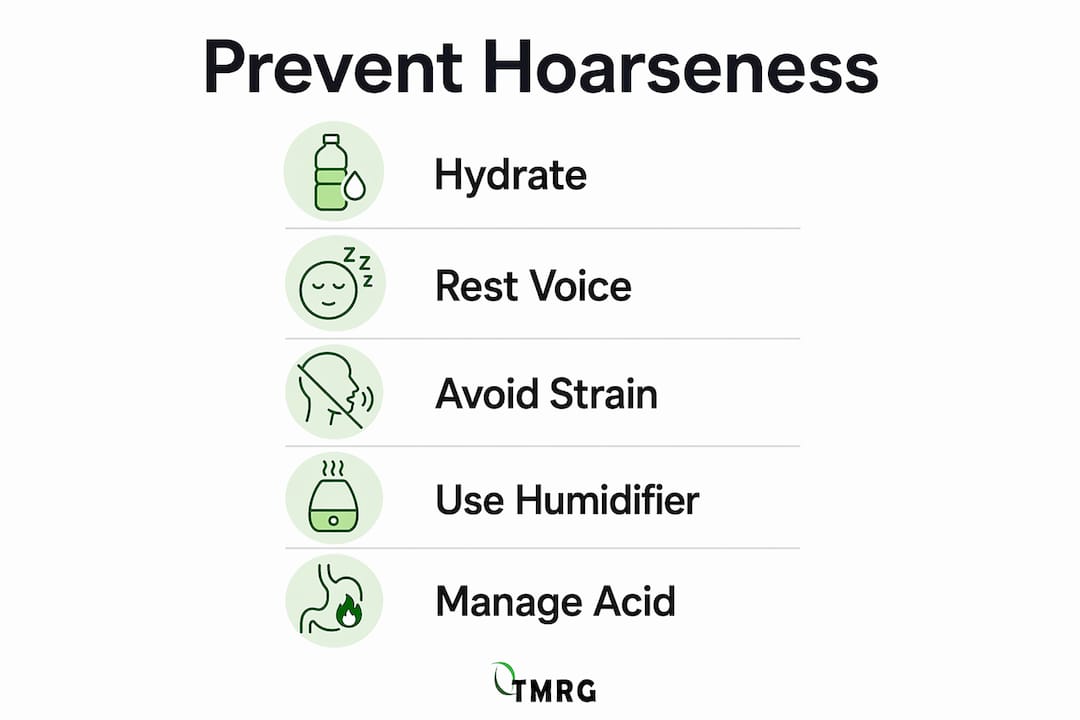
| Habit | Why It Protects Your Voice |
|---|---|
| Drink water throughout the day | Keeps vocal fold mucosa hydrated and flexible |
| Use a microphone when speaking to groups | Reduces the need to raise your volume and strain the larynx |
| Treat allergies proactively | Reduces postnasal drip and the urge to clear your throat |
| Manage acid reflux with diet and medication | Prevents stomach acid from reaching and irritating the larynx |
| Warm up your voice before heavy use | Prepares the vocal folds for sustained vibration and reduces injury risk |
| Avoid smoking and secondhand smoke | Eliminates one of the most damaging chronic irritants to vocal tissue |
Vocal strain is cumulative. A teacher who speaks for six hours daily, a singer who performs without warming up, or a call center agent who works through a cold is building up damage that eventually surfaces as chronic hoarseness. Addressing these patterns early is far easier than rehabilitating a damaged voice later.
Pro Tip: If your job requires extended voice use, consider a personal voice amplifier. Devices like the Chattervox or Amplivox allow you to speak at a conversational volume while projecting clearly to a room, cutting vocal effort by a significant margin.
For a complete breakdown of protective strategies, the Tmrgsolutions vocal health prevention guide covers environmental, dietary, and behavioral factors in detail. Performers and professional voice users will also find the natural recovery methods guide specifically useful.
Resting your voice and staying hydrated are the two most effective steps to fix a hoarse voice, and most cases of acute hoarseness resolve within 1–2 weeks when these principles are followed consistently.
| Point | Details |
|---|---|
| Voice rest is the top priority | Speak as little as possible and never whisper, which strains the larynx more than soft speech. |
| Hydration accelerates healing | Drink water consistently and use a humidifier to keep vocal fold tissue pliable. |
| Avoid irritants without exception | Smoke, alcohol, caffeine, and throat clearing all worsen inflammation and delay recovery. |
| Seek care after two weeks | Hoarseness lasting beyond two weeks, or paired with pain or breathing issues, needs medical evaluation. |
| Prevention requires daily habits | Microphone use, allergy management, and reflux control protect the voice from recurring damage. |
The single most common mistake I see is people treating vocal rest as optional. They rest for a day, feel slightly better, and immediately jump back into full voice use. That cycle extends recovery from one week to three or four. The vocal folds need uninterrupted time to reduce swelling. One good day does not mean you are healed.
The second mistake is whispering. People whisper because they think it is gentler than speaking. It is not. Whispering creates intense muscular tension in the larynx and forces the vocal folds into an unnatural position. If you need to communicate during vocal rest, text or write. If you must speak, use a soft, relaxed tone at low volume.
Recovery timelines are generally encouraging. Acute hoarseness from a cold or vocal overuse clears up within a week or two for most people. The cases that concern me are the ones where someone has been hoarse for a month and has been managing it with lozenges and hope. That is when a laryngoscopy becomes necessary, not optional. Catching a nodule or polyp early makes treatment far simpler. Do not wait out symptoms that are not improving.
— Golan
Tmrgsolutions has spent 25+ years developing natural vocal health products for singers, actors, lecturers, and anyone who depends on their voice.

If you are dealing with hoarseness right now, the TMRG Loud & Clear Classic Voice Recovery Drops are formulated to soothe inflamed vocal folds and support faster recovery. For those who prefer a spray format, the TMRG Shine Bright Classic Voice Recovery Spray delivers targeted hydration directly to the larynx. Professional voice users dealing with recurring or chronic hoarseness can explore the Premium Voice Therapy Kit, which combines structured exercises with targeted recovery support. Every product is backed by vocal coach endorsements and built around the same principles covered in this guide.
Most laryngitis cases resolve within 1–2 weeks with voice rest and proper hydration. Hoarseness lasting beyond two weeks requires medical evaluation.
Whispering is not safe during vocal recovery. It places more strain on the larynx than soft, relaxed speech and can prolong swelling of the vocal folds.
Yes. Stomach acid that reaches the larynx irritates the vocal folds and causes chronic hoarseness. Managing reflux through diet and medication often resolves the voice issue.
An ENT specialist performs a laryngoscopy to examine the vocal folds directly. Depending on findings, treatment may include voice therapy, medication, or in rare cases, surgery.
Hydration is one of the most effective remedies for hoarseness. Water keeps the vocal fold mucosa thin and pliable, which supports normal vibration and speeds recovery.
