Your Cart is Empty


TL;DR:
- Immediate remedies like hydration and steam inhalation can rapidly reduce hoarseness within 60 minutes.
- Vocal rest and avoiding irritants are essential to prevent worsening or prolonging hoarseness.
- Structured recovery and professional guidance help maintain long-term vocal health after hoarseness.
A hoarse voice before a performance isn’t just inconvenient. For singers, actors, and voice professionals, it can feel like a crisis. The good news is that the belief that nothing can be done in the short term is simply wrong. Immediate, evidence-based interventions can meaningfully reduce hoarseness within 60 minutes when applied correctly. This guide walks you through exactly what causes hoarseness, which natural remedies work fastest, what mistakes to avoid, and how to protect your voice long after the immediate threat has passed. Whether you have a show tonight or a critical meeting tomorrow, these strategies are built for you.
| Point | Details |
|---|---|
| Act within the first hour | Quick hydration and steam can noticeably reduce hoarseness before a performance. |
| Absolute vocal rest is vital | No talking or whispering gives your vocal cords the best chance to recover quickly. |
| Natural remedies work fast | Room-temperature water, steam inhalation, and honey bring effective rapid relief. |
| Avoid harmful habits | Steer clear of menthol, acidic foods, and vocal use to prevent further damage. |
| Long-term prevention matters | Daily care and smart aftercare are needed to keep your voice strong and resilient. |
Now that you know an hour can make a difference, let’s look at why your voice became hoarse and what must be addressed.
Hoarseness happens when your vocal folds, the two small bands of muscle tissue inside your larynx that vibrate to produce sound, become swollen, dried out, or irritated. When that happens, they can’t vibrate cleanly. The result is a rough, strained, or thin sound instead of your full, resonant voice.
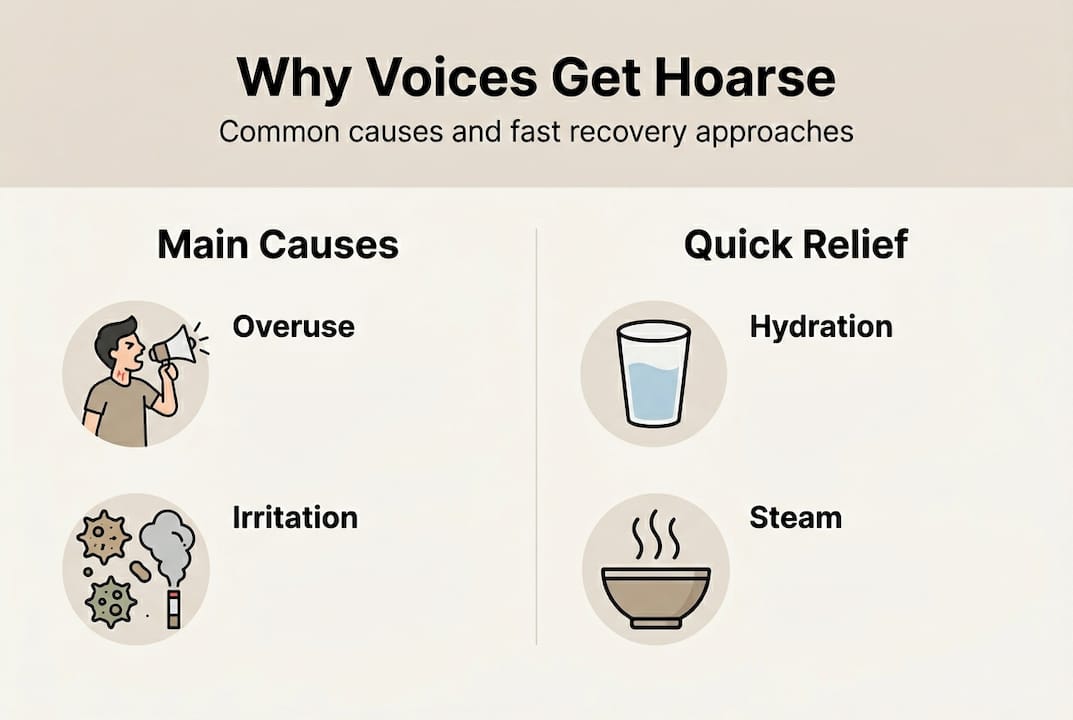
The most common triggers fall into three categories: overuse (singing or speaking too long without rest), infection (viral or bacterial inflammation of the larynx), and irritants (smoke, acid reflux, dry air, or allergens). Each of these causes the same core problem: compromised vibration of the vocal folds.
This is why fast-action remedies like hydration and steam inhalation are so effective. They target the surface of the vocal folds directly, reducing swelling and restoring moisture so vibration can improve quickly.
“Your vocal folds are like a fine instrument. Even minor swelling changes the pitch, tone, and control you’ve spent years developing. Acting fast matters.”
Here’s a quick look at how different causes affect recovery time:
| Cause | Typical recovery time | Fast-action potential |
|---|---|---|
| Vocal overuse | 1 to 3 days | High |
| Viral infection | 1 to 2 weeks | Moderate |
| Irritant exposure | Hours to days | High |
| Bacterial infection | 2 to 4 weeks | Low |
Medical recovery from laryngitis typically takes one to two weeks according to the NHS, and up to two to four weeks in more serious cases. But rapid hydration and surface lubrication can speed up short-term symptom management significantly, which is exactly what you need before a performance. To learn more about recovering from hoarseness naturally, it helps to understand which approach fits your specific cause.
With the underlying issues in mind, here’s exactly what you can do in the next hour to promote fast vocal recovery.
These steps work best when done in sequence. Don’t skip ahead or combine everything at once. Each remedy targets a specific part of the problem.
Drink room-temperature water. Start immediately. Cold water can cause the muscles around your larynx to tighten, which makes hoarseness worse. Aim for at least two full glasses over 20 minutes. Immediate natural remedies for quick relief include hydration as the first and most essential step, since it thins mucus and begins restoring moisture to the vocal fold surface.
Steam inhalation (10 to 15 minutes). Fill a bowl with hot water, drape a towel over your head, and breathe slowly through your mouth. Steam reaches the surface of the vocal folds directly, reducing inflammation faster than drinking water alone. Add a drop of eucalyptus oil if available, but avoid menthol.
Salt water gargle. Mix half a teaspoon of salt in a glass of warm water and gargle for 30 seconds. Repeat three times. This reduces surface swelling and clears irritants from the throat lining.
Take a teaspoon of raw honey. Honey outperforms some over-the-counter options for soothing throat tissue. It coats the mucous membranes and has natural antimicrobial properties. Manuka honey is particularly effective if you have access to it.
Statistic callout: Steam inhalation begins reducing vocal fold surface swelling within minutes of exposure, making it one of the fastest physical interventions available without medication.
Pro Tip: Avoid ice-cold drinks, menthol lozenges, and hot tea with lemon during this recovery window. Menthol is drying, lemon is acidic, and cold temperatures cause muscular tension around the larynx. These are among the most common mistakes singers make when trying to restore their voice fast.
For more natural remedies for a hoarse voice and additional tips for hoarseness, our resource library covers a wide range of evidence-based approaches. You can also explore Vocalzone throat pastilles as a supplementary option, though always check the ingredient list for menthol content.
Effective recovery isn’t just about the right actions. Avoiding harmful mistakes is just as crucial in your vocal rescue plan.
Many singers unknowingly make their hoarseness worse in the first hour. Here are the most damaging behaviors to stop immediately:
Pro Tip: Use a small whiteboard or your phone’s notes app to communicate during your rest period. Protecting your voice for even 45 minutes of true silence can make a measurable difference in how you sound when you perform.
Building the habit of recognizing these triggers is also how you prevent vocal strain before it becomes a crisis. Understanding the importance of voice maintenance as a daily practice, not just an emergency response, is what separates resilient voices from fragile ones.
Once you’ve reclaimed your voice, here’s how to make sure it stays strong and healthy for your next performance.
There are two distinct types of hydration that matter for vocal health, and most singers only focus on one.
| Hydration type | Method | Speed of effect | Best for |
|---|---|---|---|
| Systemic hydration | Drinking water throughout the day | Slow (hours) | Long-term vocal fold health |
| Surface hydration | Steam, nebulized saline, humidifier | Fast (minutes) | Immediate symptom relief |
Surface hydration using nebulized saline can improve phonation threshold pressure, which is the minimum airflow needed to start vibration, faster than systemic hydration alone. This is why steam works so quickly while drinking water supports recovery over time.
Here are the top daily habits to build vocal resilience:
When returning to singing after hoarseness, start with no more than 15 minutes of gentle vocalization on the first day. Increase gradually over three to five days. Rushing this process is the most common reason singers experience rapid recurrence. Explore vocal remedies for hoarseness and targeted voice exercises for hoarseness to build a structured return-to-voice plan.

You’ve learned the how-to. Now let’s address what most quick guides don’t explain about responsible voice care.
Here’s something we’ve observed after 25+ years of working with singers and voice professionals: the most dangerous moment in vocal recovery isn’t when you’re completely hoarse. It’s when you feel about 70% better and convince yourself you’re ready to perform at full capacity.
Medical sources correctly emphasize rest and hydration. Vocal coaches often add semi-occluded vocal tract (SOVT) exercises, like lip trills and straw phonation, for active recovery. Both are right, but for different stages. The conflict between these approaches confuses singers who apply SOVT exercises too early, before the inflammation has settled, and end up extending their recovery time.
The real risk is subtle. Singing over hoarseness can lead to vocal nodules, which are callus-like growths on the vocal folds that require weeks or months of therapy to resolve. No single performance is worth that outcome.
The best fast solutions always pair immediate relief with strict rest and a structured aftercare plan. That’s not a limitation. It’s the most professional approach you can take. Working with a specialist who understands how to coach hoarse singers through active recovery gives you a structured path that generic guides simply can’t provide.
For singers and speakers who need reliable solutions backed by vocal science, the next step is specialized care from trusted experts.
Home remedies are a strong starting point, but they have limits. When your voice is your livelihood, you need tools designed specifically for professional vocal recovery.

At TMRG Solutions, our voice therapy kit is built around the same principles covered in this guide: targeted hydration, natural herbal formulations, and structured recovery support. For performers with higher demands, the standard kit for singers includes advanced tools for both rapid relief and long-term vocal resilience. Explore our full range of vocal health solutions and give your voice the professional-grade care it deserves.
You can rapidly reduce hoarseness symptoms with hydration and steam, which begin working within minutes, but complete healing of the underlying inflammation typically takes longer depending on the cause.
No. Singing over hoarseness risks nodule formation and can significantly extend your recovery time, so wait until your voice feels fully restored before returning to full vocal use.
Drinking room-temperature water combined with steam inhalation provides the quickest relief, as hydration and steam thin mucus and reduce surface swelling on the vocal folds within minutes.
Many lozenges contain menthol, which dries the vocal fold surface and can worsen hoarseness. Honey outperforms many OTC options for soothing throat tissue naturally and safely.
