Your Cart is Empty


Vocal fatigue after a demanding European tour or that stubborn hoarseness following a full weekend of American studio sessions can make performing feel like an uphill battle. For professional singers and voice actors, your instrument depends on more than just talent—it hinges on strategies and habits that protect your voice from strain, irritation, and lasting injury. This guide reveals how modern vocal hygiene goes beyond old myths to help you build sustainable endurance, clarity, and vocal health tailored to your career’s demands.
| Point | Details |
|---|---|
| Vocal Hygiene Matters | Maintaining vocal hygiene involves hydration, avoiding irritants, pacing voice use, and strategic rest to prevent strain and injuries. |
| Debunking Myths | Common myths about vocal care, such as the dangers of cold water or the benefits of whispering, can harm vocal health if followed. |
| Four Pillars of Vocal Health | Focus on systemic hydration, environmental awareness, intelligent pacing, and strategic voice rest to sustain vocal well-being. |
| Address Warning Signs | Recognize early signs of vocal strain, such as persistent hoarseness or pain, to prevent long-term damage and preserve your vocal abilities. |
Vocal hygiene isn’t about gargling salt water or avoiding ice cream. It’s about strategies and habits that protect your voice from strain, fatigue, and damage over time. Think of it like dental hygiene—you’re preventing problems before they start, not just treating them after they occur.
For professional singers and voice actors, vocal hygiene involves modifying your physical environment and voicing habits to maintain health. This goes far beyond outdated “vocal misuse” frameworks. Modern vocal hygiene encompasses hydration, avoiding irritants, pacing your voice use, and strategic rest periods.
You probably believe some myths about vocal care that actually work against you. Let’s clear those up right now.
Many singers hold onto beliefs that seem logical but contradict how your voice actually works:
Cold water harms your voice. This is backward. Hydration is fundamental to vocal health, and temperature matters far less than consistent fluid intake.
Whispering is easier on your voice. Wrong. Whispering creates tension in your vocal folds and actually requires more muscular effort than normal speech.
Voice rest means complete silence. Your voice needs rest from strain, not from use entirely. Strategic rest differs from avoiding speaking altogether.
Throat lozenges solve hoarseness. They provide temporary relief but don’t address underlying causes like dehydration or vocal strain.
Clearing your throat keeps it healthy. Hard throat clearing damages vocal folds. Sipping water works better.
Real vocal hygiene means building sustainable habits—hydration, proper technique, environmental awareness, and intelligent pacing—not following old wives’ tales.
What actual vocal hygiene includes goes much deeper than these surface-level myths.
Here’s a comparison of vocal hygiene myths versus the actual science behind them:
| Common Myth | Scientific Reality | Impact on Vocal Health |
|---|---|---|
| Cold water harms voice | Fluid temperature matters little; hydration is key | Dehydration increases vocal strain |
| Whispering saves voice | Whispering causes extra muscular tension | Leads to faster fatigue |
| Complete silence is best | Rest from strain, not total silence, is more effective | Strategic rest promotes recovery |
| Lozenges cure hoarseness | Lozenges soothe, but don’t solve root causes | Underlying issues remain untreated |
| Throat clearing keeps voice healthy | Hard clearing damages folds; water is safer | Risk of vocal fold injury increases |
Vocal hygiene rests on several interconnected pillars that work together:
Hydration practices that keep your vocal folds lubricated from inside out
Environmental control by identifying and avoiding laryngeal irritants
Pacing strategies that prevent vocal fatigue during demanding performance schedules
Intelligent rest patterns tailored to your specific voice use demands
Posture and breathing mechanics that support efficient voice production
Each pillar supports the others. Skip hydration, and your voice becomes vulnerable to irritants. Ignore pacing, and rest periods become less effective. The foundation is understanding that maintaining vocal cord and surrounding tissue health prevents strain, fatigue, and damage before it happens.
This isn’t one-size-fits-all. Your vocal hygiene routine depends on your performance demands, schedule, and individual physiology.
Pro tip: Start by identifying your three biggest vocal challenges—whether that’s persistent hoarseness, fatigue after performances, or post-show recovery time—then build your hygiene habits specifically around solving those problems rather than following generic rules.
Your voice doesn’t deteriorate overnight. It suffers from accumulated small choices—skipped water bottles, ignored fatigue signals, breathing from your chest instead of your diaphragm. Building critical habits reverses this pattern by addressing what actually damages professional voices.
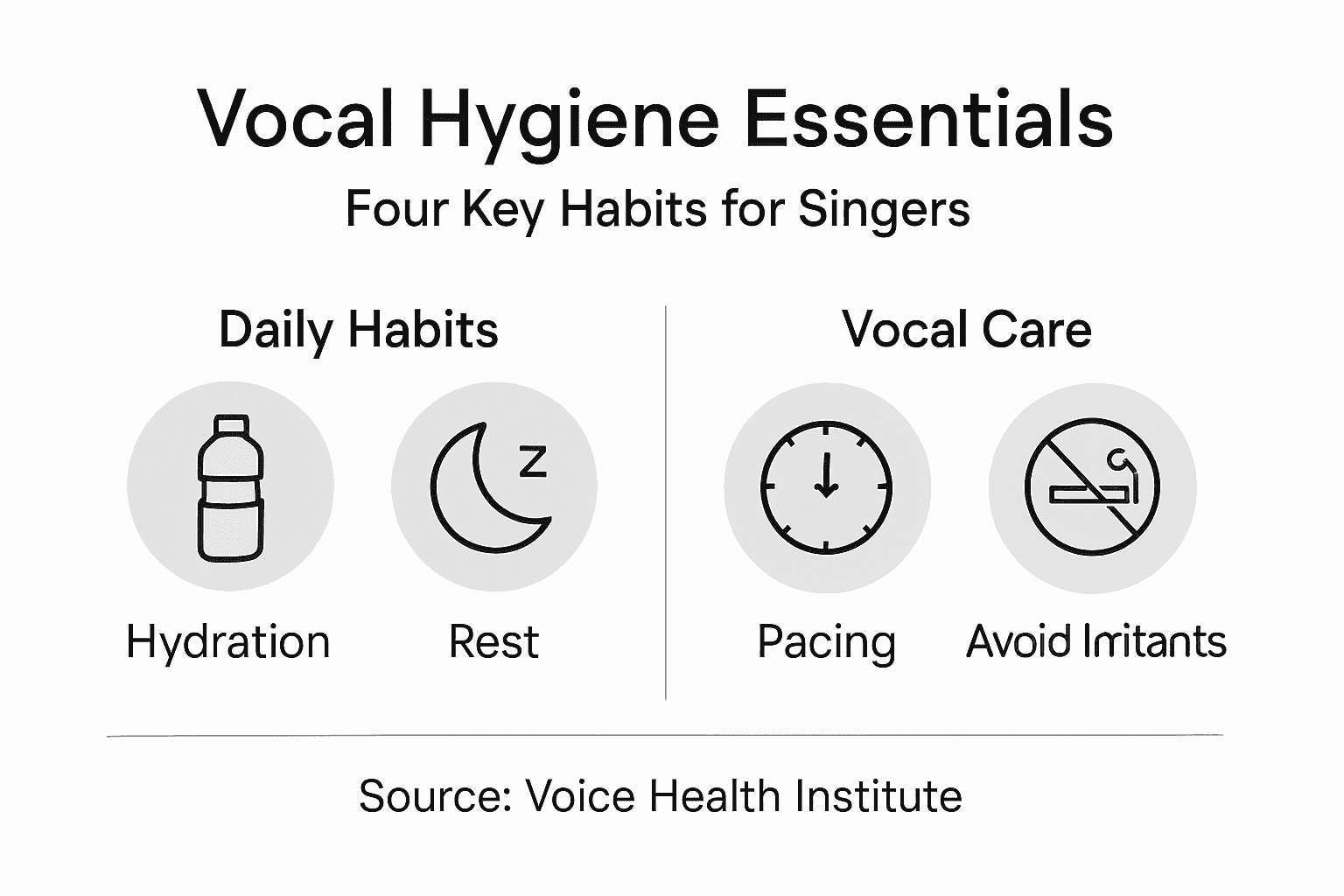
The foundation rests on four interconnected practices that work together to protect your instrument. Skip one, and the others become less effective. Master all four, and you’ll notice changes in vocal stamina, clarity, and recovery time within weeks.
These aren’t suggestions or nice-to-haves. They’re the practices that separate singers who maintain vocal health from those struggling with chronic hoarseness and fatigue:
Systemic hydration - Drinking water consistently throughout your day, not just before performances
Environmental awareness - Identifying and minimizing exposure to reflux triggers, pollution, and irritants
Intelligent pacing - Distributing your vocal demands across your week instead of concentrating them
Strategic voice rest - Knowing when silence helps and when gentle use actually accelerates recovery
Maintaining these habits prevents phonotrauma and supports both injury prevention and rehabilitation. Each habit addresses a specific vulnerability in your vocal system.
Drinking water sounds simple. Most singers do it. But there’s a difference between occasional hydration and systemic hydration—keeping your vocal folds consistently lubricated from inside out.
Your vocal folds need moisture at the cellular level. This takes time. You can’t hydrate for a performance by drinking water an hour before taking the stage. You build hydration over days and weeks through consistent intake.
The goal is simple: keep your vocal folds from drying out. Dry folds are fragile. They swell easily, fatigue faster, and require longer recovery. Hydrated folds handle demand more gracefully.
You can’t avoid all irritants, but you can minimize exposure to the ones damaging your voice. Common culprits include:
Acid reflux and stomach irritation
Cigarette smoke and air pollution
Dry heated or air-conditioned spaces
Allergens specific to your location
Vocal strain from shouting or hard consonants
Identify which irritants affect your voice. Then build habits around reducing them. If reflux triggers hoarseness, avoid late meals before bed. If dry air causes problems, use a humidifier during practice and sleep.
The goal isn’t perfection—it’s identifying your specific vulnerabilities and building habits that address them directly.
Phontrauma is the damage that builds from overusing your voice without adequate recovery. Singers create it by scheduling five performances in three days, then wondering why they’re hoarse.

Intelligent pacing means distributing vocal demands across your week. If you have a demanding performance on Saturday, plan lighter vocal activity on Friday and Sunday. If you’re doing multiple takes in the studio, build in recovery breaks.
Your voice isn’t a machine that works at full capacity indefinitely. It’s a muscle-based system that needs recovery. Respect that reality.
Pro tip: Track your vocal fatigue over two weeks, noting when your voice feels strongest and weakest, then schedule high-demand activities during your peak times and lighter work during recovery periods.
Vocal injuries don’t announce themselves loudly. They whisper at first—slight hoarseness, a nagging fatigue after performances, difficulty hitting certain notes. By the time you notice something serious, damage has been accumulating for weeks or months.
Understanding what injures voices helps you recognize warning signs before they become career-threatening problems. Professional singers face specific risks that amateur singers rarely encounter, simply because you demand more from your instrument more frequently.
Vocal nodules, polyps, swelling, and vocal cord strain arise from overuse, poor technique, or emotional tension. Each develops differently, but all share a common cause: repeated stress on delicate tissues without adequate recovery.
Understand what each injury looks like and how it develops:
Vocal nodules - Callus-like growths on both vocal folds from chronic friction caused by hard contact during phonation
Polyps - Fluid-filled sacs that develop usually on one fold from acute trauma or repeated strain
Vocal cord swelling - Inflammation of the vocal folds themselves, causing roughness and reduced vocal range
Vocal cord strain - Muscle fatigue in the larynx from overuse, creating tension and reduced control
Hemorrhage - Bleeding within vocal fold tissue from forceful voice use or trauma
Each condition requires different recovery approaches. Nodules may require weeks of voice rest and therapy. Polyps sometimes need professional removal. Swelling responds to hydration and anti-inflammatory strategies.
For quick reference, here are typical recovery strategies for vocal injuries:
| Injury Type | Typical Recovery Approach | Time to Heal |
|---|---|---|
| Vocal Nodules | Voice therapy, extended rest | Weeks to months |
| Polyps | Medical removal, therapy | Variable, often requires procedures |
| Swelling | Hydration, anti-inflammatory methods | Days to weeks, if treated promptly |
| Cord Strain | Reduced voice use, technique training | Several days to a week |
| Hemorrhage | Complete voice rest, medical review | Varies, depends on severity |
Most vocal injuries follow a predictable pattern. You push harder than usual, your folds swell slightly, that swelling creates friction, you compensate with tension, the cycle repeats. Within days or weeks, tissue damage becomes obvious.
Your risk increases with:
Consecutive performances without recovery days
Singing while already fatigued or sick
Pushing through pain instead of stopping
Poor vocal technique that concentrates force in one area
High stress or emotional intensity (tension tightens throat muscles)
The difference between a minor strain and a serious injury often comes down to how quickly you recognize the warning signs and change what you’re doing.
Your body gives clear feedback if you listen. These signs mean stop and rest:
Hoarseness that lasts beyond one day
Pain or sharp sensation in your throat during singing
Sudden loss of range or vocal power
Difficulty with specific notes that were previously comfortable
Sensation of vocal folds “catching” or feeling stuck
Fatigue that doesn’t improve with rest
These aren’t character tests. Pushing through them accelerates damage. Professional singers understand that protecting their voice today preserves their career tomorrow.
Pro tip: If you experience any warning sign, reduce your vocal output by 50% for two days—speak less, don’t sing—then gradually return to normal activity, paying attention to whether the symptom returns.
Ignoring vocal hygiene doesn’t feel like a big deal at first. You skip hydration one day, push through hoarseness another, avoid rest when you’re busy. Nothing catastrophic happens immediately. But small choices compound into serious consequences that can permanently damage your career.
The stakes are higher for professional singers than for most people. Your voice is your income. Neglecting it doesn’t just affect your health—it affects your livelihood.
Within weeks of poor vocal habits, you’ll experience tangible problems that impact your performance:
Chronic hoarseness that persists day after day
Vocal fatigue that arrives earlier in your practice or performance
Reduced vocal range or difficulty accessing upper or lower notes
Loss of vocal power and projection
Inconsistent voice quality that fluctuates unpredictably
Pain or discomfort during or after singing
These aren’t minor inconveniences. They’re warning signs that tissue damage is accumulating. Lack of vocal hygiene education contributes to increased at-risk vocal behaviors, acute and chronic voice symptoms, and impaired voice quality in professional performers.
If you ignore the warning signs, immediate problems evolve into permanent injuries. This is where neglect becomes devastating.
Chronic neglect creates conditions for:
Vocal nodules that require weeks or months of voice rest to heal
Polyps requiring professional medical intervention or surgery
Scarring of vocal fold tissue that permanently alters your voice
Voice handicap where basic speaking becomes difficult
Loss of career opportunities as your reputation for unreliability grows
Neglecting vocal hygiene leads to vocal injury, chronic voice symptoms, and voice handicap especially in professional voice users—problems that require extensive therapy to rehabilitate.
Career consequences compound the physical damage. You miss auditions because your voice isn’t ready. You can’t commit to performance contracts reliably. Other singers get hired for the roles you wanted because they can deliver what you can’t.
Psychologically, watching your voice deteriorate creates anxiety that makes everything worse. Stress tightens throat muscles, which damages your voice further. You enter a downward spiral.
Recovery becomes increasingly difficult. Early intervention takes weeks. Later intervention takes months or longer. Prevention takes almost no effort at all.
If you’ve already damaged your voice through neglect, recovery is possible but demands patience and strict adherence to vocal hygiene practices.
Recovery typically requires:
Professional voice assessment to identify specific damage
Modified or complete voice rest for days or weeks
Intensive voice therapy sessions with a specialist
Strict adherence to hydration and environmental management
Gradual return to singing under supervision
This process costs time and money. It postpones performances and income. It damages your professional reputation. All of this could have been prevented through basic vocal hygiene.
Pro tip: If you currently experience hoarseness, fatigue, or pain that lasts more than three days, pause demanding vocal work immediately and implement aggressive hydration plus complete voice rest for 48 hours—catch problems early before they require professional intervention.
Vocal hygiene isn’t just about habits—it’s also about using the right tools and products that support your voice health. The most effective approach combines smart daily practices with targeted solutions designed specifically for singers and voice professionals.
Think of products and support as force multipliers. They enhance what you’re already doing through hydration, rest, and pacing. The best singers use them strategically to accelerate recovery and prevent problems before they start.
Effective vocal hygiene support breaks down into several practical categories that work together:
Hydration aids that help you maintain consistent fluid intake throughout your day
Throat care products designed to soothe irritation and support tissue health
Environmental tools like humidifiers that reduce dry air damage
Reflux management products and dietary guidance for singers struggling with acid irritation
Voice therapy resources that provide structured guidance for rehabilitation or maintenance
Professional consultations with vocal coaches or speech pathologists who understand performer demands
Each category addresses a different vulnerability. Combining them creates a comprehensive system that protects your voice more effectively than any single solution.
Many singers prefer natural herbal solutions over pharmaceutical options. These formulations use time-tested botanicals designed to support vocal health without harsh side effects.
Common ingredients include honey for soothing irritation, ginger for reducing inflammation, and slippery elm for coating and protecting tissue. These work gradually and gently, supporting your body’s natural healing processes rather than forcing quick fixes.
Quality matters significantly. Individualized education paired with appropriate vocal support solutions enhances adherence and vocal health outcomes. Look for products with clear sourcing, transparent ingredient lists, and endorsements from vocal professionals who actually use them.
Beyond consumable products, certain equipment genuinely improves vocal health:
Humidifiers for maintaining moisture during sleep and practice
Hydration water bottles with markers helping you track daily intake
Throat spray bottles for topical relief during or after performances
Voice rest visual tools that help you track and respect silent periods
Posture alignment tools supporting proper breathing mechanics
These aren’t luxuries. They’re investments in your career. A quality humidifier costs less than one cancelled performance. A good water bottle costs less than a single vocal therapy session.
Products work best when guided by professional expertise. A speech pathologist or vocal coach can assess your specific challenges and recommend solutions tailored to your situation.
They help you understand which products address your actual problems versus which ones are unnecessary for your specific voice. This prevents wasting money on solutions that don’t serve your needs.
The most effective support combines individualized guidance with targeted products—generic solutions work, but personalized approaches accelerate results.
Pro tip: Start with just three foundational products—a quality humidifier, natural throat spray, and enhanced hydration tracking—then add specialized solutions only if specific problems emerge after consistently using these basics.
Understanding the essential habits of vocal hygiene is the first step toward protecting your voice from strain, fatigue, and long-term damage. If you are battling persistent hoarseness, vocal fatigue, or want to prevent injuries like vocal nodules, adopting targeted solutions can make all the difference. With strategies like systemic hydration, environmental control, and intelligent pacing at the core of your routine, enhancing your vocal health becomes more achievable when paired with the right support.

Explore our carefully curated range of natural remedies, voice therapy kits, and specialized products designed specifically for voice professionals and singers at the Welcome Collection - TMRG Solutions. For those seeking focused relief from serious conditions like vocal nodules or recovering from lost voice, we offer expert-backed formulations and tools that complement your vocal hygiene habits. Visit https://tmrgsolutions.com now and start building sustainable vocal health with solutions trusted by professionals for over 25 years.
Vocal hygiene refers to the strategies and habits that protect your voice from strain, fatigue, and damage over time. It involves practices such as proper hydration, avoiding irritants, pacing voice use, and incorporating strategic rest periods.
To improve vocal hydration, you should drink water consistently throughout the day, not just before performances. This ensures that your vocal folds remain lubricated from the inside out, which helps prevent fatigue and damage.
Common environmental irritants include acid reflux, cigarette smoke, air pollution, dry air from heating or air conditioning, and allergens. Identifying and minimizing exposure to these irritants can significantly help maintain vocal health.
Early signs of vocal strain include persistent hoarseness lasting beyond a day, pain during singing, sudden loss of vocal range, and feelings of fatigue that don’t improve with rest. It’s crucial to listen to these warning signs and adjust your vocal habits accordingly.
