Your Cart is Empty


Professional and aspiring actors often face unexpected vocal strain before a big rehearsal or crucial audition. Preparing your voice goes far beyond sounding good—it protects you from fatigue and keeps your performance consistent. By mastering steps like creating your ideal environment, staying hydrated, and practicing intentional breathing, you build a foundation for reliable expression. A prepared vocal environment combines physical relaxation with focused breathing and intentional movement to support healthy, powerful vocal delivery every time.
| Main Insight | Detailed Explanation |
|---|---|
| 1. Create an Optimal Vocal Space | Select a quiet area with ideal temperature and minimal distractions to support vocal health and performance. |
| 2. Prioritize Hydration and Relaxation | Drink room temperature water and practice deep breathing to maintain vocal cord flexibility and reduce tension. |
| 3. Focus on Breath and Resonance Training | Engage in diaphragmatic breathing and humming techniques to enhance vocal projection and resonance for powerful expression. |
| 4. Master Articulation and Projection | Use articulation exercises and proper posture to ensure clear, impactful communication and prevent vocal fatigue. |
| 5. Conduct a Vocal Readiness Assessment | Before performing, evaluate your vocal range, clarity, and physical alignment to ensure peak performance readiness. |
Creating an ideal vocal environment is critical for actors seeking consistent, high-quality vocal performance. Your preparation goes beyond just physical warm-ups—it involves strategically setting up a space that supports vocal health and reduces potential strain.
Start by identifying a quiet, comfortable area with consistent temperature and minimal external noise. Vocal warm-up experts recommend selecting a space where you can move freely and feel relaxed. Consider these key environmental factors:
Ensure your chosen environment allows for unrestricted physical movement. Actors need space to perform stretching exercises that activate key muscle groups and reduce vocal tension. Physical preparation involves loosening muscles in your neck, shoulders, and back—areas directly connected to vocal production.
A prepared vocal environment combines physical relaxation with focused breathing and intentional movement.
Pro tip: Keep a water bottle nearby and maintain room humidity between 40-50% to prevent vocal cord dehydration.
Preparing your body for vocal performance involves strategic hydration and intentional relaxation techniques. Your goal is to create optimal physical conditions that support vocal flexibility and reduce unnecessary muscle tension.
Deep breathing exercises are fundamental to releasing physical stress and preparing your body for vocal work. Focus on techniques that promote full, relaxed breathing and muscular release:
Actors should approach body relaxation systematically. Start with your head and work downward, consciously releasing tension in each muscle group. Mindful breathing helps reset your nervous system, creating a calm physiological state that supports vocal performance.
Proper hydration and relaxation are the foundation of a responsive, flexible vocal instrument.
Pro tip: Consume warm herbal tea with honey about 30 minutes before your vocal warm-up to soothe and prepare your vocal mechanism.

Breath and resonance form the cornerstone of powerful vocal performance for actors. Your goal is to develop a robust connection between breath control and sound production that amplifies your vocal expressiveness.
Breath preparation exercises involve strategic muscle engagement and controlled airflow. Actors should focus on developing techniques that enhance vocal projection and tonal quality:
Consider your body as an acoustic instrument. Breath support determines the richness and stability of your vocal output. Start with gentle exercises that gradually increase in complexity, paying attention to how different breathing patterns affect your voice’s resonance and power.
Vocal resonance transforms your voice from a simple sound into a dynamic, expressive instrument.
Pro tip: Practice these exercises in front of a mirror to observe your physical alignment and monitor subtle changes in facial muscle engagement.
Mastering articulation and projection is crucial for actors who want to deliver powerful, clear performances across various performance spaces. Your objective is to develop precise speech mechanics that communicate with maximum impact and minimal strain.
Articulation exercises prepare your speech muscles to produce crisp, intelligible sounds with intentional clarity. Focus on techniques that enhance your vocal precision and strengthen your communication skills:
Pay special attention to full-body alignment during these exercises. Your posture directly influences vocal projection, enabling you to communicate effectively without vocal fatigue. Begin with slow, deliberate movements and gradually increase speed and complexity as your muscles warm up.
Articulation transforms words from mere sounds into powerful, expressive communication.
Pro tip: Record yourself performing these exercises to objectively assess your progress and identify areas needing improvement.
Before stepping onto the stage, actors must conduct a comprehensive self-assessment to ensure vocal performance peak readiness. Your goal is to systematically evaluate your vocal instrument’s current condition and preparedness.
Vocal warm-up techniques help actors psychologically and physically prepare for performance challenges. Develop a personal readiness checklist that evaluates multiple vocal dimensions:
Focused listening is crucial during these diagnostic exercises. Pay attention to any signs of vocal strain, unexpected breaks in tone, or reduced flexibility. Begin with gentle probing of your vocal capabilities and progressively challenge yourself, always maintaining a sense of physical ease.
Performance readiness emerges from confident, intentional vocal preparation.
Pro tip: Create a brief pre-performance ritual that includes these diagnostic exercises to build consistent, reliable vocal confidence.
Use this summary to avoid common actor mistakes during vocal warm-up:
| Common Mistake | Impact on Performance | Correction |
|---|---|---|
| Skipping hydration | Leads to dryness, tension | Drink water frequently |
| Insufficient stretching | Increases risk of strain | Stretch all major groups |
| Rushed articulation | Causes unclear speech | Slow down, focus on clarity |
| Ignoring posture | Reduces projection power | Align body before speaking |
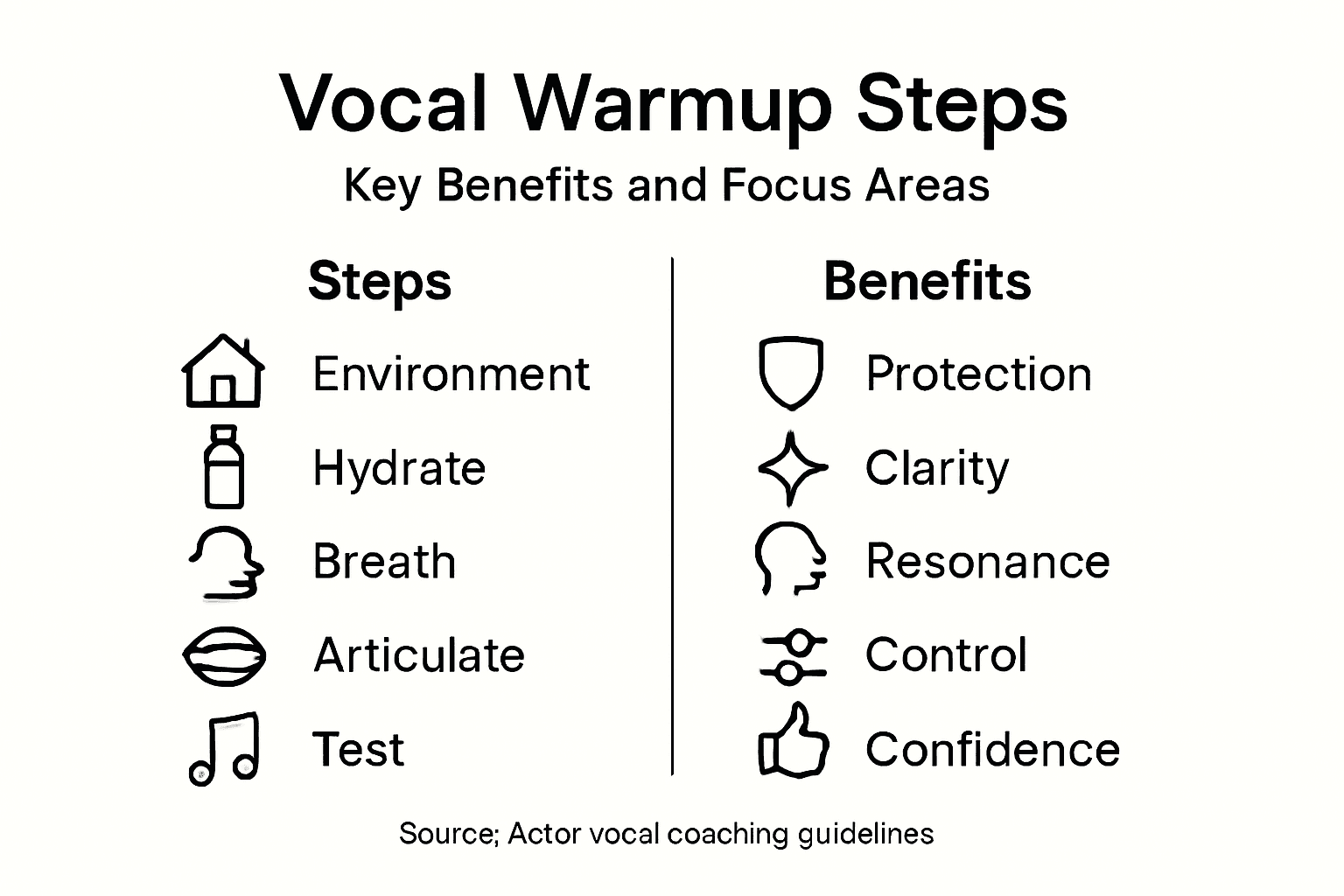
Here’s a quick reference of how each vocal warm-up step benefits actors:
| Step | Primary Benefit | Focus Area |
|---|---|---|
| Prepare Environment | Reduces strain, improves comfort | Physical space |
| Hydrate & Relax | Enhances flexibility, lowers tension | Body and breath |
| Breath & Resonance | Expands projection, strengthens sound | Airflow and resonance |
| Articulation & Projection | Maximizes clarity, boosts impact | Speech mechanics |
| Readiness Test | Ensures confidence, detects issues | Self-assessment |
Actors understand that a proper vocal warm-up is essential to avoid strain, improve breath control, and boost projection. This guide highlights key challenges such as maintaining hydration, mastering breath and resonance, and protecting your vocal cords from fatigue. To elevate your routine and support vocal health naturally, explore proven remedies designed specifically for vocal professionals.
Discover the benefits of our Singer Enhancements collection crafted to keep your voice hydrated, flexible, and ready for any role. Whether you face issues with dryness, tension, or need to relieve phlegm buildup, our targeted products can make a real difference. Visit Phlegm and Viscous Mucos for specialized solutions that reduce mucus and help you maintain crystal-clear articulation.

Don’t let vocal fatigue or strain hold you back. Take the next step now by browsing All Products at https://tmrgsolutions.com to find natural, effective remedies trusted by vocal coaches and actors alike. Experience 25 years of expertise in vocal care designed to keep your performance powerful and your voice healthy.
An ideal vocal environment is quiet, comfortable, and has consistent temperature and humidity. Aim for a space where you can move freely, ideally between 68-72°F with moderate humidity, to support vocal health and reduce strain.
To effectively hydrate, drink room temperature water regularly and consider warm herbal tea with honey about 30 minutes before your vocal warm-up. This helps to keep your vocal cords hydrated and prepares your vocal mechanism for use.
Practice diaphragmatic breathing by taking slow, deep breaths that engage your abdomen. Incorporate sustained inhales and exhales in your routine to enhance breath control, which is essential for vocal expressiveness.
Focus on articulation exercises like exaggerated consonant pronunciations and tongue twisters to enhance clarity. Begin slowly and gradually increase speed while maintaining clear speech, aiming for crisp and dynamic communication.
Conduct a vocal readiness test that checks your range, articulation, breath control, and emotional resonance. Perform these checks in a systematic way, ensuring each area feels prepared for the performance ahead.
Your posture plays a crucial role in vocal projection and clarity. Maintain an aligned and relaxed posture to optimize breath support and reduce vocal strain, enhancing your overall performance impact.
