Your Cart is Empty


TL;DR:
- A glycerin-based, alcohol-free vocal spray effectively lubricates and protects the vocal folds during singing. It coats the mucosal lining with natural herbs to reduce irritation and extend vocal endurance. Proper use of these sprays alongside hydration and rest supports vocal health and performance longevity.
A vocalist spray is a specialized throat spray formulated to soothe, hydrate, and protect the vocal folds during singing, rehearsal, and performance. Unlike general-purpose throat sprays sold at drugstores, these products are built around natural, alcohol-free, glycerin-based formulas that coat the mucosal lining without drying it out. Touring musicians, recording artists, and stage performers rely on them as a front-line tool for vocal health maintenance. Brands like Vocal Eze and products from Tmrgsolutions have made this category a standard part of the professional singer’s kit. Understanding how these sprays work, what goes into them, and how to use them correctly separates vocalists who protect their instrument from those who burn it out.

A vocalist spray works by coating the mucosal lining of the throat and the area surrounding the vocal folds with a protective, lubricating layer. The spray does not directly touch the vocal cords themselves. Instead, it hydrates the tissue around them, reducing friction and irritation during phonation.
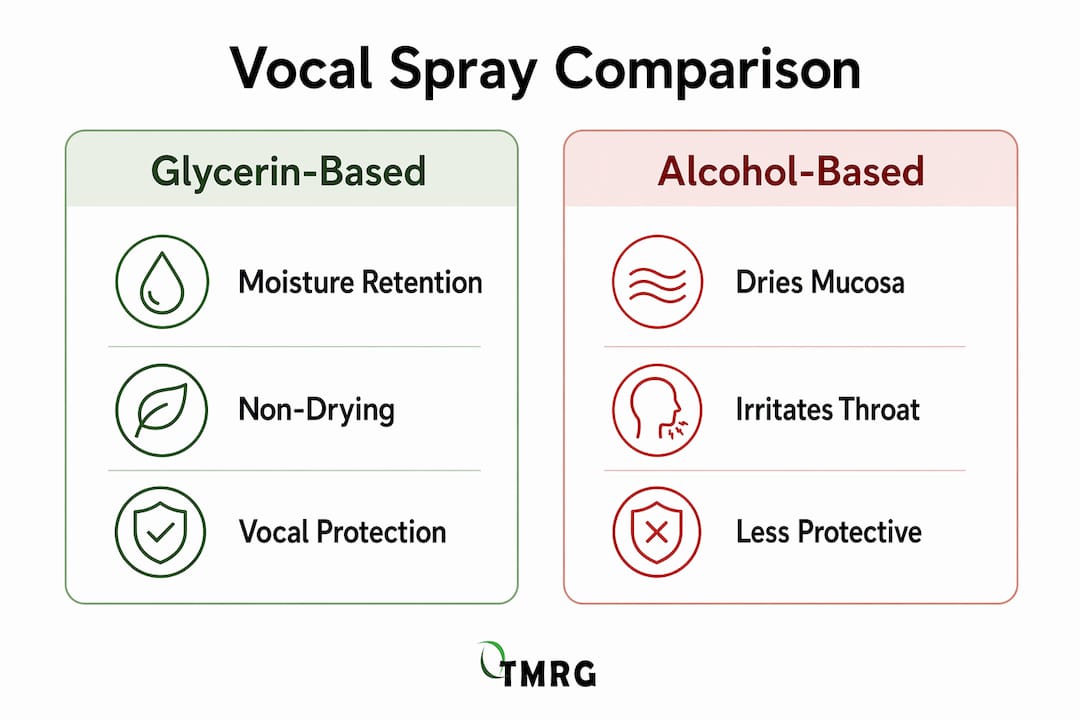
Glycerin-based sprays soothe without drying and coat the vocal cords, unlike alcohol-based sprays that pull moisture from the tissue. This distinction matters more than most singers realize. An alcohol-based spray may feel immediately cooling, but it leaves the throat drier within minutes. A glycerin base maintains that protective coating throughout a set.
The most effective natural vocalist sprays combine multiple herbs for layered protection. Herbs like licorice, aloe vera, marjoram, yerba mansa, and stoneroot are common in professional formulas, each contributing anti-inflammatory or lubricating properties. Here is what each one does:
Some formulas, like Vocal Eze, also act as bronchial dilators with immune-boosting properties, which helps singers breathe more freely during demanding performances. Oral sprays containing propolis, hedge mustard, and essential oils like eucalyptus and thyme also relieve throat overload and irritation, making them a solid option for performers dealing with hoarseness or pharyngitis.
| Feature | Glycerin-Based Spray | Alcohol-Based Spray |
|---|---|---|
| Moisture effect | Retains and adds moisture | Dries mucosal tissue |
| Safety for vocal folds | High | Low to moderate |
| Lasting protection | Yes, coats and stays | Short-lived |
| Recommended for singers | Yes | No |
| Suitable for children | Generally yes | Generally no |
Pro Tip: Read the inactive ingredients, not just the active ones. Artificial flavoring, preservatives, and fillers can irritate sensitive vocal tissue even when the main herbal ingredients are safe.
The core benefit of a singer throat spray is fast, targeted relief without the side effects of systemic medications. You do not need to wait for a pill to absorb. A few sprays deliver rapid soothing and airway dilation effects within seconds, which is critical when you have two minutes before you walk onstage.
Here are the primary benefits vocalists report and what they mean in practice:
Vocal fatigue is one of the most common reasons performers cancel shows or cut sets short. A well-chosen throat spray for performers addresses the physical causes of that fatigue at the source, not just the symptoms. When you combine a spray with proper warm-up and hydration, you give your voice the best possible conditions to perform at full capacity.
Water vapor is the only particle small enough to reach the vocal cords directly, which is why steam inhalation remains a complementary tool alongside sprays. That means sprays work on the surrounding tissue while steam works deeper. Using both together creates a more complete hydration strategy than either method alone.
Choosing the right vocal health product requires more than picking the best-reviewed bottle. Your voice is unique, and the wrong formula can cause more problems than it solves.
Look for sprays that are alcohol-free, free from artificial flavoring, and built on a glycerin or aloe vera base. Vocalists should select sprays without allergens and follow recommended use to avoid adverse reactions. Before buying, check the label for these red flags:
Apply your vocalist spray 10–15 minutes before singing to allow the formula to coat the tissue fully. During a performance, use it between sets or during extended breaks rather than spraying constantly. Overuse does not increase protection and can disrupt the natural mucosal balance of your throat.
Food supplement sprays should not exceed recommended doses and are contraindicated during pregnancy or when taking certain medications. If you are on blood thinners or immunosuppressants, check with your doctor before using herbal formulas containing licorice or propolis.
Pro Tip: Do not use a vocalist spray as a substitute for vocal rest. If your voice is genuinely injured, a spray manages discomfort but does not heal damaged tissue. Rest, hydration, and professional evaluation are irreplaceable.
For a deeper look at how to match a spray to your specific symptoms, the symptom-first guide from Tmrgsolutions walks through common vocal complaints and which formulas address each one most directly.
The market for natural vocalist spray products has grown significantly, and the differences between leading options come down to ingredient philosophy, price, and the specific vocal problems they target.
Professional vocal sprays typically retail in the $15–$25 range, with most bottles containing 1–2 oz of formula. That price point reflects the cost of quality herbal sourcing and the absence of cheap fillers.
| Product | Key Ingredients | Price Range | Best For |
|---|---|---|---|
| Vocal Eze Throat Spray | Glycerin, herbal blend, no artificial additives | ~$19.99 / 1 oz | General hydration and immune support |
| Singer’s Saving Grace | Slippery elm, licorice, aloe vera | ~$15–$18 / 1 oz | Dryness and mild hoarseness |
| Clear Voice Throat Spray | Glycerin, zinc, herbal extracts | ~$20–$25 / 1 oz | Congestion and vocal fatigue |
| TMRG Classic Voice Spray | Natural herbal formula, alcohol-free | Varies | Recovery and performance endurance |
Vocal Eze is made from all-natural ingredients without harsh chemicals, with no artificial flavoring or fillers. Singer’s Saving Grace leans heavily on slippery elm, which creates a thick coating effect that many performers prefer for extended shows. Clear Voice adds zinc, which provides mild antimicrobial support alongside the standard lubricating base.
The Tmrgsolutions product line takes a different approach by pairing sprays with complementary recovery drops and therapy kits, which gives performers a more complete care system rather than a single-product fix. For a full breakdown of what actually works across these categories, the vocal sprays comparison guide from Tmrgsolutions is worth your time.
A few practical notes on buying:
For a curated list of top-rated options with clear performance criteria, the 7 best throat sprays guide from Tmrgsolutions covers the field with specificity.
A glycerin-based, alcohol-free vocalist spray is the most effective topical tool for protecting vocal folds, reducing friction, and extending performance endurance without drying the mucosal tissue.
| Point | Details |
|---|---|
| Glycerin base is non-negotiable | Alcohol-based sprays dry the throat; glycerin retains moisture and coats safely. |
| Herbal ingredients do specific jobs | Licorice, aloe vera, and yerba mansa each target different aspects of vocal irritation. |
| Timing affects results | Apply 10–15 minutes before singing for full mucosal coating before you begin. |
| Sprays complement, not replace, rest | No spray heals damaged vocal folds; rest and hydration remain the foundation. |
| Price reflects ingredient quality | Quality natural sprays cost $15–$25; avoid cheap formulas with fillers or alcohol. |
After working with singers across every genre and performance level, the pattern I see most often is this: vocalists discover sprays during a crisis and then use them incorrectly for years afterward.
The spray becomes a crutch. A performer feels throat tightness before a show, reaches for the bottle, and sprays three times more than the label recommends. They feel better for twenty minutes. Then they push through a two-hour set without warming up, without drinking water, and without resting between songs. The spray did its job. The vocalist did not do theirs.
The most effective vocal care routines I have seen treat a vocalist spray as one layer in a system. You warm up the voice before you spray. You hydrate with water throughout the day, not just backstage. You use the spray to maintain a comfortable baseline, not to rescue a voice that is already in distress. And you take vocal rest seriously on recovery days, even when you feel fine.
The other mistake I see constantly is ignoring ingredient labels. A performer will spend serious money on a quality microphone and then buy the cheapest throat spray at a gas station before a gig. That spray almost certainly contains alcohol, artificial flavoring, or menthol in concentrations that numb rather than protect. Your voice is worth the same scrutiny you give your gear.
If you are building a consistent vocal care routine, start with a quality glycerin-based spray, pair it with steam inhalation on heavy rehearsal days, and treat vocal rest as a non-negotiable part of your schedule. The singers I have seen maintain strong voices into their forties and fifties are the ones who treat prevention as seriously as performance.
— Golan
Tmrgsolutions has spent 25+ years developing natural vocal health products for singers, actors, and speakers who cannot afford to lose their voice.
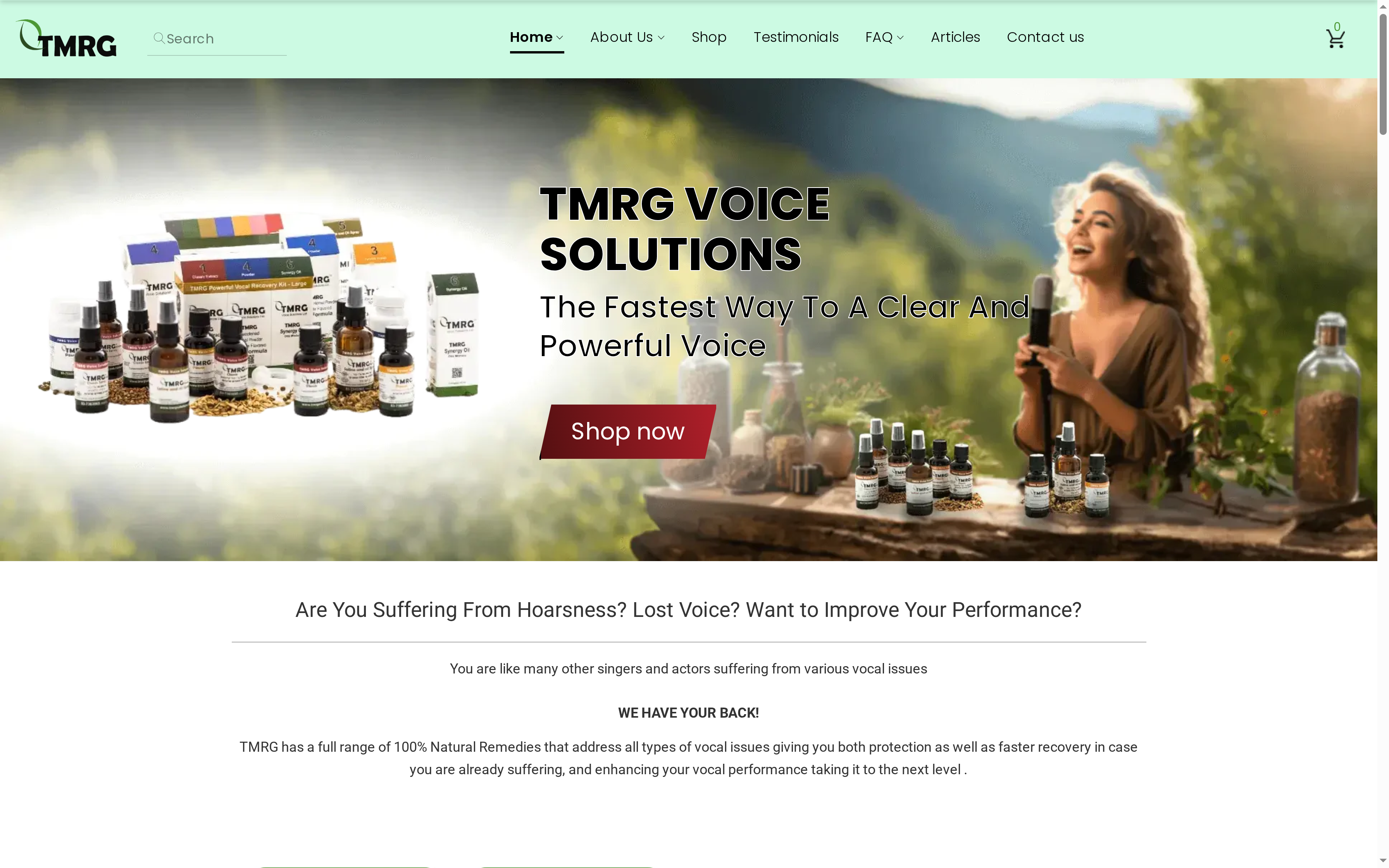
The TMRG Shine Bright Classic Voice Recovery Spray is formulated with a natural herbal base to hydrate and protect vocal cords during demanding use. Pair it with the TMRG Loud & Clear Recovery Drops for a complete pre-show and post-show care routine. For performers dealing with ongoing vocal fatigue or hoarseness, the TMRG Voice Therapy Kit brings together sprays, drops, and recovery tools in one targeted system. Every product is alcohol-free, built from natural ingredients, and endorsed by vocal coaches and medical professionals who work with performing artists.
A vocalist spray is a throat spray designed to soothe, hydrate, and protect the vocal folds before and during singing. It reduces friction, relieves dryness, and helps performers maintain vocal endurance across long sets or rehearsals.
No. A vocalist spray manages discomfort and supports mucosal health, but it does not repair damaged vocal folds. Vocal injuries require rest, proper hydration, and in serious cases, evaluation by a laryngologist or speech-language pathologist.
Apply your spray 10–15 minutes before singing and between sets as needed. Do not exceed the manufacturer’s recommended dose, since overuse can disrupt the natural mucosal balance of the throat.
Most glycerin-based, alcohol-free sprays are safe for regular use by healthy adults. Check for contraindications if you are pregnant, nursing, or taking medications that interact with herbal ingredients like licorice or propolis.
Water hydrates systemically but takes time to reach the mucosal tissue. A vocalist spray delivers immediate topical lubrication to the throat lining, which is why performers use both methods together rather than choosing one over the other.
