Your Cart is Empty


TL;DR:
- Vocal sprays soothe throat tissue and reduce dryness but do not directly hydrate the vocal folds themselves. Nebulized isotonic saline and steam inhalation reach deeper, supporting mucus thinning and vocal fold hydration effectively. Proper hydration, voice technique, and medical evaluation for persistent symptoms are essential for optimal vocal health.
Vocal strain hits fast. One night of heavy performing, a dry rehearsal room, or a week of overuse, and your voice starts to sound thin, scratchy, or unreliable. Vocal sprays are often the first thing singers, speakers, and actors reach for, and the market is flooded with options. But not all of them work the same way, and some do very little beyond coating the back of your throat. Before you spend money on another bottle, it pays to understand what these sprays actually contain, how they interact with your vocal folds, and when you need more than a spray to restore your voice.
| Point | Details |
|---|---|
| Not all sprays are equal | Ingredients and delivery methods vary widely, so read labels before you buy. |
| Saline nebulization works deeper | Nebulized isotonic saline reaches vocal folds directly, unlike most throat sprays. |
| Hydration goes beyond the bottle | Consistent water intake and behavior changes matter more than any single product. |
| Persistent symptoms need a doctor | Hoarseness lasting beyond two weeks may signal reflux, infection, or a structural issue. |
| Sprays are tools, not treatments | Use vocal sprays as part of a broader vocal care routine, not as a standalone fix. |
The term “vocal spray” covers a broad category. Some are herbal tinctures. Others are simple saline solutions. A few contain glycerin or plant-based compounds designed to coat and lubricate mucosal tissue. What they share is a delivery mechanism: a pump or spray bottle directs the formula toward the back of the throat.
Here is where the anatomy matters. Your vocal folds sit inside the larynx, below the epiglottis. When you spray something into your mouth or throat, the liquid lands on the pharynx and soft palate, not directly on the vocal folds themselves. The folds are protected by a reflexive closure mechanism that prevents foreign substances from entering the airway. So while a spray can soothe the surrounding tissue and reduce that raw, irritated feeling you notice when singing, it is not lubricating your vocal folds the same way systemic hydration does.
Common ingredients found in throat sprays for singers include:
The distinction between herbal remedies and hydrating sprays is not just marketing. Herbal sprays may reduce inflammation and discomfort in the short term. Hydrating sprays support mucus viscosity, which directly affects how your vocal folds vibrate. Many commercially available sprays make bold claims about instant vocal restoration, but their physiologic effect is often limited to surface tissue, not the folds themselves.
Pro Tip: If a spray claims to immediately “heal” or “repair” your vocal folds, treat that claim with skepticism. Soothing and healing are different things. Look for products that name their ingredients clearly and explain what each one does.
If throat sprays work at the surface, what actually hydrates your vocal folds? The answer lies in two clinically supported methods: nebulized isotonic saline and steam inhalation. Both have real benefits, but they are not interchangeable.
Nebulized isotonic saline uses a hand-held device to convert a 0.9% saline solution into a fine mist. When you inhale this mist slowly and deeply, the particles are small enough to travel past the larynx and reach the vocal folds directly. Nebulized isotonic saline thins sticky mucus and reduces the sensation of dryness, making vocal fold vibration easier and less effortful. Critically, you do not need vocal rest after using a nebulizer. That makes it a practical fit for performers who need to use their voice immediately before or after a session.

Steam inhalation is the more traditional option. It opens the airways, eases muscle tension around the larynx, and temporarily moistens the vocal tract. However, steam inhalation carries burn risks if the water is too hot or the session too long. Most guidelines recommend cooling the water slightly before use and limiting each session to 5 to 10 minutes. Steam also provides broader comfort rather than targeted vocal fold hydration.
| Method | Delivery depth | Post-use vocal rest needed | Main benefit |
|---|---|---|---|
| Throat spray | Pharynx and soft palate | No | Soothes irritation and dryness sensation |
| Steam inhalation | Upper airway and larynx | No | Eases tension and general moisture |
| Nebulized isotonic saline | Larynx and vocal folds | No | Targeted hydration and mucus thinning |
| Systemic hydration (water) | Entire body, via bloodstream | No | Long-term vocal fold lubrication |
The research points clearly in one direction. Topical hydration supports vocal fold comfort best when paired with behavior changes and workload management. A nebulizer used backstage or before a long lecture can meaningfully reduce vocal effort. Steam before bed helps your voice recover overnight. But neither replaces the foundational habit of drinking enough water throughout the day. Proper vocal tract hydration strategies give you the full picture of how systemic and topical approaches work together.
Pro Tip: For performers working in air-conditioned venues or dry climates, a portable nebulizer is one of the most practical investments you can make. Use it for 10 to 15 minutes before a performance and notice how much less effort your voice requires.
The vocal spray market is noisy. Packaging often looks more scientific than the formula inside warrants. To make a genuinely good choice, you need to look past the branding and ask a few specific questions.
Start with ingredient transparency. Can you see a full ingredient list? Can you find information about why each ingredient is included and at what concentration? A spray that lists “proprietary herbal blend” without specifics is giving you nothing to evaluate. Prioritize products that name each compound and explain its intended effect on throat tissue.
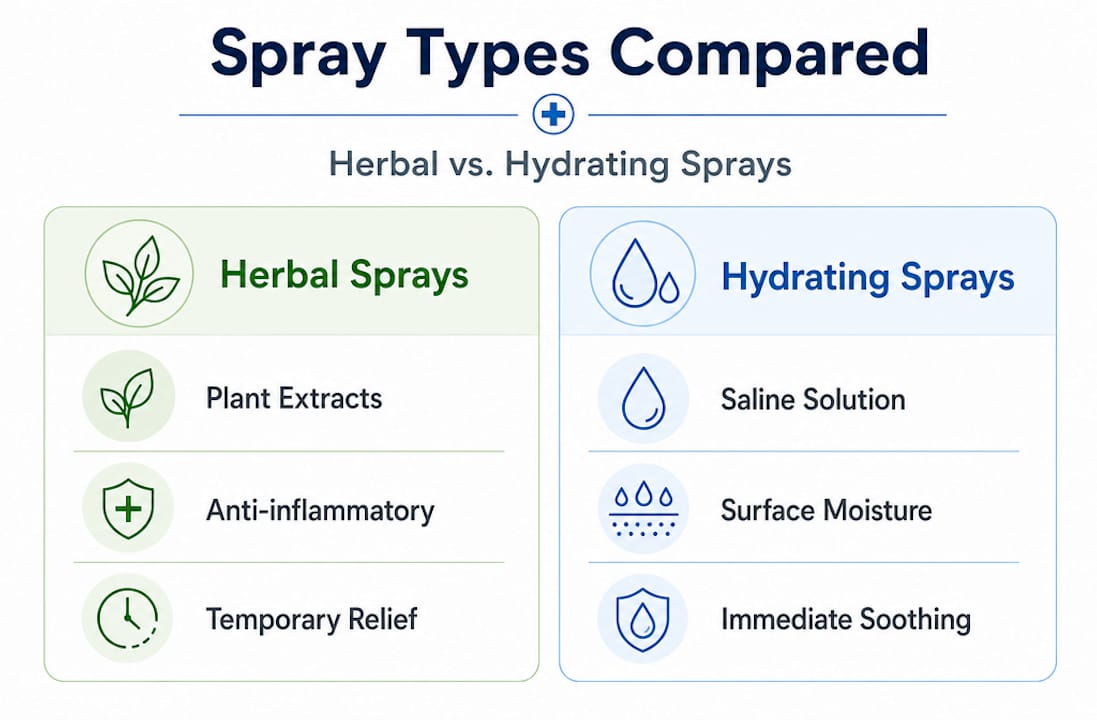
Next, consider what you are actually treating. Dryness from a dry environment responds well to a hydrating or saline-based spray. Post-performance rawness from overuse may benefit more from an anti-inflammatory herbal formula. Thick mucus that makes your voice feel foggy responds better to nebulized saline than any standard throat spray can deliver.
Some additional factors to weigh:
For a side-by-side breakdown of how specific products compare, the expert review at Tmrgsolutions covering best throat sprays for singers is worth reviewing before you commit to a purchase.
Vocal sprays and hydration devices are useful tools. They are not diagnostic tools. If your voice has been consistently hoarse, weak, or strained for more than two weeks, you may be dealing with a condition that requires medical evaluation rather than a better spray.
Laryngopharyngeal reflux, or LPR, is one of the most commonly overlooked causes of chronic vocal problems. Stomach acid and enzymes travel up past the upper esophageal sphincter and land on the laryngeal tissue, causing irritation, redness, and that persistent “something in the throat” sensation many performers recognize. It does not always come with the classic heartburn most people associate with acid reflux. The primary presentation is vocal.
Here is how evidence-based management of LPR typically progresses:
Post-viral hoarseness follows a different path. After a respiratory infection, the vocal folds often remain inflamed for days beyond the other symptoms. Post-viral hoarseness typically resolves within 7 to 10 days with conservative voice rest and reassurance. Antibiotics are rarely indicated. Steroid sprays are reserved for specific cases. For most people, rest, hydration, and avoiding vocal strain is the correct course. If hoarseness extends beyond that window, get evaluated. You can learn more about warning signs and recovery timelines in Tmrgsolutions’ detailed resource on persistent hoarseness prevention.
I have worked with singers, speakers, and voice professionals for a long time. One pattern I see repeatedly is the impulse to buy a product instead of changing a behavior. A new vocal spray feels like doing something. Resting your voice, reducing your performance load, or committing to consistent water intake feels like waiting. But that is the work that actually changes outcomes.
I am not dismissing vocal sprays. I recommend specific ones regularly. But I recommend them as one layer in a system, not as the system itself. When someone tells me they go through a full bottle of throat spray a week, my first question is not “which spray are you using?” It’s “what is causing this level of strain?”
Steaming offers temporary moisture and comfort but does not build long-term vocal resilience. Neither does a spray. What I’ve seen work, consistently, is pairing topical care with voice technique training, appropriate rest, and an honest look at workload. If you are a performer doing eight shows a week, no spray will compensate for the physiological demand of that schedule.
Before you purchase anything, educate yourself on what the product can and cannot do. Ask what its ingredients accomplish at a tissue level. Use it as a complement to your vocal training and care routine. And if your symptoms persist beyond two or three weeks, stop reaching for the spray and start reaching for a voice specialist.
— Golan
If you are ready to move beyond guesswork and give your voice the structured care it needs, Tmrgsolutions has developed targeted solutions built specifically for singers, actors, and speakers dealing with vocal fatigue and strain.

With 25 years of expertise in vocal health, Tmrgsolutions offers natural herbal formulations and complete voice therapy kits that pair topical care with proven recovery strategies. The Standard Voice Therapy Kit is designed for performers who need a reliable, expert-backed system to support vocal recovery and sustain performance quality. For those who want to explore the full range of tools and understand what fits your specific situation, the vocal problems resource page is a practical starting point.
Vocal sprays soothe the pharynx and surrounding throat tissue, reduce dryness, and ease the sensation of irritation. They do not directly contact the vocal folds due to the airway’s protective reflexes, so they work best as surface comfort tools within a broader vocal care routine.
For targeted vocal fold hydration, nebulized isotonic saline reaches deeper into the larynx and is more effective at thinning sticky mucus than standard throat sprays. Both have a role, but saline nebulization provides more direct physiologic benefit to the vocal folds.
Post-viral hoarseness usually resolves within 7 to 10 days with voice rest, hydration, and avoiding strain. If hoarseness persists beyond two weeks, consult a laryngologist or ear, nose, and throat specialist for evaluation.
No. LPR requires dietary changes, stress management, and sometimes supervised medication trials. Sprays can offer temporary comfort but reflux-related vocal symptoms need proper diagnosis and individualized treatment to resolve fully.
Look for formulas with marshmallow root, slippery elm, aloe vera, or isotonic saline, all of which have clear soothing or hydrating effects on throat tissue. Avoid sprays with high alcohol content or vague “proprietary blend” labels that do not disclose individual ingredients.
