Your Cart is Empty


Voice fatigue and hoarseness can feel catastrophic when your next performance depends on being at your best. For professional singers and actors, your voice is more than a tool—it is your career and identity. Professional voice care combines expert guidance, daily practices, and early intervention to help protect your vocal health, promote recovery, and support performance longevity. Discover how small, consistent steps can make the difference between vocal setbacks and a rewarding, sustainable career.
| Point | Details |
|---|---|
| Invest in Professional Voice Care | Systematic voice care is essential for performers to maintain vocal health throughout their careers. Proper strategies prevent injury and enhance vocal longevity. |
| Recognize Early Warning Signs | Be aware of symptoms like hoarseness and vocal fatigue to address issues before they escalate. Early intervention can prevent long-term damage. |
| Implement Daily Maintenance Practices | Consistent hydration, vocal warm-ups, and adequate rest contribute to vocal stamina and health. Make these practices a routine part of your life. |
| Understand Voice Changes with Age | Adapt your voice care strategies as your voice changes due to age, technique, and environmental factors. Regularly adjust practices to suit your current vocal demands. |
Professional voice care is the systematic approach to protecting, maintaining, and optimizing your vocal instrument throughout your career as a singer, actor, or performer. Unlike casual voice use, your voice is your livelihood, your signature, and the primary tool of your trade. Professional voice care acknowledges this reality by combining knowledge of vocal mechanics with practical strategies that prevent injury and extend your vocal longevity.
At its core, professional voice care involves understanding how your voice actually works. The vibration of vocal folds within your larynx creates the fundamental sound that resonates through your throat, mouth, and nasal cavities. Damage to these delicate structures through strain, misuse, or neglect can result in hoarseness, vocal fatigue, or more serious conditions that sideline your career. Recognizing early warning signs—like persistent roughness in your tone, increased effort to project, or reduced range—allows you to intervene before minor issues become major problems.
Professional voice care extends beyond avoiding damage. It’s about building vocal stamina, improving technique, and creating sustainable practices that allow you to perform night after night without degradation. This requires a multidisciplinary approach:
Professional voice care isn’t a luxury—it’s an investment in your ability to earn a living and express yourself through your instrument.
The distinction between casual voice care and professional voice care matters significantly. A teacher with occasional voice problems can rest their voice for a few days. You cannot. As a performer, your income depends on consistent vocal availability. Your artistic reputation rests on the quality of your voice. Your physical ability to pursue your passion depends on maintaining vocal health across decades, not just years.
Research from leading voice professionals and clinicians confirms that performers who adopt comprehensive voice care practices experience fewer voice disorders, maintain better vocal quality throughout their careers, and recover faster when problems do occur. This isn’t about vocal perfection—it’s about working intelligently with your voice to prevent the wear and tear that derails careers.
Professional voice care also acknowledges that your voice changes with age, technique development, and performance demands. What worked perfectly at 25 may need adjustment at 35 or 45. Environmental factors like stage conditions, microphone quality, and ambient noise all influence how you must use your voice. Professional voice care means adjusting your approach as these variables shift, not stubbornly maintaining the same habits regardless of circumstances.
The three pillars of professional voice care include prevention (stopping problems before they start), maintenance (daily practices that keep your voice healthy), and intervention (knowing when and how to address emerging issues). Together, these create a sustainable system that protects your voice through your entire career.
Pro tip: Begin implementing voice care practices now, even if your voice feels perfectly fine—prevention is exponentially easier and cheaper than recovery from a vocal injury.
Here’s a quick comparison of professional vs. casual voice care:
| Aspect | Professional Voice Care | Casual Voice Care |
|---|---|---|
| Objective | Preserve voice for career longevity | Handle minor issues occasionally |
| Intervention Speed | Immediate response to symptoms | Slow or inconsistent responses |
| Techniques Used | Warm-ups, hydration, rest, specialist input | Basic rest, minimal routines |
| Risk of Injury | Lower with consistent practices | Higher due to neglect |
| Adjustment Over Time | Regular adaptation for age and environment | Rarely adjusted after habits form |
Your voice sends distress signals long before permanent damage occurs. Hoarseness, vocal fatigue, loss of range, and effortful speaking are the most common complaints performers share with voice specialists. These issues feel catastrophic when they happen—especially mid-tour or before an important audition—but understanding what causes them and what actually fixes them separates panicked guessing from smart recovery.
The reality is that voice problems stem from multiple causes, and identifying the specific culprit matters enormously for treatment. Upper respiratory infections create temporary hoarseness that resolves with rest and appropriate care. Vocal misuse or overuse—pushing too hard, improper technique, or singing without adequate warm-up—creates strain that builds over days or weeks. Acid reflux irritates the throat lining and affects vocal fold closure. Physical growths like nodules or polyps develop from chronic strain. Neurological conditions and psychological factors like performance anxiety can manifest as voice problems too. Each cause requires a different approach, which is why self-diagnosis rarely works.
Here are the voice issues performers encounter most frequently:
The biggest misconception is that voice problems are permanent. Most voice disorders respond well to treatment once you understand what caused them.
Now let’s address the misconceptions that keep performers stuck in ineffective patterns. Many singers and actors believe that voice problems always require permanent solutions or surgery. This couldn’t be further from truth. Most voice disorders—even those that feel severe—improve significantly with proper diagnosis, behavioral changes, and appropriate voice care. Rest alone rarely solves problems caused by vocal technique issues; you need actual correction, not just silence.
Another widespread misconception is that vocal misuse is obvious. Performers often think “I’m not pushing hard, so I can’t be misusing my voice.” The problem: you can’t always feel strain at the moment it’s happening. Voice disorders frequently involve multiple factors, where technique issues combine with environmental stress, dehydration, or illness to create problems. Misuse can be subtle—speaking too loudly offstage, insufficient warm-up time, or improper breath support during performance. By the time you notice the symptom, the damage has been accumulating for weeks.
Many performers also underestimate the power of early intervention. Waiting for a voice problem to “go away on its own” typically makes it worse. That slight hoarseness that develops mid-week becomes severe by the weekend. The tension you feel in your throat during rehearsal becomes chronic tightness. Early action—adjusting technique, getting professional assessment, implementing voice care practices—prevents minor issues from becoming major obstacles.
There’s also a misconception that voice problems mean you should stop performing. The truth is more nuanced. Some conditions require modified voice use while healing occurs. Others actually improve faster when you use your voice correctly during the recovery process. A specialist can guide you toward the right balance for your specific situation, rather than blanket rest that sometimes perpetuates problems.
Pro tip: When voice problems emerge, get a proper diagnosis from an otolaryngologist or speech-language pathologist before attempting self-treatment—this single decision dramatically improves your recovery timeline and prevents wasted effort on ineffective strategies.
Here’s a summary of common causes and professional solutions for voice issues:
| Voice Issue | Typical Cause | Professional Solution |
|---|---|---|
| Hoarseness | Infection or misuse | Specialist diagnosis, vocal rest |
| Vocal fatigue | Overuse or poor technique | Technique correction, hydration |
| Loss of range | Chronic strain, nodules | Voice therapy, medical review |
| Throat discomfort | Irritation, acid reflux | Medication, diet modification |
| Frequent throat clearing | Allergies, mucus buildup | Allergy management, hydration |
Maintaining vocal health isn’t about perfection—it’s about consistency. The techniques that protect your voice operate across three domains: physical practices, lifestyle habits, and environmental management. Master these areas and you’ll notice dramatic improvements in vocal endurance, clarity, and resilience.
Physical vocal practices form the foundation of your voice care routine. Proper warm-up routines prepare your vocal folds for the demands ahead, increasing blood flow and flexibility before you demand power or precision. Breathing exercises that emphasize diaphragmatic support rather than shallow chest breathing give you control and reduce strain. Vocal exercises that target articulation, resonance, and breath coordination strengthen the muscles supporting your voice. Cool-down techniques allow your voice to transition safely from performance or rehearsal back to normal speaking, preventing the delayed fatigue that catches performers off guard.

Your daily choices matter more than you realize. Adequate sleep allows your vocal folds to recover and maintain elasticity, while chronic sleep deprivation makes your voice sound thin and tired. Stress management prevents the muscular tension that creates unnecessary strain during performance. Aerobic fitness improves your respiratory capacity and endurance. Proper nutrition avoids inflammatory foods that irritate your throat. Consistent hydration keeps your vocal folds lubricated and functioning optimally.
Here’s what daily vocal maintenance looks like:
Your lifestyle habits either protect your voice or undermine it. There’s no neutral ground.
Managing underlying conditions like acid reflux and allergies prevents inflammation that degrades vocal function. Acid reflux is particularly insidious because you might not feel heartburn symptoms, yet the acid still irritates your vocal folds. Allergies create swelling and excess mucus that forces you to clear your throat repeatedly, further irritating the tissues. Working with medical professionals to control these conditions protects your voice in ways that exercises alone cannot.
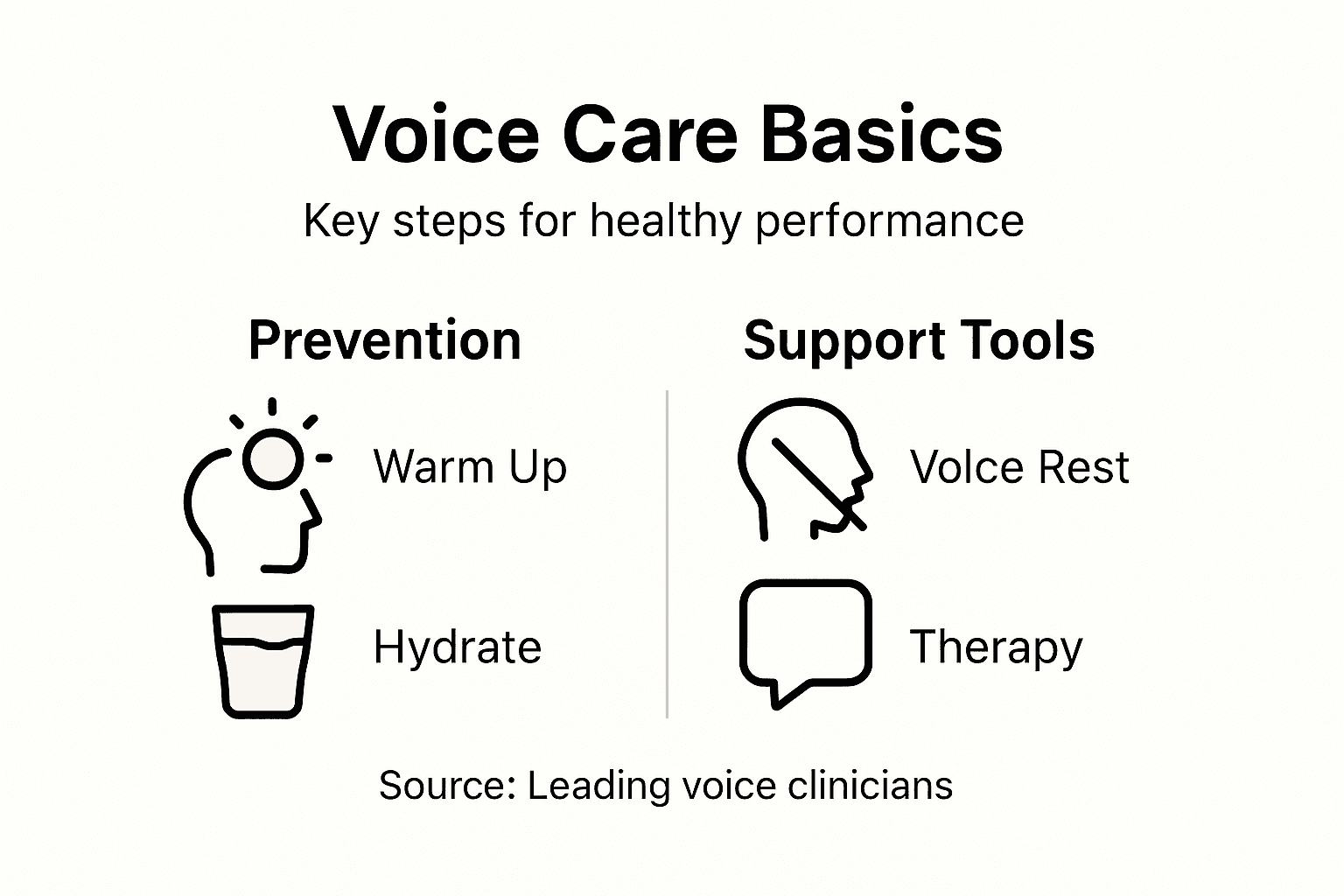
Your performance environment demands attention too. Stage conditions vary dramatically—some venues are dry and hot, others are cold and humid. You’ll need to adjust your hydration and warm-up strategies based on these conditions. Microphone technique affects how much physical effort your voice requires. A well-positioned microphone lets you sing naturally; a poorly positioned one forces compensatory strain. Sound check management prevents overuse before the actual performance—treat sound checks as positioning exercises, not full-power rehearsals.
The most overlooked technique is strategic vocal rest. This doesn’t mean silence. After a demanding performance or rehearsal, reduce your speaking voice and avoid shouting, whispering, or singing casually. Your vocal folds need recovery time just like muscles need recovery after intense exercise. Plan rehearsal schedules that include lighter days between intensive performance periods. When touring, build buffer days between performances when possible.
Consistent implementation beats occasional intensity. Singers who warm up properly and hydrate consistently experience fewer problems than those who push hard sporadically and hope their voice survives. Your voice responds to what you do regularly, not what you do occasionally. Make these techniques non-negotiable parts of your daily routine, and you’ll maintain the vocal health that sustains long careers.
Pro tip: Keep a simple voice journal noting your warm-up routine, water intake, sleep quality, and how your voice felt during performance—patterns will emerge showing which habits directly impact your vocal quality, allowing you to prioritize your specific needs.
When your voice needs recovery support, natural remedies and strategic tools work together to reduce inflammation, soothe irritation, and accelerate healing. These aren’t replacements for professional care when serious issues arise, but they’re powerful complements to your voice maintenance routine and essential first responses to minor problems.
Hydration stands as the foundation of all vocal recovery. Water intake directly impacts vocal fold moisture and flexibility, preventing the dryness that contributes to strain and hoarseness. Beyond drinking water, using humidifiers maintains moist air that prevents your vocal tissues from drying out, particularly in heated or air-conditioned environments. Steam inhalation—breathing warm, moisture-rich air for 5-10 minutes—provides immediate soothing relief and helps loosen mucus that makes you want to clear your throat repeatedly. This simple technique works remarkably well when your voice feels thick or irritated.
Throat lozenges and salt water gargles address surface irritation directly. Throat lozenges that contain soothing ingredients like honey, slippery elm, or ginger reduce the sensation of rawness and provide comfort during recovery. Salt water gargles reduce inflammation in the throat lining and help wash away irritants—mix half a teaspoon of salt in warm water and gargle gently without aggressive straining. These remedies work best when used consistently during recovery periods, not just occasionally.
Here’s your toolkit for natural vocal support:
The best natural remedies address the root cause—usually dehydration or irritation—rather than just masking symptoms.
Avoid behaviors that undermine recovery. Whispering actually strains your vocal folds more than normal speaking, creating tension that delays healing. Throat clearing physically irritates the tissues you’re trying to protect; instead, sip water or swallow gently when you feel mucus buildup. Excessive talking during recovery periods taxes your voice when it needs rest. These behaviors feel innocent but actively work against natural remedies and professional treatment.
Supportive tools extend beyond home remedies. Voice therapy exercises provided by a speech-language pathologist teach you specific techniques to prevent misuse and optimize function. These aren’t generic exercises—they’re tailored to your voice type, problem, and performance demands. Vocal warm-up tools like sirens or lip trills prepare your voice safely without forcing intensity. Posture supports like mirrors help you maintain open throat positioning that reduces strain. Recording devices let you hear exactly what you’re doing, making technique adjustments possible.
Timing matters significantly. Use natural remedies consistently during the acute phase when your voice is symptomatic, typically 3-7 days depending on severity. As symptoms improve, continue preventive measures like hydration and humidification indefinitely. Don’t abandon these practices once your voice feels better—that’s precisely when injury risk increases because you’ll overuse a voice that feels recovered but isn’t fully healed.
The relationship between natural remedies and professional guidance works like this: natural strategies support recovery from minor issues and maintain health between professional interventions. When problems persist beyond 2-3 weeks despite consistent natural remedies, professional assessment becomes essential. Some vocal issues require medical intervention or specialized therapy that natural approaches cannot address. Knowing this boundary prevents wasted time and unnecessary voice damage.
Pro tip: Create a vocal recovery kit with lozenges, herbal tea, a personal humidifier, and written reminders to avoid whispering and throat clearing—having these items immediately accessible increases consistency and speeds recovery when voice problems emerge.
Neglecting voice care doesn’t feel dangerous in the moment. You push through fatigue, skip warm-ups when running late, perform while sick, and ignore early warning signs. Then one day your voice doesn’t come back the way it should. That’s when performers realize voice care isn’t optional—it’s the difference between a sustainable career and forced retirement.
The consequences of poor voice care escalate progressively. Temporary hoarseness from a single night of strain becomes chronic hoarseness when strain accumulates over weeks without intervention. Vocal fatigue that improves with rest becomes permanent fatigue that persists even after days off. Structural changes like vocal nodules or polyps develop from repeated microtrauma. Vocal fold scarring limits flexibility permanently. In severe cases, poor voice care leads to vocal fold paralysis or other conditions requiring surgery.
Here’s what happens when voice care is neglected:
The critical window for prevention is right now, before serious damage develops. Once structural changes occur, they’re often permanent.
Your specific risk factors matter. Professional voice users—singers, actors, lecturers—face exponentially higher risk than casual speakers because you demand more from your voice and use it more intensely. Environmental exposure to smoke, pollution, or constant noise forces compensatory strain. Underlying conditions like acid reflux or allergies create inflammation that makes your voice vulnerable. Poor technique multiplies risk because every performance compounds the damage. Dehydration reduces your vocal tissues’ ability to handle stress.
The prevention strategy has three components working together. Avoid high-risk behaviors by eliminating smoking, excessive alcohol consumption, and shouting. Stop whispering—it strains your voice more than normal speaking. Limit talking offstage on performance days. Manage underlying conditions by treating acid reflux, controlling allergies, and addressing any medical issues affecting your throat. Implement protective practices through consistent hydration, proper warm-ups, appropriate technique, and adequate rest between performances.
Preventing hoarseness through proactive strategies works better than treating problems after they develop. Early intervention when symptoms first appear—that slight scratchiness or minor fatigue—stops progression before serious damage occurs. A professional evaluation at the first sign of persistent symptoms can distinguish between temporary irritation and developing structural problems.
The amplification principle changes everything for professional performers. Instead of pushing your voice harder to reach audiences, use microphones and amplification systems to project without strain. This single adjustment prevents more vocal injury than any other strategy. Many performers resist this because it feels like admitting weakness, but professional singers worldwide use amplification to extend careers by decades.
Timing your recovery is as important as implementing practices. After intense performance periods, schedule lighter vocal demands. If you feel vocal fatigue developing, reduce your speaking voice immediately—don’t wait for pain to develop. Professional voice users need to understand that pushing through early fatigue leads directly to structural damage that requires months or years to heal.
The financial and career costs of neglect are staggering. A vocal injury that could have been prevented with basic care might require expensive surgery, months of recovery, or permanent career changes. Performers lose income during recovery periods. Some never regain their previous vocal quality. The cost of prevention—consistency with hydration, proper technique practice, and strategic rest—is trivial compared to the cost of injury.
Pro tip: Schedule a baseline vocal evaluation with an otolaryngologist or speech-language pathologist even if your voice feels perfect—knowing your baseline vocal function lets you recognize changes early and catch developing problems before they become serious.
The article highlights the critical need for professional voice care to prevent vocal strain, fatigue, and long-term damage that can end a performing career. If you are facing challenges like hoarseness, reduced range, or vocal abuse caused by overuse and environmental factors, you are not alone. Your voice is your most valuable instrument, and maintaining its health requires consistent care using proven techniques and natural remedies.

Explore powerful resources and targeted products designed specifically for professional voice users at TMRG Solutions. Our collection on Vocal abuse / Vocal load - TMRG Solutions offers natural herbal formulations, sprays, and therapy kits that soothe irritation, reduce inflammation, and improve vocal stamina. Also consider browsing Improve resonance and voice quality - TMRG Solutions for tools that enhance your vocal performance safely and sustainably.
Don’t wait until vocal fatigue becomes a crisis. Take control today by visiting https://tmrgsolutions.com and discover how expert-backed, natural solutions can help you protect and optimize your voice for the stage, studio, or speaking engagements.
Professional voice care is a systematic approach to protecting, maintaining, and optimizing the vocal instrument of performers, acknowledging that the voice is their primary tool and livelihood.
Prevention is crucial because it keeps voice problems from developing into more serious issues, allowing performers to maintain their vocal health and career longevity.
Common signs of vocal strain include persistent hoarseness, vocal fatigue, loss of vocal range, increased effort to project, and throat discomfort.
Natural remedies like hydration, steam inhalation, throat lozenges, and saltwater gargles can soothe irritation, reduce inflammation, and support recovery, but they should complement professional care when necessary.
