Your Cart is Empty


TL;DR:
- Plain water and warm, caffeine-free liquids help soothe hoarseness by supporting systemic hydration and maintaining mucosal moisture. Self-care drinks like herbal teas and broths provide symptomatic relief, but persistent hoarseness beyond two to four weeks requires medical evaluation. Hydration, voice rest, and humidification form the primary foundation for vocal recovery, with herbal remedies serving as comfort supports.
Plain water and warm, caffeine-free liquids are the most effective drinks to soothe hoarseness and support vocal recovery. NIDCD recommends drinking plenty of water and balancing any caffeine or alcohol intake with extra fluids to keep the vocal folds hydrated. Mayo Clinic adds humidification, limiting alcohol, and avoiding smoke as primary self-care steps. Tmrgsolutions, with extensive experience in vocal health, supports this foundation with targeted herbal formulations for performers who need faster recovery.
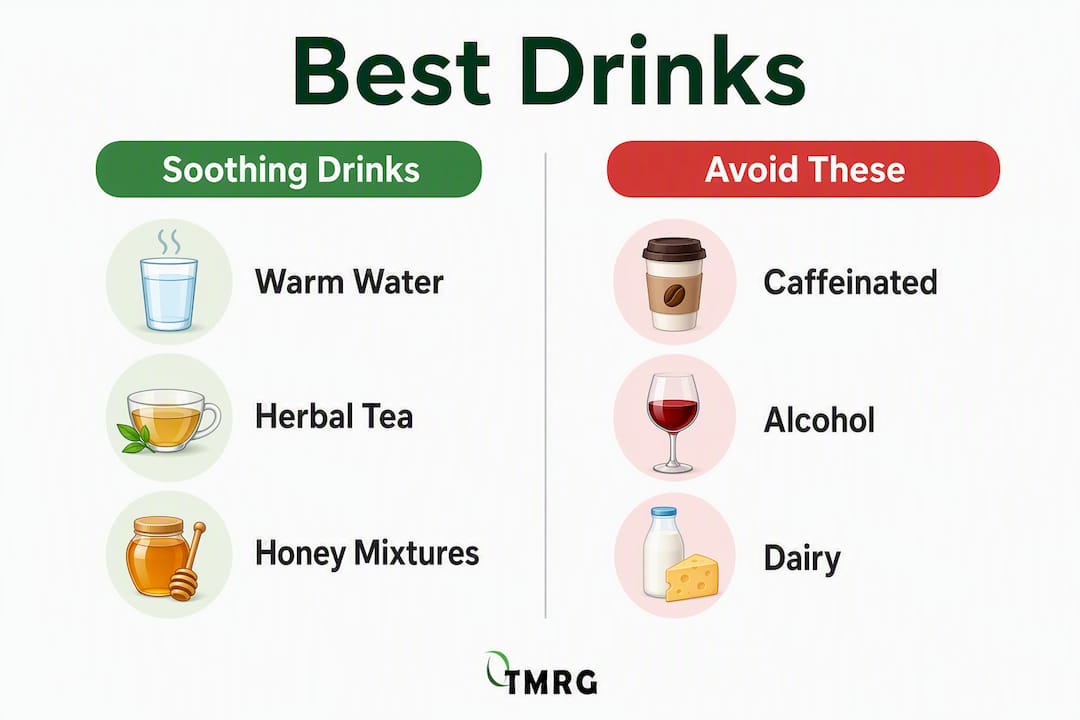
The best drinks for hoarseness, in order of clinical priority:
Red flag caveat: if hoarseness lasts more than 2–4 weeks, comes with difficulty breathing, pain on swallowing, or blood in sputum, see a clinician promptly. Self-care drinks are first-line support, not a substitute for evaluation.
The mechanism behind healing drinks is mostly systemic, not local. When you swallow water or herbal tea, the liquid does not wash over your vocal folds directly. The epiglottis closes during swallowing, routing fluid to the esophagus rather than the larynx. What swallowed fluids do is hydrate your body systemically, which keeps the mucosal lining of the larynx moist and mucus thin enough to vibrate freely.
This distinction matters practically. If your goal is to deliver moisture directly to the vocal folds, inhalation through a humidifier or steam is the only reliable route. Swallowed fluids support the mucosal lining from the inside out, which is still critical, but the two mechanisms work differently and complement each other.
Soothing vs. therapeutic effects:
Temperature matters. Warm liquids relax throat muscles and feel soothing, but very hot drinks can irritate already-inflamed tissue. Aim for warm, not scalding. Sip frequently throughout the day rather than drinking large amounts infrequently — consistent hydration keeps secretions thin rather than cycling between dry and flooded. For every caffeinated or alcoholic drink you consume, add an equivalent volume of plain water to offset the diuretic effect, as NIDCD guidance recommends.

The table below maps each drink to its primary benefit and a quick how-to.
| Drink | Primary Benefit | Practical How-To |
|---|---|---|
| Plain water (room temp) | Systemic hydration; thins mucus | Sip small amounts frequently throughout the day |
| Chamomile tea (caffeine-free) | Mild anti-inflammatory; soothing | Steep 5 minutes; drink warm, not hot |
| Ginger tea | Anti-inflammatory; reduces throat irritation | Fresh ginger slices in hot water, cooled to warm before drinking |
| Licorice root tea | Throat coating; mild demulcent | One cup warm; avoid in large quantities if you have high blood pressure |
| Warm broth (chicken or vegetable) | Hydration plus gentle warmth | Low-sodium preferred; sip slowly |
| Honey in warm water | Symptomatic throat coating | Add honey only after water cools to around 140°F / 60°C to preserve enzymes |
| Slippery elm tea or lozenge | Demulcent throat coating | Steep powder in warm water; evidence is moderate, mainly comfort-based |
| Warm saline gargle | Mucus clearance; local comfort | ¼–½ teaspoon salt in warm water; gargle 30 seconds, 2–3 times daily |
For a deeper look at how these options fit into a daily hydration routine, vocal cord hydration strategies from Tmrgsolutions cover scheduling and mucosal physiology in detail.
Performer-focused tips:
Pro Tip: Add raw honey to your warm drink only after it cools below 140°F / 60°C. Stirring honey into boiling water denatures its beneficial enzymes, leaving you with sweetness but none of the soothing properties.
Some of the most common habits in a performer’s routine actively delay vocal recovery. Knowing what to cut is as important as knowing what to add.
On dairy: the belief that milk thickens mucus and worsens hoarseness is widespread but not well supported by clinical evidence for most people. Some individuals do notice thicker secretions after dairy. The practical approach is a self-test: cut dairy for two to three days during an acute episode and observe whether your voice feels clearer. If it does, avoid it during recovery; if not, dairy is not your issue.
Drinks are the foundation, but several complementary measures multiply their effect significantly.
Pro Tip: Whispering feels gentle but places significant strain on the vocal folds. Opt for quiet, relaxed speech instead, and schedule deliberate silent periods during the day to give your voice genuine rest.
For a full breakdown of vocal cord exercises for hoarseness recovery, Tmrgsolutions covers rehabilitation progressions that pair well with the hydration routine above.
Not all popular remedies carry the same weight of clinical support. Here is a concise summary.
| Remedy | Evidence Strength | Notes |
|---|---|---|
| Hydration (plain water) | Strong | NIDCD, Mayo Clinic, Cleveland Clinic all recommend as primary care |
| Voice rest | Strong | Consistent across all major clinical guidelines |
| Humidification / steam | Moderate–Strong | Delivers moisture directly to vocal folds; preferred over swallowed fluids for local effect |
| Honey (symptomatic) | Moderate | Coats pharynx; no direct evidence of vocal fold pathology change |
| Slippery elm / marshmallow root | Moderate | Demulcent comfort; limited clinical trials specifically on vocal folds |
| Ginger / chamomile tea | Moderate | Anti-inflammatory properties documented; direct laryngeal benefit not well studied |
| Lemon + honey “vocal cord cleanse” | Limited | Swallowed liquids do not reach vocal folds; benefit is pharyngeal comfort only |
| Decongestants for laryngitis | Not recommended | StatPearls explicitly advises against due to drying effects |
Lemon and honey do not “wash” the vocal cords. Because of the epiglottic barrier, swallowed liquids bypass the larynx entirely. The comfort benefit is real, but it is pharyngeal, not laryngeal.
— StatPearls clinical review
The clinical community treats most acute hoarseness conservatively: hydration, voice rest, and humidification are the pillars. When evidence is limited, the safest default is to prioritize those three and treat herbal options as comfort supplements, not cures. Cleveland Clinic reinforces this approach, recommending clinical evaluation when symptoms persist beyond the expected recovery window.
Most acute hoarseness from viral laryngitis resolves within two weeks with consistent self-care. When it does not, or when specific warning signs appear, clinical evaluation is necessary.
Red flags that require prompt medical attention:
At a clinical visit, an ENT specialist will typically perform a laryngoscopy to visualize the vocal folds directly. Depending on findings, they may refer you to a speech-language pathologist for voice therapy, order imaging, or investigate for underlying conditions such as GERD, thyroid issues, or, in persistent cases, laryngeal lesions. For more on what to expect and when to act, tips for hoarseness and vocal issues from Tmrgsolutions covers the recovery timeline in practical terms.
Plain water and warm, caffeine-free fluids are the most evidence-backed drinks for hoarseness, and they work best when paired with voice rest and humidification.
| Point | Details |
|---|---|
| Water is the foundation | Sip room-temperature water frequently to keep mucosal secretions thin. |
| Warm herbal teas add comfort | Chamomile, ginger, and licorice root teas soothe the pharynx and offer mild anti-inflammatory support. |
| Avoid drying agents | Alcohol, excess caffeine, and decongestants dehydrate the vocal tract and delay recovery. |
| See a clinician at 2–4 weeks | Hoarseness persisting beyond 2–4 weeks, or accompanied by red flags, needs ENT evaluation. |
| Tmrgsolutions for targeted support | TMRG voice recovery kits and drops complement drink-based self-care for performers needing faster results. |
Most articles about hoarseness focus almost entirely on what to drink and stop there. The deeper issue is that many voice professionals treat hydration as a reactive measure — something to do when the voice is already failing — rather than a daily discipline that prevents the problem in the first place.
Scheduled, measured sipping throughout the day is more effective than drinking large amounts right before a performance. The mucosal lining of the vocal folds responds to systemic hydration over hours, not minutes. A performer who drinks two liters of water in the hour before a show has not compensated for a day of inadequate intake. The vocal folds are still working with yesterday’s hydration status.
The same logic applies to herbal remedies. Ginger tea and slippery elm are genuinely useful for comfort, but they work on the pharynx, not the vocal folds themselves. Treating them as a cure rather than a complement to real hydration and voice rest is where most self-care plans fall short. The evidence is clear: hydration and rest are the clinical pillars. Everything else, including the best herbal teas and throat coatings, supports those pillars rather than replacing them.
For professional voice users whose livelihood depends on consistent vocal performance, building a daily hydration and vocal hygiene routine is not optional. It is the difference between a voice that holds through a demanding schedule and one that fails at the worst moment.
Drinks and hydration are first-line self-care for hoarseness. For singers, actors, and lecturers who need faster or more targeted support, Tmrgsolutions offers a range of natural herbal formulations designed to work alongside your hydration routine, not replace it.

Here is a quick guide to which TMRG product fits your situation:
Browse the full range and consult product details or customer support at tmrgsolutions.com to find the right fit for your voice and schedule.
For persistent hoarseness, consult an ENT specialist or a speech-language pathologist. Self-care drinks and the resources above are general information, not a substitute for professional medical advice.
Plain water is the most effective drink for healing a hoarse voice, supported by NIDCD guidance. Warm caffeine-free herbal teas (chamomile, ginger, licorice root) and warm broths add symptomatic comfort alongside consistent hydration; for an effective blend, consider the Lung-Loving Herbal Tea – BreatheFree designed to support respiratory comfort naturally.
No swallowed drink reaches the vocal folds directly because the epiglottis routes liquids to the esophagus during swallowing. Systemic hydration from plain water keeps mucosal secretions thin, which supports vocal fold function; steam inhalation is the only method that delivers moisture directly to the larynx.
Most acute hoarseness from viral laryngitis resolves with hydration, voice rest, and humidification within two weeks. Avoiding decongestants, alcohol, and excess caffeine speeds recovery, as StatPearls notes that drying agents actively worsen the condition.
Consistent sipping of room-temperature water throughout the day, running a humidifier overnight, and resting the voice (using quiet speech rather than whispering) are the fastest evidence-backed steps. TMRG recovery drops and kits from Tmrgsolutions are designed as targeted adjuncts for performers who need additional support during acute recovery.
Honey coats the pharynx and reduces the sensation of throat irritation, which provides real symptomatic comfort. It does not change vocal fold pathology directly, and its enzymes are preserved only when added to liquids cooled to around 140°F / 60°C or below.
