Your Cart is Empty


TL;DR:
- Hoarseness results from inflammation or swelling of the vocal folds and requires vocal rest and hydration to heal naturally. If symptoms last longer than four weeks, medical evaluation is necessary to check for underlying conditions and prevent long-term damage. Avoiding behaviors like whispering and throat clearing, managing acid reflux, and maintaining a humid environment support faster recovery.
Hoarseness is defined as a change in voice quality caused by inflammation or swelling of the vocal folds, the two bands of tissue inside your larynx that vibrate to produce sound. Knowing how to heal hoarseness naturally starts with two non-negotiable steps: vocal rest and hydration. According to Yale Medicine, most cases resolve within 1–4 weeks with proper care. That timeline assumes you avoid the common mistakes that keep inflamed tissue from recovering. If symptoms persist beyond four weeks, a medical evaluation is necessary to rule out underlying conditions.
Hoarseness develops when the vocal folds become inflamed, swollen, or irritated. Swollen tissue cannot vibrate freely, so the voice sounds rough, breathy, or weak. The most common triggers include viral infections like the common cold, vocal overuse, acid reflux, and exposure to environmental irritants such as smoke or dry air.
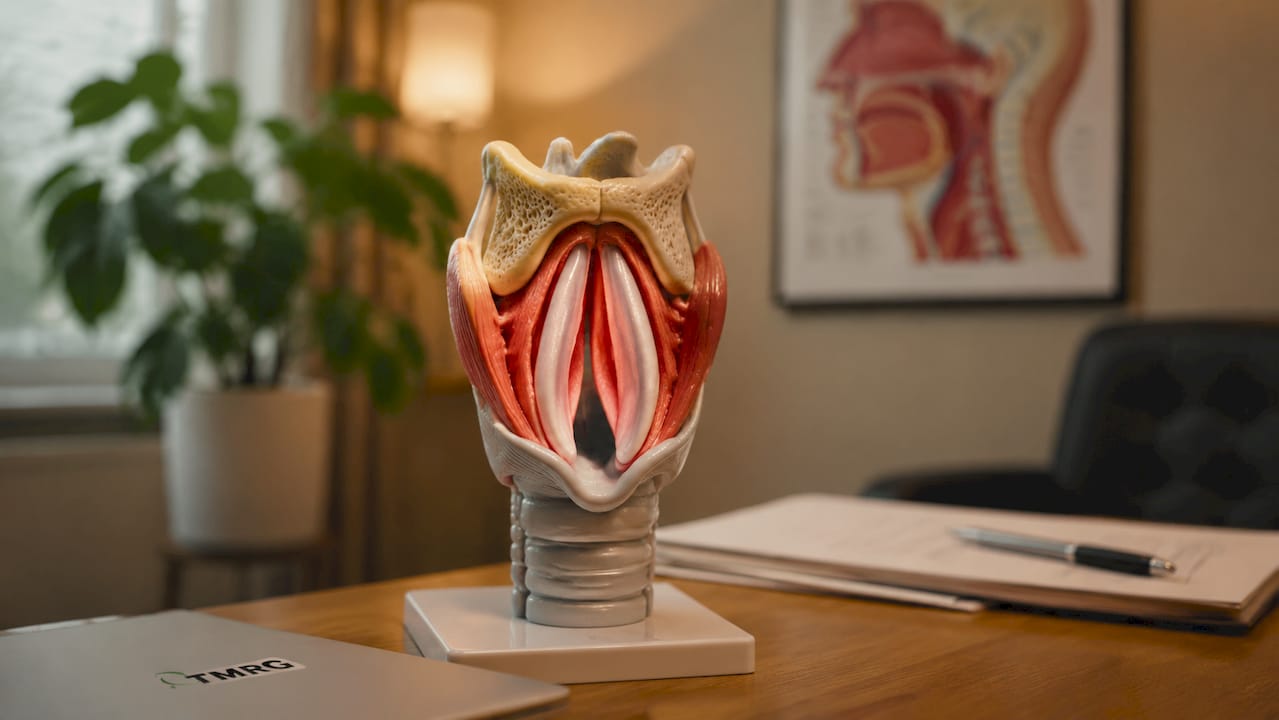
Understanding why rest matters requires a quick look at vocal fold biology. These folds are delicate mucous membrane tissue stretched across a cartilage frame. When inflamed, they need physical downtime to reduce swelling, much like a sprained ankle needs rest before you run on it again. The Cleveland Clinic confirms that vocal cords require complete silence periods to reduce inflammation effectively. Partial voice use during recovery extends the healing timeline.
Two specific behaviors make hoarseness worse, and most people do both without realizing it:
Pro Tip: Set a phone reminder every 30 minutes during your recovery period. When it goes off, take three slow sips of room-temperature water and stay silent for the next five minutes. This simple habit addresses both hydration and rest simultaneously.
Natural remedies for hoarseness work best when layered together rather than used in isolation. Each method targets a different aspect of vocal fold recovery: reducing inflammation, maintaining moisture, and protecting the tissue from further irritation.
Schedule vocal naps. A vocal nap is a scheduled period of complete silence, not whispering, not humming. Yale Medicine identifies vocal naps as more restorative than partial voice use during inflammation. Aim for at least two 30-minute silence periods per day. Write notes or use text messages to communicate during these windows.
Drink 64 ounces of water daily. Vocal fold tissue stays pliable and resilient when well hydrated. Experts recommend approximately 64 ounces of water per day during recovery. Spread intake evenly throughout the day. Cold water is fine, but room-temperature water causes less vocal fold constriction. For a deeper look at how water intake affects vocal tissue, the Tmrgsolutions guide on vocal cord hydration covers the full picture.
Use steam inhalation. Inhaling steam delivers moisture directly to the larynx and upper airway. Steam inhalation for 3–5 minutes several times daily reduces dryness and soothes inflamed tissue. Lean over a bowl of hot water with a towel over your head, or use a personal steam inhaler. Keep your eyes closed to avoid irritation.
Gargle with warm salt water. Dissolve half a teaspoon of salt in eight ounces of warm water and gargle for 30 seconds. Salt water reduces surface inflammation and clears mucus from the throat without damaging the tissue. Do this two to three times daily, but avoid swallowing the solution.
Brew herbal teas with slippery elm or ginger. Slippery elm contains mucilage, a gel-like substance that coats and soothes irritated throat tissue. Ginger has natural anti-inflammatory properties that reduce swelling. Both are among the best herbs for throat health during a hoarseness episode. Drink warm, not hot, to avoid adding heat irritation to already inflamed tissue.
Run a humidifier in your bedroom. Dry indoor air, especially during winter months, dehydrates the vocal folds overnight. A humidifier maintains ambient moisture and gives your vocal folds a recovery-friendly environment while you sleep.
Pro Tip: Skip menthol lozenges. They feel soothing, but menthol-based lozenges can dry and further irritate inflamed vocal tissue. Choose plain, non-medicated lozenges or simply sip warm water instead.
The most common errors in hoarseness recovery are well-intentioned but counterproductive. Recognizing them early saves days of unnecessary suffering.
“Lifestyle management, including avoiding noisy environments and treating acid reflux, is as important as acute remedies for long-term vocal healing.” — NIDCD, National Institute on Deafness and Other Communication Disorders
The NIDCD’s position reflects a key truth: hoarseness recovery is not just about what you do for your voice. It is equally about what you stop doing to it. The do’s and don’ts for hoarseness outlined by Tmrgsolutions expand on these behavioral adjustments with practical examples for daily life.
Acute remedies address the immediate problem. Lifestyle adjustments prevent hoarseness from returning and build vocal resilience over time.
These adjustments work because they address the root conditions that make vocal folds vulnerable in the first place. Hydration, clean air, and reflux control are not temporary fixes. They are the foundation of durable vocal health.
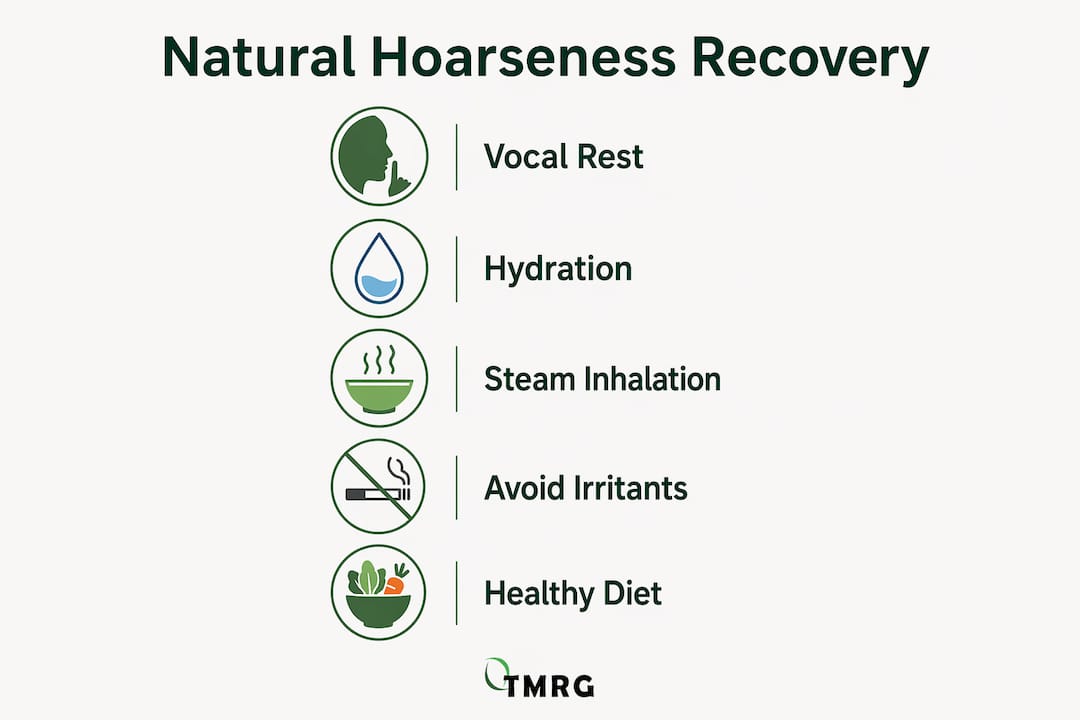
The most effective way to heal hoarseness naturally combines strict vocal rest, consistent hydration, steam inhalation, and removal of irritants like smoke, dry air, and acid reflux.
| Point | Details |
|---|---|
| Vocal rest is non-negotiable | Schedule vocal naps of complete silence; whispering delays healing more than quiet speech. |
| Hydration drives recovery | Drink 64 ounces of water daily to keep vocal fold tissue pliable and reduce inflammation. |
| Steam inhalation works | Use steam for 3–5 minutes several times daily to deliver moisture directly to the larynx. |
| Avoid menthol lozenges | Menthol dries inflamed vocal tissue; plain water or non-medicated lozenges are better choices. |
| Lifestyle changes prevent recurrence | Managing acid reflux, avoiding smoke, and limiting caffeine protect vocal folds long-term. |
After more than two decades working with singers, actors, and speakers, the pattern I see most often is this: people treat hoarseness as an inconvenience to push through rather than a signal to stop. They whisper through rehearsals, pop menthol lozenges, and wonder why they are still hoarse two weeks later.
The hardest truth to accept is that silence is the treatment. Not reduced talking. Not whispering. Silence. The vocal folds are tissue, and inflamed tissue heals through rest. Every unnecessary word spoken during a hoarseness episode is a small setback.
The second thing I have learned is that patience is not passive. While you are resting your voice, you should be actively hydrating, steaming, managing reflux, and cleaning up your air quality. Recovery is a full-body effort, not just a throat problem.
The four-week rule matters. If hoarseness has not cleared after four weeks of proper care, see a specialist. Persistent hoarseness can indicate vocal nodules, polyps, or in rare cases, something more serious. Early evaluation protects your voice long-term. Do not let the hope that it will “clear up on its own” delay a necessary check.
Natural remedies work. They work reliably when applied correctly and consistently. The people who recover fastest are the ones who commit fully: complete vocal rest, real hydration, and honest lifestyle changes. Half-measures produce half-results.
— Golan
Vocal rest and hydration are the foundation of recovery. Targeted natural formulations can support that foundation by soothing inflamed tissue and maintaining moisture between your hydration sessions.

Tmrgsolutions has developed a range of natural vocal recovery products built on 25+ years of vocal health expertise. The TMRG Classic Voice Recovery Drops are formulated to hydrate and soothe vocal folds directly, making them a practical complement to your rest and hydration routine. For those who prefer a spray format, the TMRG Voice Therapy Kit bundles multiple natural care tools into a single program designed for voice professionals. Each product uses herbal formulations without synthetic additives, keeping your recovery fully natural. Visit the Tmrgsolutions product pages to find the right fit for your recovery stage and vocal demands.
Most cases of hoarseness resolve within 1–4 weeks with vocal rest and hydration. See a doctor if symptoms persist beyond four weeks.
Whispering is not a safe alternative to silence. It forces vocal cords into a tense position that increases strain and delays healing more than quiet normal speech.
Warm herbal teas made with slippery elm or ginger soothe throat tissue and reduce inflammation. Plain water at room temperature, consumed consistently throughout the day, is the single most effective dietary support for vocal recovery.
Throat clearing causes the vocal folds to slam together at high velocity, which worsens inflammation each time it happens. Sipping water achieves the same clearing effect without the tissue damage.
Yes. Stomach acid that reaches the larynx irritates and inflames the vocal folds directly. Managing reflux through diet, meal timing, and sleep position is a necessary part of healing hoarseness naturally when reflux is a contributing factor.
