Your Cart is Empty


TL;DR:
- Not every supplement marketed for singers is safe or effective. This guide cuts through the noise — focusing on what the evidence actually says about vocal supplements, which ingredients are genuinely beneficial, and which ones to avoid altogether.
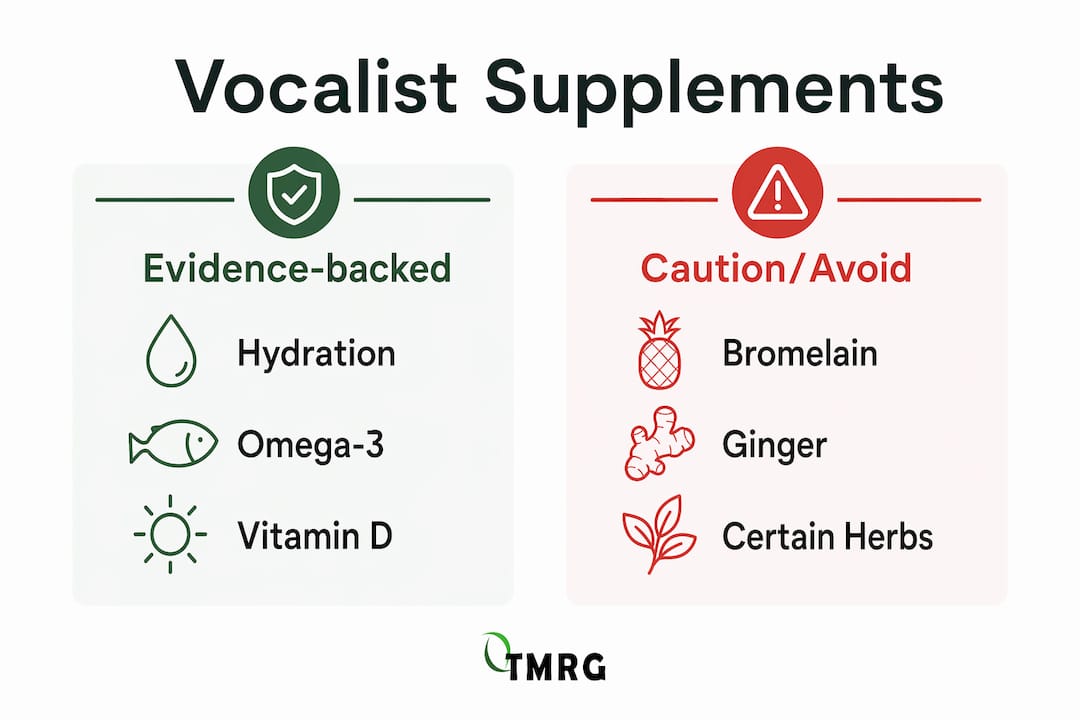
Hydration comes first. Before any supplement enters the picture, staying well hydrated is the single most important thing you can do to keep your vocal folds lubricated and vibrating cleanly. Beyond water, a small set of supplements show genuine promise for singers: omega-3 fatty acids, N-acetylcysteine (NAC), vitamin D, zinc, and demulcent herbs like slippery elm. Others, however, require real caution. High-dose vitamin E, St. John’s Wort, large amounts of ginger or garlic, and NSAIDs like ibuprofen can all thin the blood and raise the risk of vocal fold hemorrhage during intense singing. Menthol lozenges dry the throat. Ascorbic acid can worsen reflux. The best supplements for vocalists are the ones that support your voice without creating new risks.
Safety first: UT Southwestern ENT specialists and Chorus America both emphasize that “natural” does not mean safe for singers. Blood-thinning herbs, reflux-triggering acids, and drying agents can cause real harm to your vocal folds — sometimes on the night that matters most. Never introduce a new supplement immediately before a performance.
Which supplements and herbs should singers use with caution or avoid?
A voice health practitioner’s perspective on supplements and care
Most questions about vocalist nutrition tips cluster around the same handful of categories. Here is what the evidence actually says for each.
Thin, watery mucus is what allows your vocal folds to vibrate with minimal friction. Plain water is the foundation, but electrolyte drinks or tablets (sodium, potassium, magnesium) help maintain that mucus layer during long rehearsals or touring. Aim for consistent intake throughout the day rather than gulping water right before you sing.
A controlled trial of college-level singers found that Omega-3 supplementation produced a statistically significant improvement in self-reported voice handicap scores, and some male participants gained low-range notes. The study was non-randomized, so the evidence is promising but not definitive. Consider omega-3s as a long-term adjunct to training, not a quick fix before auditions.
NAC is a mucolytic: it breaks down thick mucus so your vocal folds can vibrate more freely. Guaifenesin (the active ingredient in standard expectorants) works similarly. Both can help during recovery from illness or heavy use. Avoid them immediately before performing, though, since thinning mucus too aggressively right before you sing can feel destabilizing.
Deficiency in either nutrient impairs immune function, which matters for singers who get sick frequently. Correcting a documented deficiency is worth doing. Supplementing above normal levels when you are not deficient, however, has no established vocal benefit. Get bloodwork done before adding high-dose vitamin D or zinc to your routine.
Standard dietary vitamin C supports immune health. The caution for singers is the form: ascorbic acid, found in many effervescent tablets and some teas, can aggravate reflux in susceptible people. Reflux silently inflames the posterior larynx, which thickens and stiffens the vocal folds over time. If you use vitamin C supplements, choose a buffered or non-acidic form.
Both have anti-inflammatory properties. Ginger tea is a staple in many singers’ kits, but ginger can increase bleeding risk at higher intakes, especially when combined with other blood-thinning agents. Keep ginger to moderate amounts and avoid concentrated ginger supplements close to heavy vocal use.
These demulcent herbs coat and soothe mucous membranes. Slippery elm and marshmallow root are among the most singer-friendly options available, with one study showing clinical improvement in swallowing pain versus placebo. Licorice root tea is soothing in small amounts but can raise blood pressure with regular use. Deglycyrrhizinated licorice (DGL) is the safer form for ongoing use.
Glycerin-based lozenges are your friend. Menthol-based ones are not, unless you are dealing with obstructive phlegm. The evidence on menthol lozenges is clear: they dry the throat and can further irritate already-stressed vocal folds. Read the label before you reach for a lozenge at the side of the stage.
Pro Tip: Trial any new supplement for at least one full week during low-stakes rehearsals. Track how your voice feels, whether reflux symptoms change, and whether mucus consistency shifts. If anything feels off, stop before it becomes a problem at a show.
The word “natural” carries a false sense of safety. Clinicians and voice pedagogues consistently point out that many herbs interact with medications or carry side effects that are specifically harmful to singers. Here are the main categories to watch.
Clinical warning: Vocal fold hemorrhage is a real risk during high-intensity singing. Blood-thinning supplements raise that risk the same way NSAIDs do. Treat them with the same caution you would give ibuprofen before a two-hour show.
High-dose vitamin E and St. John’s Wort. Both are documented blood thinners. St. John’s Wort also interacts with a wide range of prescription medications, including antidepressants and anticoagulants. Stop both at least one week before any period of heavy vocal use.
Large doses of garlic, ginger, and ginkgo. Each has anti-inflammatory benefits at moderate dietary amounts, but concentrated supplements can thin the blood meaningfully. The risk compounds when you stack them with each other or with NSAIDs.
NSAIDs (ibuprofen, naproxen). Not a supplement, but singers reach for them often. Taking NSAIDs before intense singing raises hemorrhage risk in the vocal folds. Use acetaminophen for pain management around performances instead, and consult your physician.
Menthol lozenges. Drying agents work against you. Unless you have thick, obstructive phlegm, menthol lozenges reduce the mucosal lubrication your vocal folds depend on.
Ascorbic acid in high-dose supplements or teas. If you are prone to reflux, acidic vitamin C formulations can silently inflame your larynx. Switch to a buffered form or get your vitamin C from whole foods.
Aggressive home remedies without safety data. Nebulized solutions, oregano oil, and strong balms circulate in singer communities online. Some may help; many carry irritation risks. Prefer interventions with at least some clinical backing.
Certain prescription medications with laryngeal side effects. Osteoporosis medications (bisphosphonates like Fosamax) have been reported to worsen reflux, which in turn damages the vocal folds. If you are on any long-term prescription, ask your prescribing clinician specifically about laryngeal side effects.
For a deeper look at herbal supplement cautions specific to singers, the Tmrgsolutions resource library covers the tradeoffs in detail.
Think of your voice care kit as a small, curated toolkit you carry to every rehearsal and show. The goal is to support lubrication, soothe irritation, and avoid anything that dries, thins blood, or triggers reflux.
Bring these:
Water. Room temperature, not ice cold. Cold water can temporarily tighten the muscles around your larynx.
Electrolyte option. A low-sugar electrolyte tablet or packet helps maintain mucus quality during long sets.
Glycerin-based lozenges. Coat and soothe without drying. Look for formulas without menthol or high ascorbic acid.
Slippery elm or marshmallow root tea. Brew it before warmup and sip slowly. These demulcents coat the mucous membranes gently.
Chamomile tea (in moderation). Mildly anti-inflammatory and calming. Avoid if you have ragweed allergies.
Personal steam inhaler or travel humidifier. Breathing steam before a show hydrates the vocal folds directly. Even five minutes makes a difference in dry venues or air-conditioned spaces.
Leave these out:
Menthol lozenges (drying)
Strong menthol rubs applied under the chin or near the throat
Concentrated ginger supplements right before singing (bleeding risk)
Alcohol-containing throat sprays (drying and irritating)
Effervescent vitamin C tablets if you are reflux-prone
Pro Tip: Use your soothing teas and steam before your warmup, not during. Trying to sip between phrases disrupts breath support and can cause you to swallow air. Set a 15-minute window before you start vocalizing.
For more on recovery tools that complement your kit, see Tmrgsolutions’s guide to throat drops and recovery tips.
Timing matters as much as what you take. A supplement that helps during recovery can actively harm you on performance day if the timing is wrong.
Start any new supplement during a low-stakes week. Give yourself at least seven days of daily use before a rehearsal-heavy period, and at least two to three weeks before a major performance. Watch for reflux, allergic reactions, or changes in mucus consistency.
Stop blood-thinning supplements at least five to seven days before intense vocal use. This applies to high-dose vitamin E, St. John’s Wort, concentrated garlic or ginkgo, and large-dose ginger supplements. The hemorrhage risk during high-intensity singing is real.
Avoid NSAIDs for at least 24 hours before heavy singing. If you need pain relief, acetaminophen is the safer choice around performances.
Use mucolytics (NAC, guaifenesin) during recovery, not right before a show. Thinning mucus aggressively immediately before singing can feel destabilizing. These work best as a recovery-phase tool, not a pre-show one.
Keep dosing conservative. More is not better with most vocal supplements. Omega-3s at 3.0 g/day showed benefit in the clinical trial cited above; exceeding that without medical guidance adds bleeding risk without clear additional benefit.
Consult a clinician before combining supplements with prescription medications. Drug-supplement interactions are underreported. St. John’s Wort alone interacts with dozens of prescription classes. A pharmacist or physician can review your full list in minutes. For general guidance on supplement safety, a qualified pharmacy resource is a practical starting point.
Pre-supplement checklist (copy this into your notes):
Am I starting this during a low-stakes period?
Does this supplement have any blood-thinning properties?
Am I on any prescription medications that could interact?
Have I checked the form (e.g., buffered vs. ascorbic acid vitamin C)?
Do I have at least two weeks before my next major performance?
Pro Tip: Keep a simple voice journal for the first two weeks on any new supplement. Note your vocal range, mucus quality, and any reflux symptoms each morning. Patterns become obvious fast.
Supplements and home remedies have a ceiling. When symptoms cross certain thresholds, you need a clinician, not a lozenge.
See an ENT or laryngologist promptly if you experience:
Sudden, unexplained voice loss
Hoarseness lasting more than two to four weeks
Blood in your mucus or saliva
Unexplained throat pain that does not resolve with rest
A significant, sudden change in your vocal range
Any history of vocal fold hemorrhage, nodules, or polyps combined with new symptoms
See a speech-language pathologist (SLP) if you need:
Rehabilitation after vocal injury or surgery
Help correcting technique that is causing chronic strain
Guidance on vocal hygiene habits and long-term care
Prepare for your ENT visit by bringing:
A complete list of all supplements and medications you take, with doses
Notes on when symptoms started and what makes them better or worse
A short audio or video recording of your voice on a symptomatic day
An ENT or laryngologist can perform a laryngoscopy to visualize your vocal folds directly. No supplement protocol substitutes for that kind of structural assessment when something is genuinely wrong.
The most common mistake I see singers make is treating supplements as a shortcut around the fundamentals. Hydration, adequate sleep, technical efficiency, and avoiding vocal abuse are the load-bearing walls of vocal health. Supplements, at best, are the finishing coat.
That said, some adjuncts genuinely earn their place in a singer’s routine. Here is how I think about integrating them:
Clinical priority order: Hydration and mucus quality come first. Demulcent support (slippery elm, marshmallow root) comes second. Targeted supplementation (omega-3s during training blocks, NAC during recovery) comes third. Nothing in that stack replaces a clinician’s assessment when symptoms persist.
Two patterns come up repeatedly in practice. A vocalist in heavy rehearsal for a touring production used NAC and slippery elm tea during a recovery week after a strained performance. Mucus quality improved, the voice felt clearer, and the singer returned to full rehearsal without further strain. Contrast that with a different scenario: a singer who had been taking concentrated garlic supplements and high-dose vitamin E for general health reasons, then pushed through a two-hour show. The result was a vocal fold hemorrhage requiring weeks of voice rest. The supplements were not the only factor, but the blood-thinning load was a contributing one.
Omega-3s show the most clinical promise of any supplement category for singers, but the evidence base is still small.
NAC and guaifenesin are useful mucolytics during recovery phases, not performance phases.
Demulcent herbs are among the safest options available and are underused relative to their benefit.
Blood-thinning supplements deserve the same respect as NSAIDs in a singer’s risk calculus.
Tmrgsolutions’s voice recovery sprays, drops, and clarifying trio are designed to complement this kind of layered approach. They work alongside hydration and targeted supplementation, not as replacements for either. [Insert author’s credentials and professional background in vocal health.] [Insert proprietary clinical data or research studies supporting product efficacy.] [Insert specific case studies demonstrating treatment success by Golan or TMRG Solutions team.]
For a broader look at how antioxidants support vocal health, the Tmrgsolutions article library covers the mechanisms in depth.
The most effective approach to vocal supplement use is hydration first, evidence-backed adjuncts second, and strict avoidance of blood-thinning or reflux-triggering agents before any heavy vocal demand.
| Point | Details |
|---|---|
| Hydration is the foundation | Water and electrolytes support mucus quality more reliably than any supplement. |
| Test new supplements early | Trial anything new for at least one week during low-stakes rehearsals, not before shows. |
| Avoid blood thinners before heavy use | High-dose vitamin E, St. John’s Wort, and concentrated ginger raise vocal fold hemorrhage risk. |
| Demulcents are the safest adjunct | Slippery elm and marshmallow root soothe mucous membranes with minimal risk. |
| Tmrgsolutions products complement the plan | Voice recovery sprays, drops, and the Voice Clarity Trio fit alongside hydration and targeted supplements for daily maintenance and recovery. |
Singers often arrive at supplement questions after something has already gone wrong: a strained performance, a bout of illness, or a voice that just will not recover on its own schedule. That is understandable. But the framing matters. Supplements can support your vocal folds; they cannot repair poor technique, override chronic overuse, or replace the assessment of a laryngologist when something structural is happening.
My recommendation is always the same: build the foundation first (hydration, sleep, technical efficiency), then layer in adjuncts cautiously, test them away from critical performances, and bring your full supplement list to every clinical appointment. The evidence on vocal health supplements is growing, but it is still limited enough that caution and clinical oversight remain the right defaults.
This article provides general information, not medical advice. Confirm any supplement or treatment plan with a qualified clinician for your specific situation.
Recovery after heavy vocal use calls for more than rest. Tmrgsolutions offers a focused line of natural voice recovery products designed to work alongside the hydration and supplement principles covered in this guide.
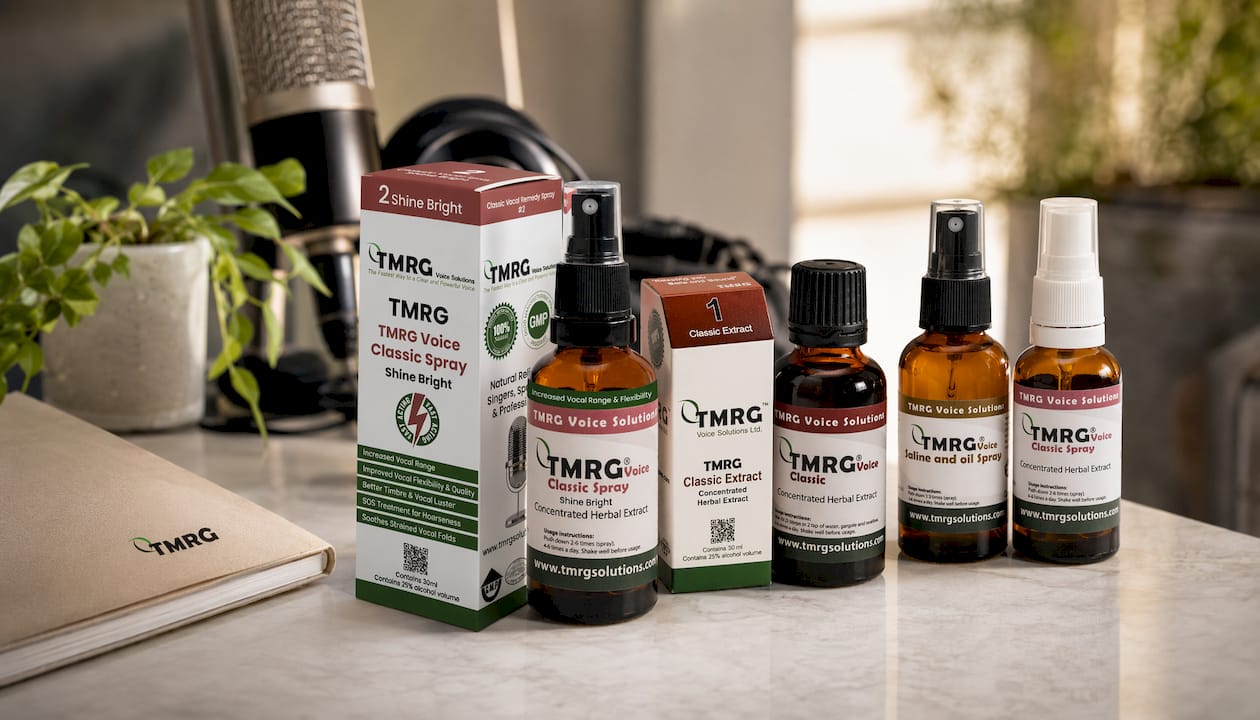
The TMRG Loud & Clear recovery drops are formulated for quick throat relief and daily maintenance, making them a practical fit for the recovery phase when mucolytics and demulcents are most useful. The TMRG Shine Bright recovery spray delivers targeted support post-performance, complementing the glycerin-based and demulcent approach outlined in the voice care lunchbox section. For singers who want a complete starting point, the TMRG Voice Clarity Trio bundles spray, drops, and a supporting product into one kit.
All three are intended to complement, not replace, proper hydration and clinician-guided care. If you are combining any Tmrgsolutions product with blood-thinning supplements or prescription medications, consult your physician or pharmacist first. Visit the Tmrgsolutions product pages to review full ingredient lists and usage guidance before adding anything new to your routine.
Authoritative references for singers researching vocal supplement safety and evidence:
UT Southwestern Medical Center ENT Blog — Voice care: Sorting fact from fiction: ENT-reviewed guidance on hydration, lozenges, and common vocal myths. One of the most clinician-grounded public resources available.
UT Southwestern Medical Center — What to include in your voice care lunchbox: Practical, performance-ready kit guidance from a major academic medical center.
Chorus America — Caution: Not all herbal remedies are good for your singing voice: The most thorough publicly available summary of blood-thinning and reflux risks for singers.
PubMed / NCBI — Omega-3 PUFA supplementation in vocal performers: The primary clinical trial on omega-3s and singing; essential reading for understanding the evidence level.
Center for Vocal Health — Top 5 teas to support singers: ENT and laryngology-backed guidance on demulcent teas, ginger, and slippery elm.
Tmrgsolutions article library — Effective supplements for vocal health: Practical overview of supplement options with product context for singers.
When citing clinical guidance, prioritize peer-reviewed sources (PubMed) and academic medical center blogs (UT Southwestern) over anecdotal or community-sourced recommendations. Anecdotal sources can illustrate common practices but should not be treated as evidence of safety or efficacy.
Hydration and electrolytes are the first priority. Beyond that, omega-3 fatty acids, NAC (during recovery), vitamin D and zinc (if deficient), and demulcent herbs like slippery elm are the most evidence-supported options for singers.
No supplement reliably improves singing performance on its own. Omega-3s showed improved self-reported vocal outcomes in one controlled trial, but the effect was modest and required consistent use alongside training over ten weeks.
Consistent hydration, adequate sleep, technically sound vocal training, and avoiding blood-thinning or reflux-triggering substances before heavy use are the most evidence-backed factors. Supplements are adjunctive at best.
No supplement directly strengthens the vocal folds. Correcting deficiencies in vitamin D and zinc supports immune and tissue health. Demulcent herbs and glycerin-based lozenges protect the mucosal lining. Vocal fold strength itself comes from structured voice training and proper technique.
Yes, with one important caveat: if you are taking blood-thinning supplements or prescription medications, review the full ingredient list with your physician or pharmacist before combining them with any new product, including Tmrgsolutions’s voice recovery drops or spray.
Effective Supplements for Vocal Health: A Practical Guide - TMRG Solutions
Herbal Supplements for Singers: Vocal Health Impact - TMRG Solutions
Vocal spray for singers: natural relief & vocal health explained - TMRG Solutions
Best vocal sprays for singers: natural vocal health guide - TMRG Solutions
