Your Cart is Empty


The routine that protects your voice at a conference is simple: hydrate to roughly half your body weight in ounces daily, warm up for 5 to 15 minutes before you speak, use amplification whenever it’s offered, follow a 30/10 pacing rhythm between heavy talking blocks, and treat recovery as part of the job, not an afterthought, as well described in long-term health tips for high-performing executives. An estimated 17.9 million U.S. adults report voice problems, so if hoarseness lingers past two or three weeks, see an ENT or speech-language pathologist. TMRG Solutions has studied vocal wear and tear extensively over many years.
TL;DR:
- Maintaining proper hydration of at least half your body weight in ounces daily is essential, especially three days before speaking engagement.
- Using amplification and taking the microphone consistently reduces vocal strain and should be prioritized over projecting loudly in noisy environments.
- In the 24 to 72 hours before speaking, cut back on delegable speech tasks, limit caffeine and alcohol, and incorporate short daily warm-up exercises to keep the voice pliable.
- Performing gentle voice resets with straw phonation or lip trills during breaks can prevent fatigue, and avoiding throat clearing helps protect the vocal folds.
- Persistent hoarseness beyond two to three weeks, pain, or sudden pitch loss warrants professional evaluation by an ENT or speech-language pathologist.
Your vocal folds don’t get “conference ready” the morning of. They respond to what you do in the three days leading up to it, the same way a runner tapers before a race instead of sprinting the day before.
Start with hydration math. The general target is half your body weight in ounces per day, so a 150-pound speaker aims for about 75 ounces, spread across the day rather than gulped before walking onstage. Water taken 60 to 90 minutes before a session actually reaches your vocal fold tissue; water swallowed five minutes before you speak mostly just fills your stomach.
Sleep and air quality matter more than most speakers expect. Hotel rooms run dry, and dry air pulls moisture straight out of your vocal folds overnight. Pack a small cool-mist humidifier, or run the shower hot for a few minutes before bed to add humidity to the room.
Watch your diet and medications in the 24 hours before you present:
Then taper your voice load. Sort your remaining speaking commitments into two piles: essential (the keynote, the panel) and delegable (the pre-event call you could push to email). Voice-health experts frame this as load management rather than blanket silence, and it works better because total silence for days before a talk is rarely realistic. Cut the delegable talking starting 24 to 72 hours out.
Finally, run short daily micro-warmups, even on travel days. Two or three minutes of humming keeps your folds pliable without adding fatigue, which matters if you’re speaking again the next morning.
Pro Tip: Set a recurring phone alarm for water breaks during the conference itself. Speakers rarely forget to drink on purpose; they just get pulled into conversations and lose track of time.
Once you’re on the schedule, the tactics shift from preparation to in-the-moment protection. Here’s the order that actually matters onsite:
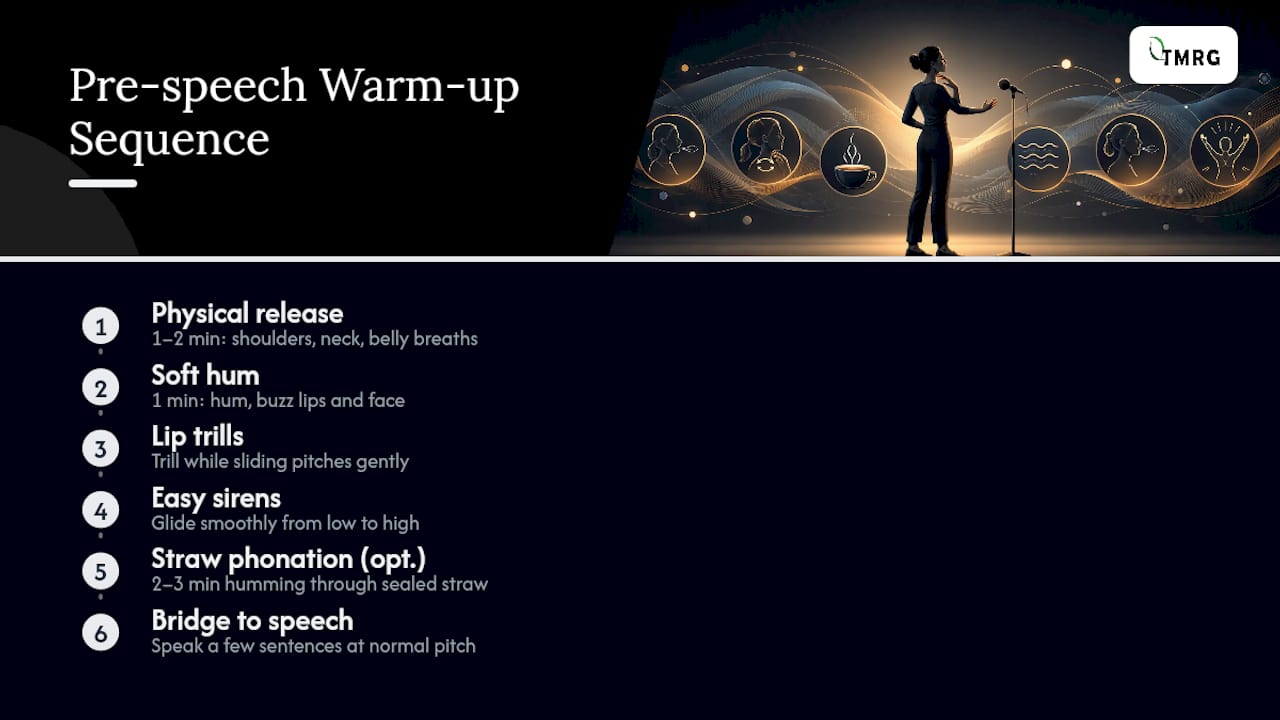
A green room warm-up doesn’t need to be elaborate. It needs to be consistent, and it needs to happen before you walk onstage, not while you’re already speaking to an audience.
Start with one to two minutes of physical release: roll your shoulders, gently stretch your neck side to side, and take a few slow diaphragmatic breaths where your belly expands, not your chest.
From there, move up what voice specialists sometimes call the vocal ladder. Hum softly for a minute, letting the vibration buzz in your lips and face. Move into gentle lip trills, sliding up and down in pitch. Follow with a few easy sirens, gliding smoothly between low and high notes without strain. Finish by speaking a few sentences at your normal conversational pitch to bridge the exercise into real talking.
If you have a straw, spend two or three minutes on straw phonation: hum or vocalize through it with your lips sealed around the end. This semi-occluded exercise balances air pressure in your vocal tract and lowers phonatory effort. No straw handy? A gentle hum with pursed lips gets you partway there.
Skip throat clearing, which irritates the folds rather than clearing them, and never force projection or shout to “test” your voice before going on.
Pro Tip: Skip ice water right before you speak. Very cold liquid can tighten the muscles around your larynx; room-temperature or lightly warm water works better in the minutes before you’re on.
The hour right after a keynote or panel decides how your voice feels tomorrow, especially at a multi-day conference where you’ll need it again in 12 hours.
Most voice fatigue from a demanding conference resolves with rest, hydration, and pacing. Certain signs mean it’s time to stop self-managing and get evaluated.
Don’t wait for chronic damage to make the call. An ENT can run laryngoscopy or stroboscopy to see your vocal folds directly, and a speech-language pathologist can build a therapy plan around what they find. Unproven home remedies that mask symptoms without addressing the cause can delay a diagnosis that matters.
TMRG Solutions has built voice-care products around more than 25 years of studying hoarseness, fatigue, and recovery in professional voice users, from singers to lecturers to conference presenters.
If you print one thing before your next conference, print this: hydrate on schedule, warm up for at least five minutes, take the mic every time, apply 30/10 pacing, and rest before you feel wrecked, not after. None of this is complicated. It’s just consistently ignored by speakers who treat their voice as infinitely renewable instead of the physical instrument it actually is.
If anything on the red-flag list shows up, don’t self-treat past it. See a specialist. And whatever product you’re tempted to try for the first time, try it in rehearsal first, never on the stage.
— Golan
If you’ve read this far, you already know the routine works better with the right tools in your bag, not instead of good habits, but alongside them. A basic voice therapy kit fits a speaker doing one or two sessions and wants simple daily support without overthinking it.
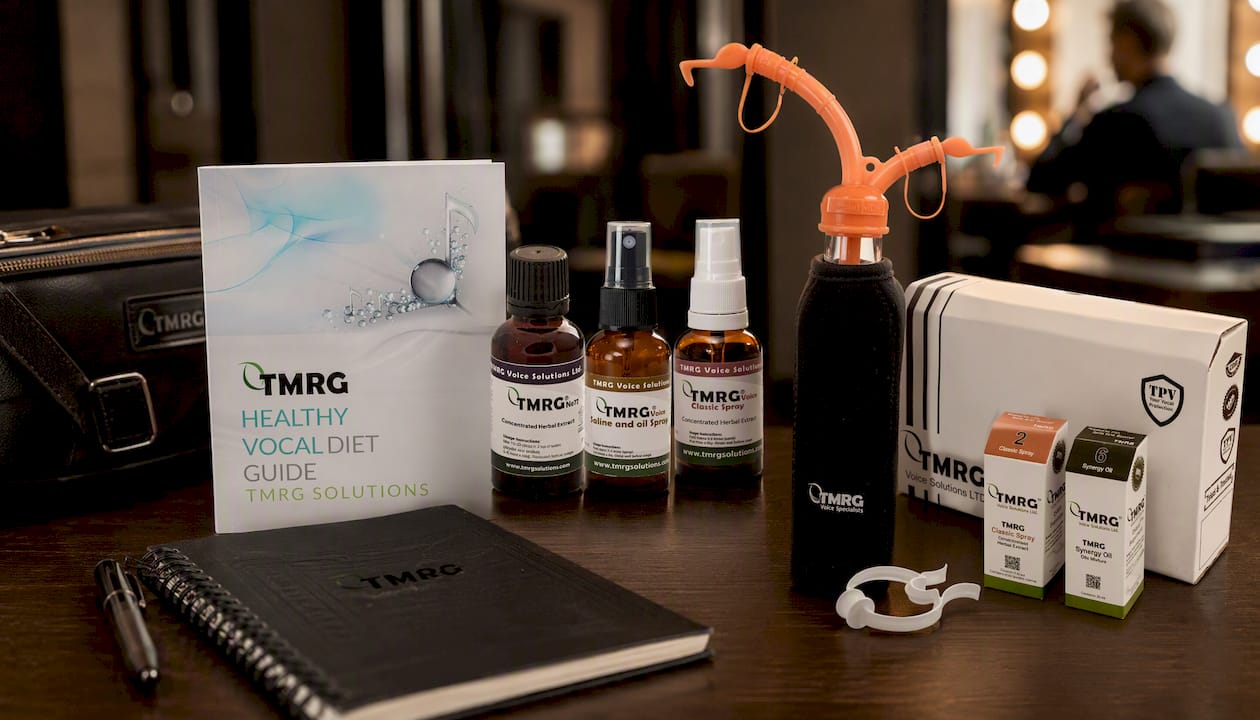
For a packed multi-day conference where you’re on stage repeatedly and networking in between, the standard voice therapy kit gives you broader tools for day-of prep and minor recovery between sessions. Frequent presenters who travel constantly and need intensive recovery support after back-to-back events tend to reach for the premium voice therapy kit, built specifically for singers, actors, and speakers putting real mileage on their voice. Whichever tier fits your calendar, trial it during a rehearsal run, not the morning of your keynote, and check the ingredient details against any allergies first. Ready to build your routine around a kit that matches your travel schedule? Start with the basic kit page and see which tier fits how often you’re speaking this quarter.
Rates vary widely by region and experience, typically running anywhere from modest hourly rates for group sessions to premium pricing for one-on-one coaching with established specialists; check with local coaches or your conference organizer for current rates in your area.
Consistent hydration paired with regular warm-ups does more for your vocal folds than any single remedy. Aim for roughly half your body weight in ounces of water daily and warm up 5 to 15 minutes before heavy speaking.
Voice disorders are commonly grouped into structural (like nodules or polyps), neurological (affecting nerve control of the larynx), functional (misuse patterns without physical damage), and inflammatory (from infection, reflux, or irritation). An ENT evaluation identifies which category fits your symptoms.
See an ENT or speech-language pathologist if hoarseness lasts beyond two to three weeks, or if you notice pain, sudden range loss, or persistent breathiness that doesn’t improve with rest.
No. Products like TMRG’s voice therapy kits are designed to support routine maintenance and recovery alongside good vocal habits, not to replace an ENT or speech-language pathologist evaluation when red-flag symptoms appear.
