Your Cart is Empty


Maintaining a healthy voice isn’t just about what you do before a show — it’s about what you do every single day. This complete guide covers the essential daily habits, hydration strategies, and long-term routines that professional singers and speakers use to keep their voice in peak condition year-round.
Daily hygiene baseline: Drink water consistently throughout the day to maintain hydration, per University of Michigan Health guidance, maintain indoor humidity at a moderate level, and avoid throat clearing.
Safe warmup routine: Five to ten minutes of semi-occluded vocal tract (SOVT) exercises, such as lip trills or straw phonation, before any extended voice use primes the vocal folds without straining them.
Evaluation threshold: Hoarseness or vocal fatigue lasting more than 10 days warrants a clinician visit, according to UCI Health. Do not wait for pain.
Pro Tip: Schedule two “vocal naps” on heavy-use days, 10–15 minutes of complete silence mid-morning and mid-afternoon. Teachers and performers who build these pauses into their schedule often experience less end-of-day fatigue, and the habit costs nothing.
Consistent vocal hygiene, clinician-supervised exercise, and early evaluation form the three-part foundation that protects professional voices over the long term.
| Point | Details |
|---|---|
| Hydration target | Drink roughly half your body weight in ounces of water daily to maintain laryngeal hydration. |
| Warmup cadence | Practice SOVT and resonant voice exercises twice daily for 10–15 minutes; keep a practice log. |
| Evaluation threshold | Seek ENT or SLP assessment for hoarseness or vocal fatigue persisting beyond 10 days. |
| Therapy timeline | Noticeable improvement typically comes after 4–8 sessions; a full course runs 6–12 weeks. |
| Tmrgsolutions support | The TVT-S, TVT-B, and Healthy Vocal Diet kits complement clinician-guided home practice routines. |
How can teachers, singers, and actors protect their voices at work?
What happens during voice therapy, and how long does it take?
What should you do in the first 72 hours of acute hoarseness?
Tmrgsolutions products that support your at-home maintenance plan
Most singers and speakers accept some end-of-day tiredness as normal. The line between normal fatigue and a warning sign is clearer than you might think.
Watch for these signals:
Hoarseness or a raspy quality lasting more than several days
Vocal fatigue that arrives earlier in the day than it used to
Pain or tension in the throat or neck during or after speaking
Breathiness or air leaking through the tone
Reduced pitch range at either end of your register
Repeated, involuntary throat clearing
NIH News in Health notes that many voice problems reverse with behavioral treatment when caught early, but delayed attention allows compensatory muscle tension to become habitual and harder to unlearn.
Persistent hoarseness, or any voice change accompanied by pain, difficulty swallowing, or a lump sensation in the throat, warrants prompt evaluation by an ENT physician. Persistent symptoms beyond that window may indicate a structural lesion or neurological issue that requires laryngoscopy to rule out.
The standard referral pathway runs: primary care physician → ENT (otolaryngologist) → fellowship-trained laryngologist for complex cases → SLP for behavioral voice therapy. Teachers, singers, and actors should not skip steps; a laryngoscopy performed before therapy ensures the SLP is not inadvertently training around an undiagnosed lesion. University of Utah Health’s voice center emphasizes that knowing when to seek multidisciplinary care is one of the three most important things a voice user can do.
Vocal hygiene is the foundation every clinician builds therapy on. Without it, even the best exercises produce inconsistent results.
Do:
Drink water consistently throughout the day, aiming for roughly half your body weight in ounces. Warm, non-caffeinated liquids during rehearsals or teaching sessions keep the laryngeal mucosa supple.
Keep indoor humidity around 30% with a cool-mist humidifier, especially during winter heating season. NIDCD recommends humidification as a core protective measure.
Sleep seven to nine hours. Laryngeal tissue repairs during sleep; chronic fatigue shows up in the voice before it shows up anywhere else.
Manage acid reflux. Laryngopharyngeal reflux (LPR) is a frequent, underdiagnosed contributor to chronic hoarseness. Elevate the head of your bed and avoid eating within three hours of sleep.
Don’t:
Throat clear. Each forceful throat clear slams the vocal folds together. Substitute a silent swallow or a small sip of water instead.
Smoke or vape. Both dry and inflame laryngeal tissue directly. NIDCD is explicit that avoiding smoking is non-negotiable for vocal health.
Rely on antihistamines or decongestants without checking with a clinician. Many dry the vocal tract significantly, trading congestion relief for a stiff, effortful voice. UCI Health’s clinical list flags certain medications as common drying agents.
Shout over background noise without amplification. The environment’s effect on vocal strain is often underestimated; even 30% of vocal strain can trace back to acoustic conditions rather than technique.
Pro Tip: Inhaling steam for five minutes before a long teaching block or rehearsal adds surface hydration to the vocal folds faster than drinking water alone, which hydrates systemically over hours.
Evidence-based home practice follows a three-stage sequence: warmup, strengthening, cool-down. Skipping straight to strengthening is one of the most common self-directed mistakes.
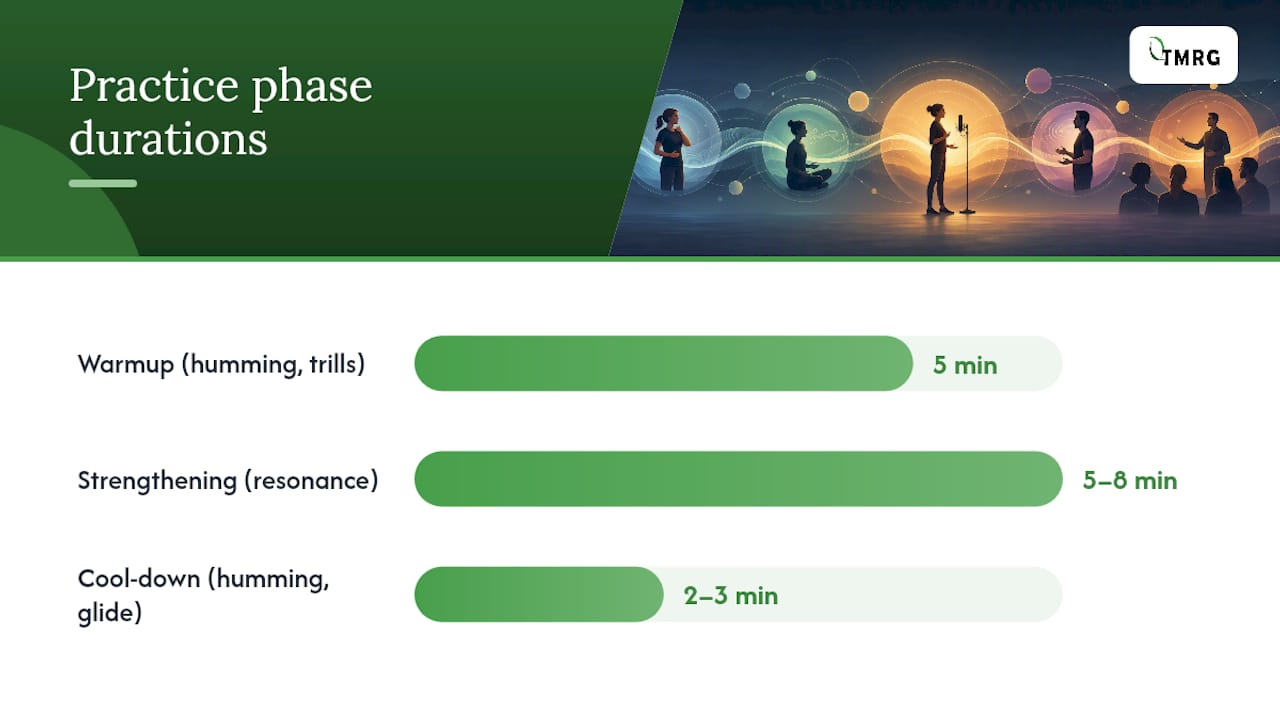
Warmup (5 minutes): Begin with gentle humming on a comfortable pitch, then move to lip trills (blowing air through loosely closed lips while phonating) and straw phonation (voicing through a standard drinking straw). These are SOVT exercises; they create back-pressure that reduces vocal fold collision force while still engaging the full phonatory system. They are among the most widely supported techniques in clinical practice.
Strengthening (5–8 minutes): Resonant voice exercises ask you to place a bright, “buzzy” sensation in the front of the face while speaking or singing. Start with “mmmm” on a comfortable pitch and gradually extend into words and phrases. Pitch glides, sliding smoothly from your lowest comfortable note to your highest and back, build range and flexibility. Vocal function exercises, a structured four-exercise sequence developed for clinical use, add endurance.
Cool-down (2–3 minutes): Return to gentle humming and finish with a slow descending pitch glide. This signals the laryngeal muscles to release tension accumulated during strengthening.
Short, consistent sessions predict therapy success more reliably than long, infrequent ones. Clinician-supervised home practice, rather than unguided extended sessions, is what speech pathology research supports as the safest and most effective model.
| Practice parameter | Guideline |
|---|---|
| Session frequency | Twice daily |
| Session length | 10–15 minutes |
| Noticeable improvement | Often after 4–8 therapy sessions |
| Full therapy course | Typically several weeks |
Stop immediately if you feel throat tightness, increased hoarseness after a session, or any pain. Keep a brief practice log noting date, exercises, duration, and how the voice felt afterward. That log becomes your most useful tool at the next SLP appointment. For a step-by-step routine, these voice exercises from Tmrgsolutions walk through each stage in detail.
High-demand voice users face cumulative load, not just single-event strain. The goal is reducing total daily phonation time without reducing professional output.
Use amplification. A portable voice amplifier in a classroom or rehearsal space cuts the effort needed to project by a significant margin. The Sean Parker Institute for the Voice at Weill Cornell identifies classroom amplification as one of the most effective occupational interventions for teachers.
Schedule vocal naps. Two 10–15 minute silence periods per workday reduce cumulative fold impact meaningfully.
Shift to nonverbal cues. Hand signals, written instructions, and visual timers replace shouted directions. Fitness instructors and teachers who adopt this habit report a measurable drop in end-of-week fatigue.
Modify pacing. Singers should separate heavy rehearsal days from performance days by at least one recovery day. Actors in long runs benefit from a structured vocal care routine for performers that accounts for cumulative weekly load.
Control the acoustic environment. Hard floors, bare walls, and high ceilings force speakers to push harder. Soft furnishings, acoustic panels, or simply repositioning students closer reduces the effort needed.
Pro Tip: Teachers and fitness instructors: replace verbal countdowns with a visible timer or hand signals for at least two activities per class. That single swap can cut daily phonation time by 10–15 minutes without any loss of instructional clarity.
For deeper strategies specific to educators, Tmrgsolutions’s guide to vocal care for educators covers classroom layout, pacing, and hydration protocols in one place.
The ENT visit comes first. The physician examines the larynx, typically with a flexible laryngoscope or videostroboscopy, to visualize the vocal folds in motion. Stroboscopy reveals subtle mucosal wave irregularities that standard laryngoscopy misses, making it the preferred tool at specialized voice centers. If a structural lesion is found, the ENT decides whether behavioral therapy alone is appropriate or whether surgical intervention is needed first.
Once cleared for therapy, you work with an SLP. Cleveland Clinic describes voice therapy as a process of retraining coordination and unlearning harmful compensatory behaviors, not simply practicing exercises. The SLP selects techniques matched to your specific diagnosis: resonant voice therapy for hyperfunctional patterns, SOVT exercises for fold fatigue, vocal function exercises for endurance deficits.
Multidisciplinary voice centers, where ENTs, laryngologists, and SLPs collaborate under one roof, consistently produce better outcomes than single-provider care for complex or occupational voice disorders. The role of medical professionals in vocal health for performers is most effective when those professionals communicate directly with each other.
Most patients notice meaningful improvement within 4–8 sessions. A full course typically spans several weeks. Surgical referral is considered when a lesion such as a vocal fold nodule, polyp, or cyst does not respond to behavioral therapy after an adequate trial.
Sudden voice loss or significant hoarseness after a performance, illness, or vocal overuse demands a structured response, not guesswork.
Rest the voice immediately. Partial voice rest (speaking only when necessary, at a comfortable volume) is preferable to complete silence for most acute cases. Whispering is not rest; it creates more laryngeal tension than normal speech.
Hydrate with room-temperature water. Cold liquids can tighten laryngeal muscles. Warm herbal teas without caffeine are a good alternative.
Run a humidifier. Moist air reduces the friction on already-irritated tissue.
Avoid all irritants. No alcohol, no smoking, no spicy food that could worsen reflux, and no throat clearing.
Skip the performance if possible. Singing or presenting through acute hoarseness risks converting a temporary strain into a structural lesion.
Inhale steam. Five minutes over a bowl of hot water (not boiling) or a personal steam inhaler adds direct surface moisture.
Seek evaluation if symptoms persist beyond 10 days, per UCI Health’s clinical guidance, or immediately if you experience pain, difficulty breathing, or a complete voice loss that does not begin to resolve within 48 hours.
Before returning to full voice use after an acute episode, confirm that your pitch range has returned to baseline, that phonation feels effortless at conversational volume, and that you can sustain a tone for at least 10 seconds without strain.
The clinical evidence is unambiguous, and after working in vocal health for years, the pattern is consistent: singers and teachers who treat their voice as a system to maintain, rather than a problem to fix when it breaks, have longer careers and fewer surgical interventions.
What most people underestimate is how much of vocal damage is cumulative and silent. A nodule does not appear overnight. It builds over months of compensatory tension, inadequate hydration, and skipped warmups. By the time hoarseness becomes chronic, the behavioral habits driving it are deeply ingrained, and retraining them takes real time.
The combined approach works because it addresses every layer: hygiene removes the environmental load, evidence-based exercises retrain efficient coordination, and early referral catches structural problems before they require surgery. No single element is sufficient alone. Clinicians at multidisciplinary voice centers see this repeatedly: patients who arrive with good hygiene habits but no warmup routine, or who warm up faithfully but drink coffee all day, still struggle.
The most overlooked piece? The practice log. Keeping a brief daily record of how the voice feels, what exercises you did, and what conditions you worked in gives both you and your SLP the data needed to adjust the plan before a small problem becomes a big one.
Consistent home practice is where most vocal maintenance plans succeed or fall short, and having the right tools makes the difference between a routine you stick with and one you abandon after a week.

The TMRG Voice Therapy Kit Standard (TVT-S) is built for singers, actors, and teachers who are already working with a clinician and need a complete at-home system to support that therapy. It covers the full warmup-to-cool-down sequence with targeted herbal formulations and equipment designed to complement SLP-assigned exercises, not replace them.
For those starting a maintenance routine or returning after a recovery period, the TMRG Voice Therapy Kit Basic (TVT-B) provides the core SOVT and warmup essentials at an accessible entry point.
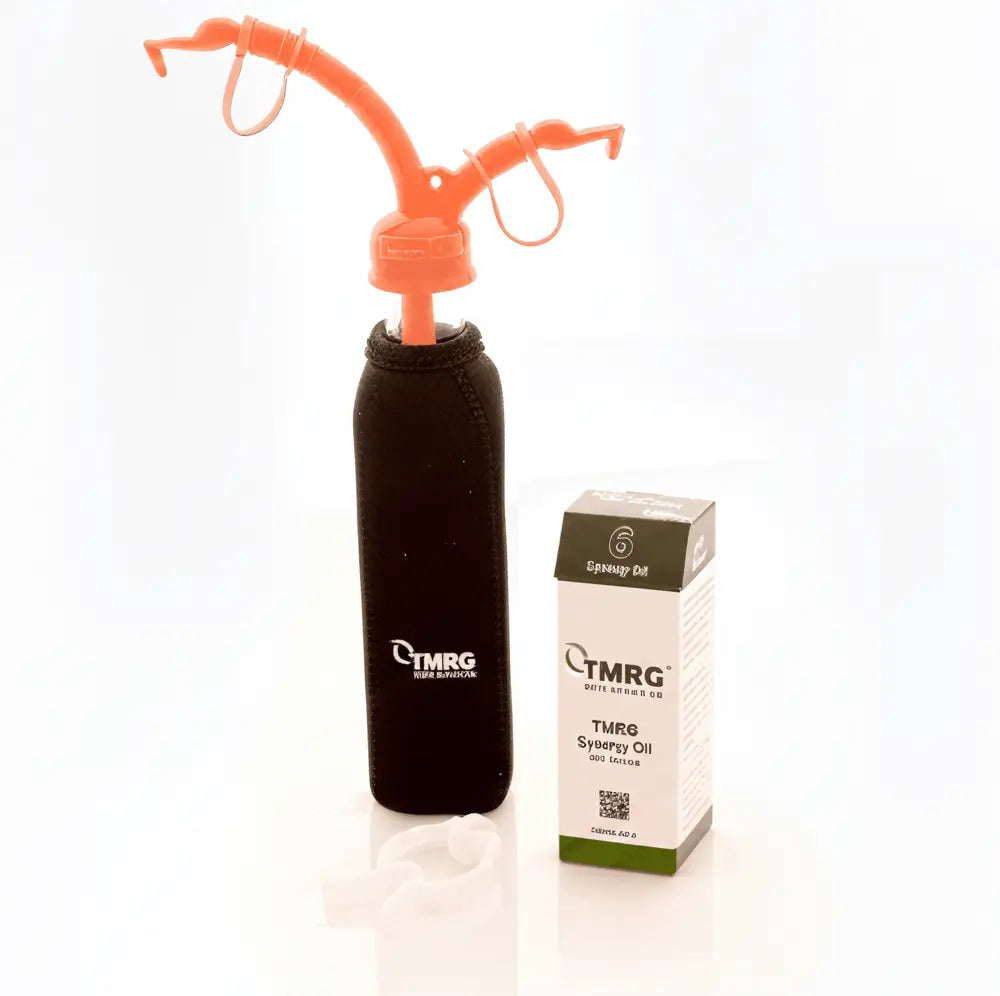
The Healthy Vocal Diet supplement and nutrition guide addresses the systemic hydration and laryngeal tissue support that daily water intake alone cannot fully provide. Use it alongside the hydration protocols in this guide, particularly on high-demand days.

None of these products substitute for an ENT evaluation or SLP-guided therapy when symptoms warrant it. They are designed to support a clinician-approved plan and make daily maintenance sustainable. Browse the full range at Tmrgsolutions and choose the kit that matches where you are in your vocal health journey.
These sources informed this guide and are worth consulting directly for deeper reading.
Voice therapy uses vocal cord exercises to prevent or treat voice disorders
Top Three Tips for Preventing and Treating Voice Disorders | University of Utah Health
Multidisciplinary voice centers, where ENTs, laryngologists, and SLPs work together, represent the highest standard of care for occupational and performance voice disorders. If your symptoms are complex or career-threatening, seek a center with fellowship-trained laryngologists rather than a general ENT practice.
Drink roughly half your body weight in ounces of water, maintain indoor humidity at a moderate level, avoid throat clearing, and warm up with SOVT exercises before heavy voice use. These habits form the core of any evidence-based voice maintenance guide.
Systemic hydration is the primary method: consistent water intake throughout the day keeps the laryngeal mucosa moist. Inhaling steam for five minutes adds direct surface moisture faster than drinking alone, and a cool-mist humidifier helps overnight.
Key signs include hoarseness lasting more than two weeks, vocal fatigue that arrives earlier than usual, reduced pitch range, breathiness, or pain during phonation. Any of these persisting beyond 10 days warrants evaluation by an ENT or SLP.
Partial voice rest, room-temperature hydration, steam inhalation, and avoiding all irritants for the first 72 hours give the vocal folds the best chance to recover. If hoarseness does not begin to improve within 48 hours or persists beyond 10 days, seek a clinical evaluation promptly.
