Your Cart is Empty


TL;DR:
- Voice exercises prescribed by speech-language pathologists restore vocal fold function, reduce tension, and improve clarity. Effective practices include straw phonation, lip trills, and resonant voice drills, with intensity and daily practice key to progress. Accurate diagnosis guides therapy adjustments, and combining physical exercises with behavioral techniques ensures lasting vocal improvement.
Voice exercises in speech therapy are defined as structured, clinically prescribed techniques that rehabilitate the vocal folds, improve muscle coordination, and restore speech clarity in individuals with voice and speech disorders. The standard clinical term for this field is voice rehabilitation, though most patients encounter it as speech therapy for voice disorders. Licensed speech-language pathologists (SLPs) deliver these programs to treat conditions ranging from dysphonia and vocal nodules to Parkinson’s-related voice loss. Voice therapy is an essential treatment for dysphonia, contributing directly to treatment efficacy when coordinated with medical care. Techniques like semi-occluded vocal tract exercises (SOVTs), resonant voice therapy, and manual laryngeal re-posturing form the clinical backbone of most modern voice rehabilitation programs.
The most clinically supported voice exercises target vocal fold vibration, reduce laryngeal muscle tension, and train the respiratory system to support a fuller, more controlled sound. Three categories dominate evidence-based practice: semi-occluded vocal tract exercises, resonant voice techniques, and intensive structured programs for specific conditions.
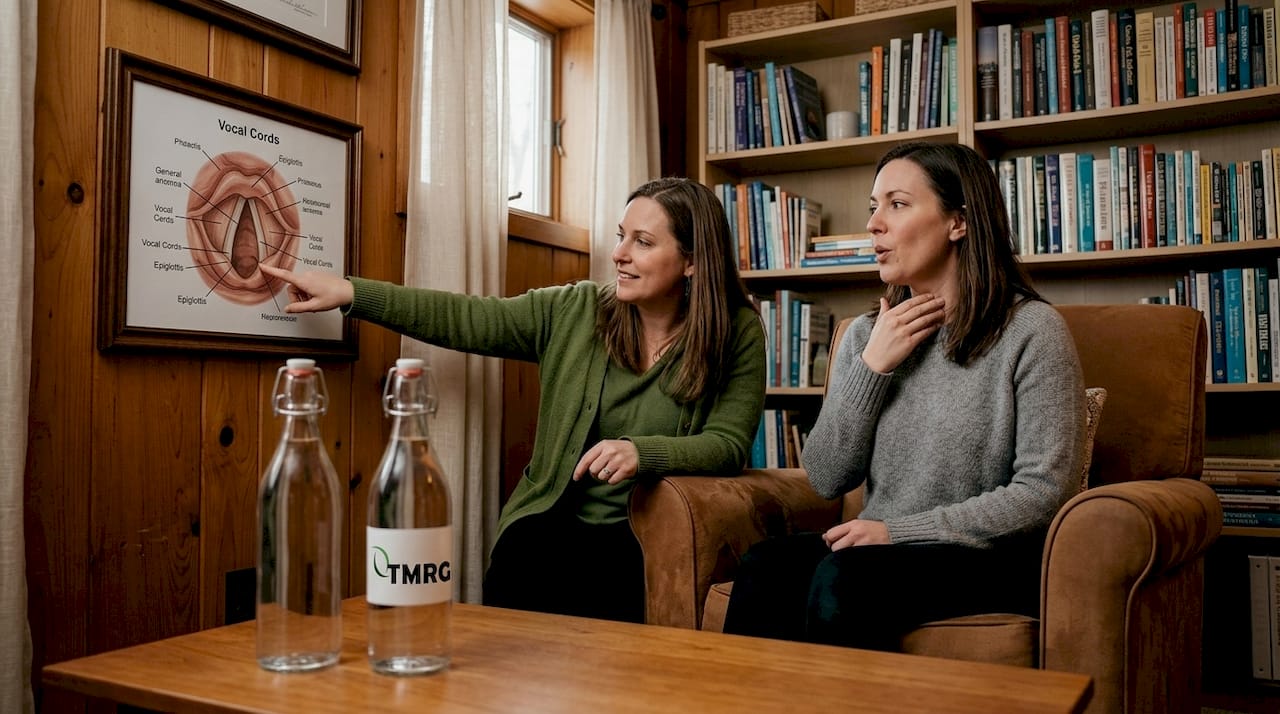
Humming, lip trills, and straw phonation reduce unnecessary muscle tension and promote a relaxed, open vocal tract. This matters because excessive laryngeal tension is the root cause of many functional voice disorders, including muscle tension dysphonia. When you phonate through a narrow straw, back pressure from the straw equalizes pressure above and below the vocal folds, allowing them to vibrate with less effort and less collision force. The result is a voice that feels easier to produce and sounds fuller.
For more serious conditions, intensity is the deciding variable. Intensive SOVT therapy delivered in a week-long camp format significantly improves vocal fold nodules across acoustic, aerodynamic, perceptual, and self-reported metrics in pediatric patients. This finding confirms that how often you practice matters as much as which exercise you choose. LSVT (Lee Silverman Voice Treatment), designed for Parkinson’s disease, requires four sessions weekly for four weeks to retrain voice loudness and communication effectiveness. That density of practice is not arbitrary. It reflects how the motor system consolidates new vocal patterns.
Key exercises used in clinical voice therapy include:
Pro Tip: Start every session with 3 to 5 minutes of straw phonation before moving to more demanding exercises. This pre-warms the vocal folds and reduces the risk of strain during higher-effort tasks.
Indirect therapy strategies run alongside these exercises. Adequate hydration keeps the mucous layer on the vocal folds thin and slippery, reducing the friction that causes fatigue. Avoiding caffeine, alcohol, and excessive throat clearing protects the tissue between sessions. These voice hygiene practices are not optional add-ons. They determine how well your vocal folds recover between practice sessions.
A voice therapy plan built without diagnostic imaging is like treating a knee injury without an X-ray. You might help, but you are likely missing critical information. Videostroboscopy and flexible laryngoscopy are the two primary tools SLPs and ENT specialists use to visualize vocal fold structure and movement before prescribing exercises.
Videostroboscopy and flexible laryngoscopy examine vocal fold mobility and document dysphonia to guide referral and therapy adaptation. Stroboscopy specifically captures the mucosal wave, the ripple that travels across the vocal fold surface during vibration. A disrupted or absent mucosal wave signals a lesion, scar tissue, or paralysis that changes which exercises are safe and effective. Without this information, a therapist prescribing high-intensity phonation to a patient with a vocal fold hemorrhage could cause serious harm.
The American Academy of Otolaryngology recommends that laryngoscopy should not exceed a 4-week wait for persistent dysphonia. Waiting longer delays diagnosis and allows compensatory muscle tension patterns to become entrenched, making therapy harder. If your voice has been hoarse or strained for more than two to three weeks without a clear cause, that timeline is your signal to seek evaluation.
The table below shows how different diagnostic findings typically redirect the therapy plan:
| Diagnostic finding | Therapy adjustment |
|---|---|
| Vocal fold nodules | Intensive SOVT exercises; voice rest periods; hydration protocol |
| Muscle tension dysphonia | Manual laryngeal re-posturing; resonant voice therapy; tension reduction drills |
| Vocal fold paralysis | Adduction exercises; pushing/pulling techniques; possible surgical referral |
| Laryngopharyngeal reflux | Indirect therapy first; dietary modification; exercises after reflux control |
| Functional dysphonia | Behavioral therapy; breathing retraining; gradual phonation loading |
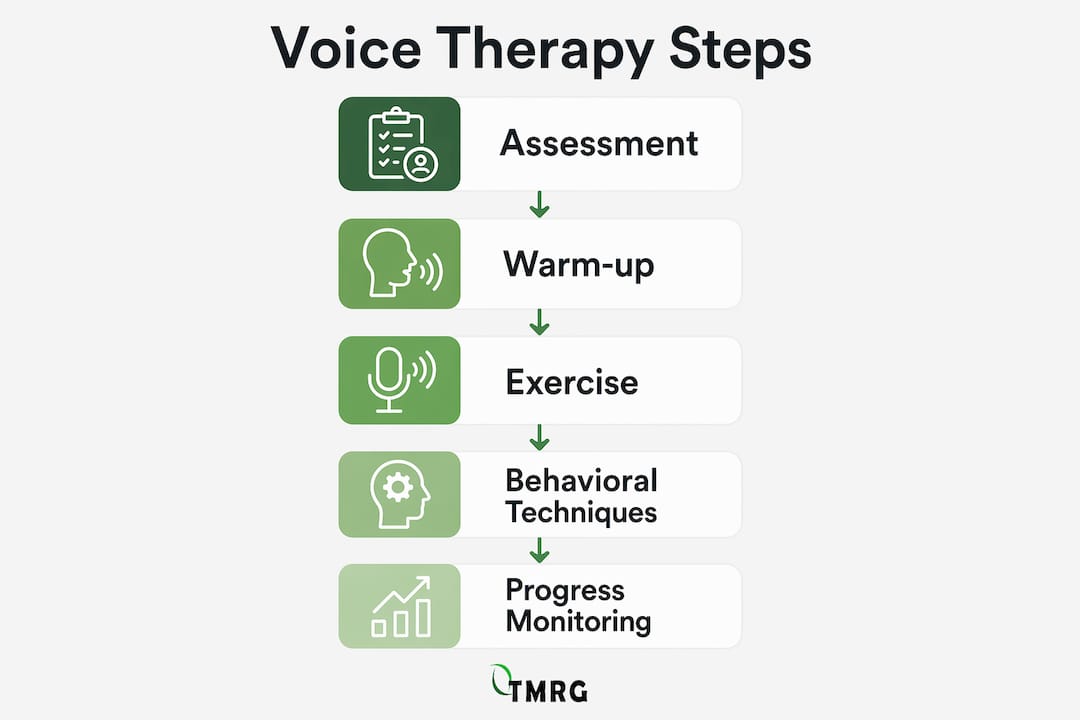
The collaboration between ENT specialists and SLPs is not a formality. It is the mechanism that keeps therapy safe and targeted. When new findings emerge mid-treatment, such as a lesion discovered after initial therapy begins, the exercise plan must be revised immediately. Voice therapy plans evolve as clinical findings change, which is why ongoing evaluation is built into effective programs rather than treated as a one-time event.
Physical exercises rebuild vocal fold function, but behavioral and indirect techniques determine whether those gains hold in everyday life. The two approaches work as a system. One without the other produces incomplete results.
Manual laryngeal re-posturing involves a therapist applying gentle external pressure to reposition a larynx that has migrated upward due to chronic tension. Manual techniques like light throat massage support muscle tension reduction and voice rehabilitation when combined with phonation exercises. One documented patient case at Carle Health showed rapid improvement using resonant voice therapy alongside manual re-posturing and hydration, demonstrating how quickly the voice can respond when multiple treatment levers are engaged at once.
Breathing strategies are equally important. Diaphragmatic breathing, where the abdomen expands on inhalation rather than the chest rising, provides the stable airflow that voice production requires. Induced laryngeal obstruction (ILO) breathing techniques are used specifically for chronic cough and paradoxical vocal fold movement, training the larynx to stay open during inhalation rather than reflexively closing.
Voice hygiene measures that every therapy patient should follow include:
Pro Tip: If you notice your voice tiring within the first hour of speaking, that is a sign of poor breath support rather than weak vocal folds. Practice sustaining a steady “sss” sound for 15 to 20 seconds using only abdominal pressure. This trains the diaphragm to carry the workload your larynx should not be handling alone.
Home exercise adherence is where most therapy programs succeed or fail. Consistent daily practice, even 10 to 15 minutes, produces more durable change than sporadic longer sessions. Tracking your practice in a simple log and reviewing it with your SLP at each appointment keeps both parties accountable and allows for timely adjustments.
Improving speech clarity requires training the articulators, the tongue, lips, jaw, and soft palate, with the same deliberate attention you give to the vocal folds. Vocal strength and clarity are separate skills that reinforce each other when trained together.
Follow this sequence to build both simultaneously:
For improving vocal strength, sustained phonation exercises are the most direct method. Hold a comfortable pitch on “ah” for as long as possible without strain, aiming to extend your maximum phonation time by one second per week. This measures glottal closure efficiency and improves it through regular practice.
Speech articulation and pacing drills improve clarity by training muscular coordination and reducing slurring. The key is deliberate, slow practice before speed. Rushing articulation drills before the movement pattern is clean simply reinforces imprecise habits at a faster rate.
Consistent, diagnostically guided voice exercises are the most effective path to lasting vocal rehabilitation and improved speech clarity.
| Point | Details |
|---|---|
| Diagnosis before exercises | Laryngoscopy within 4 weeks of persistent dysphonia prevents unsafe or misdirected therapy. |
| Intensity drives results | Programs like LSVT and intensive SOVT camps show that session frequency shapes outcomes as much as exercise choice. |
| Behavioral support is required | Hydration, voice hygiene, and manual techniques amplify the gains made through physical exercises. |
| Articulation trains clarity | Tongue twisters, over-articulation, and final consonant drills rebuild precise muscular coordination for clearer speech. |
| Home practice determines success | Daily 10 to 15 minute sessions produce more durable improvement than infrequent longer practice. |
The single biggest predictor of whether someone recovers their voice is not the exercise they choose. It is whether they show up every day and do the work with the right level of effort. I have seen patients with significant vocal fold nodules recover full voice function through intensive SOVT programs, and I have seen patients with mild muscle tension dysphonia plateau for months because they practiced inconsistently or at too low an intensity to drive change.
What surprises most people is how quickly the voice responds when therapy is well-matched to the diagnosis. The Carle Health case is a good example. A patient with severe voice loss regained function rapidly once the therapy combined manual re-posturing, resonant voice work, and hydration simultaneously. That speed is not unusual when the plan is precise. What slows recovery is generic exercise without diagnostic grounding.
The other thing I want to be direct about: voice therapy should not be optional when dysphonia is present. It is a necessary part of management, not a supplement. Patients who treat it as optional, skipping sessions or stopping when symptoms improve slightly, tend to relapse. The voice needs to consolidate new patterns through repetition before they become automatic. That consolidation takes weeks, not days.
If you are working through a program right now and feeling discouraged, check two things. First, is your exercise intensity genuinely challenging, or are you staying comfortable? Second, are you practicing every day? Those two variables explain the majority of stalled progress. Adjust them before concluding the exercises are not working.
— Golan
Tmrgsolutions has spent over 25 years developing natural vocal health solutions designed to work alongside professional speech therapy, not replace it. Whether you are managing hoarseness, recovering from vocal fatigue, or building strength after a voice disorder diagnosis, the right support tools make a measurable difference in how quickly your vocal folds recover between sessions.

The TMRG Voice Therapy Kit Basic gives you a structured starting point with natural formulations that soothe and support vocal fold tissue during active rehabilitation. For singers, actors, and professional speakers, the Premium Voice Therapy Kit provides a more advanced toolkit matched to the demands of high-use voices. Explore the full range of vocal health solutions at Tmrgsolutions and find the support that fits your specific needs.
Voice exercises in speech therapy are structured techniques prescribed by licensed speech-language pathologists to rehabilitate vocal fold function, reduce laryngeal tension, and improve speech clarity. Common examples include straw phonation, lip trills, humming, and resonant voice drills.
Improvement timelines vary by condition and exercise intensity. Intensive programs like LSVT show measurable gains within four weeks of daily sessions, while less intensive home programs may take 8 to 12 weeks to produce consistent results.
Basic exercises like straw phonation, humming, and diaphragmatic breathing are safe to practice at home, but a licensed SLP should first assess your voice to rule out lesions or paralysis that require supervised or modified protocols.
Speech therapy is the broader field covering articulation, fluency, language, and voice. Voice therapy is a specialized branch within speech therapy that focuses specifically on vocal fold function, resonance, and laryngeal muscle coordination.
Seek medical evaluation before beginning any voice exercise program if your hoarseness or voice change has persisted for more than two to three weeks. The AAO-HNS recommends laryngoscopy within four weeks of new-onset dysphonia to guide safe and targeted treatment.
