Your Cart is Empty


TL;DR:
- Losing your voice as a performer is frightening — but it’s rarely permanent. This guide gives you a clear, step-by-step recovery plan starting from the moment you notice voice loss, covering what to do in the first hour, first day, and first week to get back to full vocal health.
Stop talking. Right now. Voice rest is the single most important step in the first 24 hours after losing your voice, and every minute you keep pushing through strains already inflamed vocal folds further. If you’re a singer, actor, or lecturer, your instrument is injured. Treat it accordingly.
Urgent warning: If you experience difficulty breathing, cough up blood, or feel severe progressive pain in your throat, stop reading and seek emergency care immediately. These are not laryngitis symptoms.
Your first 24-hour action plan:
Stop speaking entirely, or use a quiet, relaxed voice at low volume (never whisper)
Drink water consistently throughout the day
Run a humidifier or sit in a steamy bathroom for 15–20 minutes
Avoid caffeine, alcohol, and any irritant that dries the mucosa
Skip throat clearing; swallow gently instead
Pro Tip: Whispering feels gentle, but it actually increases tension across the vocal folds more than quiet normal speech. Use a “confidential voice” — low volume, no strain — when you must communicate.
What are the safest at-home remedies for the first 48–72 hours?
When should you rest completely vs. start gentle rehabilitation?
How do you build a daily vocal hygiene routine to prevent recurrence?
What are the red flags that mean you need to see an ENT or SLP?
What does a staged recovery plan look like for singers, actors, and lecturers?
How do vocal drops, sprays, and oils fit into your recovery protocol?
What 25+ years of vocal health work has taught us about voice loss
The goal during this window is to reduce mucosal inflammation and protect the vocal folds from further mechanical stress. Two mechanisms matter most: systemic hydration and surface hydration.
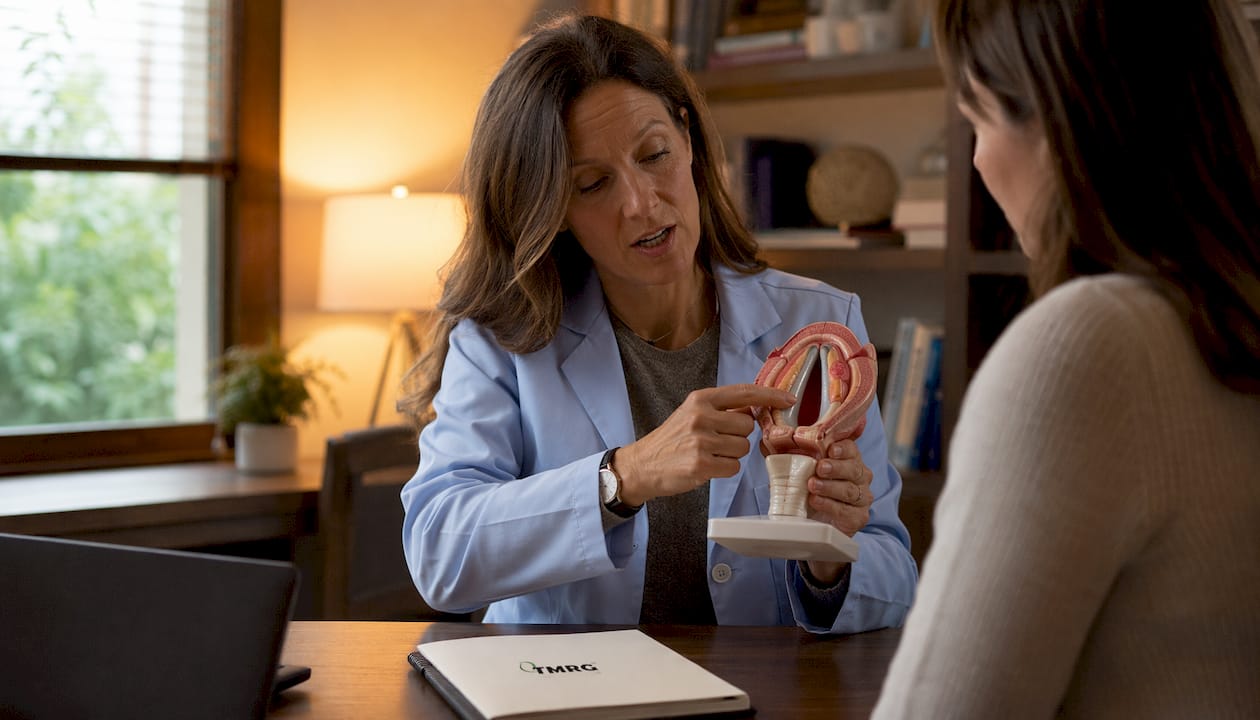
Systemic hydration means drinking enough water that the mucous layer lining your vocal folds stays thin and pliable. When you’re dehydrated, that layer thickens, and phonation becomes effortful and painful. Surface hydration works differently. Steam inhalation and humidified air soothe the vocal mucosa more directly than drinking water alone, which is why a cool-mist humidifier or a hot shower session is worth adding alongside fluid intake.
Warm saline gargles (roughly a quarter teaspoon of salt in eight ounces of warm water) reduce surface inflammation and clear irritants from the pharynx. The NHS recommends this alongside hydration and smoke avoidance as a first-line home measure.
What to avoid:
Whispering or projecting your voice in noisy environments
Menthol lozenges, which can dry the vocal mucosa in sensitive performers
Nasal decongestants, which reduce moisture throughout the airway
Alcohol and caffeine, both of which dehydrate the mucosa
Smoking or vaping, which slows mucosal recovery
For diet, shift toward alkaline or neutral foods: plain broth, vegetables, legumes, and poultry. If acid reflux is a factor, cut spicy foods, fried foods, and chocolate, and avoid eating within three hours of bedtime. Reflux is a surprisingly common driver of recurrent hoarseness in performers, and managing it during recovery accelerates healing.
Pro Tip: Set a humidifier to approximately 30% relative humidity in your bedroom overnight. Sleeping in dry air undoes much of the daytime hydration work.
Yale Medicine frames this clearly: complete voice rest for the first 24–48 hours protects injured tissue, but staying silent for days beyond that carries its own risks. Muscles stiffen. Compensatory tension patterns develop. Performers who return to full use without a graduated plan often re-injure within the first rehearsal.
The general timeline: strict rest for the first one to two days, then gentle phonatory exercises starting when pain and effort have decreased. Straw phonation (humming through a narrow straw) and light lip trills act as physical therapy for the vocal folds, maintaining pliability without impact stress. These guided exercises are not performance; they are rehabilitation.
A speech-language pathologist (SLP) should direct the rehabilitation phase whenever possible. An ENT or laryngologist steps in when the cause is unclear, when symptoms persist beyond two weeks, or when structural issues like nodules or polyps are suspected.
Pro Tip: If you’re a performer with a show in less than a week, contact an SLP or laryngologist immediately rather than self-managing. Staged rehab under clinical guidance is faster and safer than guessing.
Reactive care after voice loss is expensive, professionally and physically. The speech-language pathology consensus is clear: daily vocal hygiene prevents episodes rather than just treating them.
Core daily checklist for voice professionals:
Warm up before any vocal use: lip trills, gentle sirens, and light humming for 5–10 minutes
Drink water consistently (not just before performances); aim for pale yellow urine as a hydration marker
Use amplification whenever possible to reduce projection effort
Schedule vocal rest periods (“vocal naps”) between rehearsals, classes, or lectures
Run a bedroom humidifier nightly
Avoid smoking, secondhand smoke, and vaping entirely
Dietary management matters beyond acute episodes. Chronic acid reflux and GERD silently damage the posterior larynx over time, causing persistent hoarseness that no amount of hydration fixes. If you notice morning hoarseness, throat clearing, or a chronic “lump” sensation, silent reflux may be the underlying driver. A reflux-trigger diet that cuts caffeine, alcohol, spicy foods, and late-night meals is a practical starting point.
Allergies and environmental irritants deserve the same attention. Dust, mold, and dry indoor air all inflame the mucosa chronically. An air purifier in rehearsal spaces and a regular cleaning schedule for humidifiers reduce that load significantly.
Pro Tip: Build your daily vocal care routine around your schedule, not around symptoms. Waiting until you’re hoarse to hydrate is like waiting until you’re injured to stretch.
Most acute laryngitis resolves within one to two weeks with rest and home care. When it doesn’t, or when symptoms fall outside that pattern, clinical evaluation is necessary.
Seek care immediately if you have:
Difficulty breathing or swallowing alongside hoarseness
Blood when coughing
Severe throat pain unrelated to a cold or flu
Schedule an ENT appointment within one to two weeks if:
Hoarseness persists beyond two to four weeks without improvement
Voice loss recurs frequently with no clear cause
You have a lump in your neck or unexplained weight loss
Pain occurs when speaking or swallowing
An ENT (otolaryngologist) will typically perform a laryngoscopy or stroboscopy to visualize the vocal folds directly. This is the only way to diagnose nodules, polyps, cysts, or structural changes that home care cannot address. An SLP then designs a voice therapy program based on those findings, targeting the specific mechanical or behavioral patterns driving the problem.
Recurrent voice loss in performers often signals an underlying condition like GERD, allergies, or chronic overuse rather than isolated acute laryngitis. Treating the symptom without identifying the cause leads to repeated episodes.
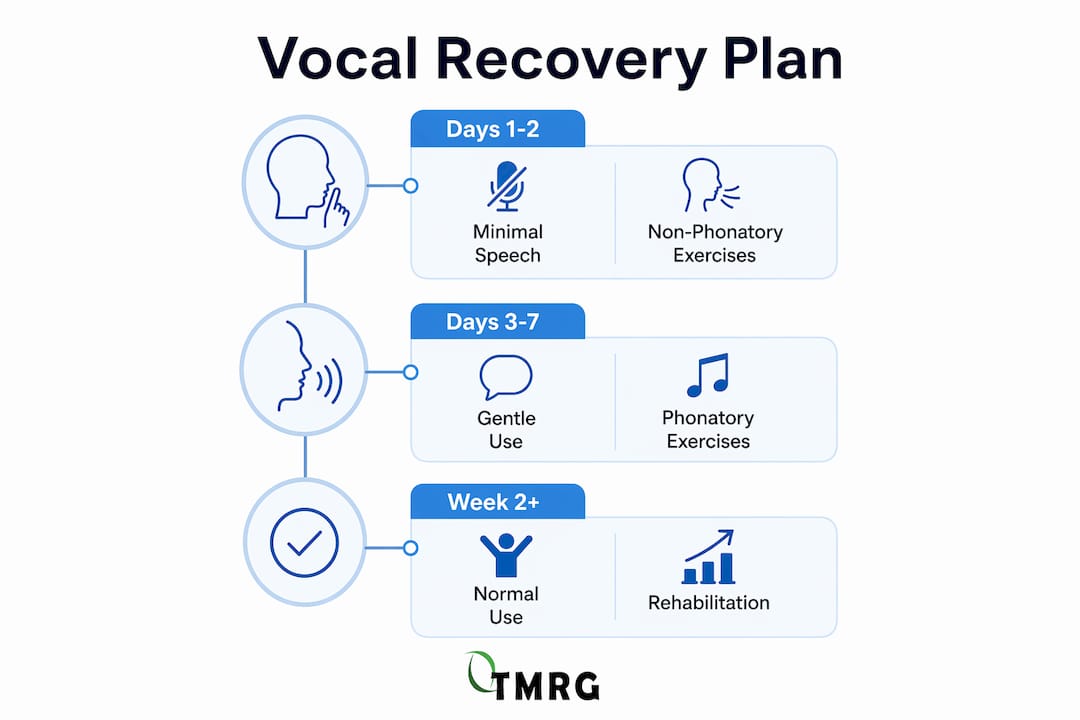
A conservative, monitored return to vocal use reduces re-injury. The stages below reflect clinical guidance from laryngologists and SLPs adapted for performers.
Stage progression:
Acute rest (Days 1–2): No singing, no projecting, minimal speech. Hydrate, humidify, and use saline gargles.
Gentle reactivation (Days 3–4): Add straw phonation and lip trills for 5–10 minutes twice daily. No performance range.
Progressive load (Days 5–7): Light scales in the middle of your range, 15–20 minutes. Monitor effort and fatigue.
Rehearsal integration (Week 2+): Return to partial rehearsals with vocal rest between sessions. Avoid extremes of range until fully recovered.
Daily self-monitoring checklist:
Pain or discomfort during phonation (stop if present)
Effort level: does speaking or singing feel harder than usual?
Range: can you access your normal range without strain?
Stamina: does fatigue arrive earlier than normal?
| Day/Week | Allowed Voice Use | Exercises | Red-Flag Signals |
|---|---|---|---|
| Days 1–2 | Minimal speech only | None | Any pain, breathing difficulty |
| Days 3–4 | Quiet conversation | Straw phonation, lip trills | Increased hoarseness, pain |
| Days 5–7 | Light vocal use | Gentle mid-range scales | Fatigue after 10 minutes |
| Week 2+ | Partial rehearsals | Progressive range work | Strain, pitch breaks, pain |
Topical products and supportive devices serve two distinct roles: acute soothing during the first 48–72 hours, and maintenance support during staged rehab and prevention. Using the right product at the right stage matters.
Surface hydration via steam and humidifiers remains the foundation. Topical drops, sprays, and oils complement that foundation by delivering targeted mucosal support, but they do not replace rest or clinical care.
Safety notes for all topical products:
Avoid products containing menthol if your mucosa is sensitive
Never use corticosteroid sprays without a clinician’s prescription
Follow product labeling for dosing and frequency
Discontinue use and consult a clinician if irritation increases
| Product Type | Best Use Case | Stage | Safety Notes |
|---|---|---|---|
| Voice recovery drops | Acute soothing, immediate relief | Days 1–4 | Follow label; avoid if ingredients irritate |
| Recovery spray | On-the-go surface moisture | Days 1–7 | Avoid menthol formulations for sensitive users |
| Voice synergy oil | Mucosal support, maintenance phase | Week 2+ | Use as directed; not a substitute for rest |
| Cool-mist humidifier | Overnight surface hydration | All stages | Clean daily; use distilled water |
| Portable amplifier | Reducing projection effort | All stages | Preferred over pushing volume |
Tmrgsolutions offers three products that map directly to this protocol. TMRG Loud & Clear drops are formulated for acute soothing and short-term relief during the first days of recovery. The TMRG Shine Bright spray provides portable surface moisture for performers who need on-the-go support during rehearsals or travel. For the maintenance phase, TMRG Voice Synergy Oil supports mucosal health during staged rehab and ongoing vocal care. All three should be used according to product labeling and in coordination with any clinician guidance you’ve received.
Treating voice loss like a physical injury, with immediate rest followed by staged, monitored rehabilitation, gives performers the fastest and safest path back to full vocal function.
| Point | Details |
|---|---|
| Rest first, then rehab | Strict voice rest for 24–48 hours, then gentle exercises like straw phonation from day three onward. |
| Hydrate systemically and topically | Drink water consistently and use a humidifier; surface moisture soothes vocal folds more directly than fluids alone. |
| Avoid whispering | Whispering increases vocal fold tension more than quiet normal speech; use a low-volume, relaxed voice instead. |
| Escalate at two weeks | Hoarseness persisting beyond several weeks requires ENT evaluation and possible laryngoscopy. |
| Tmrgsolutions product protocol | TMRG Loud & Clear drops for acute relief, Shine Bright spray for on-the-go moisture, and Voice Synergy Oil for maintenance. |
The most common mistake performers make when they lose their voice is treating it as a scheduling problem rather than a tissue injury. They push through a rehearsal, whisper their way through a meeting, and reach for a lozenge instead of a humidifier. By the time they seek help, the inflammation has compounded.
What actually works is the opposite of what feels productive. Silence, water, and steam in the first 48 hours do more for vocal recovery than any performance-day workaround. The performers who recover fastest are the ones who stop immediately, hydrate aggressively, and begin guided rehabilitation at the right moment, not too early and not too late.
At Tmrgsolutions, our 25+ years of vocal health product development and client support have been built around this principle: recovery is a protocol, not a product. Our formulations are designed to support each stage of that protocol, from acute soothing to long-term maintenance, and they are developed in alignment with the clinical guidance that laryngologists and SLPs provide. For persistent or recurrent voice loss, no product replaces a proper clinical evaluation. Our loss-of-voice resource page connects performers to both product support and educational guidance for every stage of recovery.
When you’ve lost your voice, you need products that work with your recovery protocol, not against it. Tmrgsolutions has spent over 25 years developing natural vocal health formulations specifically for singers, actors, and lecturers who cannot afford extended downtime.
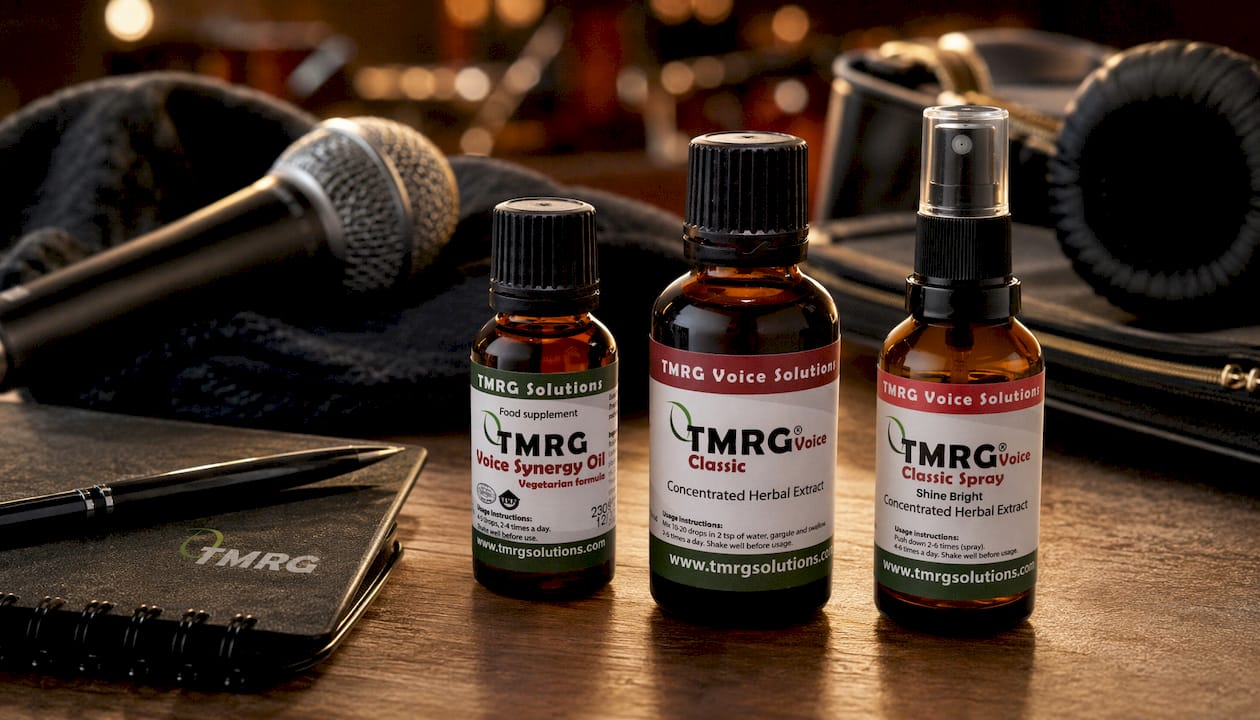
The three core products map directly to the staged recovery plan in this article. TMRG Loud & Clear drops deliver acute soothing support in the first critical days. The TMRG Shine Bright spray gives you portable surface moisture for rehearsals and travel. TMRG Voice Synergy Oil supports mucosal health through the maintenance phase and beyond. Each product is formulated with natural herbal ingredients and designed to complement, not replace, rest, hydration, and clinical care.
Visit the TMRG vocal recovery store to find the right product for your current stage, and review the daily vocal maintenance guide for a complete protocol pairing each product with the right recovery step.
This article provides general information, not medical advice. Consult an ENT or speech-language pathologist for persistent, recurrent, or severe voice loss.
The clinical guidance in this article draws from the following authoritative sources:
Yale Medicine: Laryngologist-authored guidance on treating vocal injury like a physical sprain, with staged rest and rehabilitation.
Mayo Clinic: Diagnosis and treatment overview for laryngitis, including escalation timelines.
Cleveland Clinic: Root-cause analysis of hoarseness, including GERD, allergies, and overuse.
NHS: First-line home care recommendations for laryngitis, including hydration and saline gargles.
Healthline: Practical guidance on voice rest, humidification, and diet modification.
Expressable: SLP-authored guidance on vocal hygiene routines and rehabilitation exercises.
Tmrgsolutions loss-of-voice page: Product and educational support for performers at every stage of recovery.
For persistent or recurrent voice loss, schedule an evaluation with an ENT or SLP rather than relying on home care alone.
Voice rest combined with consistent hydration and humidification is the fastest home approach. Surface moisture from steam or a cool-mist humidifier soothes the vocal mucosa more directly than drinking water alone.
Most acute laryngitis resolves within one to two weeks with rest and home care. Hoarseness that persists beyond two to four weeks warrants an ENT evaluation.
No. Whispering increases tension across the vocal folds and can worsen inflammation. Use a quiet, relaxed “confidential voice” at low volume if you must speak.
See an ENT if hoarseness lasts more than two to four weeks, recurs frequently, or is accompanied by pain, a neck lump, or difficulty swallowing. Breathing difficulty alongside hoarseness requires immediate care.
TMRG Loud & Clear drops and Shine Bright spray support acute soothing and surface moisture during recovery, while Voice Synergy Oil is suited to the maintenance phase. All three complement rest and clinical care but do not replace them.
