Your Cart is Empty


TL;DR:
- A daily vocal maintenance kit includes products and exercises to hydrate, soothe, and strengthen the vocal folds for consistent use. Regular use of throat sprays, pastilles, remedy drops, and warm-up routines improves voice quality and prevents fatigue over time. Proper integration of these tools and exercises ensures vocal longevity and optimal performance.
A daily vocal maintenance kit is a structured collection of products and exercises designed to protect, hydrate, and strengthen the vocal folds for consistent performance. Voice professionals who treat their voice as an instrument know that reactive care, reaching for a spray only when hoarseness hits, is far less effective than a proactive daily regimen. Tmrgsolutions, with over 25 years of expertise in vocal health, recommends combining soothing throat sprays, natural herbal formulations, and targeted warm-up exercises into one repeatable routine. Consistent daily care improves voice quality and reduces fatigue over time, contributing directly to vocal longevity and performance stability.
A well-built vocal care kit covers four product categories: throat sprays, throat pastilles, natural remedy drops, and hydration aids. Each category serves a distinct physiological role, and understanding those roles helps you choose products that match your voice demands.
Throat sprays deliver moisture and active ingredients directly to the pharynx and larynx. Natural formulations like those containing Spilanthes, Marshmallow root, and Lemon Balm soothe and moisturize the vocal cords while providing mild numbing relief during recovery. Sprays with propolis, eucalyptus, and thyme address hoarseness and irritation at the source. For singers who perform frequently, a therapeutic oral spray used before and after performance can meaningfully reduce post-show soreness.
Throat pastilles work differently. Products formulated with Levomenthol, Peppermint oil, and Myrrh tincture relieve throat dryness caused by overuse, but they do not heal vocal strain on their own. Think of them as comfort tools, not cures. They are most effective when used alongside vocal rest and proper technique.
Natural remedy drops round out the kit. Homeopathic options like Arum triphyllum 9C provide relief from vocal strain without numbing effects and are suitable for adults and children alike. These meltaway pellets dissolve under the tongue, requiring no food or water, which makes them convenient during rehearsals or between sets.
| Product category | Primary benefit | Best used |
|---|---|---|
| Throat spray | Moisturizes and soothes vocal folds | Before and after vocal use |
| Throat pastilles | Relieves dryness and mild irritation | During extended speaking or singing |
| Remedy drops | Addresses strain without numbing | Between performances or rehearsals |
| Hydration aids | Supports mucosal function systemically | Throughout the entire day |
Pro Tip: Match your spray to your voice type. Speakers who use their voice for long lectures benefit most from Marshmallow root formulations, which coat the throat. Singers performing high-intensity repertoire get more relief from propolis-based sprays that target inflammation.
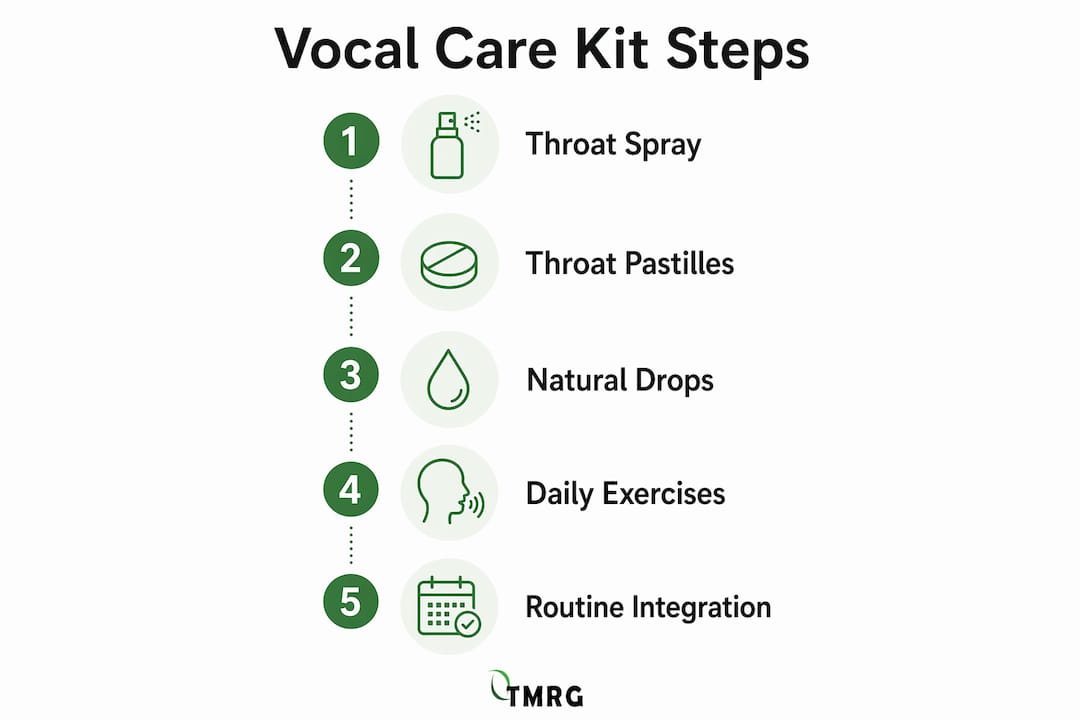
Products support the voice, but exercises build it. A daily warm-up routine prepares the vocal folds the same way an athlete stretches muscles before competition. Skipping this step and relying on products alone is like expecting a muscle rub to replace a proper warm-up.
Effective vocal warm-ups include yawning-sighs, humming, lip trills, vocal straw exercises, and sirens. Each targets a different aspect of vocal function, from airflow control to resonance placement. Voice health professionals recommend completing them in a specific order to build readiness progressively.
Spend 10–15 minutes on this sequence before any significant vocal use. Do not rush through the exercises. Moving too quickly defeats the purpose of progressive muscle preparation.
Pro Tip: Never start sirens cold. Complete at least two rounds of humming and lip trills before attempting full-range slides. Jumping to sirens on a cold voice risks micro-tears in the vocal fold mucosa.

A vocal care routine works best when it follows a predictable structure tied to your existing daily habits. Attaching vocal care to moments you already do automatically, like your morning coffee ritual or pre-show preparation, removes the friction that causes inconsistency.
Morning: Begin with warm water and a light humming session before speaking to anyone. Avoid caffeine on an empty stomach, since caffeinated beverages dehydrate the vocal folds and reduce mucosal lubrication. Apply a throat spray if you have a heavy vocal day ahead.
Daytime: Drink water consistently throughout the day. Sipping rather than gulping keeps the throat moist without causing discomfort. Use throat pastilles during extended speaking sessions, not as a substitute for water. If you feel vocal fatigue building, take a 10-minute silence break before it becomes strain.
Evening: After your last vocal performance or speaking engagement, complete a gentle cool-down using humming and yawning-sighs. Apply a soothing spray formulated for recovery. Avoid alcohol in the evening, as it dries the vocal folds overnight and compounds next-morning hoarseness.
| Time of day | Recommended action | Kit product used |
|---|---|---|
| Morning | Warm-up exercises, hydration | Throat spray, warm water |
| Pre-performance | Full warm-up sequence | Spray or pastilles |
| During performance | Sip water between sets | Hydration aid |
| Post-performance | Cool-down, recovery spray | Recovery spray or drops |
| Evening | Vocal rest, avoid irritants | None or remedy drops |
Best practices for staying consistent:
Pro Tip: Steam inhalation for 5–10 minutes before bed is one of the most overlooked vocal maintenance tips. It hydrates the vocal folds directly and reduces overnight dryness without any product application.
The most persistent myth in vocal care is that a good throat spray can fix a strained voice. It cannot. Throat sprays and pastilles manage symptoms but do not repair damaged vocal fold tissue. Overreliance on products without adequate vocal rest risks nodules and long-term structural damage.
Myths versus facts every vocalist should know:
Experts note that mastering technique and resting the voice remain the primary factors in vocal health. Products are valuable supports within a broader regimen, not standalone solutions. If your voice is not recovering with a consistent routine, consult a vocal coach or speech-language pathologist before increasing product use.
A daily vocal maintenance kit works only when products and exercises are used together within a consistent, structured routine.
| Point | Details |
|---|---|
| Products support, not cure | Throat sprays and pastilles relieve symptoms but cannot repair strained vocal folds. |
| Exercises build the voice | Daily warm-ups like lip trills, humming, and straw phonation prepare and strengthen vocal folds. |
| Hydration is non-negotiable | Drinking water throughout the day supports mucosal function and reduces vocal fold irritation. |
| Routine consistency matters | Attaching vocal care to existing daily habits reduces the chance of skipping it. |
| Know when to seek help | Hoarseness lasting more than two weeks requires professional evaluation, not more product use. |
The vocalists who get the most out of a daily kit are not the ones with the most products. They are the ones who use fewer products with more discipline. I have seen professional singers carry a bag full of sprays, drops, and lozenges and still arrive at rehearsal with a fatigued voice because they skipped their warm-up three days in a row.
The real challenge is not finding the right product. It is building the habit of using it at the right time. A throat spray applied five minutes before a two-hour performance does less than one applied consistently every morning for two weeks. The cumulative effect of daily care is what protects the voice over a career, not any single product.
I also want to address something that rarely gets said directly. Customizing your kit matters. A classical soprano has different needs than a podcast host or a high school drama teacher. The soprano needs exercises that address the passaggio and products that support the upper register. The teacher needs hydration strategies for six hours of continuous speech. One generic kit does not serve both equally. Take the time to assess your specific vocal demands and build your routine around them.
The most encouraging thing I can tell you is this: the voice responds quickly to consistent care. Singers who commit to a structured routine for 30 days report noticeable improvements in stamina and tone quality. Your voice is resilient. Give it the right conditions and it will reward you.
— Golan
Tmrgsolutions has spent over 25 years developing vocal health products specifically for singers, actors, lecturers, and voice professionals. The product range includes natural recovery drops, soothing throat sprays, and complete therapy kits formulated with herbal ingredients endorsed by vocal coaches and medical professionals.

The TMRG Voice Therapy Kit Standard combines the core tools needed for daily maintenance and recovery in one package. For singers focused on performance readiness, the TMRG Loud & Clear drops and TMRG Shine Bright spray address hydration and soothing at the source. Each product is designed to complement your warm-up routine and support your voice through demanding schedules. Explore the full range at Tmrgsolutions to find the right fit for your vocal demands.
A daily vocal maintenance kit is a curated set of products and exercises used consistently to hydrate, soothe, and strengthen the vocal folds. It typically includes throat sprays, pastilles, remedy drops, and a structured warm-up routine.
The best throat sprays for singers contain herbal ingredients like Marshmallow root, Spilanthes, or propolis, which moisturize and soothe the vocal folds without numbing them excessively. Tmrgsolutions offers several formulations matched to different performance demands.
A complete daily warm-up sequence, including humming, lip trills, straw phonation, and sirens, takes 10–15 minutes. Completing this before any significant vocal use prepares the vocal folds and reduces the risk of strain.
Throat sprays cannot replace vocal rest. They manage surface symptoms but do not repair vocal fold tissue. Overusing sprays without rest risks nodules and long-term vocal damage.
Track how your voice feels each morning and after performances. A working routine produces less morning hoarseness, greater stamina during use, and faster recovery after heavy vocal days. If hoarseness persists beyond two weeks, consult a laryngologist.
