Your Cart is Empty


Electrolytes for singers can genuinely improve tissue-level hydration in the vocal folds, but only in specific situations. Long rehearsals, hot stages, heavy sweating, or touring schedules that outpace plain water are where they earn their place. They work by improving osmotic balance, not by replacing steady daily water intake. Follow label directions, and check with a clinician first if you manage a medical condition.
TL;DR:
- Electrolytes are most beneficial for singers during long rehearsals, touring, or hot stage conditions when plain water is insufficient to restore tissue hydration.
- Sodium and potassium regulate water movement into the vocal fold tissue, enhancing mucus thinness and reducing voice strain during performance.
- Hydration strategies should include steady water intake paired with electrolytes, especially before or after demanding vocal sessions, not just reliance on pre-show tricks.
- Topical methods like steam, humidifiers, and nebulizers provide quick relief but do not replace the need for consistent systemic hydration with electrolytes.
- Over-hydration without adequate sodium can cause hyponatremia, and medications like antihistamines or decongestants may impair hydration; consulting a clinician is recommended if on medication.
Electrolytes are minerals, chiefly sodium, potassium, and magnesium, that carry an electrical charge and control how water moves in and out of your cells. They govern osmotic balance: the process that decides whether water stays in your bloodstream, gets pulled into tissue, or gets flushed out through urine. For singers, that balance matters more than the total volume of water you drink, because water without the right mineral ratio can pass through your system without ever reaching the layer of tissue that vibrates when you phonate.
That layer is the lamina propria, the soft, pliable tissue beneath the surface of your vocal folds. It needs to stay supple to vibrate freely. A peer-reviewed review of vocal fold mucus and phonation found that well-hydrated vocal fold tissue produces thinner mucus, which reduces friction between the folds and allows them to oscillate with less resistance. Thicker, drier mucus does the opposite: it increases the effort your voice needs to produce sound, a measurable value voice scientists call phonatory threshold pressure. Mild dehydration raises that threshold, meaning you have to push harder for the same result, which is exactly the kind of strain that leads to fatigue over a long set.
This is why singers who hydrate all day sometimes still feel dry on stage. Water alone doesn’t guarantee it reaches the lamina propria efficiently. Sodium and potassium regulate the fluid gradients that move water from your bloodstream into that tissue, and electrolyte-focused hydration guidance for vocalists points to this exact gap: plenty of water intake, but poor distribution without adequate mineral balance.
Systemic hydration, the water and electrolytes you consume, works on a timeline of hours. Your tissues don’t rehydrate the moment you swallow a glass of water; the effect builds over the day. Topical hydration, like steam or a throat spray, works faster but fades faster too, offering relief measured in minutes to a couple of hours rather than a lasting fix.
Pro Tip: Check three quick signals before a rehearsal: urine color (aim for pale straw, not dark yellow), how easily your voice moves through your range in a warmup, and whether your endurance holds up past the 30-minute mark. All three drifting the wrong way at once usually means your hydration strategy needs adjusting, not just more water.
A few practical markers to watch for as you assess your own hydration state:
Your baseline habit matters more than any pre-show trick. Sip water steadily throughout the day rather than gulping large amounts infrequently, and use pale urine as your rough target. Increase your intake on hot days, during heavy physical activity, or after a night of poor sleep, since all three accelerate fluid loss before you even open your mouth to sing.
Electrolytes become useful on top of that baseline, not instead of it. Practical guidance for singers suggests steady water intake paired with electrolytes when plain water isn’t restoring tissue hydration on its own, especially around long rehearsals, touring days, or performances under stage lighting that push you to sweat more than usual.
Here’s a sample timeline that works for most singing schedules:
When choosing a product, look for clean electrolyte powders or drops without added sugar or artificial sweeteners. Guidance for vocalists leans toward low-sugar formulations specifically because sugary drinks can thicken mucus or trigger reflux, undoing the benefit you’re chasing. Natural sources work too: bananas and leafy greens for potassium, broths for sodium, and coconut water in moderation for a light electrolyte boost without the sugar load of many sports drinks.
If you manage hypertension, kidney disease, or take regular medication, talk to a clinician before adding electrolyte supplementation to your routine. More minerals isn’t automatically better, and your baseline needs may differ from a healthy touring musician’s. For a deeper look at how daily habits shape long-term vocal health, Tmrgsolutions’ guide to hydration and vocal health walks through the broader routine beyond just electrolytes.
Topical methods work fast, which makes them the right tool when you need relief in minutes rather than hours. They’re a supplement to systemic hydration, not a replacement for it. A speech pathologist’s core guidance for singers pairs internal hydration with topical measures specifically because dehydration on either front raises the risk of voice disorders like nodules over time.
A few practical tools and how to use them safely:
None of these replace steady water and electrolyte intake. Think of them as your fast lane for acute relief, with systemic hydration doing the slower, more durable work underneath.
Over-hydration is a real risk, not just a theoretical one. Drinking excessive water without adequate sodium can lead to hyponatremia, a dangerous drop in blood sodium levels. Watch for nausea, headache, confusion, or severe fatigue, especially if you’ve been drinking large volumes of plain water over a short window. These symptoms warrant medical attention, not just a snack and a nap.
Several common medications work against your hydration efforts:
If you take any of these regularly, ask your prescriber whether a vocal-friendly alternative exists or whether you need to compensate with extra hydration on performance days.
Lifestyle factors matter too. Excess alcohol and caffeine both increase fluid loss, and acid reflux, which caffeine and alcohol can also aggravate, irritates the same tissue you’re trying to keep hydrated. If reflux is a recurring issue, understanding how it affects your vocal cords is worth doing before you assume dehydration is your only problem. See an ENT or speech-language pathologist if hoarseness persists beyond two weeks, if singing causes pain, if your range shrinks, or if fatigue continues despite consistent hydration and rest. Persistent symptoms despite good habits point to something hydration alone won’t fix, and chronic strain patterns can develop into nodules if left unaddressed.
Experience with vocal health shapes how product lines map to the routines above. Daily systemic support calls for clean, low-sugar approaches; acute vocal load calls for fast topical relief. The distinction between those two needs, ongoing baseline hydration versus situational recovery, guides which product category fits which moment in a singer’s week, without overstating what any single product can do on its own.
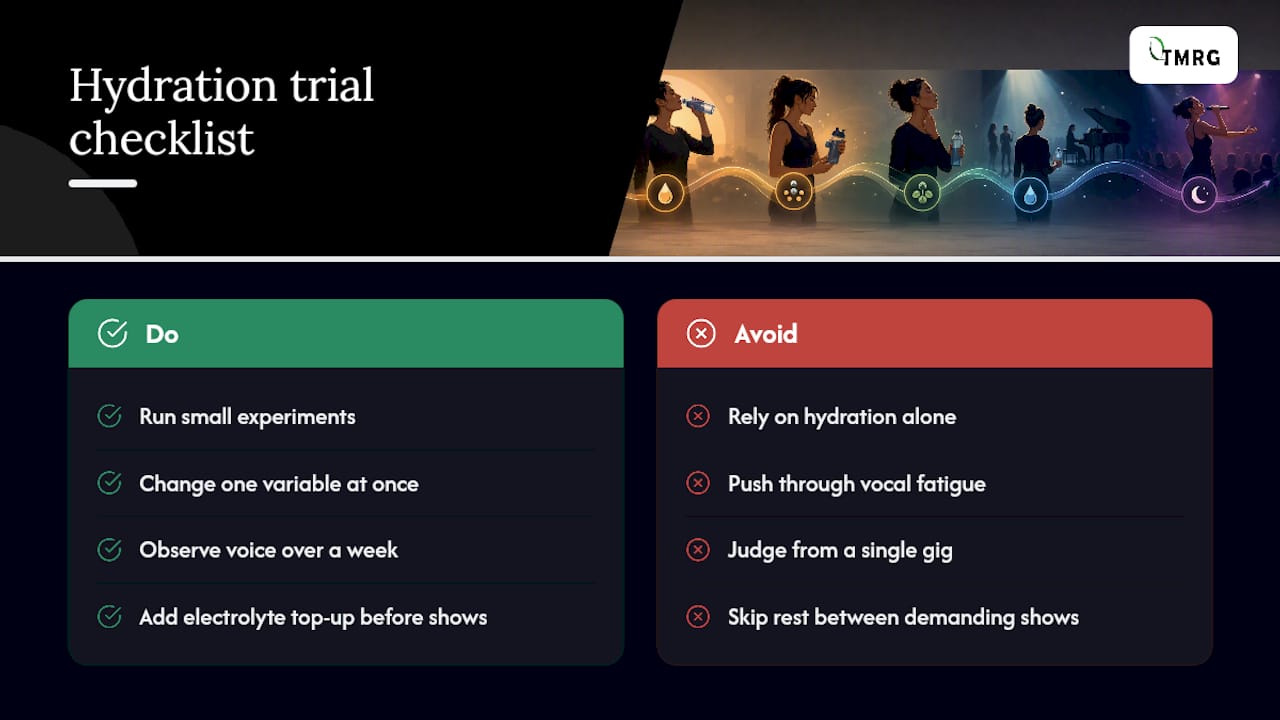
Touring schedules make hydration harder to track. Time zones shift, venues vary in humidity, and rehearsal days blur together. The fix isn’t a rigid formula. It’s running small experiments: change one variable at a time, whether that’s adding an electrolyte top-up before a show or running a humidifier overnight, and pay attention to how your voice actually responds over a week, not just one gig.
Hydration is a lever, not a cure. Pair it with proper technique, adequate sleep, and rest between demanding shows. A singer who hydrates carefully but pushes through vocal fatigue night after night will still lose ground. The habits reinforce each other, but they don’t substitute for one another.
— Golan
The product catalog is built around the distinction this article draws: daily systemic support versus acute topical relief, to help clarify product use for different needs.
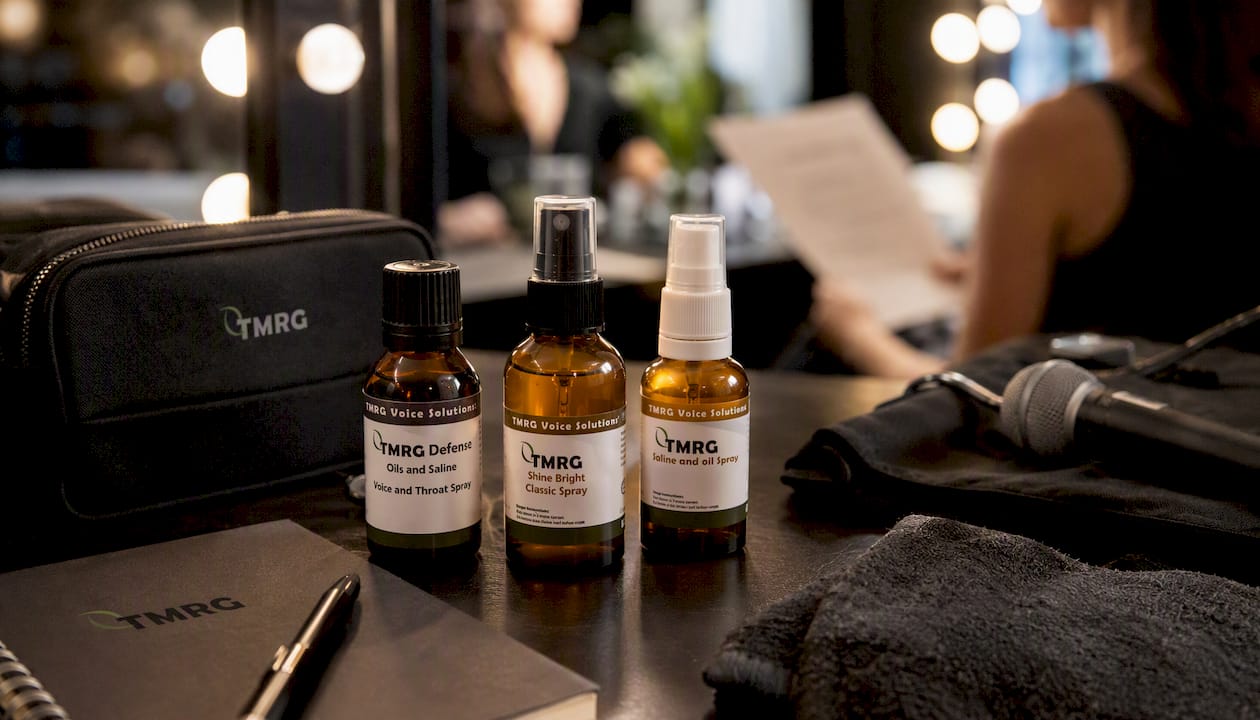
For steady daily support, the TMRG Voice Clarity Trio is designed to work alongside your baseline hydration habits rather than replace them, useful groundwork for singers managing frequent rehearsals or a demanding season. When you need topical recovery after a heavy vocal load, the TMRG Shine Bright Classic Voice Recovery Spray offers targeted relief for the kind of dryness plain water won’t fix fast enough between sets. For situations where you need something compact and immediate, backstage, on a flight, between takes, the TMRG Defense Oils and Saline Voice and Throat Spray gives you a quick, portable option for on-the-go comfort. If you’re building a hydration toolkit for the season ahead, start by matching your routine’s gaps, daily baseline or situational relief, to the product designed for that exact moment.
This article is general information, not a substitute for advice from a qualified doctor. Consult a qualified healthcare professional about your own circumstances before acting on anything here.
Yes, in specific situations. Electrolytes help sodium, potassium, and magnesium move water into vocal fold tissue more efficiently, which matters most during long rehearsals, touring, or heavy sweating when plain water alone isn’t restoring tissue hydration.
Most singers combine steady water intake throughout the day with clean, low-sugar electrolyte powders or drops, plus topical tools like humidifiers and steam for faster, short-term relief.
Plain water forms the baseline, with a low-sugar electrolyte drink added before long sets, heavy sweating, or touring days when water alone leaves your voice feeling dry.
You can improve vocal fold hydration through steady systemic fluid and electrolyte intake over hours, plus faster topical methods like steam or saline nebulizers for shorter-term relief between performances.
