Your Cart is Empty


TL;DR:
- Endurance for public speakers involves maintaining vocal strength, clarity, and energy throughout long sessions. Proper hydration, diaphragmatic breathing, physical conditioning, and deliberate recovery are essential for preventing vocal fatigue and ensuring sustained performance.
Endurance for public speakers is the capacity to sustain consistent vocal strength, clarity, and physical energy across extended presentations, workshops, and performances. Building this kind of stamina requires more than willpower. It depends on systematic hydration, diaphragmatic breath control, physical conditioning, and deliberate energy management. Vocal fatigue, the technical term for the progressive deterioration of voice quality under sustained use, is the most common barrier speakers face. The good news is that vocal fatigue is largely preventable. With the right protocols, you can speak for hours without your voice thinning out or your energy collapsing.
Public speaking endurance is the trained ability to maintain vocal and physical output without degradation over time. Most speakers treat fatigue as inevitable. It is not. The voice is produced by the vocal folds, two muscular bands in the larynx that vibrate as air passes through them. When breath support is weak or hydration is low, those folds work harder than necessary. That extra effort accumulates into strain, hoarseness, and lost clarity.
The physiological basis of speaker stamina involves three systems working together: the respiratory system for breath support, the phonatory system for sound production, and the resonance cavities of the chest, throat, and head for projection. When all three are conditioned and coordinated, your voice carries farther with less effort. When one system is underprepared, the others compensate, and fatigue accelerates.
Endurance is also cognitive. Processing audience reactions, managing emotional delivery, and tracking your own pacing all draw on mental energy. Speakers who ignore this cognitive load often hit a wall in the second half of a long session, not because their voice gave out, but because their mental reserves did.
Consuming 64 or more ounces of water daily and taking 20–30 minutes of complete vocal silence between engagements reduces vocal fatigue by 60–70%. That is not a minor improvement. It means the difference between finishing a full-day workshop with a clear voice and losing it by the afternoon break.
Hydration works by keeping the mucous membrane lining the vocal folds supple. Dry folds create more friction during vibration, which accelerates inflammation. Dehydration impairs not just vocal quality but cognitive clarity and physical endurance simultaneously. Drinking water consistently throughout the day, rather than in large amounts right before speaking, is the correct approach.
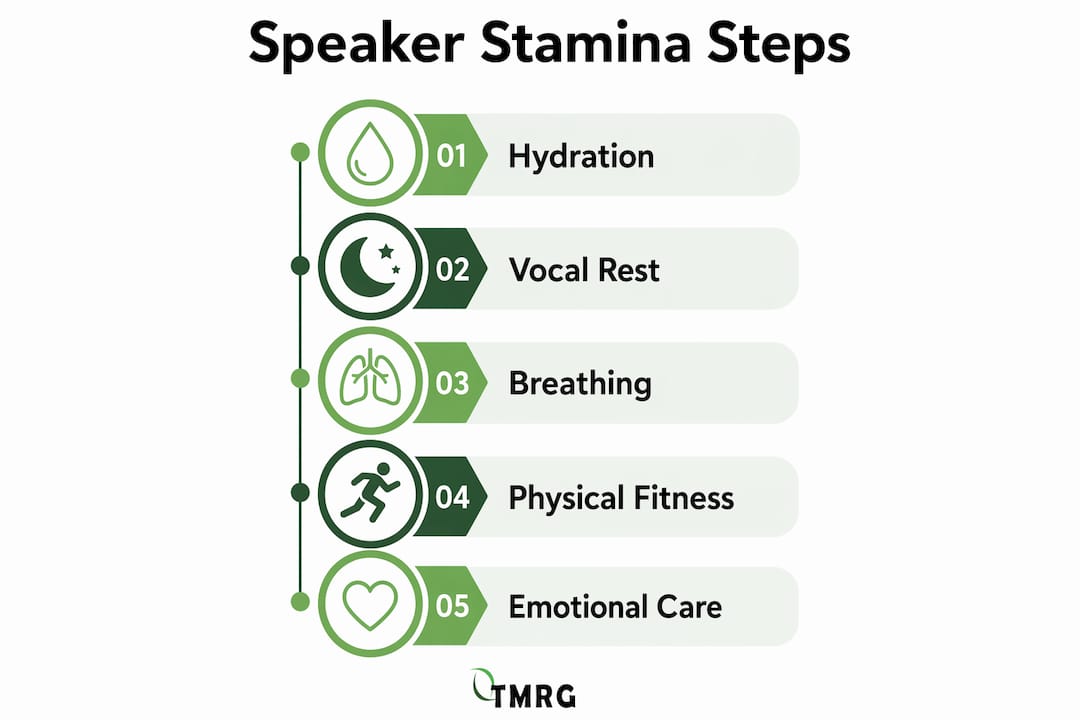
Vocal rest is equally non-negotiable. Complete silence, not whispering, is the recovery mode your vocal folds need. Whispering actually increases tension in the larynx and can worsen strain. Schedule your silent recovery periods the same way you schedule your sessions.
Practical hydration and rest habits for speakers:
Pro Tip: If you are presenting multiple sessions in one day, treat vocal rest as a non-negotiable appointment. Block it in your calendar and communicate it to event organizers in advance.
Diaphragmatic breathing is the foundation of vocal cord pressure reduction by 40–50%, which directly translates to less strain and longer speaking capacity. Shallow throat breathing forces the laryngeal muscles to compensate for weak airflow. The result is a voice that tires quickly and loses resonance under pressure.

The diaphragm is a dome-shaped muscle below the lungs. When it contracts and descends, it creates a pressure differential that draws air deep into the lungs. This produces a steady, controlled airflow column that supports the vocal folds from below rather than squeezing them from the sides. The difference in vocal effort is immediate and significant.
Breath pauses during speeches serve a dual purpose. They give your audience time to absorb what you said, and they create micro-recovery moments that sustain your energy without the audience noticing any fatigue. The best speakers use pauses as a delivery tool, not a weakness.
Key breath exercises to build speaking endurance:
Pro Tip: Before any major presentation, spend five minutes on diaphragmatic breathing in a quiet space. It lowers cortisol, steadies your heart rate, and primes your vocal folds for sustained output.
Improved cardiovascular fitness reduces perceived vocal effort during long speaking days. This finding reframes how speakers should think about training. Your voice is not an isolated instrument. It is powered by your entire metabolic system. A speaker with strong aerobic capacity simply works less hard to produce the same vocal output.
Core strength matters too. The diaphragm and intercostal muscles that drive breath support are part of the core system. Weak core muscles mean weaker breath support, which means more laryngeal strain. Exercises like planks, Pilates, and yoga all build the postural and respiratory foundation that speaking demands.
Energy management expert Felix Lenhard describes long performances as an energy architecture problem. You need planned peaks, valleys, and recovery moments built into your session design, not just your physical training. A two-hour keynote should not be delivered at full intensity throughout. Strategic variation in volume, pace, and physical movement preserves your reserves.
| Speaking scenario | Energy management strategy |
|---|---|
| Single 60-minute keynote | Full warm-up, sustained peak, strong close |
| Half-day workshop | Planned energy valleys after each module; audience activity breaks |
| Full-day training | Morning peak, midday recovery activity, afternoon rebuild |
| Multi-day conference | Evening vocal rest, morning warm-up ritual, limit social talking at night |
| Back-to-back sessions | 20–30 minute vocal silence between blocks; no social conversation |
Physical conditioning habits that directly support speaker stamina:
Performed emotion is metabolically expensive, whereas genuine emotional engagement is more energy-efficient for sustaining performances. This is one of the most underappreciated facts in public speaking. When you manufacture enthusiasm or force a connection you do not feel, your body pays a real metabolic price. Authentic connection, by contrast, draws on a sustainable internal source.
Highly empathetic personality types such as ENFJs and INFJs often experience energy depletion due to a dual cognitive load: processing audience emotion while simultaneously managing content delivery. This is not a weakness. It is a structural feature of how these speakers engage. The solution is not to suppress empathy but to budget for it.
“The most draining thing for an empathetic speaker is not the talking. It is the constant reading of the room while managing their own performance.” — Felix Lenhard
Recovery strategies for high-sensitivity speakers:
Burnout from public speaking is a chronic nervous system state. It is not resolved by a weekend off or a positive mindset shift. Full recovery requires diaphragmatic breathing, vagal tone training, and progressive muscle relaxation practiced consistently over weeks.
Vocal warm-ups including humming, lip trills, and tongue trills strengthen the vocal folds and build endurance over time. These exercises are not optional extras for professional speakers. They are the equivalent of stretching before a run. Skipping them increases the risk of acute strain and long-term vocal damage.
A sustainable stamina routine does not require hours. Ten to fifteen minutes of consistent daily practice produces measurable results within weeks. The key is regularity, not intensity.
Five stamina-building habits for speakers:
Pro Tip: Avoid over-talking at social events the night before a major presentation. Casual conversation uses the same vocal folds as your keynote. Treat your voice like an athlete treats their legs the night before a race.
Nutrition timing also matters. Eat a light, non-acidic meal two hours before speaking. Acid reflux, even silent reflux without heartburn symptoms, coats the vocal folds with stomach acid and causes significant inflammation. Avoid spicy food, citrus, and carbonated drinks on speaking days.
Endurance for public speakers is a trainable physical and psychological skill built through consistent hydration, breath control, aerobic conditioning, and deliberate energy management.
| Point | Details |
|---|---|
| Hydration reduces vocal fatigue | Drinking 64+ ounces daily and resting the voice 20–30 minutes between sessions cuts fatigue by 60–70%. |
| Diaphragmatic breathing protects the voice | Proper breath support reduces vocal cord pressure by 40–50%, extending speaking capacity significantly. |
| Aerobic fitness lowers vocal effort | Cardiovascular conditioning reduces the perceived effort of long speaking days across all session types. |
| Emotional authenticity saves energy | Genuine engagement is metabolically cheaper than performed emotion; authentic speakers last longer. |
| Daily warm-ups build lasting endurance | Consistent humming, lip trills, and breath exercises strengthen vocal folds and prevent chronic strain. |
I have worked with speakers at every level, from first-time workshop facilitators to keynote presenters who speak hundreds of days a year. The most common mistake I see is treating vocal fatigue as a sign of effort rather than a sign of inefficiency. Speakers wear a ragged voice like a badge of honor. It is not. It is a signal that something in the system is breaking down.
The second mistake is ignoring the body entirely. Speakers who do not exercise, do not sleep enough, and do not hydrate properly are asking their voice to carry the full load of a system that is already under-resourced. The voice cannot compensate for a depleted body indefinitely.
What actually works is building the whole system. Breath mechanics, hydration, physical conditioning, and emotional self-awareness all feed into the same output: a voice that holds up and a speaker who finishes strong. I have seen speakers transform their endurance in eight to twelve weeks simply by adding a morning breath routine, cutting caffeine on speaking days, and scheduling genuine recovery time.
The psychological piece is the one most speakers resist. Accepting that you need recovery, that your energy is finite, and that authentic connection is more sustainable than performance takes real honesty. But once you accept it, your stamina improves faster than any exercise alone could produce.
Endurance is not a talent. It is a practice.
— Golan
Consistent vocal care between engagements is what separates speakers who last from those who burn out. Tmrgsolutions has spent 25+ years developing natural herbal formulations specifically for voice professionals who demand sustained performance.

The TMRG Voice Therapy Kit Standard combines targeted recovery tools to reduce inflammation, restore vocal fold hydration, and support long-term vocal health. For speakers who need fast recovery between sessions, the TMRG Voice Clarity Trio delivers a complete care protocol in one package. These products complement your breath training and hydration routines, giving your vocal folds the support they need to perform day after day. Explore the full range at Tmrgsolutions and build a vocal care routine that matches your speaking demands.
Complete vocal silence for 20–30 minutes, combined with consistent water intake, is the most direct recovery method. Avoid whispering, which increases laryngeal tension rather than reducing it.
Most speakers see measurable improvement in vocal stamina within 8–12 weeks of consistent daily warm-ups, diaphragmatic breathing practice, and proper vocal care strategies.
Empathetic personality types process both content delivery and audience emotion simultaneously, creating a dual cognitive load that depletes energy faster. Planning deliberate recovery time and solitude after performances directly addresses this drain.
Yes. Improved cardiovascular fitness reduces the perceived effort of sustained vocal output, meaning a fitter speaker produces the same vocal power with less strain across a long day.
Some natural compounds support physical endurance and recovery. Research on Cordyceps for endurance performance shows promising results for high-demand performers, though vocal-specific supplementation should always be paired with proper hydration and rest protocols.
