Your Cart is Empty


Vocal endurance is built through technique, pacing, hydration, warmups, cooldowns, rest, and smart recovery habits. For singers and speakers, the goal is not to force the voice longer; it is to reduce unnecessary strain and support consistency over time.
Use TMRG products as part of a routine around heavy voice days, rehearsals, teaching, presentations, and performances. For ongoing hoarseness, pain, or loss of range, work with an ENT, laryngologist, speech-language pathologist, or qualified voice teacher.
Helpful collections: Vocal Abuse and Vocal Load, Improve Resonance and Voice Quality, and Singing Enhancement Support.
You’re midway through a performance when your voice starts to crack and fade. Every note feels harder, your throat tightens, and panic sets in as you realize you can’t sustain the sound. Vocal fatigue doesn’t just ruin performances, it limits your career and steals the joy from singing. This guide delivers natural, expert-backed methods to build lasting vocal stamina safely. You’ll learn hydration strategies, proven techniques, natural remedies, rest protocols, and how to track your progress toward a stronger, more resilient voice.
| Point | Details |
|---|---|
| Combined approach works best | Vocal endurance improves when you integrate hydration, proper technique, and structured rest together. |
| Warm-ups prevent injury | Consistent warm-up and cool-down exercises reduce vocal injury risk by 60%. |
| Natural remedies accelerate healing | Herbal sprays and steam inhalation can shorten recovery time from vocal fatigue by up to 40%. |
| Rest prevents fatigue | Structured voice rest during heavy use prevents 35% of vocal fatigue symptoms. |
| Track your progress | Monitoring vocal duration and strain levels reinforces improvement and keeps you motivated. |
Before diving into vocal endurance strategies, you need the right foundation to ensure success and prevent injury. Starting without proper preparation can lead to frustration or even vocal damage.
First, develop a basic understanding of proper vocal technique and recognize early warning signs of vocal strain like hoarseness, discomfort, or breathiness. You don’t need expert-level knowledge, but awareness of healthy phonation helps you avoid harmful habits. Second, ensure access to clean water throughout your day and create a comfortable space for vocal exercises free from dust, smoke, or extreme temperatures.
Gather natural remedies that support vocal health. Stock herbal sprays, ingredients for steam inhalation like thyme or chamomile, and consider honey or herbal teas. These items should be readily available when you need quick relief. Commit daily time for warm-up routines, practice sessions, and intentional rest periods. Consistency matters more than intensity when building endurance.
Finally, consider scheduling a vocal health assessment with a speech therapist or ENT specialist to identify any pre-existing conditions that might limit your progress. Knowing your baseline helps you set realistic goals and avoid pushing through serious problems that require medical attention.
If you’re ready to strengthen your voice naturally, having these prerequisites in place sets you up for measurable, lasting results.
Your vocal folds are delicate tissues that depend on proper hydration to function optimally. When dehydrated, they become stiff and prone to injury, cutting your endurance short.
Drinking at least 8 glasses of water daily improves vocal fold function by 15 to 20% in endurance tests. Water lubricates the vocal folds, reduces friction during phonation, and helps you sustain notes longer without strain. Carry a water bottle everywhere and sip consistently throughout the day, not just before performances.
Avoid caffeine and alcohol before singing. Singers who abstain from alcohol and caffeine before performances sustain vocal endurance 15% longer than those who consume them. Both substances act as diuretics, pulling moisture from your tissues and leaving your vocal folds dry and vulnerable. If you need a morning boost, choose herbal tea instead of coffee.
Nutrition plays a critical supporting role. Consuming a diet rich in antioxidants like vitamin C and E supports vocal fold tissue repair and reduces oxidative stress that leads to vocal fatigue. Load your plate with berries, citrus fruits, nuts, leafy greens, and colorful vegetables. These foods help your body repair microscopic damage from daily vocal use.
Maintain ambient humidity in your practice and performance spaces. Dry air irritates vocal folds and accelerates fatigue. Use a humidifier in your home studio and avoid rehearsing in dusty, polluted, or overly air-conditioned environments whenever possible.
Pro Tip: Keep a reusable water bottle with measurement markers so you can track your daily intake. Aim for clear or pale yellow urine as a hydration indicator.
For comprehensive hydration and nutrition tips for voice health, consistency beats perfection. Small daily habits compound into significant endurance gains over weeks.
Jumping straight into demanding vocal work without preparation is like sprinting without stretching. Your vocal folds need gradual activation to perform safely and sustain effort.

Daily vocal warm-up exercises covering breathing techniques and gentle phonation improve vocal length and reduce strain by 25% within 3 weeks. Warm-ups increase blood flow to the laryngeal muscles, improve flexibility, and prepare your voice for the demands ahead.
Follow this sequence for effective preparation:
After singing, cool down with soft phonation and gentle humming for 3 to 5 minutes. This helps your vocal folds transition back to rest and reduces post-performance inflammation.
“Consistency in warm-up and cool-down reduces injury risk by 60% and extends your vocal career by protecting against cumulative damage.”
Pro Tip: Record your warm-ups when your voice feels great, then use those recordings to guide you on tired days when motivation is low.
Explore proper vocal warm-up techniques and follow a complete vocal warm-up checklist to ensure you never skip essential preparation steps. Research on scientific studies on vocal warm-up confirms these practices deliver measurable benefits.
Even with perfect technique, your voice needs support to recover quickly and maintain peak performance. Natural remedies offer gentle, effective relief without the side effects of synthetic medications.
Inhale herbal steam using thyme, chamomile, or eucalyptus to reduce throat inflammation and soothe irritated tissues. Boil water, add herbs, drape a towel over your head, and breathe the steam for 5 to 10 minutes. The warm moisture hydrates your vocal tract while anti-inflammatory compounds in the herbs reduce swelling.
Use of proprietary herbal sprays containing natural anti-inflammatory agents reduces recovery time from vocal fatigue by up to 40%. Apply these sprays after performances or rehearsals to accelerate healing. Look for formulations with natural ingredients like slippery elm, licorice root, or marshmallow root, which coat and protect irritated tissues.
Consider dietary supplements rich in antioxidants and omega-3 fatty acids to support systemic anti-inflammatory processes. Vitamin C, zinc, and magnesium supplements can help if your diet lacks variety, but whole foods remain the best source.
Avoid synthetic corticosteroids unless prescribed by a medical professional for acute inflammation. While effective, they carry risks of tissue thinning and dependency when overused. Natural remedies work more slowly but support long-term vocal health without adverse effects.
Monitor your body’s response carefully when introducing new remedies. If you experience allergic reactions, increased irritation, or no improvement after two weeks of consistent use, consult a voice specialist.
Discover natural vocal recovery methods and learn more about herbal sprays for vocal recovery to integrate proven remedies into your routine.
Rest is not weakness. It’s the foundation of sustained vocal performance and the most overlooked component of endurance training.
Incorporate 15 minutes of voice rest every hour during heavy vocal activity to prevent fatigue. This practice allows your vocal folds to recover from the mechanical stress of vibration, reducing cumulative damage that leads to chronic problems.
Implement these rest strategies:
Understanding and practicing voice rest can prevent 35% of fatigue symptoms before they become chronic issues requiring medical intervention. Many singers push through discomfort, mistakenly believing rest shows lack of dedication. The opposite is true: strategic rest demonstrates professional discipline and protects your most valuable instrument.
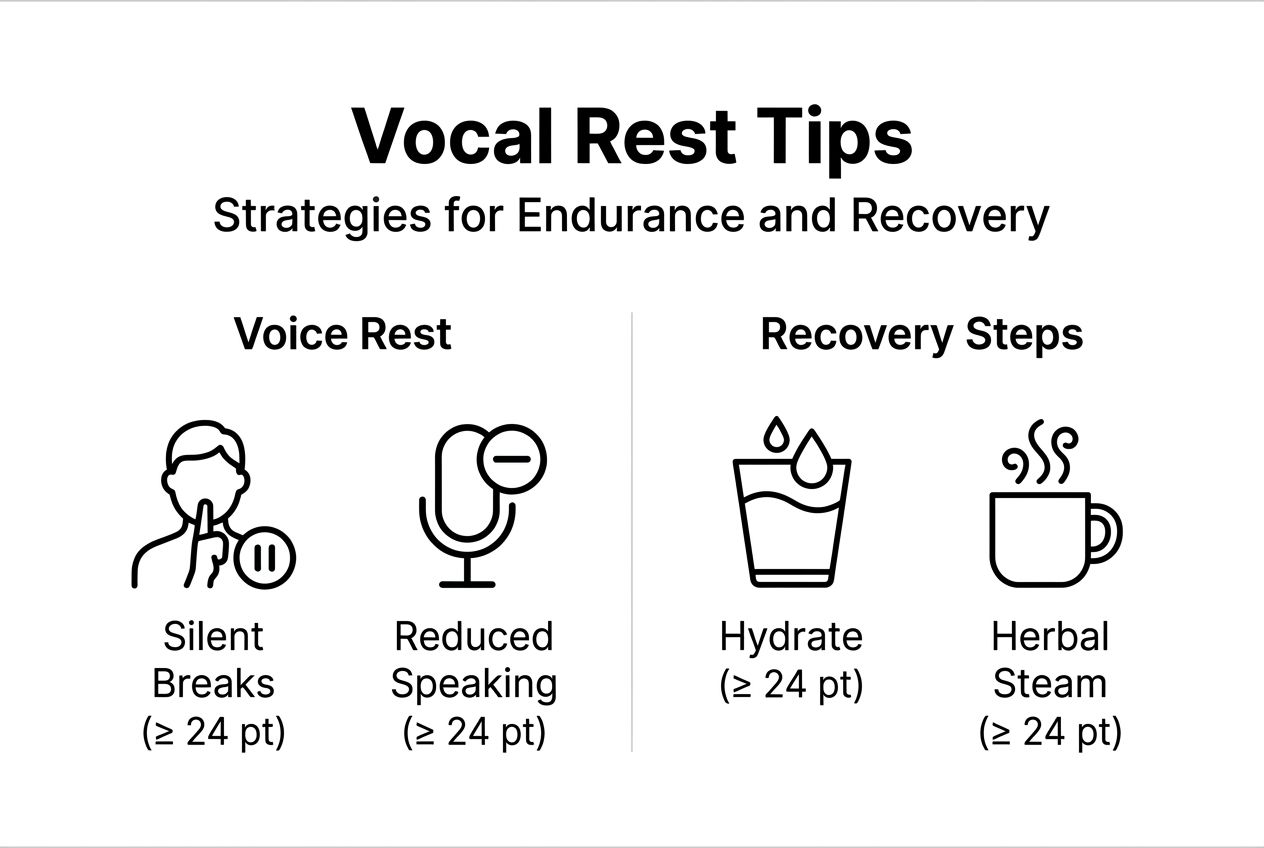
Follow the step by step vocal recovery process when you notice early fatigue signs. Learn about the importance of voice rest to reduce fatigue from clinical research.
Even well-intentioned singers sabotage their endurance through simple mistakes. Recognizing these errors helps you course-correct before damage occurs.
Skipping warm-ups or cool-downs increases injury risk by 60%. Singers often skip these steps when rushed or over-confident, then wonder why performance quality deteriorates. Fix: Make warm-ups non-negotiable. Schedule them into your calendar like any other rehearsal component.
Common mistakes like insufficient hydration and ignoring voice rest account for 45% of vocal fatigue cases reported in voice clinics. Inadequate hydration ranks as the single most preventable cause of vocal problems. Fix: Use the water bottle tracking method mentioned earlier and set phone reminders if you forget to drink.
Excessive vocal fry and shouting cause vocal fold trauma through hard glottal attacks and forceful closure. These habits create inflammation and micro-tears in delicate tissues. Fix: Work with a vocal coach to identify and eliminate harsh vocal behaviors, replacing them with supported, efficient phonation.
Ignoring early warning signs like hoarseness, throat discomfort, or reduced range accelerates fatigue onset and can lead to nodes, polyps, or hemorrhage. Fix: Treat mild symptoms seriously. Rest immediately when you notice changes and seek professional evaluation if symptoms persist beyond three days.
Using poor breath support forces your larynx to work harder, causing premature fatigue. Fix: Focus on diaphragmatic breathing and abdominal engagement to power your voice efficiently.
Pro Tip: Keep a vocal health journal tracking water intake, warm-up completion, rest periods, and daily voice quality. Patterns emerge quickly, helping you identify what works and what sabotages your progress.
Learn to prevent vocal fatigue mistakes before they become habits. Understanding common vocal fatigue causes empowers you to make smarter choices.
Setting realistic expectations keeps you motivated while you build endurance. Vocal improvement takes time, but measurable progress appears faster than most singers expect.
Significant vocal stamina increase typically becomes visible after 4 weeks of consistent practice combining hydration, technique, remedies, and rest. Some singers notice subtle improvements within the first week, but sustainable gains require patient, repeated effort.
Vocal duration can improve 18 to 25% with regular hydration, exercise, and remedy use. You’ll sing longer before fatigue, recover faster between sets, and maintain vocal quality throughout extended performances. Hoarseness and vocal strain symptoms diminish noticeably as your tissues adapt to healthy practices.
Track your progress using these methods:
| Measurement Method | How to Track | Frequency |
|---|---|---|
| Vocal duration before fatigue | Time how long you can sing comfortably before strain appears | Weekly |
| Vocal strain level | Rate strain 1 to 10 after singing sessions | Daily |
| Recovery speed | Note hours needed for voice to feel normal after use | After each performance |
| Range consistency | Test highest and lowest comfortable notes | Weekly |
| Self-assessment questionnaire | Use validated tools like VHI-10 or customize your own | Bi-weekly |
Record short vocal samples weekly to hear quality changes over time. Your perception of progress can be skewed by daily fluctuations, but recordings provide objective evidence.
Seek feedback from vocal coaches or trusted colleagues who can identify improvements you might miss. External validation helps confirm that your efforts are paying off.
Explore vocal recovery and progress tracking resources to refine your measurement approach and stay accountable.
You’ve learned the science and strategies behind lasting vocal endurance. Now access professional-grade tools that support your journey.
TMRG Solutions offers curated vocal remedies designed specifically to enhance natural voice stamina and accelerate recovery. With 25 years of experience serving professional vocalists, we understand the unique demands you face and provide solutions that integrate seamlessly into your vocal care routine.

Explore the best vocal remedies for endurance trusted by singers worldwide. Our professional vocal recovery kit delivers quick relief when fatigue strikes, combining herbal sprays, therapeutic oils, and evidence-based protocols. Dive deeper into vocal health remedies revealed to avoid harmful habits while building protective practices. Every product we offer undergoes rigorous testing and receives endorsements from vocal coaches and medical professionals who demand real results.
Watch for signs including persistent hoarseness, throat discomfort, vocal strain during normally easy passages, and voice loss after short singing or talking periods. If your voice feels tired at the start of your day or takes longer to warm up than usual, you’re likely overusing it. Monitoring these consistent symptoms guides when to rest or seek expert advice from a speech therapist or ENT specialist.
Most herbal sprays formulated with natural ingredients like slippery elm, licorice root, and marshmallow root are safe for daily use when you follow product instructions carefully. Monitor for any allergic reactions such as increased irritation, rash, or breathing difficulty. Avoid synthetic corticosteroid sprays unless prescribed by a medical professional, as these carry risks with prolonged use.
Integrate at least 15 minute voice rest breaks every hour during heavy vocal activity to allow your vocal folds to recover from mechanical stress. During these breaks, avoid loud talking, shouting, or even whispering, as all create vocal fold vibration and reduce recovery benefits. Complete silence provides maximum benefit.
Yes, you can effectively track progress by monitoring vocal duration before fatigue appears, rating your vocal strain levels after sessions, and noting recovery speed following performances. Use simple self-assessment scales rating comfort from 1 to 10 or adopt validated tools like the Voice Handicap Index. Seek feedback from vocal coaches or record weekly vocal samples for objective comparison over time.
