Your Cart is Empty


Most vocal professionals spend thousands on lessons and equipment but overlook one of nature’s most powerful tools for voice care. Essential oils offer scientifically backed support for vocal health, reducing inflammation and soothing irritation naturally. This guide reveals how these concentrated plant extracts can transform your vocal performance and recovery in 2026.
Understanding Essential Oils And Their Benefits For The Voice
Scientific Evidence Supporting Essential Oils For Vocal Health
How To Safely And Effectively Use Essential Oils For Your Voice
Choosing The Right Essential Oils And Integrating Them Into Your Vocal Routine
| Point | Details |
|---|---|
| Essential oils soothe vocal irritation | Eucalyptus, lavender, and peppermint reduce inflammation and calm irritated vocal cords naturally. |
| Multiple application methods available | Use topical application with carrier oils, steam inhalation, diffusion, or sprays for targeted relief. |
| Scientific evidence supports effectiveness | Studies show camphor, menthol, and eucalyptus provide significant symptom relief for respiratory and vocal issues. |
| Safety requires proper dilution | Always dilute essential oils with carrier oils like coconut or jojoba to prevent skin irritation. |
| Complementary to comprehensive care | Essential oils work best alongside hydration, voice rest, and professional medical guidance when needed. |
Essential oils are concentrated aromatic compounds extracted from flowers, leaves, bark, and roots through steam distillation or cold pressing. These volatile liquids capture the plant’s essence in highly potent form, requiring only small amounts for therapeutic benefit.
Essential oils are used in aromatherapy for their therapeutic potential in promoting overall well-being. Aromatherapy works by stimulating the limbic system, the brain region controlling emotions, memory, and stress responses. When you inhale or apply essential oils, their molecules interact with this system to produce calming, focusing, or energizing effects that directly impact vocal performance.
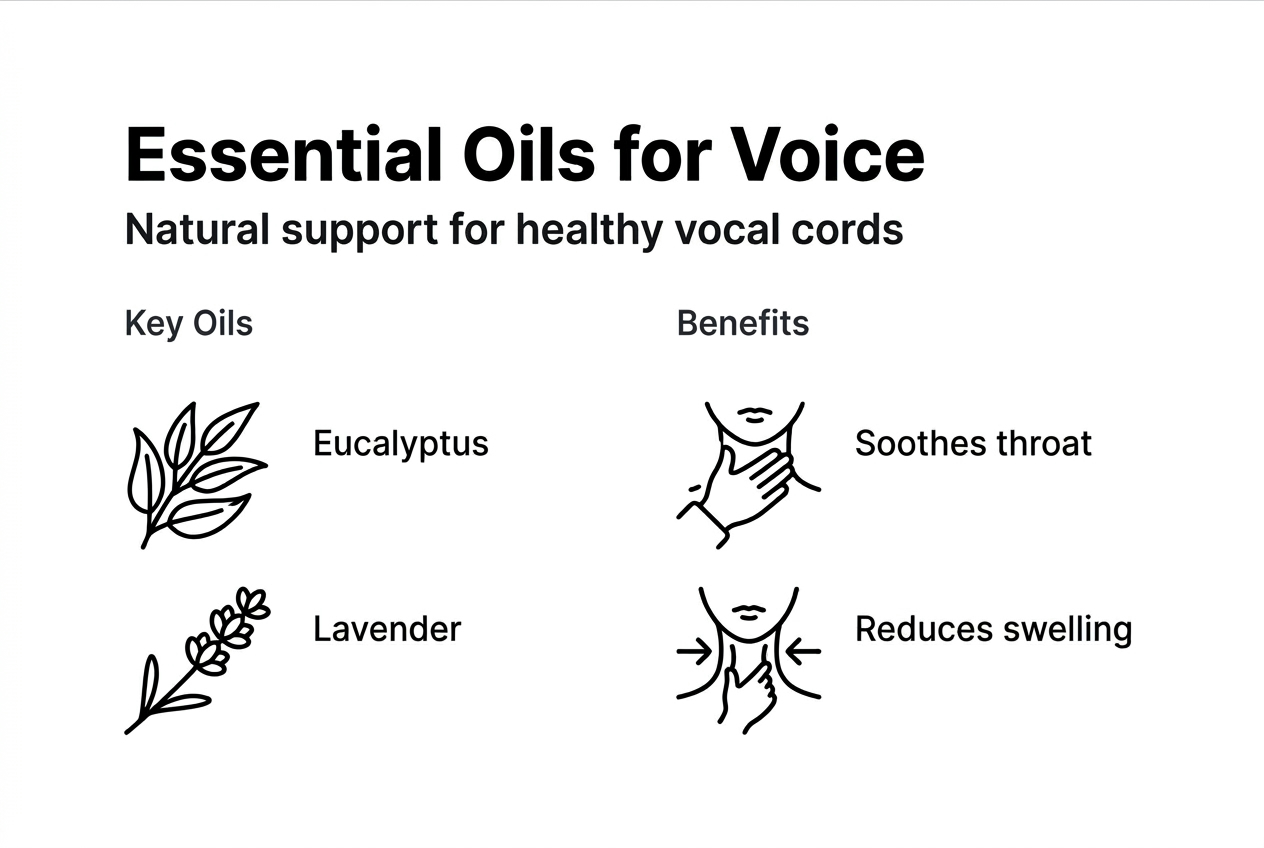
For vocalists, certain essential oils stand out:
Eucalyptus opens airways and reduces respiratory congestion
Lavender calms nerves and reduces performance anxiety
Peppermint cools inflamed tissues and refreshes breath
Thyme provides antimicrobial protection against throat infections
Tea tree fights bacteria that cause vocal irritation
These oils deliver anti-inflammatory, antibacterial, and soothing properties crucial for maintaining healthy vocal cords. Inflammation narrows your vocal tract and stiffens your cords, making phonation difficult and painful. Essential oils combat this by reducing swelling and supporting tissue repair.
Scents also reduce vocal strain indirectly by promoting mental clarity and relaxation. When you’re anxious, your throat muscles tighten unconsciously, forcing your voice to work harder. Calming aromas like lavender help release this tension, allowing your voice to flow naturally. This dual action makes essential oils uniquely valuable for benefits of vocal health performers seeking holistic care.
Recent research validates what traditional healers have known for centuries. A 2025 clinical study found the CMEO group showed more significant symptom relief for common cold than controls. Participants using camphor, menthol, and eucalyptus oil experienced faster recovery from congestion, cough, and throat irritation compared to those receiving standard care.
These findings matter because upper respiratory symptoms directly compromise vocal function. When your sinuses swell and mucus accumulates, your resonance chambers can’t vibrate properly. The oils’ decongestant properties restore normal airflow and vocal clarity.
Essential oils alleviate laryngitis symptoms through anti-inflammatory and soothing effects. Laryngitis inflames your vocal folds, causing hoarseness or complete voice loss. Essential oils like thyme and tea tree contain compounds that inhibit inflammatory pathways while promoting healing. Their antimicrobial action also addresses bacterial infections that prolong laryngitis.
Another compelling study examined herbal preparations containing essential oils. Researchers discovered herbal oral sprays reduce sore throat and hoarseness rapidly with good patient compliance. The spray format delivers concentrated relief directly to affected tissues without systemic side effects.
| Study Focus | Key Finding | Vocal Health Application |
|---|---|---|
| Camphor, menthol, eucalyptus during sleep | Significant cold symptom relief vs. controls | Reduces respiratory issues affecting voice |
| Essential oils for laryngitis | Anti-inflammatory and antibacterial benefits | Soothes inflamed vocal cords, speeds recovery |
| Herbal oral sprays | Rapid sore throat and hoarseness reduction | Direct application provides targeted relief |
Complementary natural remedies enhance these effects. Pineapple juice contains bromelain, an enzyme that breaks down mucus and reduces inflammation. Honey coats irritated tissues while providing antimicrobial protection. Combining these with essential oils creates a powerful natural toolkit for voice recovery.
Pro Tip: Using essential oils diluted in sprays or steam inhalation maximizes soothing benefits while minimizing irritation. The warm moisture helps oils penetrate deeper into vocal tissues for faster relief.
This evidence base supports integrating essential oils into your vocal care routine, especially when traditional methods alone prove insufficient. The 3-step treatment for hoarseness combines these natural approaches for comprehensive recovery.
Practical application determines whether essential oils help or harm your voice. Four primary methods deliver therapeutic benefits safely.
Topical application requires mixing essential oils with carrier oils before skin contact. Carrier oils like coconut, jojoba, or sweet almond dilute the concentrated essentials while facilitating absorption. Use a 2% dilution ratio: add 12 drops of essential oil per ounce of carrier oil. Apply this blend to your throat, chest, or pulse points.

Aromatherapy diffusion disperses oils into the air you breathe. Add 3 to 5 drops to a diffuser and run for 30 to 60 minute intervals. This method benefits your entire respiratory system without direct contact.
Steam inhalation combines heat and moisture for maximum penetration. Here’s how to create an effective steam treatment:
Boil 4 cups of water and pour into a large heat-safe bowl
Add 3 to 5 drops of eucalyptus or peppermint oil to the water
Drape a towel over your head to trap steam
Position your face 10 to 12 inches above the bowl
Breathe deeply through your nose and mouth for 5 to 10 minutes
Rest afterward and avoid cold air exposure immediately
Sprays offer portable convenience. Mix 10 to 15 drops of essential oil with 2 ounces of distilled water in a spray bottle. Shake before each use and mist your throat or the air around you.
Timing matters as much as method. Use essential oils preventively before vocal demands or therapeutically at first signs of irritation. Limit applications to 2 to 3 times daily to prevent overexposure. Dilution with a carrier oil is necessary for topical application to avoid skin irritation.
Essential oils work best within a comprehensive vocal care framework:
Drink 8 to 10 glasses of water daily for optimal vocal cord lubrication
Schedule complete voice rest after intensive use
Eliminate smoke, excessive caffeine, and environmental irritants
Maintain humidity levels between 40% and 60% in your practice space
Warm up gently before singing or speaking extensively
Pro Tip: Always do a patch test before topical use to check for allergic reactions. Apply diluted oil to your inner forearm, wait 24 hours, and watch for redness or itching.
These practices complement natural vocal maintenance strategies outlined in tips for hoarseness and vocal issues. Proper hydration remains fundamental, as explored in the vocal cord hydration guide.
Each essential oil offers distinct advantages for specific vocal challenges. Understanding these differences helps you customize your aromatherapy regimen.
| Essential Oil | Primary Benefits | Best Used For |
|---|---|---|
| Eucalyptus | Decongestant, anti-inflammatory | Clearing sinuses, reducing vocal fold swelling |
| Lavender | Calming, stress relief | Performance anxiety, tension-related strain |
| Peppermint | Cooling, analgesic | Soothing sore throat, refreshing tired voice |
| Tea tree | Antimicrobial, immune support | Fighting infections, preventing illness |
| Thyme | Antispasmodic, expectorant | Loosening mucus, calming cough |
| Strawberry shortcake fragrance | Mood elevation, confidence boost | Pre-performance mental preparation |
Match oils to your immediate needs. Facing a performance tonight with scratchy vocals? Peppermint and eucalyptus provide quick relief. Dealing with chronic tension from demanding rehearsals? Lavender’s calming properties address the root cause.
Fragrances like lavender and eucalyptus promote relaxation and prevent vocal strain. The strawberry shortcake scent, while unconventional, triggers positive memories and boosts confidence through olfactory associations. This psychological edge translates to better vocal control and reduced performance anxiety.
Integrating aromatherapy into daily practice requires strategic timing:
Diffuse calming scents like lavender during morning warm-ups to start relaxed
Apply diluted eucalyptus to your chest before rehearsals when feeling congested
Keep a peppermint spray in your performance bag for quick throat refreshment
Use tea tree diffusion in your practice space to maintain a germ-free environment
Create pre-show rituals incorporating mood-boosting fragrances for mental preparation
Personalization matters more than following rigid protocols. Some vocalists find thyme too strong, while others love its earthy warmth. Experiment with different oils and blends to discover what resonates with your body and preferences.
Consider seasonal adjustments too. Winter demands more antimicrobial protection and decongestant support. Summer might require lighter, refreshing scents that don’t overwhelm in heat. This adaptive approach keeps your routine effective year-round.
The synergy between essential oils and holistic care amplifies results. Combining aromatherapy with proper technique, rest, and nutrition creates comprehensive protection. Resources on vocal health benefits and wintertime vocal issue tips provide additional strategies for maintaining peak vocal condition.
Transforming vocal care knowledge into consistent practice requires the right tools. TMRG Solutions specializes in voice therapy kits designed specifically for singers, actors, and voice professionals seeking natural recovery methods.

These kits combine traditional healing wisdom with modern understanding of vocal physiology. Each package includes herbs, supplements, and application tools that align with the holistic approaches discussed throughout this guide. TMRG’s 25 years of expertise ensures every component serves a specific therapeutic purpose.
The basic voice therapy kit provides essential support for occasional vocal issues. For comprehensive care, the standard voice therapy kit includes expanded options addressing multiple symptoms simultaneously. Those facing serious vocal challenges benefit from the herbal vocal recovery kit, which delivers intensive natural intervention.
These kits complement essential oil therapy perfectly, creating a complete natural vocal care system. TMRG’s formulations incorporate complementary ingredients that enhance aromatherapy benefits while addressing inflammation, infection, and strain through multiple pathways.
Essential oils such as thyme, tea tree, peppermint, lavender, and eucalyptus possess soothing properties that alleviate laryngitis symptoms. Thyme and tea tree offer antimicrobial action against infections causing hoarseness. Eucalyptus reduces inflammation while peppermint provides cooling relief to irritated vocal cords.
Dilution with a carrier oil is necessary for topical application to avoid skin irritation. Mix 12 drops of essential oil per ounce of carrier oil like coconut or jojoba. Perform a patch test on your inner forearm 24 hours before applying to your throat. Never apply undiluted essential oils directly to mucous membranes or sensitive skin areas.
Certain essential oils inspire relaxation and mental clarity through limbic system effects that enhance focus during demanding performances. Fragrances like lavender and strawberry shortcake scent boost confidence, mood, and concentration for singers. This psychological support reduces tension-related vocal strain, allowing your natural voice to shine without mental interference.
Essential oils can be used as a natural way to manage laryngitis without relying on over-the-counter medications but are not a replacement for professional care. They provide supportive relief and complement medical treatments effectively. Persistent hoarseness, pain, or vocal changes require evaluation by healthcare professionals to rule out serious conditions like nodules or lesions.
