Your Cart is Empty


Eucalyptus steam voice therapy can soothe strained vocal folds, add topical hydration, and loosen thick mucus, but it treats symptoms, not the underlying cause of hoarseness or infection. The heat and moisture do the primary work; eucalyptus oil adds a modest anti-inflammatory boost on top. If you have asthma, reactive airways, or a known sensitivity to strong scents, ease in carefully or skip the oil altogether.
TL;DR:
- Steam provides measurable improvements in vocal fold hydration and acoustic voice quality within just three minutes, supporting everyday vocal health.
- Eucalyptus oil enhances mucus thinning and immediate airway comfort but offers only modest, short-term respiratory relief rather than a cure for underlying conditions.
- Risks of burns and airway irritation increase if home steam methods are used improperly, especially for people with asthma, sensitivities, or when inhaling undiluted oil.
- Regular, controlled eucalyptus steam routines are safe and effective for hydration, but they do not replace rest or medical treatment for persistent vocal issues.
- Combining steam therapy with targeted voice support products, like specialized oils, can optimize vocal recovery without over-relying on moisture alone.
Your vocal folds are covered by a thin layer of mucosa that needs consistent moisture to vibrate efficiently. When that layer dries out from talking all day, dry stage air, or airplane cabins, the folds get stiff and the voice turns raspy or effortful. Steam rehydrates that surface tissue directly, which is why singers and speakers have used it for generations before anyone measured it in a lab.
Eucalyptus adds a second layer of action. The oil’s dominant compound, 1,8-cineole, has documented mucolytic and anti-inflammatory properties, meaning it helps thin mucus and calm irritated tissue rather than just masking discomfort. Clinical reviews on eucalyptus oil’s pharmacological properties report cough-frequency reductions of up to 68% in people with upper respiratory infections. That’s a meaningful number for cough and congestion, but it matters to separate two different things happening at once during a eucalyptus steam voice session:
Feeling clearer is real. It is not the same as being cured, and treating it that way is the most common mistake performers make when they lean on steam instead of rest.
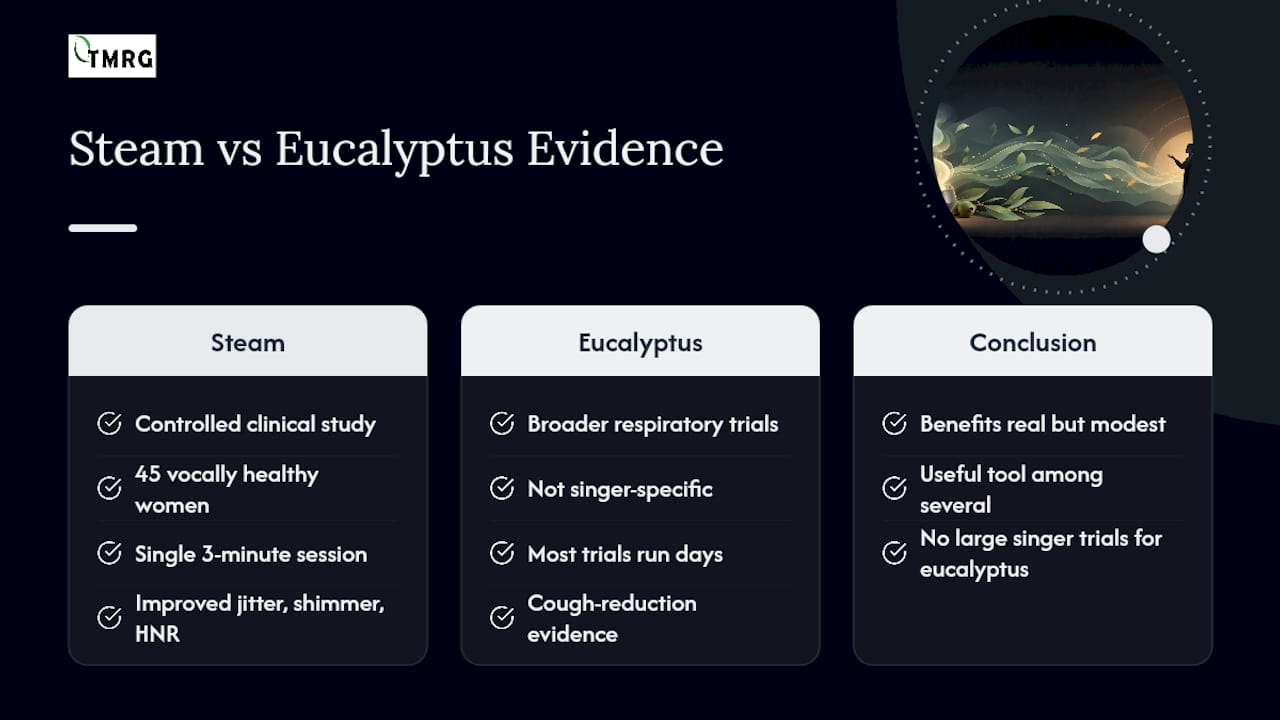
The strongest data point for singers comes from a controlled study published in The Laryngoscope, which tested 45 vocally healthy women after inducing mild dehydration. Just three minutes of steam from a facial steamer produced statistically significant improvements in jitter, shimmer, and harmonics-to-noise ratio, the standard acoustic markers voice clinicians use to judge vocal quality. That’s a fast, measurable reset, not a placebo effect.
Key finding: A single three-minute steam session reversed acoustic changes linked to acute vocal fold dehydration in a controlled clinical study.
On the eucalyptus side, the evidence is broader but less voice-specific. The cough-reduction data referenced above comes from upper respiratory infection studies, not singers or actors specifically, and most trials run for days rather than months. NHS practical voice-care guidance supports regular steam inhalation for vocal fold hydration but frames it as one tool among several, not a standalone fix.
The honest takeaway: steam has solid, voice-specific acoustic evidence behind it. Eucalyptus has solid respiratory evidence that reasonably extends to vocal comfort, but nobody has run a large trial isolating eucalyptus’s effect on singers specifically. Small samples and short follow-up periods mean you should treat the benefit as real but modest, not miraculous.
You don’t need expensive equipment to get a real benefit. What you do need is a method that controls temperature and dosing, because the two biggest risks with home steam remedies are burns and overexposure to concentrated oil.
A few safety checks apply across all three methods. Keep your eyes closed or angled away from the steam plume, since eucalyptus vapor can sting. Never apply undiluted oil directly to skin, and never ingest it. If children or pets are nearby, keep the setup out of reach. This is one of the areas steam inhalation for a healthy singing voice routines get wrong most often. People crank the water too hot, chasing a stronger sensation, and end up with a burn instead of a better voice.
Pro Tip: If you’re using eucalyptus steam for the first time before a show, test it two or three days earlier instead of an hour before you go on stage. That gives you time to notice any sensitivity without risking your performance.
Eucalyptus is generally well tolerated, but it isn’t harmless for everyone. A case report on eucalyptus as a specific respiratory irritant documented vocal cord dysfunction triggered within minutes of exposure in a susceptible individual. That’s an underdiscussed occupational risk for performers who use eucalyptus products constantly. If your throat has ever tightened unexpectedly around strong scents, this is worth taking seriously before you build a nightly habit around it.
Certain groups face higher risk and should approach eucalyptus steam more cautiously, according to wellness guidance on eucalyptus steam:
Stop immediately and seek medical care if you experience wheezing, a sensation of throat tightness or closing, or symptoms that worsen instead of improve. Plain steam without eucalyptus is a reasonable fallback if you notice any of these reactions.
Consistency beats intensity here. A session of 5 to 15 minutes, once or twice daily during periods of heavy use, lines up with the timing NHS practical voice-care guidance recommends for hydrating vocal fold tissue. Pair it with the basics that actually carry most of the load:
Steam won’t help, and may mask something serious, if hoarseness lasts more than two weeks, if you notice blood, or if you’re running a fever. Those signs call for a clinician, not another eucalyptus session. For more on distinguishing normal vocal fatigue from something that needs professional attention, see tips for hoarseness and other vocal issues.
Steam and eucalyptus earn their place in a performer’s routine, but they earn it as maintenance, not rescue. Experience shows many performers reach for steam only after their voice has already failed them, when a nightly habit would have prevented the crisis in the first place. The pattern shows up constantly: someone tries eucalyptus steam for the first time an hour before curtain, reacts badly to the scent, and walks on stage worse off than before. Build the habit on off nights. Save the targeted, concentrated tools, like a well-formulated kit, for when your voice needs more than moisture alone can give it.
— Golan
Steam handles hydration. It doesn’t deliver the herbal compounds performers often need for deeper vocal recovery, which is where a dedicated formulation earns its place alongside your steam habit.
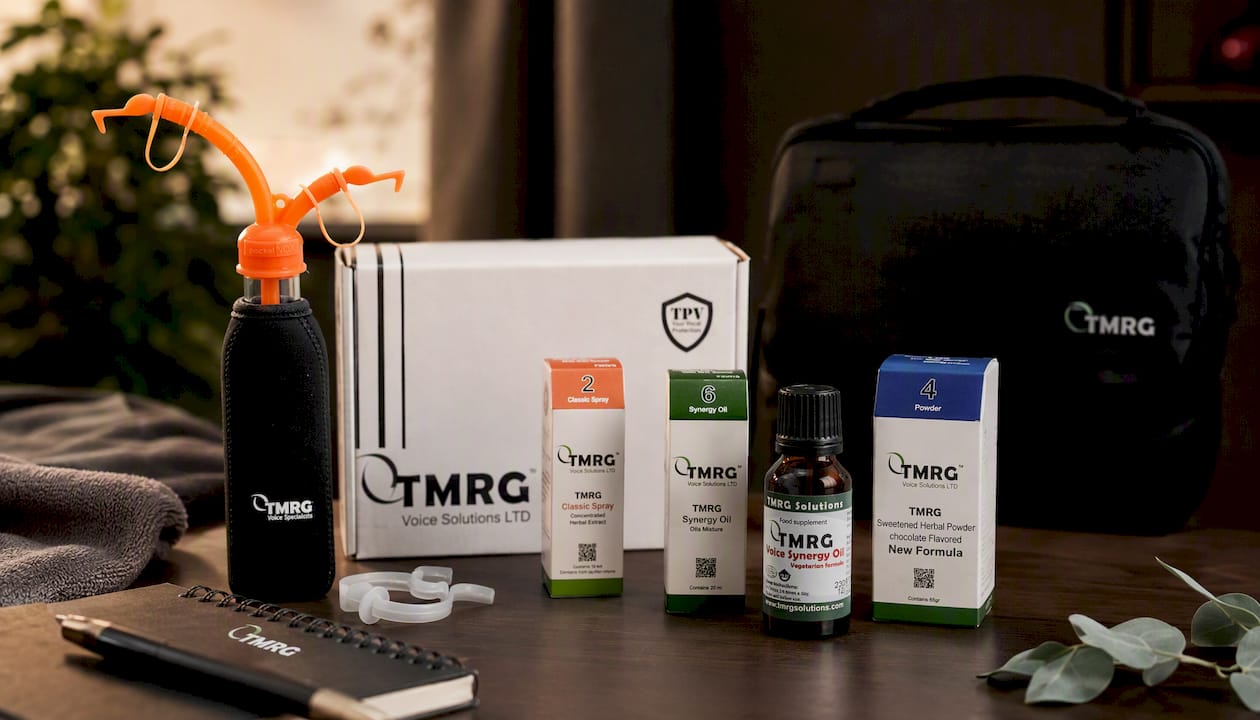
The TMRG Voice Synergy Oil Lost Vocal Drops work as targeted topical support you apply after a steam session, once your vocal folds are already warmed and hydrated. For daily maintenance between performances, the TMRG Voice Therapy Kit Basic gives you a structured starting point without overwhelming your routine with extra steps. Performers with heavier demands, back-to-back shows, long tours, extended speaking engagements, tend to reach for the TMRG Voice Therapy Kit Standard (TVT-S), which bundles a fuller set of tools for recovery instead of relying on steam alone. Pair steam for hydration, drops for targeted relief, and a kit for the maintenance days in between. Visit Tmrgsolutions to check current availability and pick the combination that matches how hard you’re using your voice this month.
This article is general information, not a substitute for advice from a qualified doctor. Consult a qualified healthcare professional about your own circumstances before acting on anything here.
Yes, short steam sessions hydrate the vocal fold surface and have been shown to improve acoustic voice measures like jitter and shimmer within minutes, according to clinical research.
For most healthy adults, yes: eucalyptus steam can loosen mucus and ease breathing, though people with asthma or fragrance sensitivity should use caution or avoid it, per consumer health guidance.
There’s no instant fix for a fully lost voice, but voice rest combined with steam inhalation and adequate hydration supports the fastest realistic recovery; targeted products like the TMRG Voice Synergy Oil can support that process alongside rest.
Steam can ease the dryness and irritation that come with laryngitis, but it doesn’t treat the underlying infection or inflammation, so persistent laryngitis still needs medical evaluation.
Sessions of 5 to 15 minutes, once or twice daily during heavy vocal use, align with common voice-care guidance without overexposing you to concentrated oil.
