Your Cart is Empty


TL;DR:
- Lemon water’s effect on acid reflux depends on individual digestive patterns and consumption method.
- While its initial acidity can irritate the esophagus and worsen symptoms, its post-metabolic alkalizing properties may help some individuals.
Lemon water is defined as a common natural remedy for digestive discomfort, but its effect on acid reflux is more complex than most people realize. The question of whether lemon is good for acid reflux does not have a single answer. Lemon juice carries a pH of about 2.0–3.0, making it highly acidic before digestion. After metabolism, however, it can produce an alkalizing effect in the body. Whether that helps or harms you depends entirely on your individual digestive pattern, the severity of your reflux, and how you consume it.
The medical term for chronic acid reflux is gastroesophageal reflux disease, or GERD. Understanding lemon’s role starts with understanding what happens the moment acidic liquid touches your esophagus.
Harvard Health clinical guidelines classify citrus foods, including lemon, as common triggers for heartburn and GERD. Citrus weakens the lower esophageal sphincter, the muscular valve that keeps stomach acid from rising. When that valve relaxes, acid climbs back up and burns the esophageal lining.
There is a second, less discussed mechanism that makes lemon particularly problematic for some people. Acidic beverages reactivate pepsin, a digestive enzyme that can bind to esophageal tissue and remain dormant there. When you drink something with a low pH, like undiluted lemon juice, that dormant pepsin wakes up and begins damaging tissue. This is why some people feel a burning sensation in their throat even hours after drinking lemon water.
Here is a clear summary of how lemon’s acidity affects reflux:
Pro Tip: If you already feel a burning sensation in your chest or throat, avoid lemon in any form until symptoms calm down. Introducing an acidic liquid during active inflammation accelerates tissue irritation.
The case for lemon water as a digestive aid rests on a concept called the Potential Renal Acid Load, or PRAL. PRAL measures whether a food leaves an acidic or alkaline residue after the body metabolizes it. Lemon, despite its acidic taste, has a negative PRAL score. That means it leaves an alkaline ash after digestion, which can raise the body’s overall pH slightly.
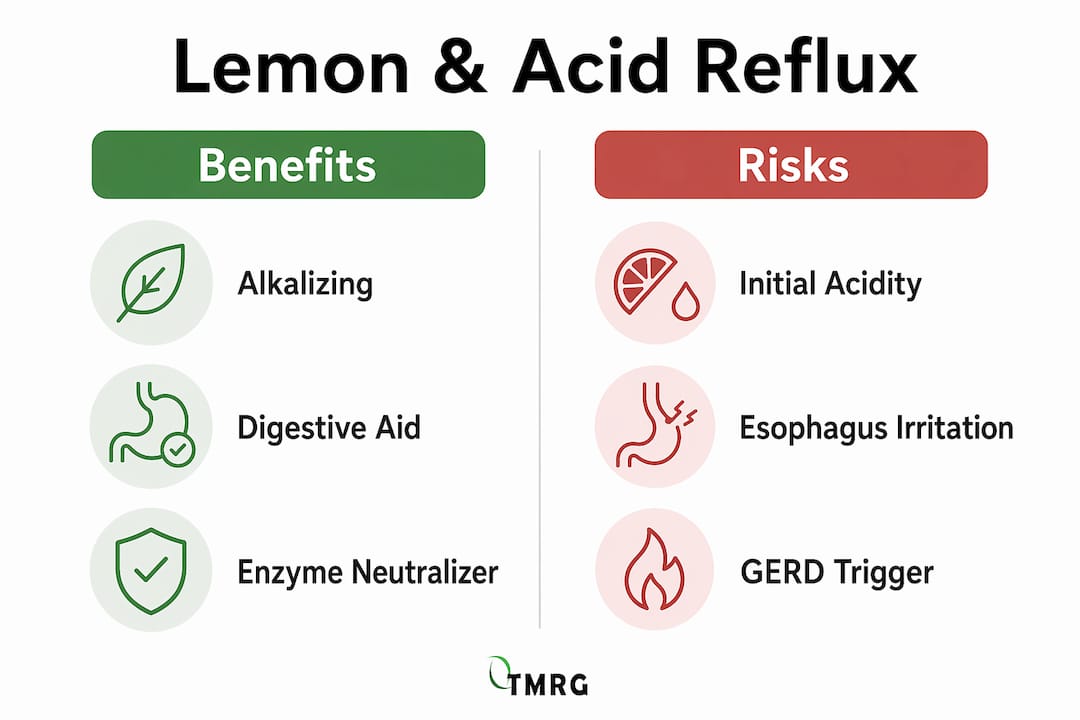
This matters for reflux because keeping esophageal pH above 5.0 denatures the pepsin enzyme, effectively neutralizing its ability to damage tissue. When esophageal pH stays above that threshold, symptom relief can be comparable to that of over-the-counter antacids. The alkalizing effect of lemon, when it works, operates through this exact pathway.
There is also a specific digestive pattern where lemon water genuinely helps. Individuals with low stomach acid can benefit from diluted warm lemon water because it stimulates digestive enzymes and improves gastric motility. Low stomach acid, known clinically as hypochlorhydria, causes food to sit in the stomach too long, creating pressure that pushes acid upward. Lemon water can help move that process along.
Ayurvedic medicine has recognized this distinction for centuries. Here is how the Ayurvedic framework describes lemon’s digestive effects:
The Ayurvedic perspective also connects to herbal medicine’s role in self-healing, where natural compounds work with the body’s own regulatory systems rather than overriding them.
Lemon’s effect varies dramatically by individual digestive type, which means one-size-fits-all advice on lemon for reflux is genuinely inappropriate. The Ayurvedic system offers a useful framework here, distinguishing between Vata-type and Pitta-type digestive patterns.

| Digestive Profile | Characteristics | Lemon Water Response |
|---|---|---|
| Vata type (sluggish) | Slow digestion, bloating, irregular bowel movements, low stomach acid | May benefit from warm diluted lemon water before meals |
| Pitta type (burning) | Excess heat, burning reflux, inflammation, acid sensitivity | Likely to worsen symptoms; avoid lemon |
| Chronic GERD | Frequent heartburn, esophageal damage, LES dysfunction | High risk; lemon is a documented trigger |
| Gastritis or ulcers | Inflamed stomach lining, pain after eating | Contraindicated; citric acid worsens mucosal damage |
| Mild occasional reflux | Infrequent symptoms, no structural damage | May tolerate small amounts of diluted lemon water |
The timing and concentration of lemon water also determine its effect. One tablespoon of lemon juice in eight ounces of warm water, consumed 20–30 minutes before meals, is the recommended starting point for those who want to test tolerance. Warm water is preferred because cold water can trigger esophageal spasms in sensitive individuals.
You can read more about how acidic foods interact with reflux symptoms in Tmrgsolutions’ detailed breakdown of acidity and reflux triggers.
Pro Tip: Keep a symptom log for at least two weeks when testing lemon water. Note the time, dilution, and whether symptoms appear within 30–60 minutes. This data tells you far more than any general guideline.
If you decide to test lemon water for your reflux, the method matters as much as the decision itself. Undiluted lemon juice is never appropriate for someone with reflux. Proper preparation reduces the risk of triggering a flare-up.
Follow these steps for safer consumption:
If lemon water does not suit you, several other natural options support reflux relief without the acidity risk. Ginger is one of the most studied natural digestive aids. Ginger supports digestive health by reducing inflammation and improving gastric motility without lowering esophageal pH. Chamomile tea, aloe vera juice (the decolorized, purified form), and slippery elm are also widely used for soothing the esophageal lining.
Foods that actively support reflux relief include oatmeal, bananas, melons, leafy greens, and lean proteins. These foods have low acid content and do not trigger sphincter relaxation. A diet for vocal and digestive health follows similar principles, prioritizing anti-inflammatory, low-acid foods that protect mucosal tissue throughout the throat and esophagus.
Lemon water’s effect on acid reflux is determined by your digestive type, the severity of your condition, and how you prepare and time your consumption.
| Point | Details |
|---|---|
| Lemon is initially acidic | Raw lemon juice at pH 2.0–3.0 can irritate the esophagus and reactivate pepsin enzyme on contact. |
| Alkalizing effect is post-digestive | Lemon’s alkaline ash forms after metabolism, not in the stomach, so it does not neutralize reflux in real time. |
| Individual type determines outcome | Vata-type sluggish digestion may benefit; Pitta-type burning reflux and chronic GERD typically worsen with lemon. |
| Dilution and timing are non-negotiable | One tablespoon in eight ounces of warm water, taken 20–30 minutes before meals, is the only appropriate starting method. |
| Track symptoms before committing | A two-week food diary with reaction notes is the most reliable way to assess your personal lemon tolerance. |
Working in vocal and throat health for over two decades, I have seen the lemon-for-reflux question come up constantly. Singers and speakers are especially drawn to it because lemon water has a reputation for clearing the throat and brightening the voice. The reality is more complicated.
The most common mistake I see is people reading about lemon’s alkalizing effect and assuming that means it is safe to drink freely. That misconception ignores the initial tissue exposure to acidity before any metabolic conversion occurs. The esophagus does not care about what happens downstream. It responds to what touches it right now.
I have also seen the opposite mistake: people with genuinely sluggish digestion avoiding lemon entirely because they read it is acidic, then continuing to suffer from bloating and pressure-driven reflux that warm lemon water might actually ease. The lemon test is a real diagnostic tool, not just a folk remedy.
My honest recommendation is this: do not start with lemon water during an active flare. Wait until symptoms are stable, then test carefully with proper dilution and a symptom log. Your body will tell you within a few days whether lemon is an ally or an irritant. Trust that signal over any general advice, including this article.
— Golan
Acid reflux does not just affect your stomach. It travels upward and irritates the vocal folds, causing hoarseness, throat clearing, and vocal fatigue. This is called laryngopharyngeal reflux, or LPR, and it is one of the most common reasons singers and speakers lose their voice unexpectedly.

Tmrgsolutions has spent 25+ years developing natural formulations specifically for throat and vocal cord recovery. If reflux has left your voice rough or your throat raw, the TMRG Loud & Clear Classic Voice Recovery Drops and the TMRG Defense Oils and Saline Throat Spray are designed to soothe and restore mucosal tissue naturally. These products work alongside dietary adjustments, not as a replacement for them. If you are managing reflux and protecting your voice at the same time, Tmrgsolutions offers the tools to support both goals.
Lemon water can worsen acid reflux in people with chronic GERD, gastritis, or esophageal inflammation because its low pH reactivates pepsin and irritates the esophageal lining on contact. People with mild or infrequent reflux may tolerate properly diluted lemon water without symptoms.
Lemon juice is acidic before digestion, with a pH of 2.0–3.0, but it produces an alkaline ash after metabolism due to its negative PRAL score. The alkalizing effect occurs in the kidneys and bloodstream, not in the stomach or esophagus.
Yes. Individuals with low stomach acid may benefit from diluted warm lemon water because it stimulates digestive enzymes and speeds gastric emptying, reducing the pressure buildup that drives reflux upward.
Use one tablespoon of fresh lemon juice in eight ounces of warm water, drink it 20–30 minutes before a meal, and use a straw to protect tooth enamel. Rinse your mouth with plain water afterward and stop immediately if burning increases.
Oatmeal, bananas, melons, ginger, chamomile tea, and leafy greens are among the most reliable foods to relieve acid reflux because they are low in acid and do not weaken the lower esophageal sphincter. Ginger in particular supports digestive motility without lowering esophageal pH.
