Your Cart is Empty


Laryngitis is inflammation of the larynx — the structure housing your vocal folds — that distorts how those folds vibrate, producing the hoarseness or voice loss vocalists dread most. Clinically, it splits into two categories based on duration: acute laryngitis lasts fewer than three weeks (typically 3–7 days), while chronic laryngitis persists beyond three weeks and usually signals an underlying condition requiring targeted care.
For a vocalist, even a few days of acute inflammation can derail a performance. Chronic cases carry heavier stakes, including structural changes to the vocal folds such as polyps or nodules.
Key classification at a glance:
Common symptoms include hoarseness, voice fatigue, dry cough, throat rawness, and the persistent urge to clear your throat. Most resolve within three to seven days with proper care, though symptoms can last up to three weeks.

Certain signs demand urgent attention. Red-flag features requiring immediate evaluation include stridor (a high-pitched sound when breathing), progressive shortness of breath, systemic toxicity, and hoarseness persisting beyond four weeks. For vocalists, any unexplained pitch shift or sudden loss of upper-register control that lingers warrants a call to your ENT, not just a day of rest.
Watch for these warning signs:
Pro Tip: Whispering feels gentler, but it actually increases laryngeal strain by forcing inefficient vocal fold adduction. Speak softly at a natural pitch or stay silent — never whisper during recovery.
Viral upper respiratory infections — colds, influenza, COVID-19 — remain the most common trigger. But for vocalists, noninfectious causes are just as significant: vocal overuse, laryngopharyngeal reflux (LPR), GERD, inhaled corticosteroids (common in performers managing asthma), environmental pollutants, and smoke.
Chronic recurrence in performers often traces back to LPR, where stomach acid reaches the larynx without producing classic heartburn symptoms. Many singers never connect their persistent morning hoarseness to reflux until a specialist visualizes the characteristic redness of the arytenoids.
Primary risk factors for vocalists:
Clinical diagnosis relies on symptom history and physical examination. When symptoms persist beyond two to three weeks, laryngoscopy becomes the standard of care to rule out structural lesions or malignancy. Advanced techniques including flexible nasopharyngoscopy and laryngeal stroboscopy allow clinicians to assess vocal fold vibration patterns in detail — critical for performers whose livelihood depends on nuanced vocal function.
Do not wait out persistent hoarseness hoping it resolves. Any vocalist experiencing voice changes beyond three to four weeks, dyspnea, or pain with swallowing should seek ENT referral promptly.
Voice rest, generous hydration, and humidified air form the foundation of recovery. Watchful waiting with environmental modifications consistently outperforms aggressive pharmaceutical intervention for most vocal professionals.
Antibiotics and antifungals do not improve outcomes in viral laryngitis, which accounts for the vast majority of cases. Corticosteroids are occasionally used for urgent situations but carry real risk: they can mask symptoms and encourage premature voice use, potentially leading to vocal fold hemorrhage. Decongestants and menthol lozenges may actually dry and irritate the vocal folds, worsening the very symptoms you are trying to relieve.
Effective management priorities:
Pro Tip: Avoid decongestants during laryngitis recovery. They reduce mucus production, which sounds helpful but leaves your vocal folds dry and more vulnerable to further irritation.
Herbal formulations, essential oils, saline rinses, and consistent mucosal hydration all support healing without the risks associated with pharmaceutical shortcuts. For vocalists seeking natural relief options, steam inhalation with eucalyptus or chamomile, raw honey in warm water, and slippery elm lozenges have long been used to soothe inflamed laryngeal tissue.
Tmrgsolutions brings 25+ years of vocal health expertise to three products specifically designed for performers:
For throat comfort between performances, Vocalzone throat pastilles offer a complementary option to support vocal hydration on the go.
Daily vocal health habits:
Pro Tip: Consistency matters more than intensity. Using a vocal hydration spray once before a show is far less effective than maintaining mucosal moisture throughout the day.
Prevention starts with vocal hygiene: warm up before every session, cool down after, and never push through pain. Diaphragmatic breathing reduces the strain placed on the larynx during sustained phonation. Amplification — even a simple clip-on microphone during lectures or rehearsals — meaningfully reduces the vocal load over time. For sustained vocal effort, pacing your speaking and singing across a day prevents the cumulative fatigue that opens the door to inflammation.
Stay current on flu and COVID-19 vaccinations. Wash hands frequently. Manage reflux proactively rather than reactively.
Acute laryngitis typically calls for a period of complete voice rest, followed by a gradual return to speaking before resuming singing or performance. Most vocalists can cautiously resume light rehearsal within a few days if symptoms improve. Full performance readiness after a significant episode generally requires adequate recovery time, which varies by individual.
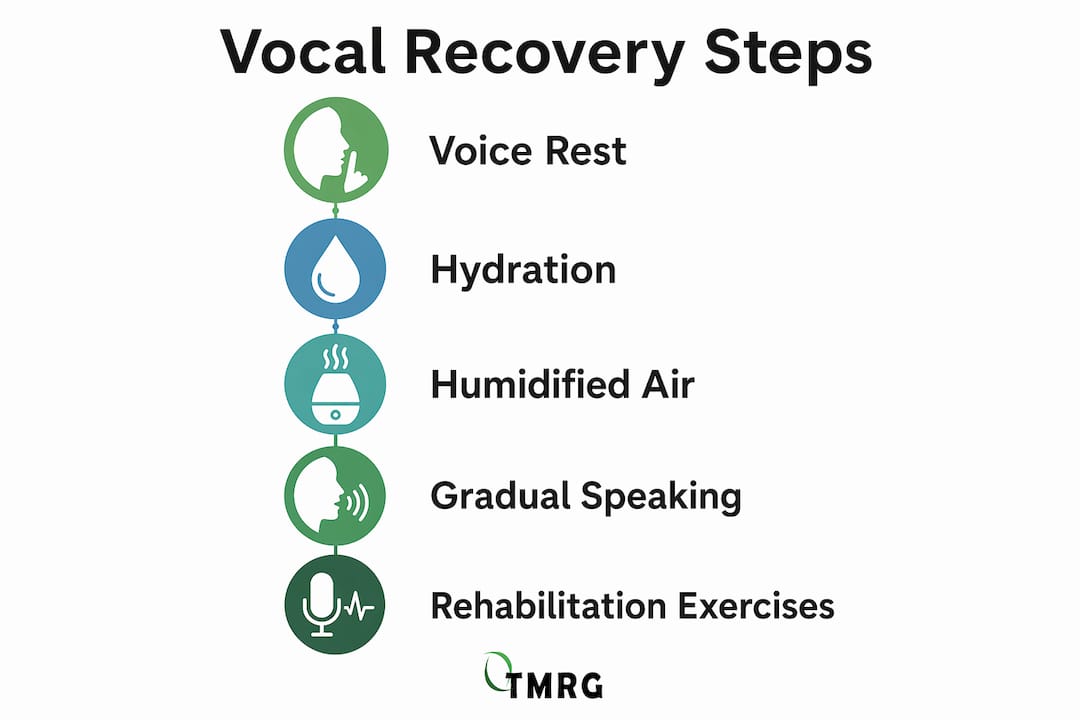
Chronic or recurrent cases require a longer, structured approach of modified voice use, often with guidance from a speech-language pathologist to support safe return to performance. Never rush back to full vocal load based on how your voice sounds in a quiet room. The demands of amplified performance are categorically different.
Untreated or repeatedly aggravated laryngitis can progress to vocal fold nodules, polyps, or Reinke’s edema — a watery swelling of the vocal folds associated with chronic smoke exposure. These structural changes alter vocal quality in ways that rest alone cannot reverse. Recurrent laryngitis often indicates an underlying chronic condition such as LPR, requiring specific management rather than repeated short-term treatment.
Long-term steroid use for chronic vocal fold inflammation carries significant risk and should be avoided when possible. Addressing the root cause — reflux, smoking, or vocal misuse — produces more durable results.
Once acute inflammation resolves, rehabilitation focuses on restoring coordination and stamina rather than simply recovering volume. Begin with gentle humming at a comfortable mid-range pitch, progressing to lip trills and then sustained vowel tones. Resonance exercises that place vibration in the facial mask (rather than the throat) reduce laryngeal tension during the rebuilding phase.
Vocal recovery strategies for singers typically include semi-occluded vocal tract exercises (SOVTEs) such as straw phonation, which allows the vocal folds to vibrate with reduced collision force. A certified voice therapist or speech-language pathologist can design a progression tailored to your specific vocal demands and recovery timeline.
Vocalists need more than generic advice when their voice is on the line. Tmrgsolutions offers a complete range of natural vocal health products built specifically for performers — from the first sign of hoarseness through full rehabilitation.

The TMRG product line includes the Loud & Clear Voice Recovery Drops, the Shine Bright Recovery Spray, and the Defense Oils and Saline Spray — each formulated with natural herbal ingredients and endorsed by vocal coaches and medical professionals. For a structured recovery plan, the TMRG Voice Therapy Kit provides guided protocols alongside the products your voice actually needs. With 25+ years of expertise behind every formulation, Tmrgsolutions is the resource serious vocalists trust when recovery cannot wait.
Acute laryngitis usually resolves within three to seven days, but symptoms can extend up to three weeks. If hoarseness persists beyond three weeks, it is classified as chronic and warrants specialist evaluation.
No. Whispering increases laryngeal strain by forcing inefficient vocal fold adduction. Speak softly at a natural pitch or rest your voice completely.
Seek evaluation if hoarseness lasts more than four weeks, or immediately if you experience stridor, difficulty breathing, or coughing up blood.
Yes. Hydration, steam inhalation, herbal formulations, and saline sprays support mucosal healing. Tmrgsolutions products like the Loud & Clear Drops and Defense Spray are designed specifically for this purpose.
Acute laryngitis lasts fewer than three weeks and is most often viral. Chronic laryngitis persists beyond three weeks and typically requires identifying an underlying cause such as reflux or vocal misuse.
Laryngitis in vocalists demands early recognition, structured rest, and targeted natural support — not antibiotics or decongestants that worsen vocal fold dryness.
| Point | Details |
|---|---|
| Acute vs. chronic classification | Acute laryngitis lasts under three weeks; chronic persists beyond three weeks and needs specialist care. |
| Red-flag signs | Hoarseness beyond four weeks, stridor, or breathing difficulty requires urgent ENT evaluation. |
| Avoid whispering | Whispering increases laryngeal strain; speak softly at natural pitch or rest completely. |
| Antibiotics rarely help | Most laryngitis is viral; antibiotics and antifungals do not improve outcomes in these cases. |
| Tmrgsolutions recovery support | The TMRG Loud & Clear Drops, Shine Bright Spray, and Defense Spray provide natural, professionally endorsed vocal recovery. |
