Your Cart is Empty


TL;DR:
- If you prefer natural solutions for your voice, not all throat sprays are equal. This guide focuses specifically on natural and herbal throat recovery sprays — what ingredients to look for, which ones are backed by evidence, and how they compare to conventional options.
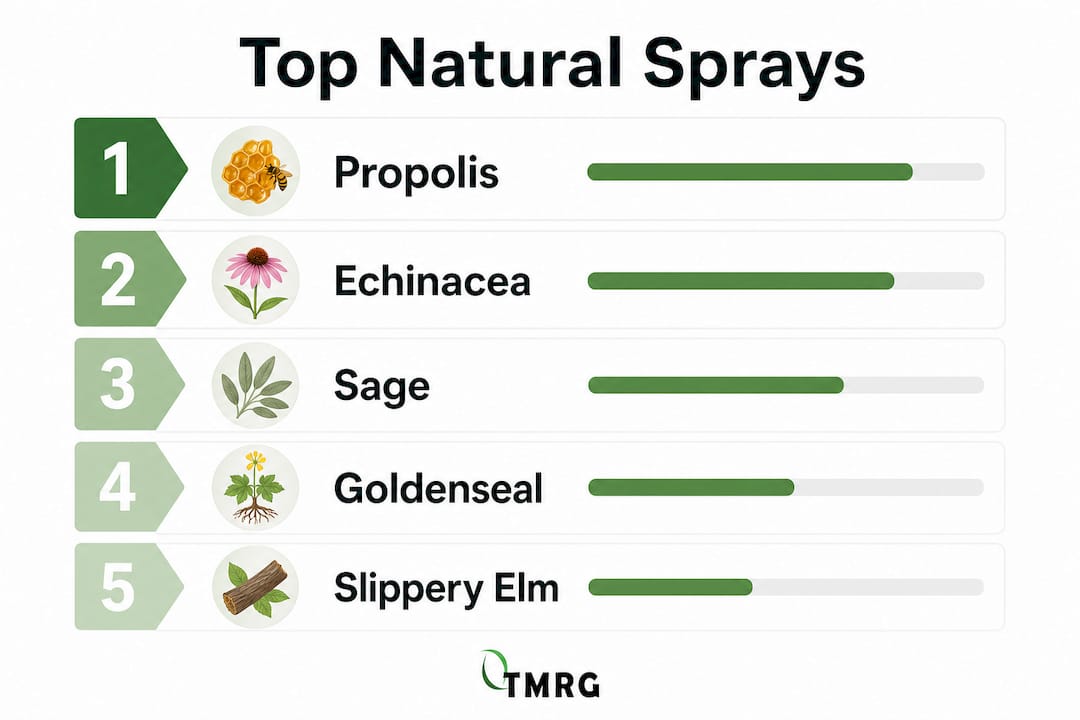
The strongest natural throat recovery sprays available in the U.S. combine bee propolis, echinacea, slippery elm, and sage to soothe irritation, coat mucosal tissue, and support your immune response during recovery. These aren’t miracle cures. Most sore throats are viral, which means antibiotics won’t help, and what your throat actually needs is moisture, comfort, and time. A well-formulated herbal spray delivers all three in a single application.
The six options below represent the clearest choices across different needs, from fast cooling relief to DIY herbal blends.
| Product | Key Ingredients | Target Symptoms | Usage | Organic/Allergen Info | Best For |
|---|---|---|---|---|---|
| Beekeeper’s Naturals Propolis Throat Spray | Bee propolis (95% extract), slippery elm, menthol | Soothing, immune support, cooling | 3 sprays as needed | Contains bee products; avoid if allergic to honey/pollen | Fast, cooling relief for dry or overused throats |
| Herbal Relief Botanical Throat Spray | Echinacea, goldenseal, licorice root, sage, osha root | Soothing, immune support | 3 sprays as needed | Herbal; check for plant allergies | Complex herbal blend for multi-symptom relief |
| Herb Pharm Soothing Throat Spray | Certified organic vegetable glycerin, botanicals | Soothing, lubrication | 3–4 sprays as needed | Certified organic; generally gentle | Gentle, glycerin-based lubrication and comfort |
| Beekeeper’s Naturals Bee Propolis Throat Spray | High-concentration bee propolis, slippery elm, menthol | Immune support, soothing, coating | 3 sprays as needed | Contains bee products; avoid if allergic | Immune support combined with throat coating |
| Gaia Echinacea Goldenseal Propolis Throat Spray | Echinacea, goldenseal, bee propolis | Immune support, antiseptic, soothing | 3 sprays as needed | Contains bee products; herbal allergen risk | Multi-herb remedy with antiseptic properties |
| Sage-Echinacea Throat Spray (DIY/Home Remedy) | Sage, echinacea | Soothing, mild immune support | Spray as needed | Fully customizable; natural | DIY users and home remedy preference |
Each of these sprays works by coating the mucosal lining of the throat, reducing friction, and delivering active botanicals directly to irritated tissue. Bee propolis supports immune function, slippery elm creates a protective mucilage layer, and menthol provides the immediate cooling sensation most people associate with throat relief.
Choosing between these products comes down to your specific symptoms, your tolerance for bee-derived ingredients, and whether you want a ready-made formula or a home preparation.
Beekeeper’s Naturals Propolis Throat Spray is the most recognized option in this category. Its 95% propolis extract concentration is unusually high for a consumer product, and the addition of slippery elm means it addresses both immune support and physical lubrication in one formula. Menthol adds a cooling effect that many people find immediately comforting. The main limitation: anyone with a bee product allergy cannot use it.
Herbal Relief Botanical Throat Spray takes a different approach by stacking five distinct herbs. Echinacea and goldenseal are the immune-focused workhorses, while licorice root and sage contribute soothing and mild antimicrobial properties. Osha root, less commonly seen in consumer sprays, has a long history in traditional Western herbalism for respiratory support. This is the right choice if you want broad herbal coverage rather than a single-ingredient focus.
Herb Pharm Soothing Throat Spray stands apart because its base is certified organic vegetable glycerin rather than alcohol or water. Glycerin is a humectant, meaning it draws moisture to tissue and holds it there. For people with a raw, dry throat rather than an acutely inflamed one, this lubrication-first approach often feels more immediately relieving than an immune-focused formula.
Here is how the products break down by primary action:
Immune support first: Beekeeper’s Naturals Bee Propolis Throat Spray, Gaia Echinacea Goldenseal Propolis Throat Spray
Soothing and lubrication first: Herb Pharm Soothing Throat Spray, Beekeeper’s Naturals Propolis Throat Spray
Broad herbal coverage: Herbal Relief Botanical Throat Spray
DIY control and customization: Sage-Echinacea Throat Spray
Gaia Echinacea Goldenseal Propolis Throat Spray combines three well-researched ingredients into a compact formula. Goldenseal contains berberine, a compound studied for its antimicrobial properties, and pairing it with echinacea and propolis creates a spray with both immune-activating and surface-level antiseptic potential. It suits people who want a targeted, science-adjacent formula without a long ingredient list.
The Sage-Echinacea Throat Spray as a DIY preparation deserves more credit than it typically gets. Research supports sage and echinacea for sore throat relief, with clinical comparisons suggesting this combination can perform comparably to some antiseptic medication sprays. You control the concentration, the carrier liquid, and the absence of any additives. For singers or speakers who are sensitive to alcohol-based formulas, a glycerin-and-water DIY base is worth considering.
Pro Tip: Hold any herbal throat spray in your mouth for 30–60 seconds before swallowing. This extended contact time allows demulcent agents like slippery elm and licorice root to fully coat the mucosal lining rather than passing through quickly.
The right spray depends on three things: your primary symptom, your ingredient sensitivities, and how you plan to use it. Getting that match right makes a real difference in how quickly you feel relief.
Different herbs address different aspects of throat discomfort. Knowing what each one does helps you read a label with confidence.
Bee propolis: Delivers immune-modulating compounds called flavonoids; best for early-stage irritation and immune support
Slippery elm: Forms a mucilage coating over inflamed tissue; best for dry, raw, or overused throats
Echinacea: Activates immune cells; most useful at the onset of a cold or viral sore throat
Sage: Carries mild astringent and antimicrobial properties; particularly effective for inflamed, swollen throat tissue
Licorice root: Soothes and coats; also has mild anti-inflammatory activity
Menthol: Provides cooling and mild numbing; does not treat the underlying cause but reduces perceived discomfort quickly
Vegetable glycerin: Humectant base that retains moisture on mucosal surfaces; ideal for dry throat without active infection
No spray works in isolation; for comprehensive care, consider following reputable supportive care recommendations as outlined in Fast Virtual Strep Throat Care for School-Aged Kids. Standard sore throat care includes saltwater gargles (1/4 to 1/2 tsp of salt in warm water), consistent hydration, and a humidifier to keep ambient air moist. Most viral sore throats resolve within a week with supportive care alone. A herbal spray adds comfort and may support your immune response, but rest and hydration remain the foundation.
Warm liquids, particularly herbal teas with honey, help keep the throat moist between spray applications. Honey has well-documented soothing properties and is safe for adults and children over one year of age. Avoid whispering, which actually strains the vocal folds more than speaking at a normal volume.
Bee-derived ingredients appear in several of the most popular sprays, including all propolis-containing formulas. If you have a known allergy to honey, bee stings, or pollen, avoid any product listing propolis or bee pollen. Echinacea belongs to the daisy family, so people with ragweed or chrysanthemum allergies should use it cautiously. Goldenseal is not recommended during pregnancy. Licorice root in large amounts can affect blood pressure, though the quantities in a throat spray are generally small.
Pro Tip: Apply your herbal throat spray at the very first sign of irritation rather than waiting until symptoms are severe. Early application helps maintain mucosal integrity and may prevent the irritation from progressing into full-blown inflammation.
Most sprays recommend several pumps directed toward the back of the throat, repeated as needed throughout the day. Tilt your head back slightly, open wide, and aim the nozzle past the tongue toward the posterior pharynx. After spraying, keep your mouth closed and resist swallowing immediately. That 30–60 second hold time, mentioned above, is the single most underused technique for maximizing the demulcent effect.
For vocal recovery strategies specifically, singers and speakers often apply a spray before a performance or rehearsal as a preventative measure, not just after symptoms appear.
Symptom relief from a spray typically begins within minutes of application, but actual tissue recovery follows the underlying cause. A viral sore throat usually clears within about a week with good supportive care. Vocal strain without infection can resolve within a few days with voice rest, hydration, and regular spray use. If symptoms persist beyond ten days, worsen significantly, or include high fever and difficulty swallowing, consult a healthcare provider. Natural sprays manage comfort during recovery; they do not replace medical evaluation when something more serious is present.
The clinical picture for herbal throat sprays is nuanced. They are not cures, but they are genuinely useful tools when used correctly.
“Throat sprays and lozenges help keep the throat moist and provide numbing, but they work best alongside rest, voice rest, and humidity. They are symptom supports, not standalone treatments.”
That framing matters. A spray’s job is to reduce friction, deliver active botanicals to irritated tissue, and keep the mucosal surface hydrated between natural recovery cycles. Voice professionals understand this intuitively. Singers and speakers favor natural sprays specifically for their lubricating properties, which ease vocal fatigue and hoarseness caused by overuse rather than infection alone.
The delivery mechanism also matters more than most people realize. Micro-mist intra-oral sprays deposit active botanicals directly onto mucosal membranes, reaching irritated tissue more precisely than a lozenge that dissolves slowly in saliva. For localized vocal irritation, that targeted delivery translates to faster perceived relief.
The evidence base for specific herbs is growing. Sage and echinacea have been studied in clinical settings, with research suggesting the combination can relieve sore throat pain comparably to some antiseptic sprays. The evidence for large-scale efficacy is still developing, but the safety profile of these herbs is well-established, and the mechanism, coating and soothing inflamed tissue, is straightforward.
| Ingredient | Clinical Support | Primary Action | Relevant For |
|---|---|---|---|
| Sage | Studied for sore throat relief | Astringent, mild antimicrobial | Inflamed, swollen throat |
| Echinacea | Immune activation research | Immune modulation | Onset of viral sore throat |
| Bee propolis | Flavonoid-based immune support | Immune support, antimicrobial | Early irritation, immune defense |
| Slippery elm | Traditional demulcent use | Mucosal coating, lubrication | Dry, raw, overused throat |
| Licorice root | Anti-inflammatory studies | Soothing, coating | General throat comfort |
| Vegetable glycerin | Humectant mechanism | Moisture retention | Dry throat, vocal fatigue |
For voice professionals specifically, the preventative use of a natural throat spray before strain occurs is as important as reactive use after symptoms appear. Maintaining mucosal hydration before a long rehearsal or lecture protects the vocal folds from the micro-trauma that accumulates with heavy use. The spray acts as a buffer, not a bandage.
If you’re managing throat recovery as a singer, actor, lecturer, or voice professional, a standard retail spray may not address the full picture. Tmrgsolutions brings 25+ years of specialized vocal health expertise to a product line built specifically for people who depend on their voice.

The Tmrgsolutions approach goes beyond a single spray. The TMRG Voice Therapy Kit Standard combines natural herbal remedies, tone recovery sprays, and targeted therapy tools in one system designed for vocal professionals. For those starting out, the Basic Voice Therapy Kit covers foundational throat and vocal care. The Premium Kit adds advanced herbal formulations and specialized equipment for performers with demanding schedules. These kits are formulated with the same herbal principles discussed throughout this article, but structured around the specific recovery needs of voice users rather than general sore throat relief.
Rest your voice, stay well hydrated, and use saltwater gargles (1/4 to 1/2 tsp salt in warm water) several times a day. A herbal throat spray with slippery elm or glycerin adds mucosal coating and comfort between gargles.
Vegetable glycerin-based sprays like Herb Pharm Soothing Throat Spray coat and hydrate the mucosal lining directly. Warm herbal teas with honey and consistent water intake also maintain throat moisture throughout the day.
Bee propolis and goldenseal both carry compounds with documented antimicrobial activity, making sprays like Gaia Echinacea Goldenseal Propolis Throat Spray a reasonable choice for bacterial irritation. That said, most sore throats are viral, so antimicrobial herbs address comfort rather than the root cause in the majority of cases.
A glycerin-based spray applied every 2–3 hours, combined with a cool-mist humidifier and warm liquids, addresses dry throat most directly. Avoid caffeine and alcohol, which dehydrate mucosal tissue, and hold each spray application for 30–60 seconds to maximize contact time with the throat lining.
Consult a healthcare provider if your sore throat lasts longer than ten days, is accompanied by a high fever, causes difficulty swallowing or breathing, or produces white patches on the tonsils. Natural sprays support comfort during recovery but are not a substitute for medical evaluation when these warning signs appear.
The most effective natural throat recovery approach pairs a well-matched herbal spray with rest, hydration, and humidity, since no spray works as a standalone treatment.
| Point | Details |
|---|---|
| Match spray to symptom | Choose propolis for immune support, glycerin or slippery elm for lubrication, and sage-echinacea for broad soothing relief. |
| Hold time matters | Keeping the spray in contact with throat tissue for 30–60 seconds significantly improves the demulcent coating effect. |
| Sprays support, not replace, care | Saltwater gargles, hydration, and rest remain the foundation; sprays add comfort and botanical support alongside them. |
| Use early for best results | Applying a herbal spray at the first sign of irritation helps maintain mucosal integrity before symptoms worsen. |
| Tmrgsolutions for voice professionals | The TMRG Voice Therapy Kits combine herbal throat sprays with targeted recovery tools designed specifically for singers, speakers, and actors. |
