Your Cart is Empty


Yes, your voice can change across your menstrual cycle, and the shift is usually strongest right before and during your period. Studies link this to falling estradiol, which can bring breathiness, a duller top range, and vocal fatigue that clears once your period ends. The effect is often mild but real, especially for singers and frequent speakers, and it usually shows up less if you use combined hormonal contraceptives. Peer-reviewed research backs the pattern, and phase-aware care can help you manage it.
TL;DR:
- Voice changes linked to the menstrual cycle are most noticeable during the premenstrual and menstrual days, typically peaking in severity within the four to five days before and during menstruation.
- Women using combined hormonal contraceptives usually experience fewer and less pronounced vocal fluctuations across the cycle due to steadier hormone levels.
- Acoustic markers such as lower fundamental frequency, decreased voice intensity, and increased breathiness or instability are measurable indicators of cycle-related vocal shifts.
- Hormonal receptors on vocal fold tissue respond directly to estrogen and progesterone fluctuations, affecting tissue hydration, flexibility, and vocal quality.
- Building a habit of cycle and voice tracking, along with phase-aware vocal care strategies, helps mitigate symptoms and optimize vocal performance during vulnerable periods.
Trained listeners and acoustic software both pick up on cycle-linked shifts in the voice, even when a singer feels fine on stage. The changes tend to cluster around a handful of measurable traits, and researchers have been tracking them for decades.
The most commonly studied acoustic markers include:
A longitudinal study in the Journal of Voice found that drops in estradiol during the premenstrual and menstrual phases correlated with increased roughness, tension, and instability in recorded speech samples. Singers describe this less as pain and more as friction. High notes that normally sit comfortably suddenly ask for more effort, and the voice tires faster during a rehearsal that would otherwise feel routine.
Clinicians have a name for the cluster of symptoms: dysphonia premenstrualis. It describes decreased vocal efficiency, reduced flexibility, breathiness, fatigue, and a loss of the highest notes in a singer’s range, and it shows up most often in the premenstrual window. The research on menstrual cycle effects on singing voice treats this as a recognized, temporary condition rather than a permanent decline, which matters if you have ever worried that a rough patch before your period meant something was wrong with your instrument.
Statistic Callout: Comparative research on naturally cycling women versus hormonal contraceptive users found measurable shifts in minimum pitch and voice intensity across the cycle in women without hormonal contraception, while contraceptive users showed no comparable pattern.
Timing matters more than most singers realize. Several studies point to the four to five days before your period, plus the days of menstruation itself, as the window when symptoms peak. Outside that stretch, most women’s voices behave the way they always have.
None of this means every woman experiences dramatic changes. Study samples are often small, recording tasks vary (a sustained vowel behaves differently from connected speech), and individual hormone sensitivity differs widely. A review of hormonal modulation of the voice cautions that methodology differences across studies make it hard to pin an exact number on how much any one woman’s voice will shift. That variability is exactly why self-tracking, covered later in this guide, matters more than any published average.
The vocal folds are not just muscle and mucosa reacting to airflow. They carry receptors for estrogen and progesterone, the same hormones that drive your menstrual cycle, which gives hormonal shifts a direct biological route into how your voice sounds.
Blood plasma hormone-level research has identified these sex-steroid receptors on vocal fold tissue and found correlations between phase-specific estrogen and progesterone levels and acoustic measures like smoothed fundamental frequency (Sf0) and cepstral peak prominence (CPP), a marker of voice quality. That is the physiological mechanism behind the symptoms singers describe as “off” days.
Estrogen and progesterone don’t do the same job:
Think of the vocal fold mucosa the way you’d think of skin that reacts to shifting humidity. Some days it holds moisture well; other days it feels drier and less elastic. Estrogen decline nudges that tissue toward the drier, stiffer end, which is why singers report a “thinner” sound or reduced flexibility just before their period starts.
This is also why the changes are not universal. A review of hormonal modulation of voice points out that not every study finds identical results, and researchers suspect that baseline hormone sensitivity, hydration status, vocal load, and even sleep quality all interact with the hormonal signal. Two singers with identical cycles can report very different experiences. One might notice nothing beyond mild scratchiness; another might lose the top of her range for several days.
That inconsistency is not a flaw in the research. It reflects a genuinely complex system where hormones are one input among several affecting vocal fold tissue at any given time.
Many women report noticing voice changes tied to their cycle, with the effect more common among professional voice users who rely on precise pitch control every day. If you’re a singer, broadcaster, teacher, or someone who speaks for a living, you have more opportunities to notice a subtle shift than someone who uses their voice casually.
That makes sense mechanically. A classical soprano reaching for a high B needs every bit of vocal fold flexibility available; a casual speaker chatting with friends rarely pushes the instrument anywhere near its limits. The same small biological shift produces a noticeable problem for one and passes unnoticed by the other.
Statistic Callout: Studies comparing naturally cycling women to users of combined oral contraceptives found that contraceptive users showed no systematic cycle-linked changes in acoustic measures, while naturally cycling participants did.
Hormonal contraceptives work by keeping estrogen and progesterone at relatively steady levels across the month, instead of letting them rise and fall the way they do in a natural cycle. That steadier hormonal environment appears to dampen the acoustic swings that unmedicated cycles produce.
A 2020 study on fundamental frequency variation found that speaking fundamental frequency (SFF) tends to hit its lowest point during the menstrual phase in naturally cycling women, while oral contraceptive pill users showed far less variability across the month. That is a meaningful finding for professional voice users who have disruptive symptoms, though contraceptive choice is a medical decision that belongs in a conversation with a physician, not a self-directed fix based on an article.
If you’re past your reproductive years, the pattern shifts again. The menopausal transition brings its own hormonal changes, and some women report voice effects tied to declining estrogen during that period as well, though that falls outside the scope of a monthly-cycle discussion.
The most useful thing any singer or speaker can do here is build a simple tracking habit:
That kind of record turns a vague suspicion into a pattern you can actually plan around.
You cannot override hormonal biology, but you can absolutely manage how your voice performs around it. Phase-aware vocal care means adjusting your habits in the days you know are more vulnerable, rather than treating every day of the month identically.
Consistent vocal hygiene matters every day, but it matters more in the days leading up to your period, when tissue is already more reactive.
A complete voice maintenance guide walks through a fuller daily routine if you want a structured version of these habits.
On premenstrual or menstrual days, treat your warmup like a conversation with your voice rather than a checklist to power through. Start with gentle onsets, humming, and lip trills before asking for anything demanding. Pull back on extreme high or low extremes until you’ve confirmed how your voice feels that day. Shorten heavy rehearsal blocks and build in more breaks than usual. A guide to vocal maintenance during intense vocal effort covers pacing strategies that work well when you know a demanding session is coming during a vulnerable window.
When a performance or important talk lands on a difficult cycle day and you can’t move it, a few tactical choices help:
Pro Tip: If you know your period tends to land during tech week or a big audition, build a “safety transposition” into your prep two weeks ahead, not the morning of. Adjusting under pressure costs you more energy than adjusting on a calm rehearsal day.
For acute irritation or a rough patch mid-rehearsal, conservative measures go a long way: steam inhalation, brief voice rest between sets, and gentle hydration support. Sprays and drops formulated for short-term vocal comfort can supplement these habits during a demanding week, though they work best alongside rest and pacing, not instead of it. There are tips for managing hoarseness and vocal irritation that go deeper on what actually helps versus what just feels soothing in the moment.
Cycle-linked voice changes almost always follow a predictable, self-resolving pattern: symptoms build in the days before your period, peak during menstruation, and clear within a few days of your period ending. If that’s the rhythm you’re experiencing, you’re looking at ordinary hormonal fluctuation, not a vocal fold injury.
Certain signs point past normal cycle variation and toward something that needs a professional look:
An ENT or speech-language pathologist evaluating a persistent issue will typically perform laryngoscopy to visualize the vocal folds directly, alongside acoustic measures similar to the ones described earlier in this guide. Bring a cycle diary and, if you have them, voice memos recorded across different cycle days. That data helps a specialist distinguish a hormonal pattern from something structural far faster than a single office visit ever could.
Golan, a voice specialist featured in vocal health content, draws on extensive practical experience working with singers, actors, and professional speakers navigating vocal fatigue, hoarseness, and recovery. That depth of hands-on exposure to real vocal complaints shapes how the recommendations in this guide are framed, as supportive, phase-aware routines rather than one-size-fits-all fixes.
An educational library backs up this experience with practical, non-clinical guidance:
Every product mentioned across these resources belongs in the “supportive tool” category. None of it replaces a diagnosis from an ENT or speech-language pathologist when your symptoms fall outside the normal cycle pattern described earlier.
Most advice aimed at singers treats vocal fatigue as a single problem with a single fix: rest more, drink water, warm up properly. That advice isn’t wrong, but it skips the hormonal layer entirely, and that gap does a disservice to any woman who has felt genuinely confused by a voice that behaves differently week to week for no obvious reason.
The research here supports a more specific judgment: cycle-linked voice changes are real, biologically grounded, and largely predictable once you track your own pattern. What’s overrated is the idea that you need to identify a precise cause before you act. You don’t need a lab test to know your top notes feel harder to reach the Tuesday before your period. You need a warmup adjustment, a transposition option, and maybe a short conversation with a voice specialist if the pattern ever stops matching your cycle.
Prioritize tracking before you prioritize products or fixes. A week of honest observation tells you more about your own voice than any average pulled from a study sample of strangers.
— Golan
A product lineup is built around the same phase-aware thinking this guide covers, so you won’t have to guess which formula fits an acute rough patch versus a maintenance week.

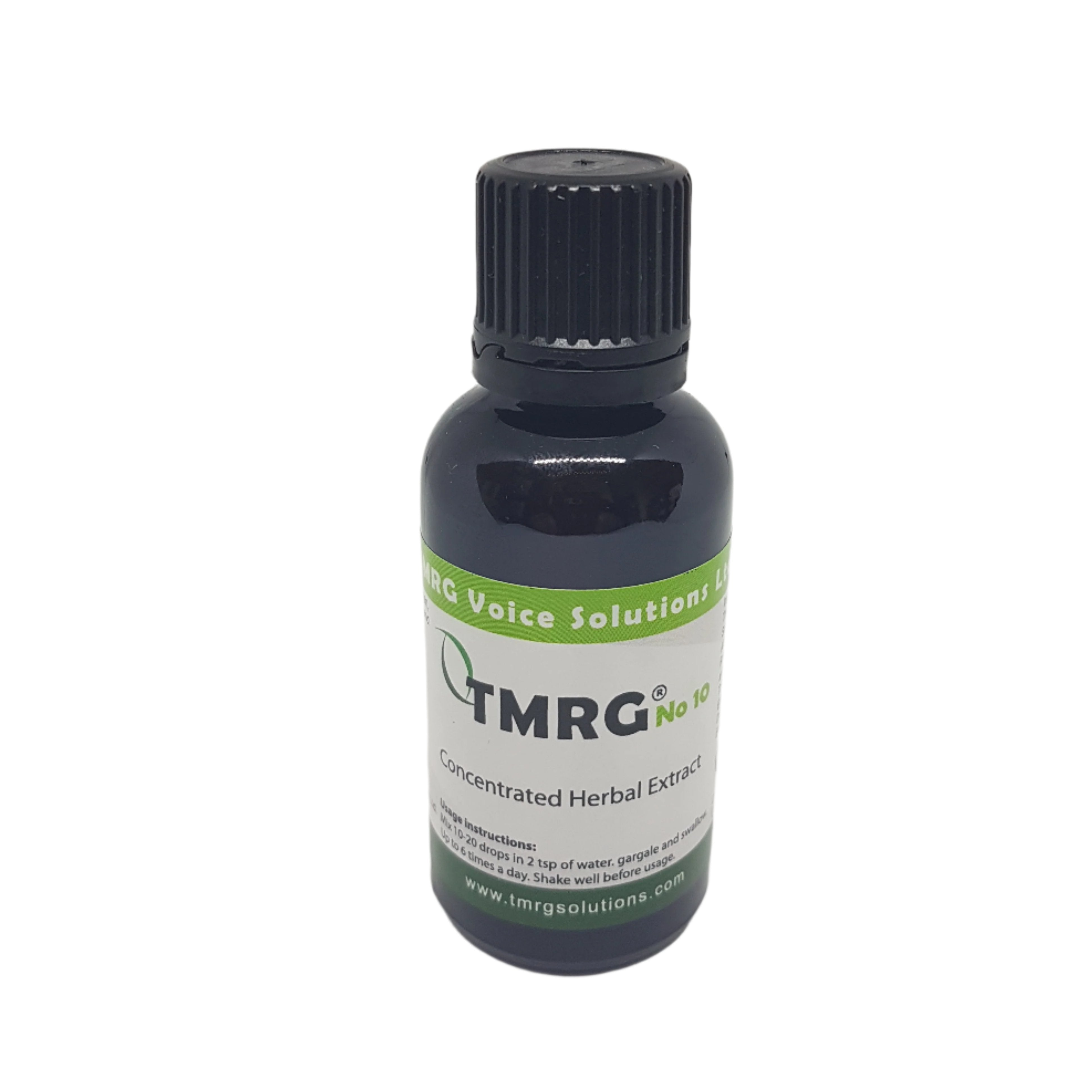
For sudden dryness or scratchiness before a rehearsal, the TMRG Shine Bright Classic Voice Recovery Spray offers fast topical comfort you can use right before you step on stage. The TMRG Loud & Clear Classic Voice Recovery Drops work as an oral option for the same kind of short-term relief, useful when you need hydration support between sets rather than a spray. If your symptoms follow a monthly pattern and you want ongoing support rather than a one-off fix, the TMRG Voice Therapy Kit Standard bundles a maintenance routine designed for singers managing recurring vocal fatigue across the month.
Pair any of these with genuine voice rest on your heaviest symptom days, and see a specialist if hoarseness ever outlasts your period by more than two weeks. Browse the available voice therapy and recovery lineup to find combinations that may suit your cycle pattern.
Complete voice loss is not typical, but temporary hoarseness, breathiness, and reduced range are common and usually resolve within a few days after your period ends.
Cycle-linked vocal fluctuation tends to track with active menstrual cycles, so it generally diminishes around the menopausal transition, though hormonal shifts during menopause can bring their own separate vocal effects.
Yes. Falling estradiol levels, especially in the days before and during your period, correlate with increased vocal roughness, tension, and instability, according to longitudinal acoustic research.
Some studies find speaking fundamental frequency dips to its lowest point during the menstrual phase, which can make the voice sound slightly lower or heavier, an effect that’s less pronounced in oral contraceptive users.
Yes. Logging symptom days alongside your cycle and comparing them to short daily voice recordings helps you identify your own vulnerable window, so you can schedule demanding performances around it when possible.
