Your Cart is Empty


Post-nasal drip can directly impair your singing. Excess mucus coating the vocal folds causes irritation, swelling, and hoarseness, and inflamed nasal turbinates reduce the resonance your voice depends on. The single best immediate action: perform a saline nasal rinse and drink 16 oz of warm water before you warm up.
In the next hour, do these three things:
Safety note: If your voice feels strained at low volume, or if you notice pain on phonation, stop and rest. Pushing a swollen voice risks serious injury, including vocal fold hemorrhage. One rehearsal is not worth weeks of recovery.
Managing post-nasal drip as a singer requires immediate saline-based care, careful medication choices, and a structured daily routine to protect the vocal folds from irritation and swelling.
| Point | Details |
|---|---|
| Saline rinse first | A sterile saline nasal rinse is the safest and most immediate step before any rehearsal or show. |
| Avoid drying medications | Oral decongestants and first-generation antihistamines dry the posterior throat and can impair vocal performance. |
| Humidify and hydrate | Keep indoor humidity at 40–60% and drink warm fluids throughout the day to thin mucus. |
| Rest when hoarse | If the voice feels strained at low volume, stop and rest; pushing a swollen voice risks serious injury. |
| Tmrgsolutions recovery options | The TVT-S kit, Loud & Clear Drops, and Shine Bright Spray offer non-drying, singer-specific vocal support. |
Post-nasal drip is the clinical term for excess mucus draining from the nasal cavity down the posterior throat. The body normally produces about 1–1.5 liters of mucus daily, most of it swallowed without notice. When allergies, infection, or irritants change the quantity or consistency of that mucus, it becomes noticeable and problematic.
The primary causes for singers to know:
The nasal-to-vocal-fold pathway: Inflamed nasal lining → excess mucus produced → mucus pools in the nasopharynx → drains posteriorly down the throat → contacts the posterior larynx → deposits on the vocal folds → irritation and swelling develop → phonation becomes effortful, onset is delayed, and upper range narrows.
Two distinct problems emerge for singers. The first is resonance loss: when the nasal turbinates swell, they reduce airflow through the nasal cavity, narrowing the resonant space that gives your voice its ring and brightness. The second is phonation disruption: mucus deposited directly on the vocal folds causes laryngitis-like swelling, delayed onset (that frustrating “crack” at the start of a note), and a compressed upper range. Both effects can appear simultaneously, which is why a singer with post-nasal drip often sounds both muffled and strained.
Excess mucus on the vocal cords reduces their flexibility, making it harder to achieve the precise vibration patterns that clean pitch and tone require. The inflammation, not just the mucus itself, is what causes lasting hoarseness when the condition goes unmanaged.
These are the non-pharmacologic measures with the strongest practical track record for singers. None of them dry the vocal folds, and all can be used on performance day.
Saline nasal rinse (neti pot or squeeze bottle). Use sterile or distilled water only. Tap water carries a small but real risk of contamination. Mix with a pre-measured saline packet, tilt your head at 45 degrees over a sink, and pour through one nostril until it exits the other. Rinse both sides. Do this 30–60 minutes before a warm-up, not immediately before singing, so residual moisture clears. Steam inhalation and saline rinses loosen thick mucus and soothe nasal passages, making them practical pre-show measures.
Steam inhalation. Lean over a bowl of hot (not boiling) water with a towel over your head, or use a personal steam inhaler. Breathe through the nose for 5–10 minutes. This loosens mucus and hydrates the nasal lining. A warm shower works nearly as well and is easier to fit into a pre-show routine.
Warm liquids and hydration. Aim for at least 8–10 cups of water throughout the day. Warm herbal teas (ginger, chamomile, licorice root) thin mucus and soothe the posterior throat. Avoid caffeinated drinks in large amounts; caffeine has a mild diuretic effect that works against vocal hydration.
Room humidifier. Keeping indoor humidity between 40–60% prevents the nasal lining from drying out and thickening mucus overnight. Run a cool-mist humidifier in your bedroom while sleeping. This is especially relevant in winter months when central heating drops indoor humidity well below that range.
Gentle vocal warm-ups to mobilize mucus. Humming on a comfortable pitch, lip trills up and down a comfortable range, and slow sirens (sliding from low to high and back) all create vibration that helps dislodge mucus from the vocal folds without forcing the voice. Hydration combined with these warm-ups is one of the most reliable tactics for maintaining vocal function during illness.
What to avoid at home: Alcohol-based mouthwash dries the posterior throat. Excessive menthol (strong lozenges, menthol sprays) can irritate already-sensitive mucous membranes. Aggressive throat clearing is the most damaging habit of all: each forceful clear slams the vocal folds together and worsens the very swelling you are trying to reduce.
Pro Tip: Pack a small rehearsal kit: a travel saline nasal spray, a personal steam inhaler or face steamer, and a non-menthol, non-drying lozenge. Trial every item at least two days before a performance so you know how your voice responds to each one.
Knowing which medications help and which ones harm your voice is one of the most practical things a singer can learn. The risks are real and often underestimated.
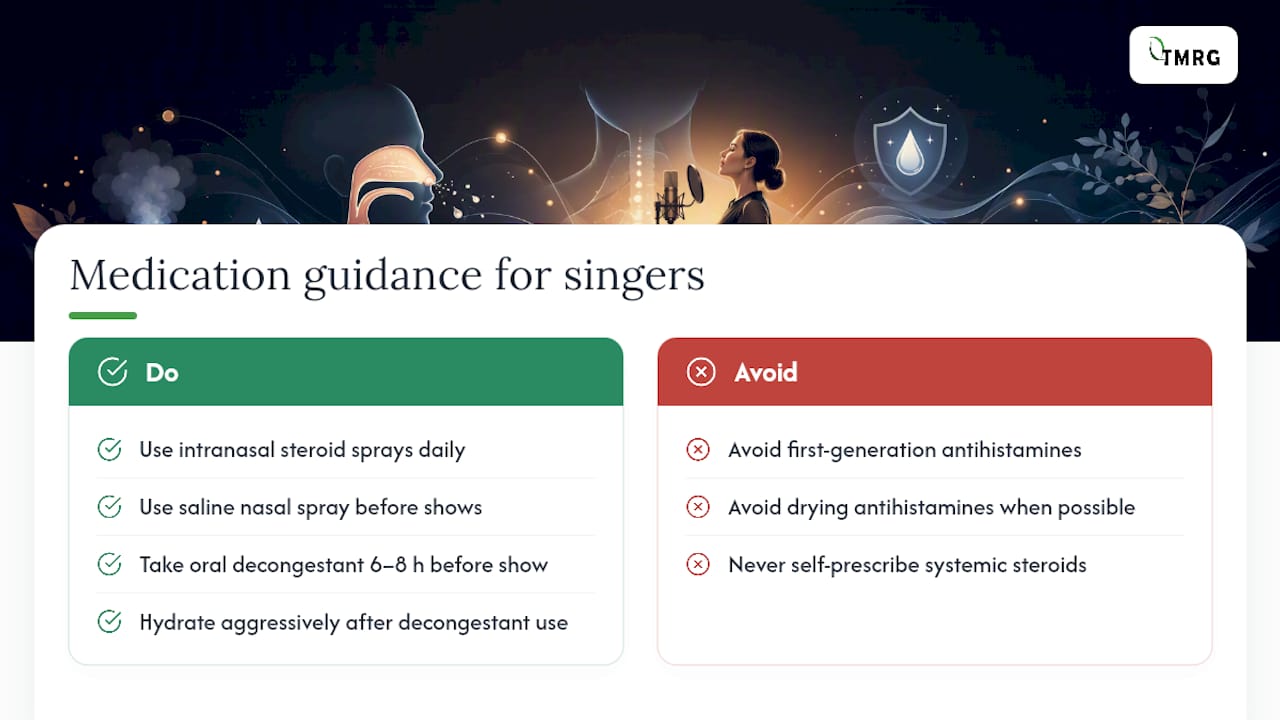
Intranasal steroid sprays (fluticasone, budesonide, mometasone) are the first-line prescription option for allergic post-nasal drip. They reduce nasal inflammation without systemic drying effects, making them the safest pharmacologic choice for singers. They require consistent daily use for 1–2 weeks before full effect, so they are a maintenance tool, not a same-day fix.
Saline nasal sprays are non-pharmacologic, non-drying, and safe for daily use. They are the most singer-friendly option for on-the-go mucus management and can be used immediately before a show.
Oral decongestants (pseudoephedrine, phenylephrine) shrink nasal blood vessels and reduce congestion, but they also dry out the posterior throat and tongue. Vocal specialists note that oral decongestants commonly cause significant drying at the back of the throat, and singers should use them with extreme caution, monitoring vocal dryness before performing. If you must use one, do so at least 6–8 hours before a show and hydrate aggressively.
First-generation antihistamines (diphenhydramine, chlorpheniramine) are strongly drying and should be avoided by singers whenever possible. Second-generation antihistamines (loratadine, cetirizine, fexofenadine) are less drying but can still affect vocal fold lubrication in some singers. Singer-focused guidance recommends avoiding drying antihistamines and seeking ENT evaluation if voice problems persist.
A note on systemic steroids: A short oral steroid course (prednisone) is sometimes prescribed by clinicians to reduce severe vocal fold swelling before a critical performance. This is a last-resort, clinician-directed option only. Conservative measures — hydration, saline, nasal steroid sprays — are always preferred first, and systemic steroids carry real risks including immune suppression and rebound swelling. Never self-prescribe them.
If GERD or LPR is the underlying cause, treatment shifts to dietary modification (avoiding late meals, acidic foods, alcohol), sleeping with the head elevated, and potentially proton pump inhibitors under a physician’s guidance. An ENT or gastroenterologist referral is appropriate when reflux is suspected.
Technique adjustments matter as much as remedies when mucus is present. The goal is to protect the vocal folds from additional strain while keeping the voice functional.
Gentle warm-ups that mobilize mucus without strain:
Dos and don’ts while symptomatic:
Replacing throat clearing is one of the highest-impact behavioral changes you can make. Instead of clearing, try a gentle hum, a quiet swallow, or a sip of warm water. A moistening throat spray can also interrupt the urge to clear without the mechanical trauma.
Pro Tip: When mucus is present, run this sequence before rehearsal: 3 minutes of lip trills → 2 minutes of humming → 2 minutes of slow sirens. If your voice feels significantly more effortful than usual after this warm-up, scale back the session and prioritize rest. The warm-up is a diagnostic tool as much as a preparation.
For a complete set of throat exercises designed for singers managing vocal strain, Tmrgsolutions has a detailed guide worth bookmarking.
Timing matters on show day. The decisions you make in the hours before a performance determine how much vocal reserve you have when it counts.
Performance-day principle: Every intervention before a show should reduce irritation or add moisture. Anything that dries, stimulates, or irritates the vocal tract has no place in your pre-show routine.
Two hours before the show:
Thirty minutes before:
During the show:
Do-not-use list for the immediate pre-show window: aggressive expectorants (guaifenesin in high doses can thin mucus but also increase secretion volume unpredictably), strong menthol sprays or lozenges, alcohol-based throat sprays, and any new product you have not previously trialed. For more on managing your voice during intense performance days, Tmrgsolutions’s guide covers pacing and hydration in detail.
Home care handles most acute cases of post-nasal drip. These red flags mean you need professional evaluation, not more saline rinses.
Red flags requiring specialist attention:
Common diagnostic tests your clinician may order:
The typical referral flow runs from primary care to an ENT or laryngologist for laryngoscopy, then to a speech-language pathologist (SLP) if behavioral factors (vocal technique, compensatory habits) are contributing to the problem. Seeking ENT evaluation for persistent vocal impact is the standard recommendation from voice specialists.
When you call a clinic, tell them you are a singer or professional voice user, describe your performance schedule, and list the self-care measures you have already tried. This context helps the scheduler prioritize appropriately and ensures the clinician comes prepared to discuss performance-specific concerns.
A structured routine gives your voice the consistency it needs to recover. This plan works whether post-nasal drip is allergy-driven, cold-related, or reflux-triggered.
Daily routine framework:
Where TMRG products fit into this routine:
The TMRG Voice Therapy Kit Standard (TVT-S) is the most complete option for singers managing repeated or prolonged post-nasal drip. It combines recovery tools for both acute and maintenance phases, making it practical for a full 7–14 day protocol.
For singers who want a lighter starting point, the TMRG Voice Therapy Kit Basic covers the core recovery essentials without the full TVT-S scope.
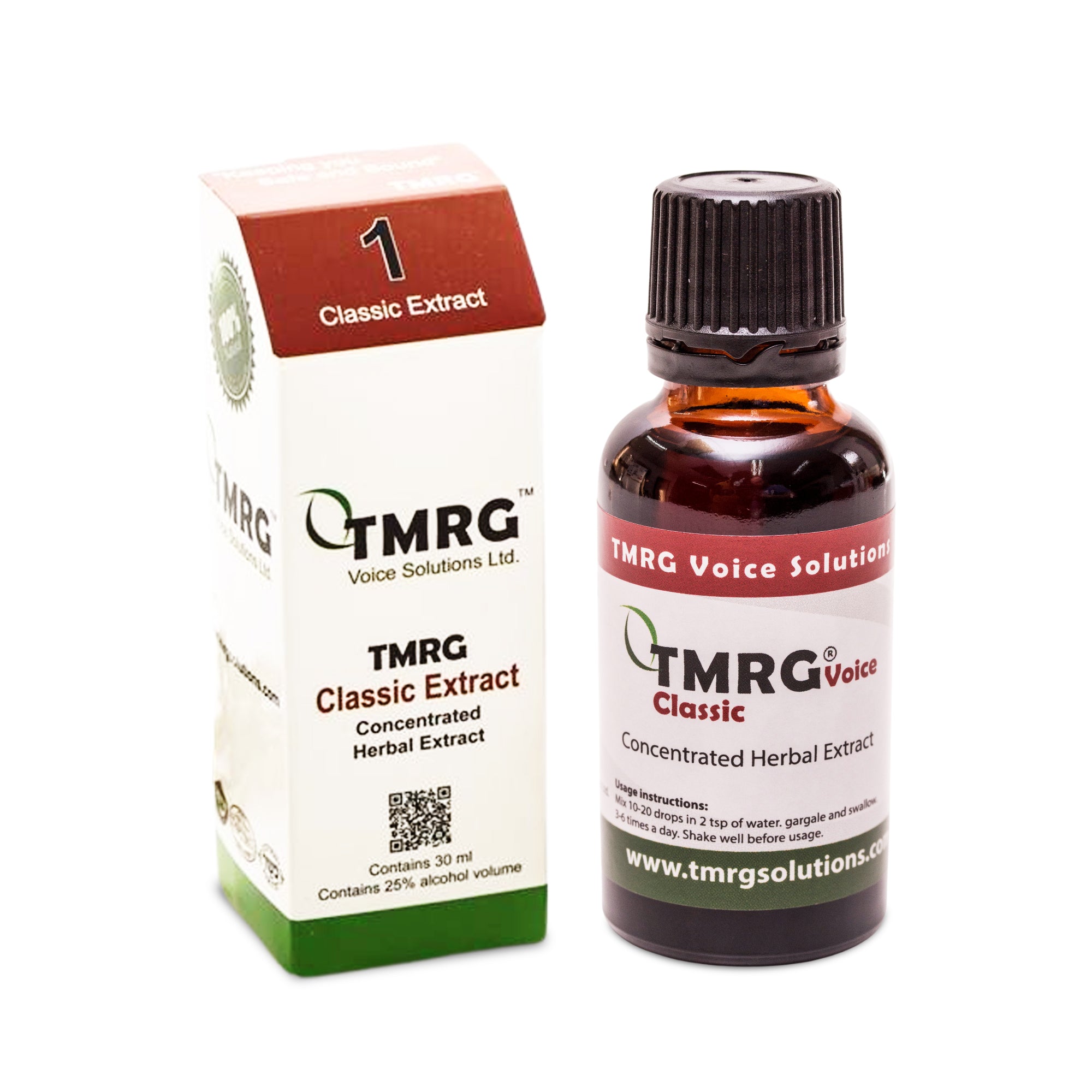
The TMRG Loud & Clear Classic Voice Recovery Drops are formulated for rapid soothing and short-term voice support. Use them during the daytime phase of the routine or as an on-the-go option between rehearsals.
The TMRG Shine Bright Classic Voice Recovery Spray provides quick topical moisture to the throat and vocal tract. It fits naturally into the pre-show 30-minute window as a non-drying alternative to menthol sprays.
The TMRG Defense Oils and Saline Voice and Throat Spray combines moisturizing oils with saline for protective throat support. It works well as a daily maintenance spray for singers who perform frequently and need consistent lubrication without pharmaceutical ingredients.
For more acute vocal strain on top of post-nasal drip, the TMRG Powerful Vocal Recovery Kit addresses more significant vocal fatigue alongside mucus-related irritation.
| Product | Primary purpose | Best use-case |
|---|---|---|
| TVT-S (Standard Kit) | Comprehensive recovery and maintenance | 7–14 day protocol, repeated post-nasal drip |
| Basic Kit | Core recovery essentials | First-time users, lighter symptoms |
| Loud & Clear Drops | Rapid soothing, short-term support | Daytime use, between rehearsals |
| Shine Bright Spray | Quick throat moisture | Pre-show 30-minute window |
| Defense Oils and Saline Spray | Daily protective moisture | Frequent performers, maintenance phase |
| Powerful Vocal Recovery Kit | Acute strain plus mucus irritation | Significant vocal fatigue with post-nasal drip |
Trialing guidance: Test any new product at least two days before a performance. If you notice increased dryness or any unusual sensation, discontinue before show day. Read product directions carefully, and consult a clinician if you have an underlying medical condition.
The hardest call in a singer’s professional life is deciding whether to perform when the voice is compromised. There is no universal answer, but there is a clear framework.
When symptoms are mild, mucus is manageable, and the voice warms up without strain, performing with appropriate precautions is usually reasonable. When hoarseness is significant, onset is delayed, or the voice feels effortful at low volume, the risk of pushing through outweighs the cost of canceling or modifying the set. A single performance rarely defines a career. A vocal fold hemorrhage from pushing a swollen voice can sideline a singer for months.
The medical evidence is consistent: rest the voice when hoarse, use breath support rather than throat tension, and avoid whispering or excessive talking during recovery. These are not conservative suggestions for amateurs. They are the same recommendations ENTs and laryngologists give professional singers. If symptoms persist beyond two weeks, or if you experience any of the red flags listed above, an ENT or laryngologist evaluation is not optional. An SLP can also address compensatory vocal habits that develop when singers push through illness repeatedly.
Long-term vocal health is built on consistent, evidence-based care, not on heroics during a single show.
Singers dealing with post-nasal drip need products that support the voice without adding dryness or irritation. Tmrgsolutions offers a range of natural vocal health products built specifically for that balance.

The TMRG Voice Therapy Kit Standard gives you a structured recovery system for the full 7–14 day protocol. For rapid on-the-go relief, the Loud & Clear Drops and Shine Bright Spray are designed to soothe and moisturize without the drying effects that make so many over-the-counter options problematic for singers. The Defense Oils and Saline Spray works as a daily maintenance option for frequent performers. Trial any product at least two days before a critical performance, read the directions, and consult your clinician if you have an underlying medical condition. Browse the full range at Tmrgsolutions and find the option that fits your current recovery phase.
The following clinical and singer-focused resources informed this article’s guidance on causes, medication cautions, home remedies, and when to seek specialist care.
Key sources used in this article: Clinical guidance on turbinate inflammation and vocal fold impact: Center for Vocal Health. Medication cautions for singers (oral decongestants, antihistamines): ENT and Allergy Associates. Saline rinse and steam inhalation protocols: Sleep and Sinus Centers. Voice rest and breath support: NIDCD / NIH. Allergy and mucus physiology: Ohio Nose, Throat, and Ear. Mucus and hoarseness: CV Surgical Group. Singer-focused post-nasal drip management: Catherine Kay Brown. Warm-up and mucus mobility techniques: Kent Hamplin Vocal Academy. Professional singer vocal health and injury risk: Mandy.
This article provides general educational information and is not a substitute for professional medical advice. Consult an ENT, laryngologist, or qualified clinician for diagnosis and treatment of persistent vocal or sinus symptoms.
The most effective immediate steps are a sterile saline nasal rinse, warm fluid intake, and steam inhalation to loosen and clear mucus before it reaches the vocal folds. For allergy-driven cases, a clinician-prescribed intranasal steroid spray addresses the underlying inflammation over 1–2 weeks.
Yes. Mucus depositing on the vocal folds causes irritation, swelling, and delayed onset, which narrows your upper range and makes phonation feel effortful. Turbinate swelling simultaneously reduces nasal resonance, leaving the voice sounding both muffled and strained.
Directly, yes. Excess mucus contacting the vocal folds irritates them and reduces their flexibility, producing hoarseness and reduced vocal range until the inflammation resolves. Chronic or untreated post-nasal drip can cause persistent laryngitis-like changes.
Singing increases airflow across the vocal folds and nasal passages, which can mobilize mucus that was pooled in the nasopharynx or posterior throat. Allergies, colds, reflux, and dry air all increase baseline mucus production, making the effect more pronounced during vocal effort.
Non-drying, non-menthol sprays like the TMRG Shine Bright Spray or the TMRG Defense Oils and Saline Spray are designed for pre-show use and do not carry the drying risk of alcohol-based or strong-menthol products. Always trial any spray at least two days before a critical performance to confirm your voice responds well.
