Your Cart is Empty


Fatigue and hoarseness after late-night performances can leave even the most skilled singers frustrated. The connection between sleep and vocal recovery is proven, with research showing that poor sleep quality directly leads to diminished voice performance. American, British, and Canadian singers alike rely on restful sleep as the foundation for tissue repair and vocal strength. This article offers clear explanations and actionable, natural remedies so you can restore your voice and reclaim vocal clarity, even when sleep feels out of reach.
| Point | Details |
|---|---|
| Adequate Sleep is Essential for Vocal Recovery | Your voice repairs primarily during deep sleep; insufficient rest leads to hoarseness and fatigue. |
| Sleep Quality Affects Vocal Performance | Deeper, uninterrupted sleep stages significantly enhance vocal health compared to fragmented sleep. |
| Consistency Matters | Maintaining a regular sleep schedule supports optimal vocal recovery cycles and hormonal balance. |
| Natural Strategies Can Improve Sleep | Incorporating dietary supplements and creating a conducive sleep environment can enhance the quality of your rest for better vocal health. |
Your voice doesn’t recover during performances or rehearsals—it recovers while you sleep. Sleep is when your vocal folds repair microscopic damage, rebuild tissue, and restore the moisture and flexibility your voice needs to perform at its best.
When you’re awake, your vocal cords vibrate thousands of times per minute, creating friction and requiring constant muscular effort. This repeated use causes wear that demands dedicated recovery time. Without adequate sleep, your voice never gets the chance to fully repair itself, leading to persistent hoarseness, fatigue, and diminished range.
Sleep activates several biological processes that directly support vocal health:
Research shows that sleep quality significantly impacts voice quality, with poor sleep directly linked to worse vocal performance. Even more striking, 24 hours of sleep deprivation induces recognizable voice changes in young adults, highlighting how quickly sleep loss affects your instrument.
Your vocal recovery happens offline. Without sleep, your voice never gets ahead of the damage.
Missing sleep doesn’t just make you tired—it damages your voice in measurable ways. Singers often notice these specific changes after poor sleep:
Your breathing control also deteriorates without sleep. Adequate rest allows your diaphragm and respiratory muscles to maintain the steady airflow your voice demands. Without it, your breath support weakens, forcing your throat muscles to compensate—a pattern that accelerates fatigue and damage.
You can’t simply accumulate sleep on weekends and expect recovery. Consistent sleep timing helps your body regulate vocal repair cycles. Your body works best when sleep follows a predictable schedule, allowing hormone production and tissue rebuilding to occur at optimal times.
Singers performing evening shows should plan recovery sleep afterward, even if it means sleeping later than usual. Your voice needs that post-performance window to begin repairs before the next day’s demands arrive.
Understanding how rest supports vocal recovery provides additional context for building a sustainable practice routine.
Pro tip: Aim for 7-9 hours of consistent sleep nightly, scheduling it so your longest sleep block occurs after your heaviest singing days—this gives your vocal folds maximum recovery time.
Not all sleep is equal. A restless night where you wake frequently delivers far less vocal recovery than seven solid, uninterrupted hours. Sleep quality—how deeply and continuously you sleep—directly determines whether your voice actually heals or simply rests without recovering.
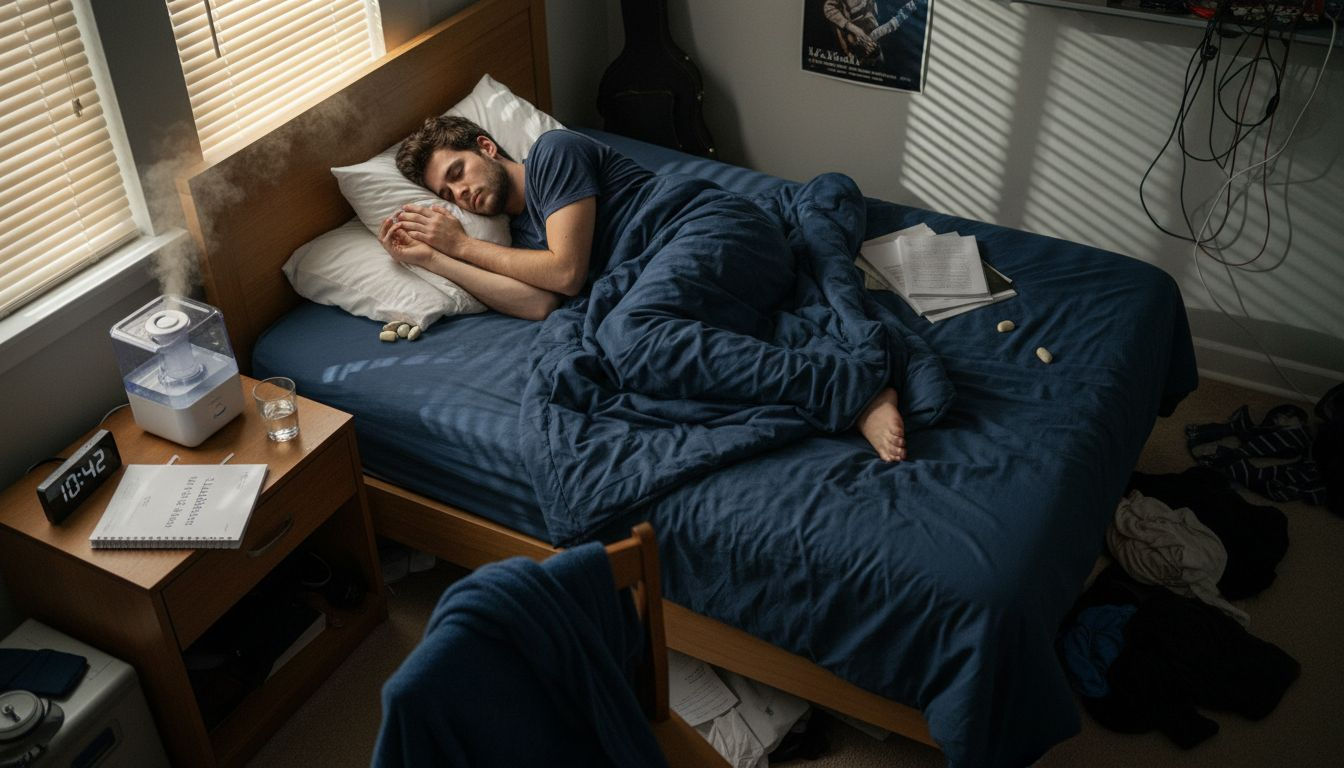
Your vocal folds need specific conditions to repair themselves. Deep sleep stages activate the biological processes that rebuild tissue, reduce inflammation, and restore hydration. Shallow or fragmented sleep leaves your voice in a partially repaired state, vulnerable to the next day’s demands.
Research involving 231 singers found a moderate association between poor sleep quality and declined singing voice quality, revealing that optimal sleep is essential for vocal health. Additionally, poor sleep quality negatively affects vocal quality because physiological fatigue impairs tissue recovery and vocal fold function.
This isn’t coincidence. Your body allocates limited repair resources during sleep. If you’re constantly waking or sleeping lightly, your system never reaches the deep stages where major healing occurs. Your voice pays the price.
Many singers unknowingly sabotage their sleep without realizing it’s destroying their vocal recovery:
Quality sleep beats quantity. One night of solid, uninterrupted sleep does more for your voice than two nights of broken, restless sleep.
You might be sleeping eight hours but still waking hoarse. Poor sleep quality shows up distinctly in your voice:
You wake with a raspy, thick voice that takes an hour to clear. Your warm-up feels harder than usual, taking longer to reach comfortable range. Your voice fatigues quickly during rehearsals even though you rested. You notice a gravelly quality to sustained notes that wasn’t present before.
These signs mean your sleep, while long enough, isn’t delivering the healing your voice needs. This is where the step-by-step vocal recovery process becomes valuable—optimizing both sleep and complementary recovery strategies.
Pro tip: Keep your bedroom at 65-68 degrees Fahrenheit, eliminate blue light one hour before bed, and maintain the same bedtime within 30 minutes every night—these three changes dramatically improve sleep quality and accelerate vocal healing.
Your sleep cycles through distinct stages, and not all of them repair your voice equally. Understanding which stages matter most for vocal healing helps you protect the sleep quality your voice depends on.
Sleep operates in cycles lasting about 90 minutes each. Within each cycle, your body moves through light sleep, deep non-REM sleep, and REM sleep. Your vocal folds get the most healing during deep non-REM stages, when your body prioritizes tissue repair and cellular restoration.
Light sleep (stages 1-2) acts as the gateway to deeper recovery. This is when your body begins to slow down metabolically and transition from wakefulness. While some vocal recovery occurs here, it’s minimal compared to deeper stages.
You spend roughly 50% of your total sleep in light stages. This is necessary—your body needs these stages to eventually reach deeper phases. But if your sleep never progresses beyond light stages, your voice won’t heal adequately.
Deep non-REM sleep is where the real vocal recovery work occurs. During this stage, deep non-REM sleep supports cellular energy restoration and protein synthesis important for tissue regeneration, including the delicate structures of your vocal folds.
Your body activates several critical processes during deep sleep:
You spend about 15-20% of your night in deep sleep. This percentage matters enormously for singers. Missing just one night of adequate deep sleep measurably impacts your voice the next day.
Here’s a structured summary of sleep stages and their impact on vocal recovery:
| Sleep Stage | Percentage of Total Sleep | Role in Vocal Recovery | Key Biological Benefits |
|---|---|---|---|
| Light Sleep (1-2) | About 50% | Minimal tissue repair, transition | Prepares body for deeper sleep |
| Deep Non-REM Sleep | 15-20% | Main stage for vocal fold repair | Protein synthesis, inflammation reduction |
| REM Sleep | 20-25% | Indirect support via hormone regulation | Stress processing, neural reset |
This table clarifies how each sleep phase contributes differently to healing your voice.
Deep sleep is non-negotiable for singers. You cannot compensate for lost deep sleep with extra light sleep or REM sleep.
REM (Rapid Eye Movement) sleep handles different recovery tasks. While not directly repairing tissue, circadian rhythms and sleep regulate tissue regeneration through hormonal signals like melatonin activating genes that control stem cell differentiation and repair, meaning REM contributes to the hormonal environment necessary for vocal healing.
REM sleep also processes stress and anxiety, both of which tense your throat and worsen vocal fatigue. Without adequate REM sleep, you wake tense and unable to relax your vocal muscles.
To maximize vocal healing, you need complete, uninterrupted sleep cycles. Each 90-minute cycle carries you through all stages. Interruptions reset your progress, forcing your body to restart the cycle.
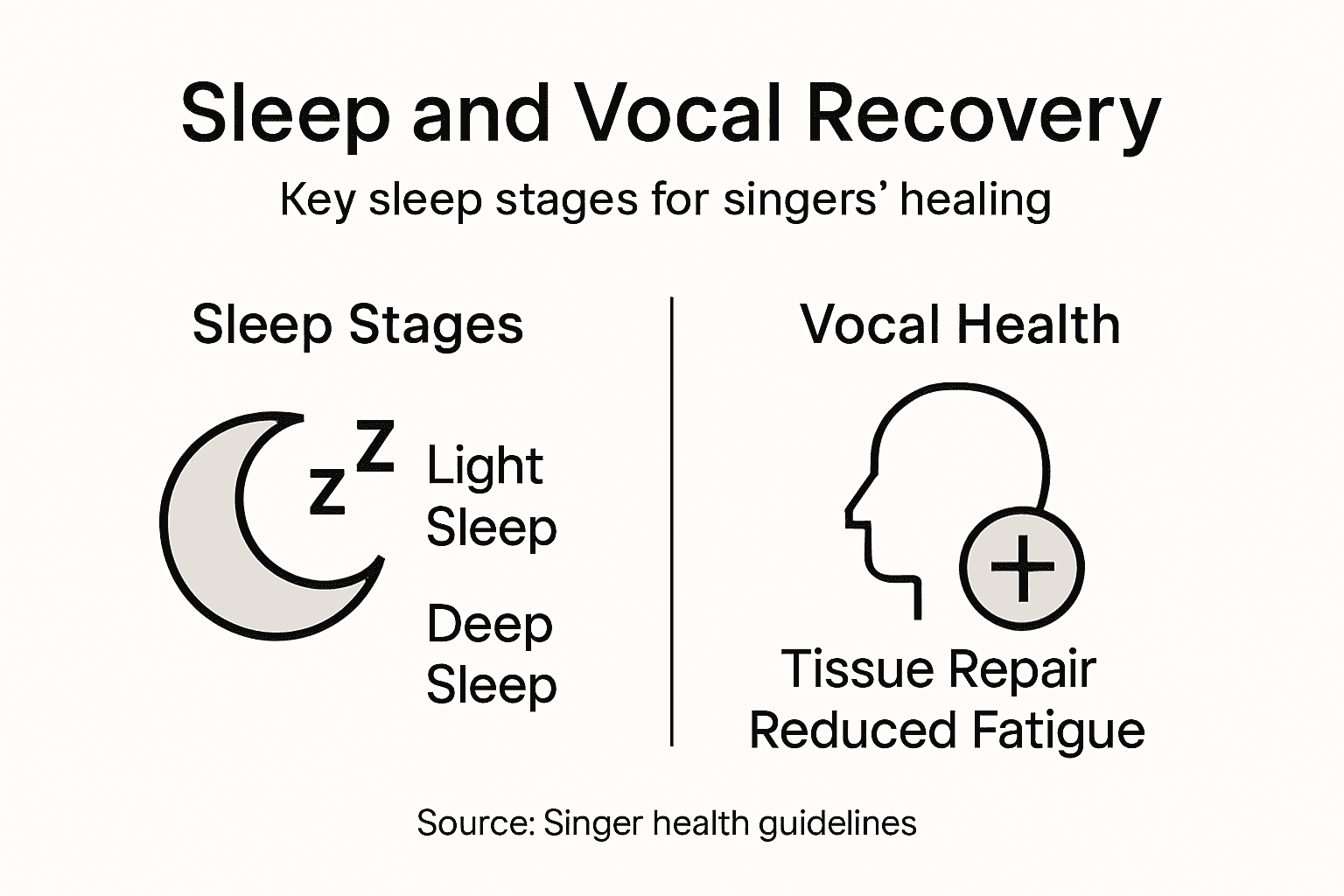
Seven to nine hours of sleep allows roughly 5-6 complete cycles. This gives your voice multiple opportunities to enter deep repair stages. Singers should protect their sleep with the same dedication they give to vocal exercises. Implementing essential exercises for vocal recovery and strength complements deep sleep by addressing daytime strain.
Pro tip: Avoid setting multiple alarms or checking your phone between sleep cycles—each disruption resets your progress toward deep sleep, defeating the healing purpose of your rest.
Sleep deprivation doesn’t just leave you tired—it systematically dismantles your voice. For singers, missing sleep is like performing without warming up, except the damage compounds over days and weeks.
When you skip sleep, your voice loses its primary recovery window. The longer sleep debt accumulates, the more irreversible damage occurs to your vocal tissues. This isn’t a minor inconvenience; it’s a direct threat to your singing career.
You notice the effects within hours. Sleep deprivation negatively affects acoustic properties of voice, causing vocal fatigue and degraded vocal performance, with these impairments increasing risk for vocal strain and potential long-term damage.
Singers report these specific changes after poor sleep:
These aren’t cosmetic issues. They’re warning signs that your vocal structures are inflamed and stressed.
Sleep deprivation doesn’t weaken your voice temporarily—it creates conditions for lasting injury.
When your voice is fatigued from sleep loss, you unconsciously overcompensate. You push harder to achieve the same volume and clarity. This creates a dangerous cycle: fatigue plus overexertion equals rapid tissue damage.
Insufficient sleep leads to vocal fatigue, increasing the risk of strain as singers overexert their voices, which may reduce practice effectiveness and may cause lasting damage if the lack of sleep persists.
One sleepless night creates strain. Three consecutive nights create injury. A week of poor sleep can damage your voice for months. Professional singers know that skipping sleep before a performance is career suicide.
Repeat sleep deprivation causes permanent changes to your voice. Your vocal folds develop scar tissue from chronic inflammation. Your mucus production decreases, leaving tissues vulnerable to further damage.
Chronic sleep deprivation also impairs your immune system, making you susceptible to upper respiratory infections. A cold on top of an already stressed voice creates the perfect conditions for serious vocal injury.
Understanding early signs of vocal damage helps you catch problems before they become permanent. Sleep loss accelerates progression toward these warning signs dramatically.
Your brain processes singing through learning and muscle memory consolidation during sleep. Without adequate sleep, your nervous system can’t integrate what you practiced yesterday.
This means your practice sessions become less effective. You’re working harder while learning less. Your progress stalls. Worse, fatigue causes poor technique, reinforcing bad habits instead of good ones.
Pro tip: Never schedule intensive vocal training or performances after nights of poor sleep—prioritize sleep recovery first, then return to demanding vocal work when your voice has genuinely healed.
You don’t need prescription medications to sleep better. Natural approaches work with your body’s biology instead of fighting it. For singers, these methods directly support vocal recovery by enabling deeper, more restorative sleep.
The goal isn’t just falling asleep—it’s achieving the deep sleep stages where your vocal folds actually heal. Natural methods address the root causes of poor sleep without the side effects that damage morning voice quality.
Natural dietary protocols can enhance sleep quality, including melatonin, magnesium, omega-3 fatty acids, valerian root, and L-theanine, supporting circadian rhythm regulation and promoting restful sleep complementary to good sleep hygiene.
Specific nutrients help your body enter deeper sleep stages:
Consume these nutrients 2-3 hours before bed, giving your body time to process them. Avoid heavy meals right before sleep, as digestion interferes with falling asleep quickly.
Natural dietary support works best when combined with consistent sleep timing—nutrients prime your body, but schedule keeps it synchronized.
Herbal and natural supplements such as valerian, hops, and kava show potential in improving sleep quality by modulating neurotransmitters involved in sleep-wake cycles, offering safer alternatives to conventional medications for sleep disturbances.
These herbs work differently than prescription sleep aids. They don’t suppress REM sleep or leave you groggy. Instead, they gently guide your nervous system toward the relaxation necessary for quality sleep.
Valerian root requires 2-3 weeks of consistent use before showing full effects. Start gradually with smaller doses to assess tolerance. Hops and kava work more quickly, often showing benefits within days.
Your sleep environment matters as much as what you consume. Small adjustments create surprisingly large improvements:
Your nervous system thrives on predictability. Consistency signals your body that sleep is coming, triggering natural hormone release.
Learning how to make good night sleep come true provides additional practical strategies tailored to your schedule.
Pro tip: Combine one dietary supplement (magnesium works best for most singers), one herbal support (valerian is reliable), and consistent 10 PM bedtime—this triple approach takes 2 weeks to show full effect but typically improves sleep quality by 40-60%.
For quick reference, here’s a comparison of natural sleep-support strategies for singers:
| Approach | Benefit for Vocalists | Typical Time to Effect | Extra Notes |
|---|---|---|---|
| Magnesium | Enhances muscle relaxation, deeper sleep | 1-7 days | Take 2-3 hours before bed |
| Valerian Root | Improves quality, less morning grogginess | 2-3 weeks | Start with small doses |
| Omega-3 Fatty Acids | Supports brain chemistry and sleep cycles | 1-2 weeks | Combine with regular schedule |
| Environmental Changes | Promotes uninterrupted, restorative sleep | Immediate | Cool room, noise control |
Use this table to select strategies that fit your individual needs and schedule.
Sleep is the foundation of vocal recovery but even the best rest cannot fully heal your voice if strain, hoarseness, or fatigue persist. If you are struggling with these challenges, it is time to complement your sleep routine with natural remedies designed specifically to support vocal health. Our Lost Voice collection offers carefully crafted sprays, oils, and therapy kits to nourish and restore your vocal folds while you rest.

Don’t wait for vocal issues to worsen. Experience proven relief and protect your voice today with trusted solutions from TMRG Solutions. Explore our Welcome Collection for a comprehensive range of products that fit seamlessly into your vocal care routine. Take control of your vocal recovery now—visit us online and start healing smarter alongside your essential sleep.
Sleep is crucial for vocal recovery as it enables tissue regeneration, hydration restoration, and inflammation reduction in the vocal folds. During deep sleep, growth hormones and essential biological processes heavily support vocal health and repair.
Lack of sleep can lead to reduced vocal range, increased hoarseness, thinner vocal tone, slower warm-up times, and a greater risk of vocal strain and injury, affecting overall performance quality.
To enhance sleep quality, maintain a consistent sleep schedule, create a conducive sleep environment (cool and dark), avoid caffeine after 2 PM, and eliminate blue light exposure an hour before bed. These practices lead to deeper and more restorative sleep.
Consistent sleep timing is essential for vocal repair cycles. Singers should aim for a predictable sleep schedule to maximize recovery, especially after evening performances, to ensure sufficient rest for the next singing demands.
