Your Cart is Empty


TL;DR:
- Persistent vocal changes lasting over three or four weeks require prompt medical evaluation to identify potential structural damage. Early diagnosis through specialist exams, including laryngoscopy and stroboscopy, improves treatment outcomes and may prevent permanent injury. Voice therapy and lifestyle adjustments are effective treatments, while timely intervention is crucial for full recovery and long-term vocal health.
Your voice has been rough for weeks. Maybe it sounds thinner than it used to, or you run out of breath mid-sentence, or certain notes you once hit with ease are simply gone. These are the kinds of changes that can feel alarming, and rightly so. Recognizing the signs of permanent vocal damage early is what separates a recoverable situation from one that becomes a lifelong limitation. Not every voice change means lasting harm, but some symptoms are red flags that demand attention before the window for full recovery closes.
| Point | Details |
|---|---|
| Four-week threshold matters | Hoarseness or voice change lasting more than 3 to 4 weeks requires professional evaluation, not more rest. |
| Not all damage is permanent | Functional disorders like muscle tension dysphonia cause serious symptoms but respond well to voice therapy without surgery. |
| Stroboscopy reveals what standard exams miss | Laryngeal stroboscopy can identify subtle vibratory changes that distinguish structural injury from functional problems. |
| Voice therapy works, even in severe cases | Early and consistent voice therapy can reduce the need for surgery and improve long-term vocal function significantly. |
| Early action changes outcomes | Waiting too long increases the risk that temporary vocal cord injury symptoms become chronic or irreversible. |
Before you can recognize whether your symptoms suggest lasting harm, it helps to understand what the vocal cords actually do. Your vocal folds are two bands of muscular tissue stretched across the larynx (voice box). When you speak or sing, airflow from the lungs causes them to vibrate rapidly, and that vibration produces sound. The quality, pitch, and strength of your voice depend on how precisely these folds come together, how freely they vibrate, and how well the surrounding structures support that process.
Vocal cord injury symptoms arise when this system breaks down. Common causes include:
When any of these factors impair normal fold vibration or closure, the voice becomes hoarse, breathy, weak, or loses its upper range. Understanding which cause is driving your symptoms matters enormously because the treatment path differs significantly for each one.
This is where many people get it wrong. They assume their rough voice is just temporary laryngitis and wait it out. Sometimes that is correct. Acute laryngitis typically resolves with supportive care within a few weeks, and the voice returns to normal without any lasting structural harm. But there are specific patterns that suggest something more serious is happening.
The following signs warrant serious concern, especially when they persist or worsen over time:
Dysphonia symptoms linked to vocal cord damage include hoarseness, breathiness, weakened voice quality, and pitch changes, all of which reflect impaired fold vibration or closure. These symptoms can appear in both temporary and permanent conditions, which is why the duration and pattern matter as much as the symptoms themselves.
Pro Tip: Keep a simple voice log for one week. Note when your voice sounds or feels worst (morning versus evening), whether symptoms improve fully after one night’s rest, and whether there are specific triggers. This pattern data will be extremely useful for any specialist you consult.
Here is a side-by-side look at how symptoms typically differ between temporary and potentially lasting conditions:
| Feature | Temporary condition (e.g., acute laryngitis) | Possible chronic vocal damage signs |
|---|---|---|
| Duration | Days to 2 weeks | More than 3 to 4 weeks |
| Response to rest | Significant improvement | Little to no improvement |
| Breathing affected | Rarely | Possible, especially in paralysis |
| Voice fatigue | Mild, situational | Persistent, even in short use |
| Pitch range loss | Temporary | Sustained or worsening |
| Pain with speaking | Mild soreness | Persistent, sharp, or chronic |
Persistent hoarseness beyond 2 to 4 weeks, particularly when accompanied by throat pain or breathing difficulty, signals the need for medical evaluation to exclude serious causes including malignancy.
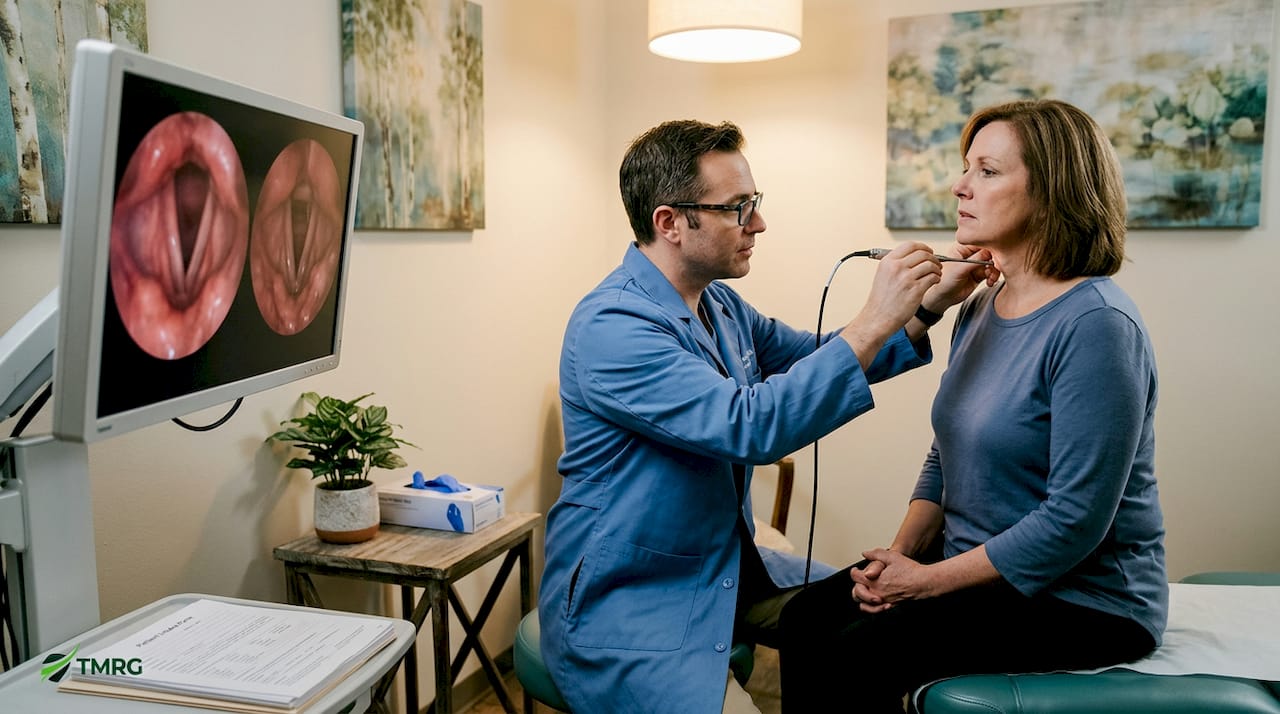
When your symptoms cross that four-week threshold, the next step is not more throat lozenges. You need a specialist, specifically an otolaryngologist (ear, nose, and throat physician) or a laryngologist who focuses exclusively on voice disorders.
The AAO-HNS clinical guidance is clear: patients with hoarseness lasting longer than four weeks should receive laryngoscopy or an urgent specialist referral to identify serious underlying conditions. Waiting longer without evaluation risks missing treatable conditions at a stage when full recovery is still possible.
Diagnostic evaluation typically involves:
What specialists look for on these exams includes scarring or stiffness in the mucosal wave (the rippling motion across the fold surface when vibrating), lesions that prevent proper fold contact, evidence of paralysis or paresis (partial paralysis), and signs of chronic inflammation from reflux or irritants. Each finding points to a different prognosis and treatment approach.
Receiving a diagnosis of vocal fold damage is not the end of the story. The range of treatment options available today is broader than most people realize, and even in cases of significant structural injury, meaningful improvement is achievable.
Pro Tip: If you have been diagnosed with a vocal fold lesion, do not stop using your voice entirely. Complete vocal rest beyond a few days is rarely recommended by specialists. Controlled, gentle voice use as guided by your therapist keeps the muscles active and prevents additional stiffness.
The importance of acting early cannot be overstated. Recognizing voice disorders at the functional stage, before scar tissue fully forms or the contralateral fold develops compensatory hyperfunctional patterns, gives therapy the best possible conditions to work with.
One of the most common sources of anxiety for people researching vocal health concerns is confusing structural damage with functional disorders. These require completely different approaches.
| Feature | Structural damage (e.g., nodules, paralysis, scarring) | Functional disorder (muscle tension dysphonia) |
|---|---|---|
| Underlying cause | Physical change in fold tissue or nerve supply | Muscle overactivation without tissue injury |
| Visible on scope? | Yes, usually | Folds appear normal or mildly irritated |
| Responds to voice rest? | Partially, but does not resolve fully | Often improves but returns without therapy |
| Primary treatment | Voice therapy plus possible surgery | Voice therapy is typically curative |
| Prognosis | Variable, depends on severity | Generally very good with proper therapy |
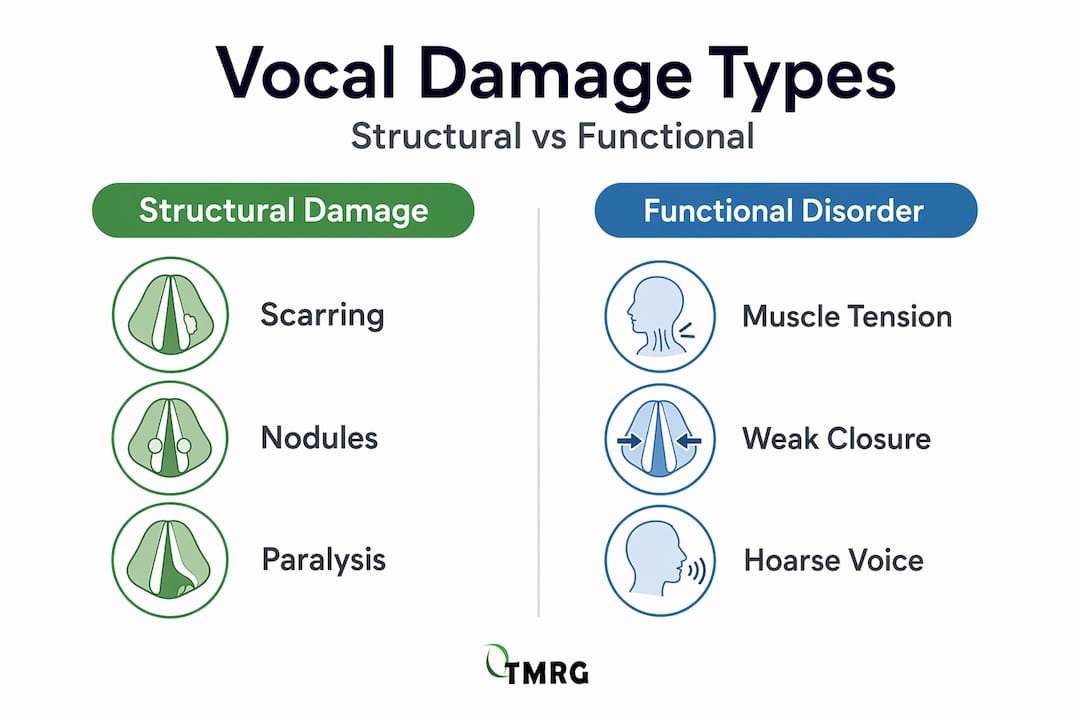
Muscle tension dysphonia produces a strained, effortful, or hoarse voice from chronically tight laryngeal muscles without any structural fold damage. It often develops after a respiratory illness or a period of vocal overuse and can feel just as alarming as structural injury. The good news is that it responds well to voice therapy without any surgical intervention. Knowing the difference means you neither overtreat a functional problem nor undertreat a structural one.
Not all chronic vocal damage signs point to permanent laryngeal damage. But distinguishing the two requires professional visualization, not self-diagnosis.
I have spent years working with singers, actors, teachers, and executives who came to me after months or years of trying to push through voice problems on their own. The pattern is almost always the same. The voice changed gradually, daily demands made stopping feel impossible, and by the time they sought evaluation, the condition had advanced significantly.
What I have learned is this: the voice is more forgiving than most people think, but only when you give it what it needs in time. I have seen patients with even significant dysphonia improve dramatically through dedicated voice therapy, without surgery. I have also seen cases where six more weeks of waiting turned a treatable nodule into a scarred fold that required surgical correction with a longer recovery.
The part that frustrates me most is the silence around self-care. People invest in their speaking skills, their singing lessons, their microphones and audio gear. They invest almost nothing in understanding how their actual instrument works and what it needs to stay healthy. That gap in knowledge is what this resource is meant to close.
If your voice has changed and has not returned to normal within three to four weeks, please get it examined. That one decision separates most recoverable cases from the ones that become permanent.
— Golan
If you have identified symptoms that concern you or you are already working through a diagnosis, having structured support at home makes a real difference. Tmrgsolutions has spent over 25 years developing targeted voice therapy solutions for singers, speakers, actors, and anyone dealing with vocal health concerns.

The TMRG Voice Therapy Kit Basic is designed for individuals starting their recovery journey, combining natural formulations with structured guidance to support healing alongside professional care. For voice professionals needing more depth, the Standard and Premium kits offer expanded tools tailored to higher-demand use cases. Explore the full range of voice solutions to find what fits your situation best. These resources complement professional voice therapy, they do not replace it, and they are built around the same principles your specialist will recommend.
There is no single fixed timeline, but chronic symptoms beyond 3 to 4 weeks without improvement raise concern for conditions that may not resolve without treatment. Early evaluation significantly improves the chances of full recovery.
Many vocal injuries, including nodules and cases of muscle tension dysphonia, can recover fully with proper voice therapy and lifestyle changes. Structural damage like scarring or fold paralysis may result in partial rather than complete recovery, but function often improves meaningfully with treatment.
Common experiences include a persistently hoarse, thin, or breathy voice; rapid vocal fatigue; loss of upper pitch range; and the sense that the voice simply does not respond the way it used to, even after full nights of rest and hydration.
Not always. Voice therapy can avoid or reduce the need for surgery in many cases, including vocal fold paralysis. Surgery is reserved for structural changes that do not respond adequately to conservative management.
See a specialist if your voice has been hoarse, weak, or changed for more than three to four weeks, or sooner if you have breathing difficulty, pain when speaking, or difficulty swallowing. AAO-HNS guidance recommends no patient wait more than four weeks without laryngeal examination.
